
A work injury in Ohio can feel overwhelming, especially when you’re unsure about your rights and available support. At Robin J Peterson Company, LLC, we’ve helped countless injured workers navigate the Ohio BWC benefits overview and understand what they’re entitled to receive.
This guide breaks down how the system works, what benefits you can claim, and how to handle common obstacles along the way.
How the Ohio BWC System Actually Works
The Ohio Bureau of Workers’ Compensation operates as a state-funded insurance system that handles work-related injuries differently than most other states. Unlike federal workers’ compensation programs, Ohio’s BWC is a monopoly system, meaning injured workers cannot sue their employers directly in most cases. Instead, you file claims through the BWC, which then determines eligibility and benefit amounts. This system processes roughly 300,000 claims annually according to BWC data, making it one of the largest workers’ compensation programs in the United States.
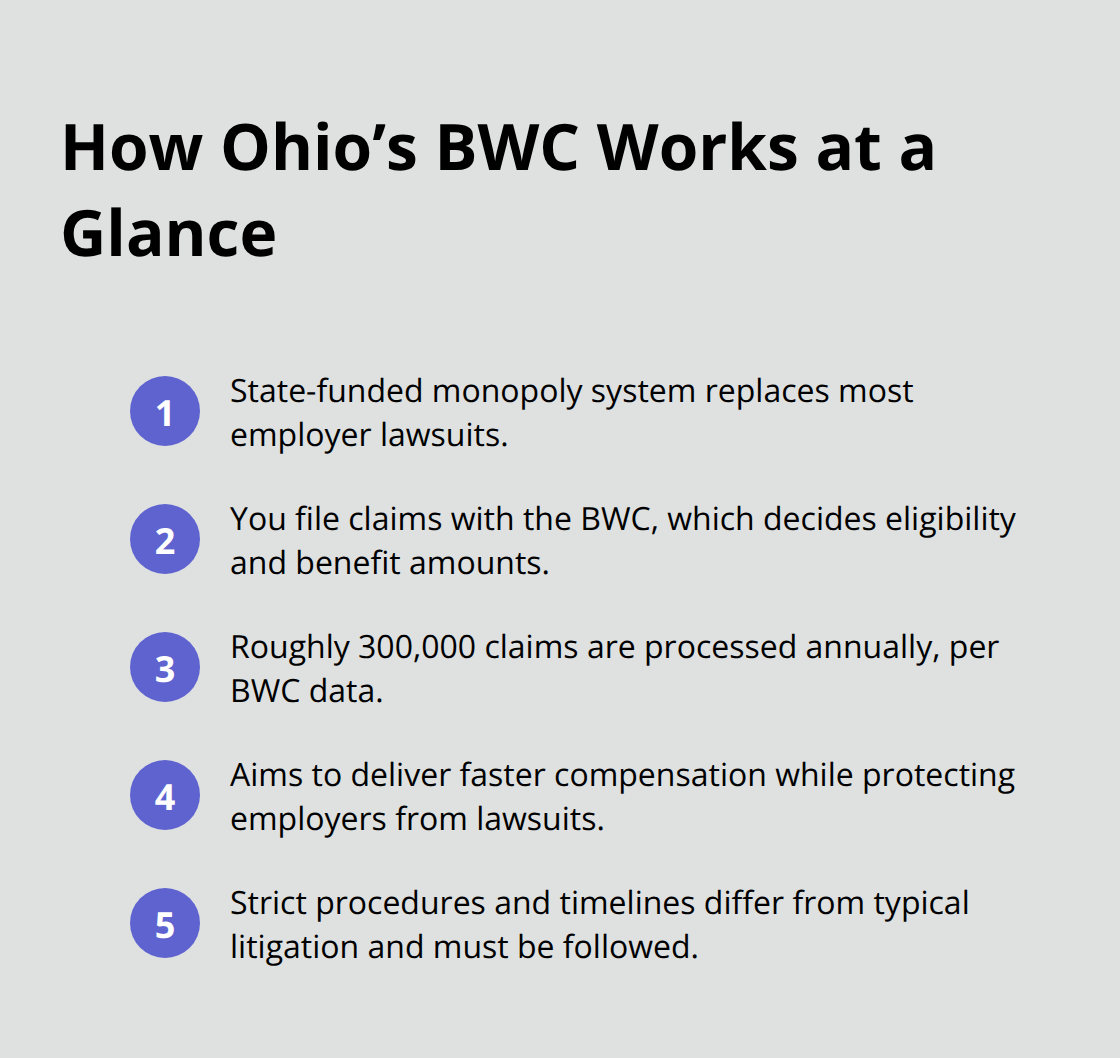
The structure exists to provide faster compensation to injured workers while protecting employers from lawsuits, but this also means you must understand specific procedures and timelines that differ from typical litigation.
Report Your Injury Immediately
You must report your work injury to your employer as soon as possible, ideally within 24 hours. Ohio law gives you up to one year from the date of injury to file a claim with the BWC, but waiting longer weakens your case significantly. Your employer is required to provide you with a Form C-91, which is the official BWC claim form, within seven days of learning about your injury. If your employer refuses or delays providing this form, contact the BWC directly at 1-800-644-6292. Many injured workers assume their employer will handle the filing process, but you should verify that your claim has actually been submitted to the BWC and monitor its status actively. The BWC assigns each claim a number, and you need this number to track progress and communicate with the agency about your case.
Understand the Decision Timeline
The BWC typically makes an initial decision on your claim within 28 to 35 days of receiving it. During this period, they review medical evidence, your wage history, and employment records to determine whether your injury qualifies for benefits. If the BWC approves your claim, benefits begin immediately, but if they deny it, you have 14 days to appeal the decision. This appeal period is strict, and missing it eliminates your chance to challenge the denial at that stage. The Industrial Commission of Ohio handles appeals, and this process can take several months depending on caseload and complexity. If you disagree with the Industrial Commission’s decision, you can appeal to the Ohio Supreme Court, though these cases are rarely accepted. Understanding these deadlines matters because missing even one can permanently affect your ability to receive benefits.
What Happens When the BWC Denies Your Claim
A denial from the BWC does not mean your case is finished. You have options to challenge the decision, and the appeal process offers a real opportunity to overturn an unfavorable ruling. The Industrial Commission of Ohio reviews denied claims and can reverse the BWC’s decision if evidence supports your injury claim. Many denials occur because of incomplete documentation or procedural errors rather than the actual merits of your case. Working with someone experienced in Ohio workers’ compensation law (such as the team at Robin J Peterson Company, LLC, which serves the Cleveland, Akron, and Canton areas) can significantly improve your chances of success during an appeal. The next section covers the specific types of benefits available and how the BWC calculates what you receive.
Types of Benefits Available Under Ohio BWC
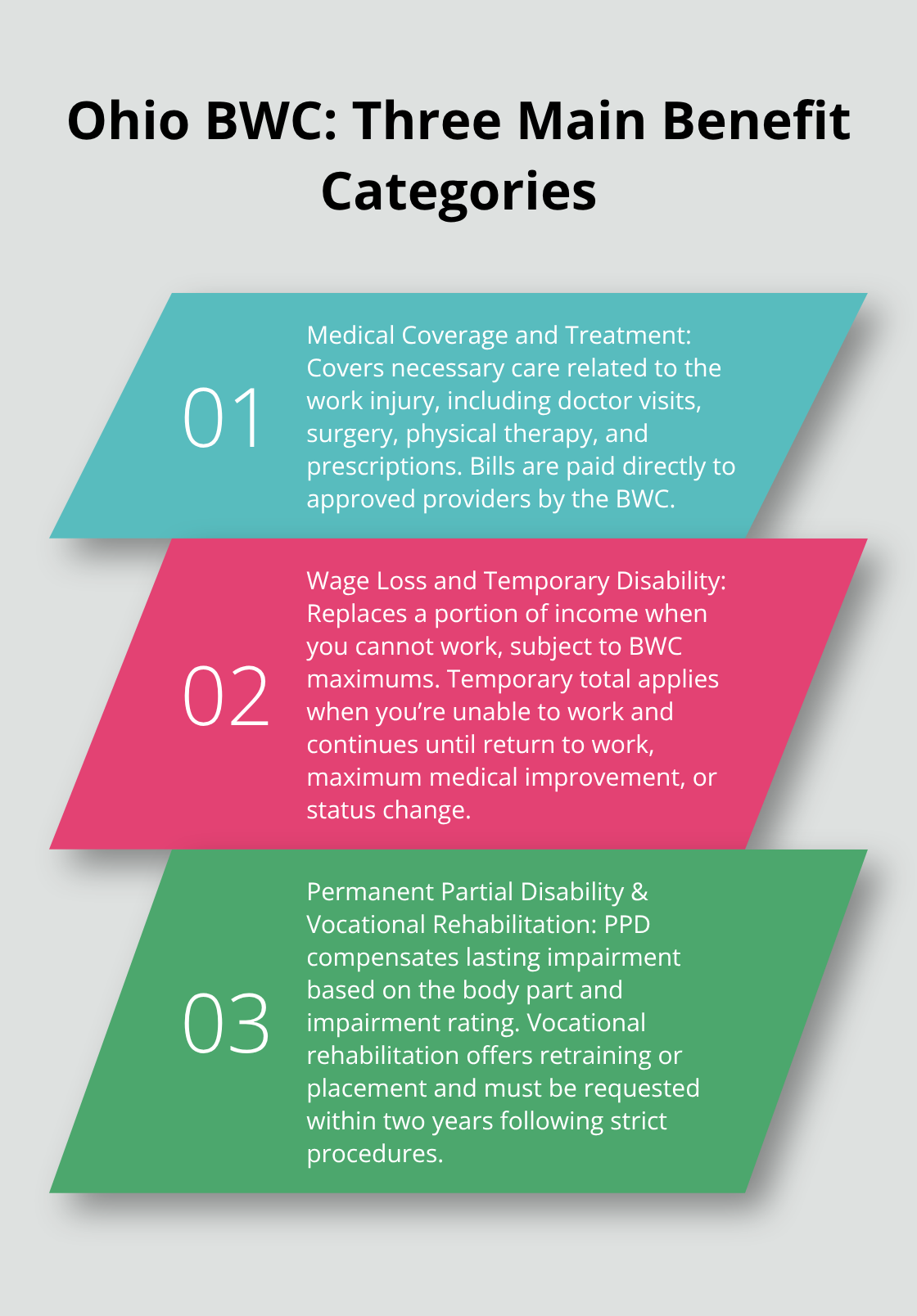
The Ohio BWC offers three main categories of benefits for injured workers, and understanding how each one works directly affects how much money you receive and for how long.
Medical Coverage and Treatment
Medical benefits cover all necessary treatment related to your work injury, including doctor visits, surgery, physical therapy, and medications prescribed by your treating physician. The BWC pays these medical expenses directly to providers, so you typically don’t handle the bills yourself, but you must use approved medical professionals and facilities. Your treating physician plays a critical role in determining which treatments the BWC will cover, so maintaining clear communication with your doctor about your work injury is essential.
Wage Loss and Temporary Disability Benefits
Wage loss benefits replace a portion of your income when you cannot work due to your injury, calculated at two-thirds of your average weekly wage up to a maximum amount set by the BWC. According to the Ohio BWC’s most recent data, the average weekly wage benefit in 2025 was approximately 662 dollars for injured workers, though your actual amount depends on your pre-injury earnings. Temporary total disability benefits apply when your doctor states you cannot work at all during recovery, and these payments continue until you return to work, reach maximum medical improvement, or transition to permanent disability status.
Permanent Partial Disability and Vocational Rehabilitation
Permanent partial disability compensation applies when your injury causes lasting damage that prevents you from returning to your previous job, even after medical treatment ends. The BWC calculates this benefit based on the specific body part injured and the degree of impairment, using a schedule that assigns dollar amounts to different injuries. For example, loss of a finger carries a different compensation level than a back injury affecting your ability to lift, and the BWC uses specific medical criteria to determine your impairment rating.
Vocational rehabilitation services help you return to work through job retraining, education, or placement assistance if your injury prevents you from performing your original job duties. You must formally request vocational rehabilitation services within two years of your injury date, and the BWC can deny your request if you wait too long or fail to follow their specific procedures. Many injured workers also qualify for supplemental job displacement vouchers, which provide funds for retraining if you cannot return to your previous employer (though eligibility rules are strict and require proper documentation during the claims process).
The next section covers the common obstacles you may face when navigating the BWC system and how to address them effectively.
Overcoming BWC Denials and Building a Winning Appeal
Understanding Why the BWC Denies Claims
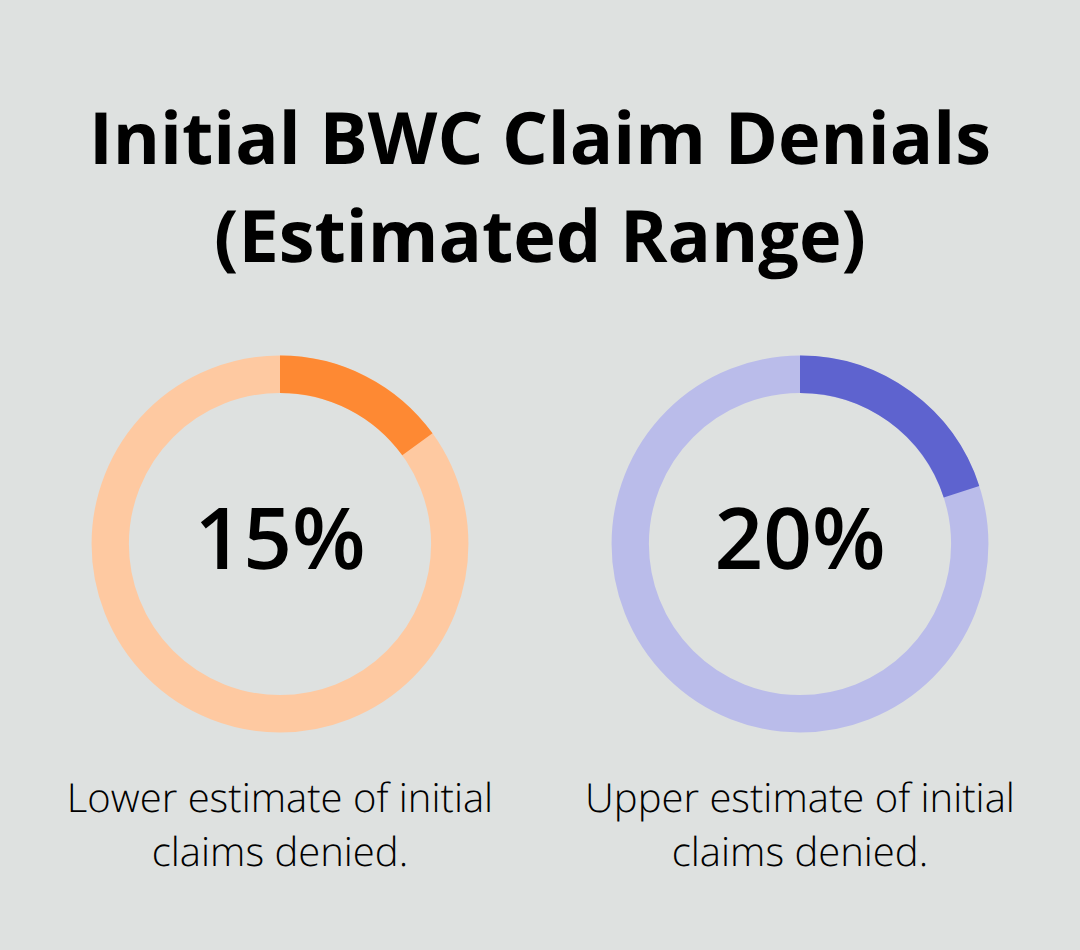
The BWC denies approximately 15 to 20 percent of initial claims, according to data from the Ohio Industrial Commission, and most of these denials stem from insufficient documentation rather than the actual strength of your injury. When the BWC rejects your claim, you have exactly 14 days to file an appeal with the Industrial Commission of Ohio, and this deadline is absolute.
Missing it forfeits your right to challenge the denial at the administrative level. The appeal process itself takes between three to six months on average, depending on the Industrial Commission’s caseload and the complexity of your case.
Submitting Medical Evidence That Wins Appeals
During the appeal, you won’t receive benefits unless the Industrial Commission grants temporary relief, which happens rarely. The key to winning an appeal is submitting comprehensive medical evidence that directly connects your injury to your work duties. Request your complete medical records from every healthcare provider who treated you, including imaging studies, lab results, and detailed clinical notes. Your treating physician’s statement matters tremendously-ask them to document specifically how your work injury caused your condition and why treatment is necessary. The Industrial Commission gives substantial weight to physician testimony, particularly when the doctor has examined you multiple times and understands your job duties.
Gathering Employment and Incident Documentation
Collect employment records that show your job title, responsibilities, and the specific incident that caused your injury. Ask your employer for incident reports, witness statements, and any documentation from the date you reported the injury to your supervisor. If your employer refuses to provide these records, the Industrial Commission can compel their production through the appeal process, but this takes additional time. Many injured workers strengthen their appeals by obtaining an independent medical examination from a physician of their choosing, which provides a second professional opinion supporting your injury claim.
Organizing Evidence for Maximum Impact
Document everything in writing, including dates you reported your injury, names of witnesses present, and any symptoms you experienced immediately after the incident. The Industrial Commission reviews written evidence more heavily than verbal statements, so written communications with your employer, the BWC, or medical providers carry significant weight. Organize all documentation chronologically in a single folder before submitting your appeal, as disorganized evidence often results in overlooked details that could support your case (this approach also helps you identify gaps in your documentation before submission).
Preparing for Your Industrial Commission Hearing
The Industrial Commission may schedule a hearing where you testify about your injury, your work duties, and how the injury affects your daily life. Prepare specific examples of activities you cannot perform now that you could perform before the injury, as the Industrial Commission uses this information to assess your impairment level and benefit eligibility. If you face a complex appeal or significant benefit amounts at stake, working with an experienced workers’ compensation attorney-such as those at Robin J Peterson Company, LLC, which serves the Cleveland, Akron, and Canton areas-can substantially improve your chances of success during the hearing and appeal process.
Final Thoughts
The Ohio BWC benefits overview shows that injured workers have real options, but only if you act decisively within strict deadlines. Your injury report must happen immediately, your appeal must be filed within 14 days of a denial, and your medical evidence must directly connect your work duties to your condition. These aren’t suggestions-they’re the rules that determine whether you receive the benefits you’re entitled to, and missing even one deadline can eliminate your opportunity to challenge an unfavorable decision.
An experienced workers’ compensation attorney can substantially improve your outcome if your claim was denied, if you face a complex appeal, or if significant benefit amounts are at stake. The Industrial Commission of Ohio reverses denials regularly when proper evidence is presented, and our firm can help you challenge a BWC decision that initially seemed final. We represent injured workers throughout the Cleveland, Akron, and Canton areas and understand the specific procedures the Industrial Commission expects.
Start by gathering your medical records, employment documentation, and incident details today. Verify that your claim was actually submitted to the BWC, and if you received a denial, file your appeal immediately rather than assuming the decision is final. Your work injury shouldn’t leave you struggling financially while you recover.