
A BWC denial can feel like a setback, but it’s not the end of the road. At Robin J Peterson Company, LLC, we help workers understand their options and fight for the benefits they deserve.
The appeals process exists for a reason-many denials can be overturned with the right approach and documentation. This guide walks you through exactly what happens next.
Why BWC Denials Happen and What It Means
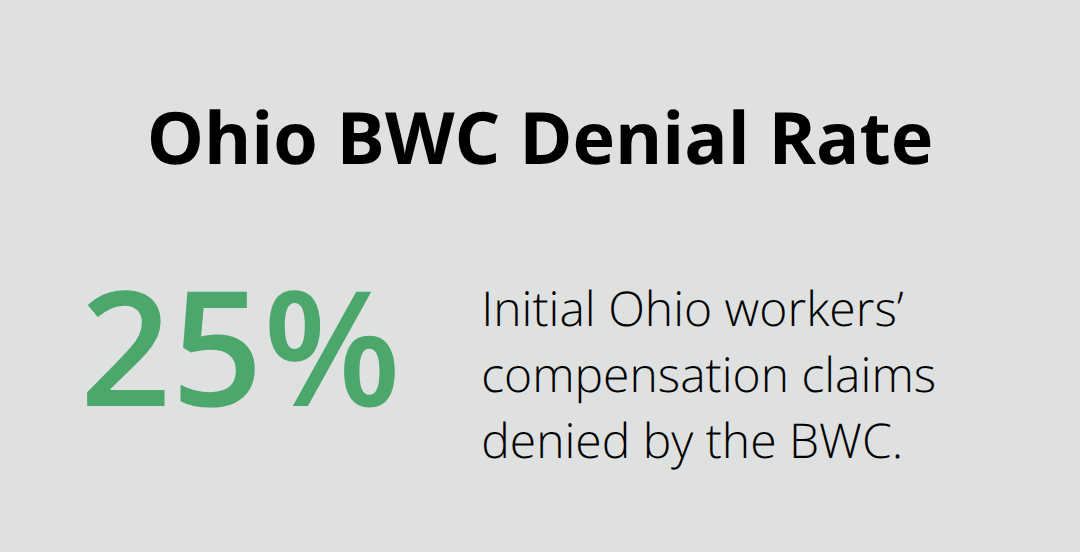
About 25% of initial workers’ compensation claims in Ohio face denial by the Bureau of Workers’ Compensation. That statistic matters because it shows denial is common, but it also means three-quarters of claims succeed. Understanding why yours landed in the denial category is your first step toward overturning it.
The BWC denies claims for specific, identifiable reasons, and most of those reasons can be addressed on appeal.
Mismatches Between Your Accident Report and Medical Records
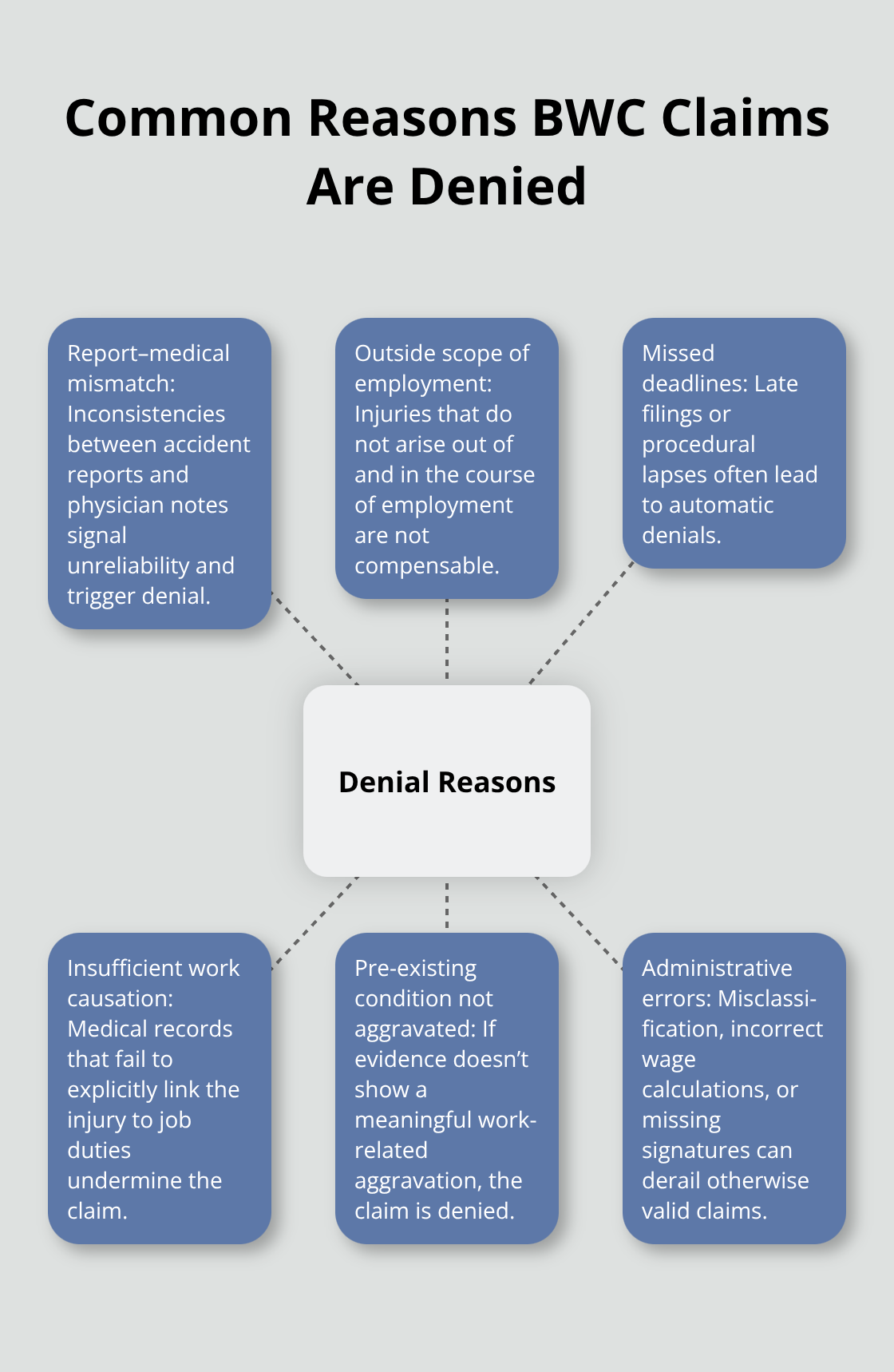
Discrepancies between your accident report and medical records represent the single most frequent source of denials. If your report states you injured your shoulder on a ladder but your doctor’s notes say you strained it lifting boxes, the mismatch signals inconsistency that triggers denial. The BWC also denies claims when the injury falls outside the scope of employment, when you miss filing deadlines, or when medical documentation fails to explicitly state work causation. A diagnosis alone is not enough; your physician must connect the injury directly to your job duties.
Pre-Existing Conditions and Administrative Errors
Pre-existing conditions create denials too, but only when the BWC concludes the work incident did not meaningfully aggravate the condition. If you had a prior shoulder problem and a work incident worsened it significantly, that aggravation is compensable, provided your medical records prove it. Administrative errors cause denials as well, including misclassification as an independent contractor, incorrect wage calculations, or missing signatures on required forms.
How Fast the Denial Arrives
The BWC has up to 28 days to approve or deny your claim after you file. Many denials arrive within this window, though some take longer if the agency requests additional medical records or clarification. Once the denial decision is issued, you receive written notice explaining the specific reason. That notice is your roadmap for appeal because it tells you exactly what evidence or documentation the BWC found lacking.
You have 14 days from the date of that denial notice to file an appeal with the Industrial Commission of Ohio. This deadline is absolute and non-negotiable; missing it waives your right to challenge the decision. The moment you receive a denial, request your complete BWC claim file immediately. This file shows exactly what evidence the agency reviewed and what gaps exist in your documentation. That information shapes your appeal strategy. You should also request a written explanation if the denial letter lacks detail about the specific grounds for the decision. Some denials reference general categories like insufficient medical evidence, but your complete file reveals what documents are actually missing or contradictory.
What Your Denial Does Not Mean
A denial does not mean your claim is permanently closed. The appeals process exists because many denials can be overturned with stronger evidence, corrected documentation, or clarified physician statements. If administrative errors caused the denial, those are often resolved quickly on appeal. If your medical records lack explicit work causation, an updated statement from your treating physician addressing that gap can reverse the decision. If discrepancies exist between your accident report and medical records, you can correct those inconsistencies and resubmit.
What a denial does mean is that you must act strategically and quickly. The 14-day appeal window is tight, and the evidence you present must directly address the reason the BWC cited for denial. Generic appeals without specific rebuttals to the denial reason rarely succeed. Your next move is to understand exactly how the appeal process works and what steps you must take to file your request for a hearing with the Industrial Commission of Ohio.
How to File Your Appeal and Prepare for the Hearing
Submit Your IC-12 Notice of Appeal Within 14 Days
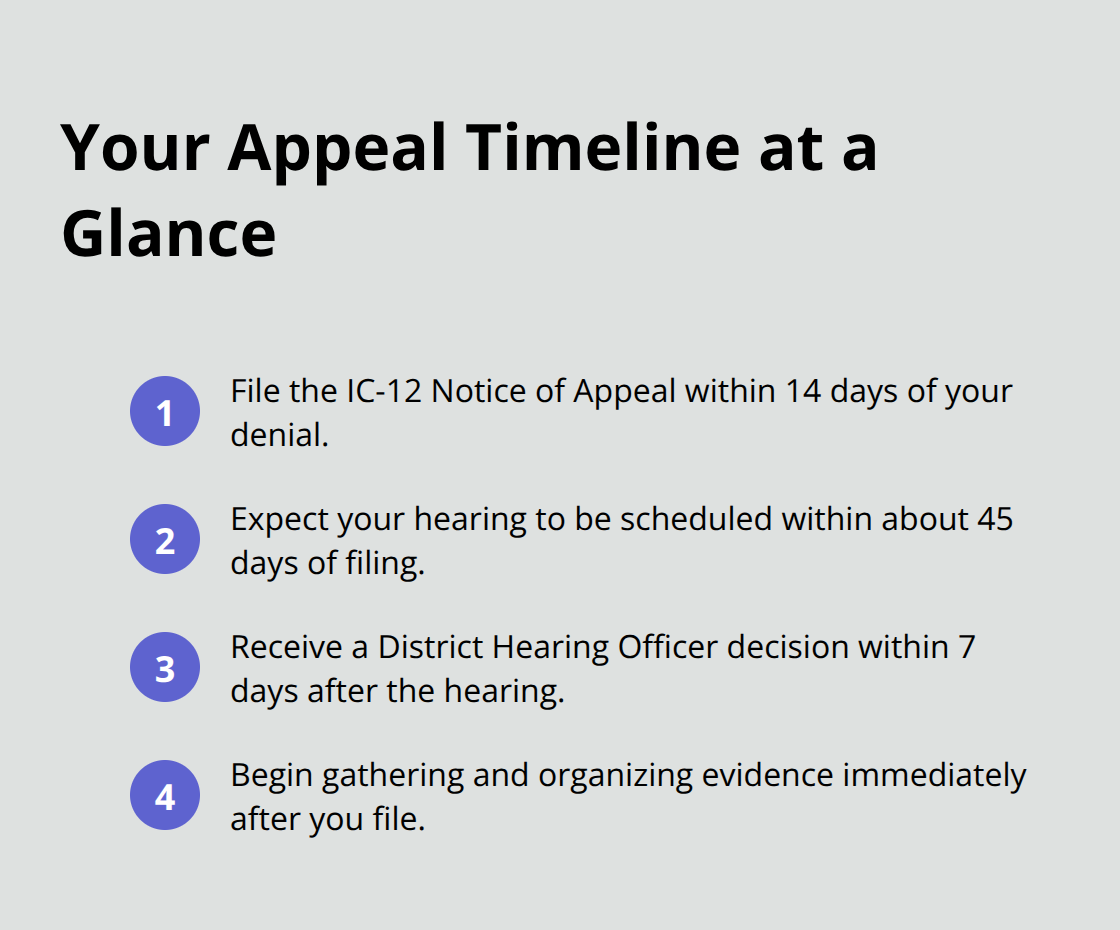
Filing your appeal with the Industrial Commission of Ohio requires precision and speed. You must submit the IC-12 Notice of Appeal within 14 days of receiving your denial notice, and this deadline cannot be extended. The IC-12 is the official form that initiates your appeal, and you can file it online through the Industrial Commission Online Network (IC-ON), in person at the Ohio Bureau of Workers’ Compensation office located at 30 W. Spring St., Columbus, OH 43215-2256, or by certified mail. Online filing through IC-ON is the fastest and most reliable method because you receive immediate confirmation and a tracking number. If you mail your appeal, use certified mail with return receipt requested so you have proof of delivery.
Understand Your Timeline and Hearing Schedule
The Industrial Commission typically schedules your hearing within 45 days of filing, and a District Hearing Officer will issue a decision within 7 days after the hearing concludes. This timeline means you have roughly six weeks to gather and organize your evidence after filing. Plan your evidence collection strategy immediately after you submit your IC-12 form rather than waiting for the hearing notice to arrive.
Build Medical Evidence That Addresses the Denial Reason
Your evidence strategy must directly address the specific reason the BWC cited for denial. If the denial stemmed from discrepancies between your accident report and medical records, obtain a corrected statement from your treating physician that reconciles those inconsistencies and explicitly confirms the injury occurred as you described it. If the denial cited insufficient medical evidence of work causation, have your physician submit a detailed letter addressing the injury’s relationship to your job duties, including clinical specifics about how the work incident caused or aggravated your condition. Medical evidence carries the most weight at hearings, so this documentation is your strongest tool.
Gather all medical records chronologically, including dates, diagnoses, and treatment notes from every provider you visited after the injury. Collect wage statements showing your Average Weekly Wage, as this determines your benefit calculation. Obtain written statements from coworkers who witnessed the incident or your symptoms afterward. Photograph the work area, equipment, or conditions that contributed to your injury if possible.
Correct Administrative Errors and Prepare Documentation
If administrative errors caused the denial (such as misclassification as an independent contractor or incorrect wage calculations), prepare corrected documentation that resolves those errors. Organize all documents in chronological order and create a summary sheet that cross-references each piece of evidence to the specific denial reason. This organization helps the Administrative Law Judge follow your argument and locate supporting documentation quickly during the hearing.
Prepare Your Testimony and Know What to Expect
At the hearing, an Administrative Law Judge will review your evidence and testimony, listen to any employer arguments, and question you about the details of your injury and treatment. You should be prepared to testify about exactly when and how the injury occurred, what job duties you were performing, your medical treatment timeline, and how the injury has affected your ability to work. Bring all original documents to the hearing and be ready to answer questions that challenge the consistency of your account. Practice your testimony beforehand so you can answer clearly and confidently without hesitation or contradictions.
If the District Hearing Officer denies your appeal, you have 14 days to file another appeal with a Staff Hearing Officer at the next level. The process repeats with similar timelines and evidence requirements, so understanding how to present your case effectively at the first hearing prepares you for subsequent appeals if needed. Many workers benefit from legal representation at this stage because an attorney can cross-examine witnesses, present evidence strategically, and navigate the procedural rules that govern hearings.
Should You Hire an Attorney for Your BWC Appeal
Why Legal Representation Strengthens Your Appeal
An attorney experienced in Ohio workers’ compensation appeals substantially improves your odds of overturning a denial. The Industrial Commission hears hundreds of appeals each month, and many workers file without legal representation, which puts them at a disadvantage. Attorneys who specialize in these cases understand exactly how Administrative Law Judges evaluate evidence, what documentation carries the most weight, and how to structure arguments that directly counter the BWC’s stated reason for denial. An attorney handles all procedural requirements, manages the tight 14-day filing deadline and subsequent appeal windows, and ensures your evidence reaches the right decision-maker in the right format.
Without legal guidance, many workers miss filing deadlines, submit incomplete documentation, or present evidence that fails to address the specific denial reason. These procedural mistakes can result in waiver of your appeal rights or dismissal before a hearing even occurs. An attorney performs a thorough case evaluation early on, identifying weaknesses in your claim and building a strategy to overcome them before you present your case to a judge.
How Attorneys Gather and Organize Evidence
Your attorney gathers and organizes medical evidence far more effectively than you can alone because they know which clinical details matter most to judges and how to obtain physician statements that directly address the denial reason. If the BWC cited insufficient work causation, your attorney contacts your treating physician and requests a detailed letter that includes specific clinical findings linking the injury to your job duties. If discrepancies exist between your accident report and medical records, an attorney reconciles those inconsistencies with corrected documentation before the hearing.
Attorneys also identify and correct administrative errors that caused denials, obtain wage statements and payroll records that support your benefit calculation, and gather witness statements from coworkers who can corroborate your account of the incident. In cases involving complex medical causation issues or disputes about whether your job duties caused the injury, an attorney may retain an independent medical examiner or expert witness whose testimony carries significant weight with judges.
What Happens During the Hearing
During the hearing itself, your attorney presents evidence in a logical sequence that builds a compelling narrative, cross-examines the employer’s witnesses to expose weaknesses in their arguments, and responds immediately to challenges from the opposing side. This strategic presentation of your case makes a substantial difference in how judges perceive your claim and the strength of your evidence.
Selecting the Right Attorney for Your Case
When selecting an attorney, ask about their appellate success rate and request specific examples of cases where they reversed unfavorable decisions. Ask how they charge for services, whether they work on contingency (meaning they only collect a fee if you win), and what costs you might incur for expert medical opinions or other case expenses. Request references from past clients or ask about the number of cases they’ve handled before the Industrial Commission.
A qualified workers’ compensation attorney should explain their strategy for your specific denial reason and outline the steps they’ll take during the appeal process so you understand exactly what to expect. The attorney should also clarify their communication practices and how often you can expect updates on your case progress.
Final Thoughts
A BWC denial appeal in Ohio demands immediate action within the 14-day filing window, which you cannot extend or recover if missed. Request your complete claim file from the BWC right away to identify exactly what evidence the agency reviewed and what documentation gaps exist. Obtain a detailed written explanation of the denial reason, gather all medical records chronologically, and have your treating physician submit a statement that addresses the specific grounds for denial with clinical specifics about how your job duties caused or aggravated the injury.
An experienced workers’ compensation attorney transforms your appeal from a solo effort into a strategic case with substantially better odds of success. Attorneys understand how Administrative Law Judges evaluate evidence, know which clinical details carry the most weight, and structure arguments that directly counter the BWC’s stated reason for denial. Without legal representation, workers frequently submit incomplete documentation, miss filing deadlines, or present evidence that fails to address the specific grounds for your denial.
At Robin J Peterson Company, LLC, we represent injured workers throughout Ohio who face BWC denials and need to navigate the Industrial Commission appeal process. We handle all procedural requirements, gather the medical evidence that judges find most persuasive, and fight for the benefits you deserve. Contact us for a case evaluation so we can assess your specific denial reason and outline the strategy most likely to reverse the decision.