
The Ohio Bureau of Workers’ Compensation denies thousands of claims each year. A medical benefits denial doesn’t mean your case is closed-it means you have options to fight back.
At Robin J Peterson Company, LLC, we’ve helped injured workers challenge BWC decisions and recover the benefits they deserve. This guide walks you through the appeal process step by step.
Why the BWC Denies Medical Benefits Claims
The Three Main Denial Triggers
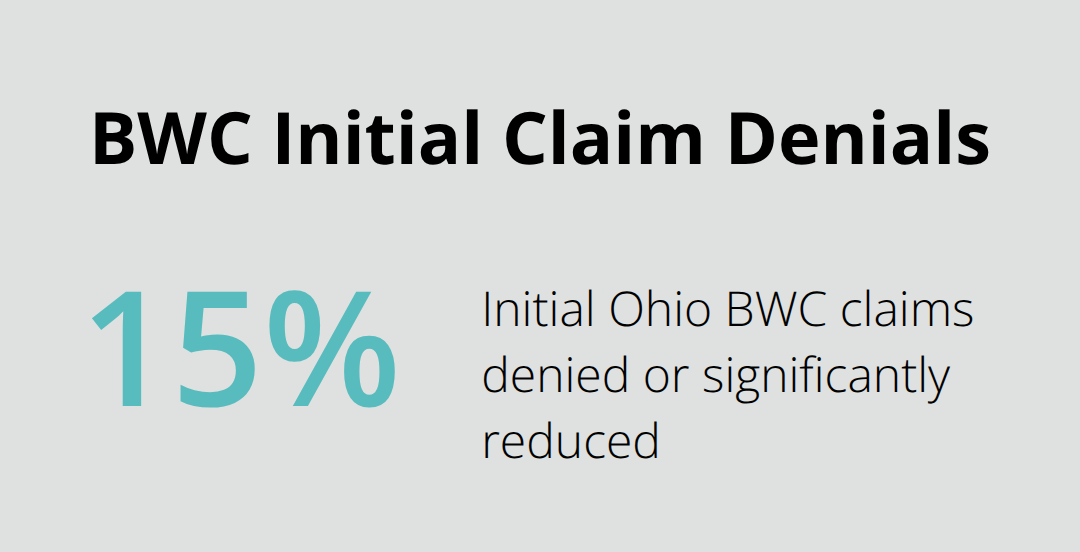
The Ohio Bureau of Workers’ Compensation denies or significantly reduces approximately 15% of initial claims according to data from the BWC itself. Understanding why your claim landed in that group is the first step toward overturning the decision. Three distinct categories account for most denials: incomplete medical documentation, causation disputes, and procedural errors.
Each category requires a different strategy to overcome.
Medical Documentation Gaps
Missing or vague medical records represent the single largest denial trigger. The BWC enforces a strict 17-day deadline for medical records to arrive after you file your claim, and missing this window can result in automatic denial. Your treating physician’s notes must explicitly connect your injury to work duties-generic statements that you have pain or a diagnosis will not suffice. The medical record needs specifics: the exact mechanism of injury, when it occurred, which job tasks caused or aggravated the condition, and how your condition has changed since the workplace incident.
Delayed treatment following an injury also invites denial. If you waited weeks or months to seek medical attention, the BWC may argue the injury wasn’t work-related or wasn’t serious enough to require immediate care. Gaps in follow-up appointments work against you for the same reason. Seek medical attention immediately after injury and maintain consistent appointments to strengthen your position.
Pre-Existing Conditions and Causation
Pre-existing conditions create a particular vulnerability. The BWC does not automatically deny claims involving prior health issues, but the medical evidence must show that work aggravated or worsened your condition, not merely that a pre-existing problem exists. Your doctor needs to state directly that the workplace incident was a substantial contributing factor to your current condition, not just that you have a history of the issue.
Procedural Mistakes and Reporting Delays
Procedural mistakes cause denials more often than injured workers realize. The First Report of Injury must be filed within one year, though filing promptly strengthens your position. Administrative errors-misspelled names, incorrect dates, missing signatures, or wrong injury classification-can trigger denial even when the underlying claim is legitimate.
Detailed incident documentation matters enormously. Your initial report should include the precise mechanism of injury, the location where it occurred, equipment involved, and how specific job duties caused the problem. Witness statements from coworkers who saw the incident happen carry significant weight in countering employer disputes about whether the injury occurred at work. The BWC also scrutinizes the timeline between injury and reporting. Immediate notification to your supervisor protects credibility; delays invite skepticism about the injury’s reality or severity.
Taking Action After Denial
Once denied, you have 14 days to file an appeal with the Industrial Commission of Ohio-this deadline is absolute and missing it forfeits your right to challenge the decision. Identifying the exact reason the BWC rejected your claim is essential before you move forward. The denial letter will specify which category triggered the decision, and your appeal strategy must address those specific deficiencies directly. With the denial reason identified, you can now gather the targeted evidence and documentation needed to build a compelling case.
How to Navigate the Industrial Commission Appeal
Understanding the Industrial Commission’s Role
The Industrial Commission of Ohio serves as the appellate body that reviews whether the BWC’s initial decision was correct. The BWC makes the first determination, but the Industrial Commission is where your fight to overturn a denial actually happens. A staff hearing officer examines your case and focuses on concrete evidence that directly contradicts the BWC’s stated reason for denial. This is where strong documentation and clear presentation make the difference between winning and losing your appeal.
Filing Your Appeal and Meeting Deadlines
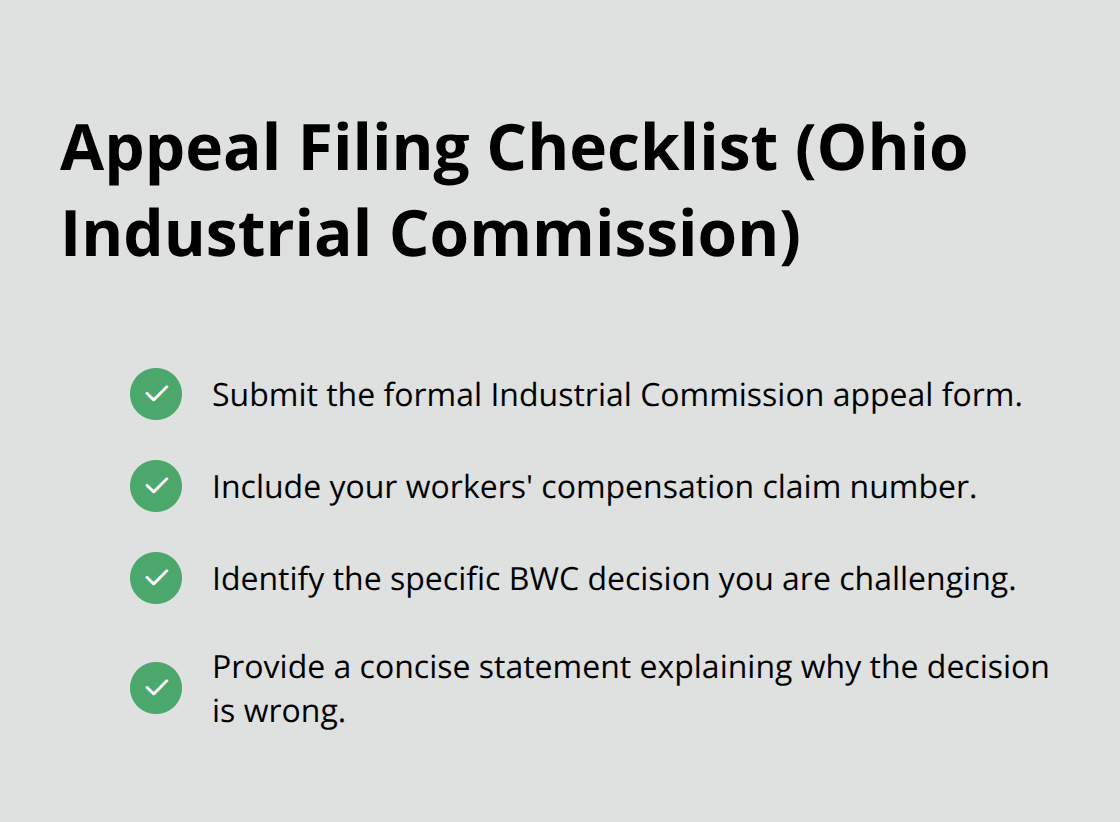
Your 14-day deadline to file an appeal with the Industrial Commission is absolute-missing it forfeits your right to challenge the decision entirely. The appeal process requires a formal appeal form (available through the Industrial Commission), your claim number, the specific BWC decision you’re challenging, and a concise statement explaining why the decision is wrong. No filing fee applies. You must organize medical records chronologically with clear labels and highlight passages that support your position so the hearing officer can quickly locate key evidence.
Presenting Evidence That Contradicts the Denial
The hearing typically lasts between 30 minutes and two hours depending on complexity. Bring original medical records, imaging results, wage documentation, and all correspondence with the BWC. You will answer questions about your injury, treatment history, and work duties. If the denial cited insufficient medical documentation, submit additional medical records or a treating physician opinion that explicitly addresses what the BWC said was missing. If the BWC misclassified your injury, provide documentation showing the correct classification. New medical evidence discovered after the initial denial carries significant weight-submit these records with a cover letter explaining their relevance and how they contradict the denial reasoning.
The Power of Strategic Evidence Presentation
Successful appeals require organizing your evidence strategically and presenting it in ways that directly counter the insurer’s arguments. The hearing officer focuses on concrete evidence that directly contradicts the BWC’s reasoning, not on emotion or general fairness arguments. Self-representation is common but generally produces weaker results than experienced representation. Workers’ compensation attorneys know how to structure evidence strategically, anticipate counterarguments, and navigate procedural nuances that matter in outcomes. Experienced representation helps level the playing field by countering the BWC’s position with relevant precedent and precise medical evidence tied to work duties.
Building Your Medical Case Against the BWC
Your medical evidence will either make or break your appeal. The BWC rejected your claim based on specific deficiencies in documentation or causation, and your job is to fill those gaps with precise, targeted medical support. The hearing officer at the Industrial Commission reviews your case on the written record, meaning the strength of your medical evidence directly determines whether you win or lose.
Obtaining a Causation Statement From Your Treating Physician
Start with a detailed written statement from your treating physician that addresses the exact reason the BWC cited for denial. If the BWC said insufficient documentation proved work causation, your doctor must explicitly state that the workplace incident was a substantial contributing factor to your condition, not merely that you have a diagnosis. Generic language will not overcome a denial. Your physician needs to describe the specific mechanism of injury, when it occurred, which job duties triggered or aggravated the condition, and how your symptoms changed after the workplace event. Request this statement in writing before your hearing and submit it with your appeal paperwork so the hearing officer has it in advance.
Organizing Medical Records Chronologically
Arrange medical records chronologically to tell a clear story of injury and deterioration. Include initial treatment notes from immediately after the injury, imaging results if available, all follow-up appointment records, and any specialist evaluations. Highlight the passages in these records that show you sought treatment promptly and maintained consistent care, both of which counter BWC arguments about delayed or sporadic treatment.
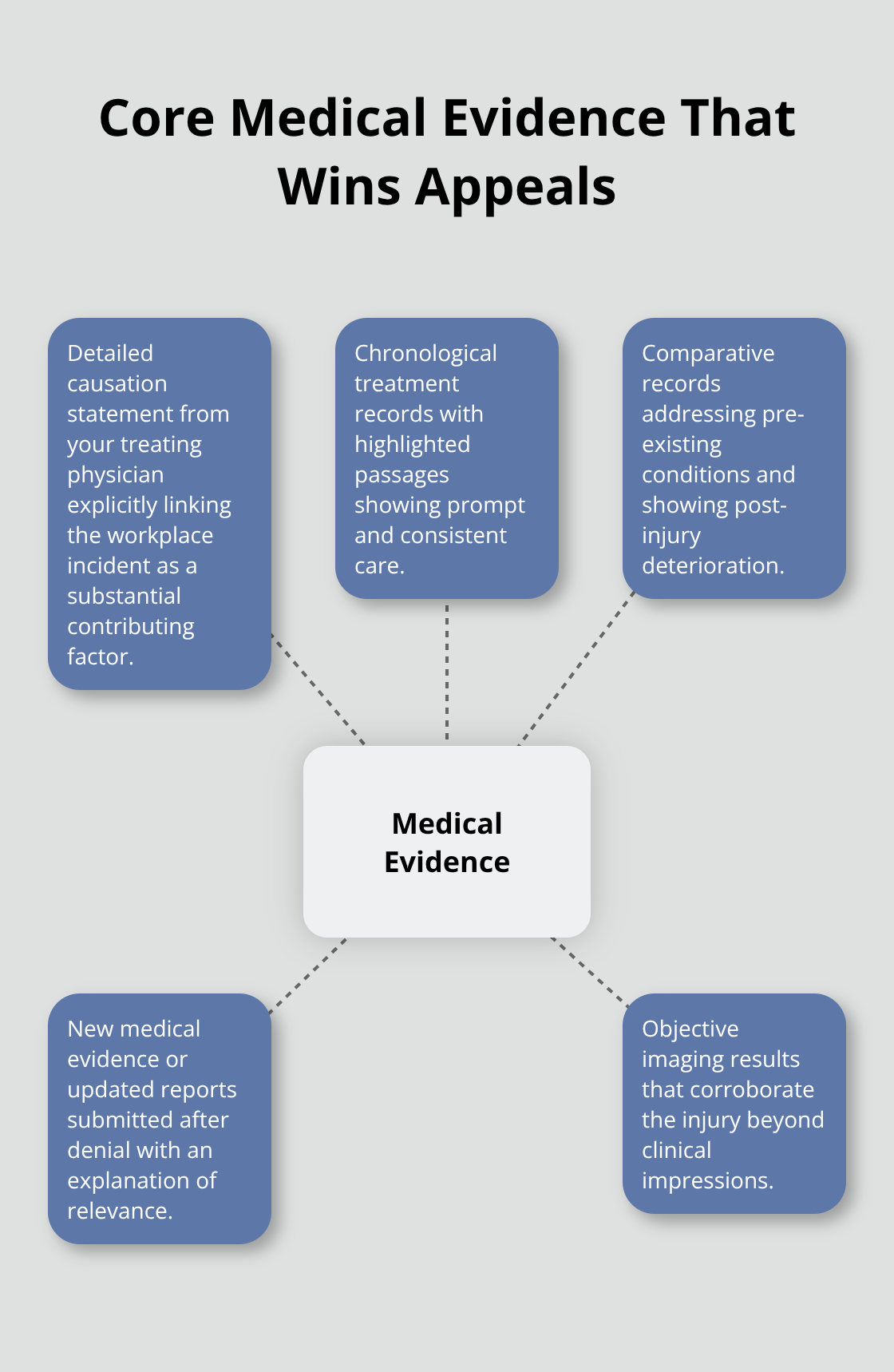
Imaging studies carry significant weight because they provide objective evidence of the injury rather than relying solely on your description or the doctor’s clinical impression.
Addressing Pre-Existing Conditions With Comparative Evidence
For pre-existing conditions, pull your prior medical records from before the workplace incident and compare them side-by-side with post-injury notes to demonstrate the deterioration caused by work. Your doctor should explicitly address this comparison in their statement, showing how your condition was stable before the injury and worsened after the workplace event. If the denial involved misclassification of your injury or disputes over which body part was actually injured, obtain medical documentation that clarifies the correct classification.
Submitting New Medical Evidence After Denial
New medical evidence discovered after the initial BWC decision carries significant weight in appeals. If your treating physician has issued updated reports or if you obtained an independent medical examination after the denial, submit these records with a cover letter explaining how they directly contradict the BWC’s stated reason for rejection. This additional documentation can shift the outcome in your favor when presented strategically to the hearing officer.
Final Thoughts
A medical benefits denial from the Ohio Bureau of Workers’ Compensation does not end your case. You have concrete steps available to challenge the decision and recover the benefits you need, starting with identifying the exact reason the BWC rejected your claim and gathering targeted evidence that directly addresses that deficiency. Whether incomplete medical documentation, causation disputes, or procedural errors triggered the denial, each category requires specific documentation to overcome.
Your appeal to the Industrial Commission of Ohio hinges on presenting clear, organized evidence that contradicts the BWC’s reasoning. Medical records arranged chronologically, explicit causation statements from your treating physician, and documentation of timely treatment all strengthen your position. The hearing officer reviews your case on the written record, meaning the quality and organization of your documentation directly determines the outcome.
At Robin J Peterson Company, LLC, we represent injured workers throughout the Cleveland, Akron, and Canton areas who are fighting medical benefits denials and other BWC decisions. We understand the specific deficiencies that trigger denials and how to build compelling cases that overturn them. The 14-day deadline to file your appeal is absolute, so contact us today to discuss your options and strengthen your position.