
Filing a workers’ compensation claim in Ohio can feel overwhelming, especially when you’re dealing with an injury. The good news is that the process becomes manageable once you understand the steps involved.
At Robin J Peterson Company, LLC, we’ve helped countless injured workers navigate BWC claim filing in Ohio successfully. This guide walks you through exactly what you need to do to get paid.
How Ohio’s Workers’ Compensation System Actually Works
The No-Fault Advantage
The Ohio Bureau of Workers’ Compensation operates as a state-run agency that handles workplace injury claims fundamentally differently than private insurance companies. The BWC uses a no-fault system, which means you don’t have to prove your employer was negligent to receive benefits-you only need to show the injury happened at work. This structure eliminates the lengthy disputes over fault that private insurance often creates, allowing settlements to move forward without months of back-and-forth arguments.
The 28-Day Investigation Window
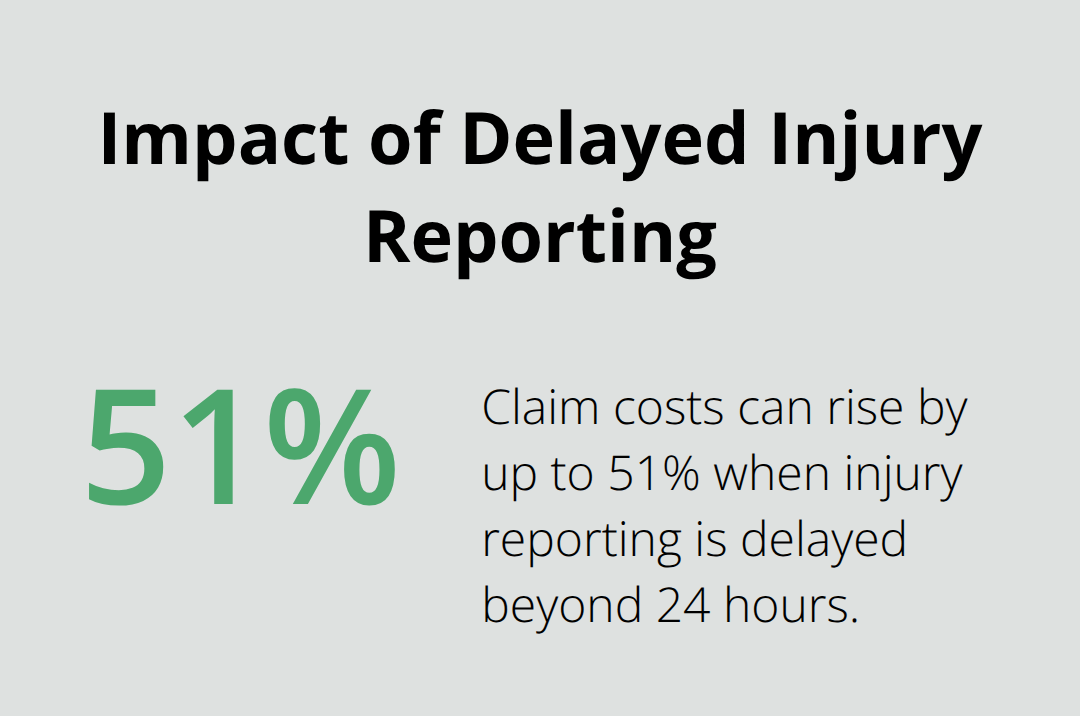
The BWC processes claims through a standardized 28-day investigation window after you file your First Report of Injury. During this period, a claims adjuster reviews your documentation, contacts your employer for their accident report, and decides whether to approve or deny your claim. The speed of this process depends entirely on how complete your initial submission is. Sedgwick Managed Care Ohio data from 2020 to 2024 shows that delayed injury reporting to your employer increases claim duration significantly, and the National Council on Compensation Insurance reports that claim costs can rise by up to 51% when reporting is delayed beyond 24 hours. This means the clock starts ticking the moment you get hurt-not when you file paperwork.
Filing Deadlines and Appeal Windows
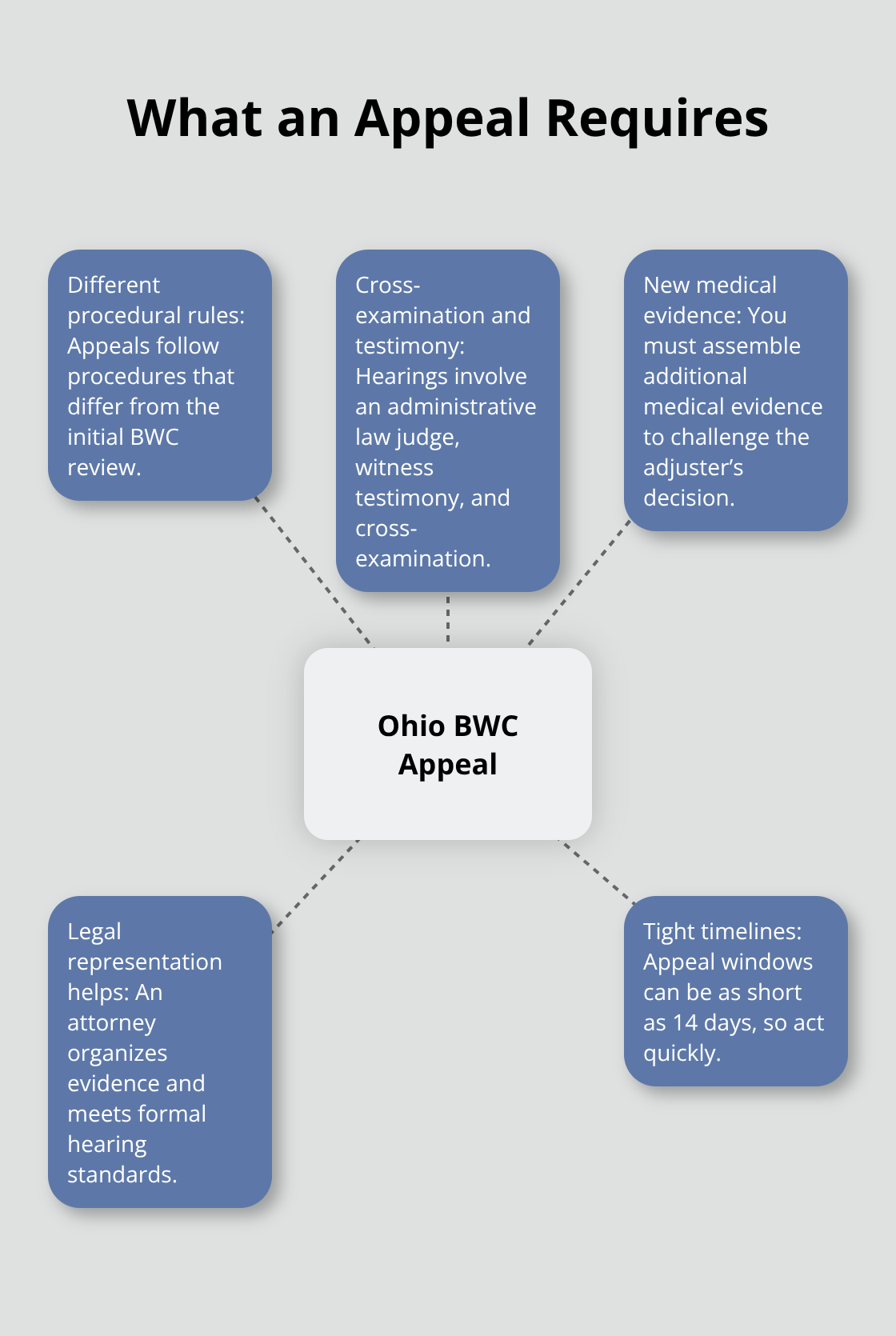
The filing deadline itself is one year from the date of injury for work-related accidents, though the BWC strongly recommends filing within 30 days. After the 28-day investigation closes, if your claim is denied, you have a limited appeal window (sometimes as short as 14 days) to request a hearing with the Industrial Commission of Ohio. This is where the process becomes adversarial. Unlike the initial BWC review, the appeal involves an administrative law judge, witness testimony, and cross-examination.
Medical-Only Versus Lost-Time Claims
If you receive approval, you enter either medical-only status or lost-time status depending on whether you miss more than eight days of work. Medical-only claims cover treatment costs only, while lost-time claims include Temporary Total Disability payments calculated at roughly two-thirds of your Average Weekly Wage. The BWC assigns a Managed Care Organization to coordinate your medical care once eligibility appears, and this MCO can become a bottleneck if they deny treatment requests.
Preparing for What Comes Next
Understanding this structure upfront helps you prepare documentation strategically and avoid the common pitfall of incomplete filings that restart the 28-day clock. The next section walks you through exactly what documentation you need to gather and how to report your injury to your employer in a way that protects your claim from the start.
How to File Your Claim Without Delays
Report Your Injury Immediately
Report your injury to your employer within 24 hours of it happening. This is not a suggestion-it’s the single most important action you can take to protect your claim. Sedgwick Managed Care Ohio data from 2020 to 2024 shows that delayed reporting directly correlates with longer claim durations, and the National Council on Compensation Insurance found that claim costs rise by up to 51% when you wait beyond 24 hours. When you report, give your supervisor or HR a detailed written account via email or in person, specifying exactly what you were doing, what equipment was involved, which body parts hurt, and any environmental hazards present.
Request an accident report form from your employer and keep a copy for your records with the date and time you submitted it. This paper trail proves you reported promptly and establishes credibility from day one. If your employer resists creating a written record, document the resistance itself by sending a follow-up email summarizing what you told them verbally and when you told them.
Gather Documentation Strategically
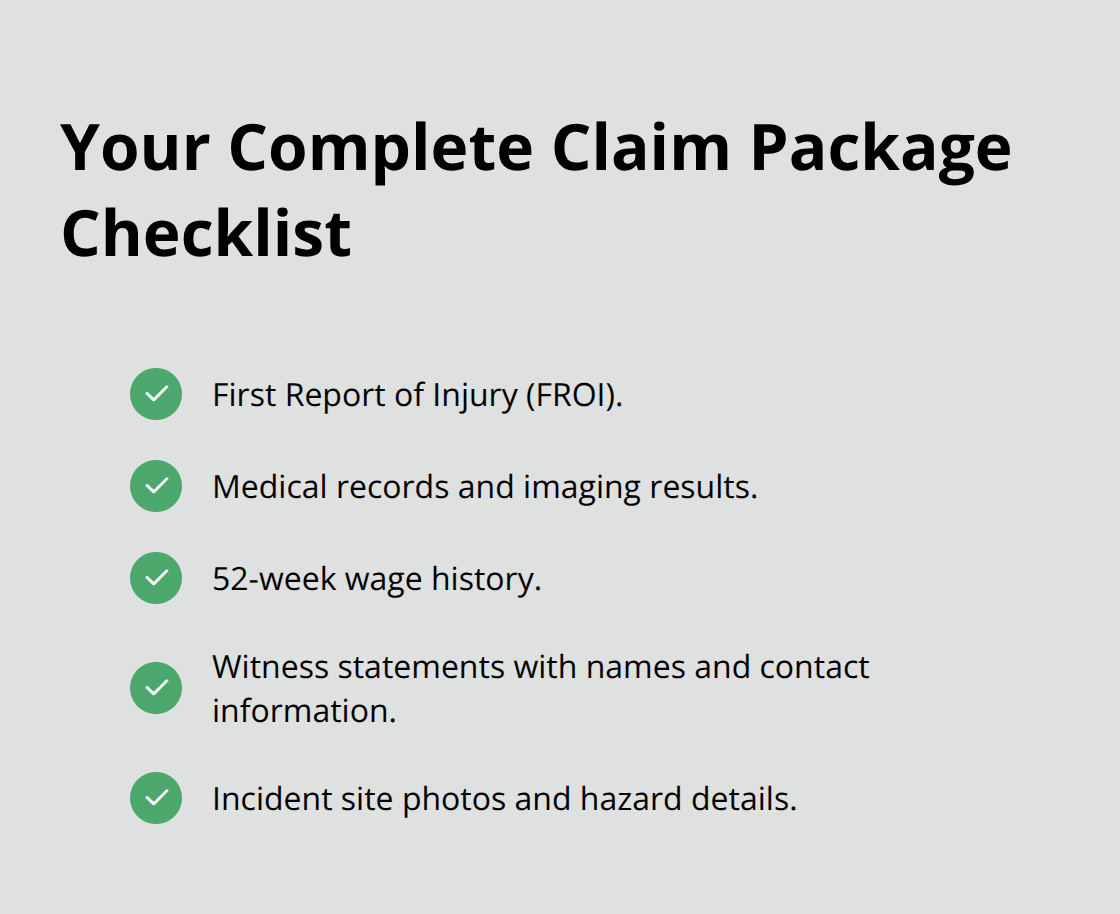
Seek treatment the same day if possible and tell the provider the injury is work-related so the medical records clearly show prompt treatment. Collect your wage history for the 52 weeks before the injury, all medical reports and imaging results, witness statements with names and contact information, and any photographs of the incident site or hazards. Organize these documents chronologically in a secure location with backups.
Complete the First Report of Injury form with precise details: the exact mechanism of injury, your doctor’s diagnosis, the exact date and time of the incident, witness names, and your average weekly wage calculation. Vague descriptions invite scrutiny; instead, specify what you were doing, what equipment was involved, whether witnesses saw it, and your immediate and after-injury symptoms.
Submit Your Complete Claim Package
Submit everything together through the BWC online portal-incomplete submissions restart the 28-day investigation clock. Upload the FROI, medical records, wage history, witness statements, and incident documentation as one package. The BWC processes online submissions faster than paper, so avoid filing piecemeal.
After submission, monitor the online portal through OHID by creating an account with ID.me verification, and respond to any BWC requests for additional information within 10 to 14 days. Set up direct deposit for payments to receive benefits within 1 to 2 business days after processing.
Understand What Happens Next
If your claim receives approval, a Managed Care Organization will be assigned to coordinate your medical care. If denied within the 28-day window, you have a limited appeal window (sometimes as short as 14 days) to request a hearing with the Industrial Commission of Ohio. The appeal process follows different rules and timelines than the initial BWC review, and this is where legal representation can help assemble new medical evidence and prepare for a hearing.
What Mistakes Cost You the Most
The gap between a claim that receives approval and one that faces denial often comes down to three specific errors that appear repeatedly in BWC files. Delayed reporting to your employer within the first 24 hours remains the single biggest claim killer. Sedgwick Managed Care Ohio data from 2020 to 2024 confirms that workers who wait even a few days to report their injury face substantially longer claim investigations and higher scrutiny from the adjuster. The National Council on Compensation Insurance reports claim costs rise by up to 51% when reporting occurs beyond 24 hours, and that financial impact shows up in your case file as a credibility problem. When you delay reporting, the BWC assumes you either exaggerate the injury or hide something about how it happened. That assumption stays in your file throughout the entire process.
Incomplete Documentation Restarts the Clock
The second major mistake involves submitting incomplete or inaccurate information on your First Report of Injury form. Workers often provide vague descriptions like “my back hurt” or “I fell at work” without specifying what they were actually doing, what equipment was involved, or which body parts were affected. The BWC adjuster cannot read your mind during those 28 investigation days. Vague injury descriptions force the adjuster to contact your employer multiple times for clarification, which restarts the clock and gives your employer more opportunities to dispute the claim. Inaccurate wage calculations on the FROI form create a separate problem-if you understate your average weekly wage, your benefits get calculated lower even after approval, and correcting this requires filing an appeal.
Using Non-Certified Providers Leaves You Unprotected
The third critical mistake involves seeing a provider who isn’t on the BWC approved list. When you use a non-certified medical provider, that provider’s bills often go unpaid, leaving you responsible for the debt. This also creates gaps in your medical record because those treatment notes may not make it into your official claim file, which weakens your case if you need to appeal a denial.
Missing Deadlines and Ignoring Requests
Many injured workers fail to respond quickly enough when the BWC requests additional information during the investigation. The BWC typically gives you 10 to 14 days to submit missing documents, wage stubs, or clarifications, and missing that deadline can result in an automatic denial. Workers miss payment issues, claim terminations, and important notices because they never created an OHID account or checked their online portal. If you move and don’t update your address in the system, critical notices go to your old address and you miss the 14-day appeal window entirely.
Appeals Require More Than Good Intentions
The final mistake worth highlighting involves handling an appeal without legal representation after a denial. The appeal process with the Industrial Commission of Ohio operates under completely different procedural rules than the initial BWC review, requires cross-examination of witnesses, and demands new medical evidence to overturn the adjuster’s decision. Workers who try this alone often stumble on technical filing requirements or fail to present medical evidence in the format the judge expects. An attorney who handles workers’ compensation appeals understands these procedural differences and can assemble evidence strategically to maximize your chances of success.
Final Thoughts
Filing a BWC claim in Ohio succeeds when you act fast, document thoroughly, and respond promptly to every request. The 24-hour reporting window, complete First Report of Injury form, and organized documentation package determine whether you receive approval or face denial. Delayed reporting costs you credibility and money, incomplete submissions restart the investigation clock, and non-certified providers leave you paying medical bills out of pocket.
The appeal process after a denial operates under completely different rules than the initial BWC review, and you’ll face an administrative law judge, cross-examination of witnesses, and strict procedural requirements that trip up workers handling appeals alone. This is where legal representation makes a measurable difference-an attorney who handles workers’ compensation appeals understands how to present medical evidence in the format judges expect, file motions correctly, and cross-examine the employer’s witnesses. The Industrial Commission of Ohio sees hundreds of appeals, and the ones that succeed typically involve experienced legal counsel.
At Robin J Peterson Company, LLC, we represent injured workers throughout the Cleveland, Akron, and Canton areas who are navigating BWC claim filing Ohio and fighting denials with the Industrial Commission. Contact us for a free consultation to understand your options without financial risk, and let us handle the procedural complexity so you can focus on recovery.