
Getting injured at work in Ohio can feel overwhelming, especially when you’re unsure where to turn for answers. We at Robin J Peterson Company, LLC understand that navigating Ohio workers comp resources isn’t straightforward, and many workers don’t know what support is actually available to them.
This guide walks you through the government agencies, legal options, and professional help that can make a real difference in your claim.
How Ohio’s Workers’ Compensation System Actually Works
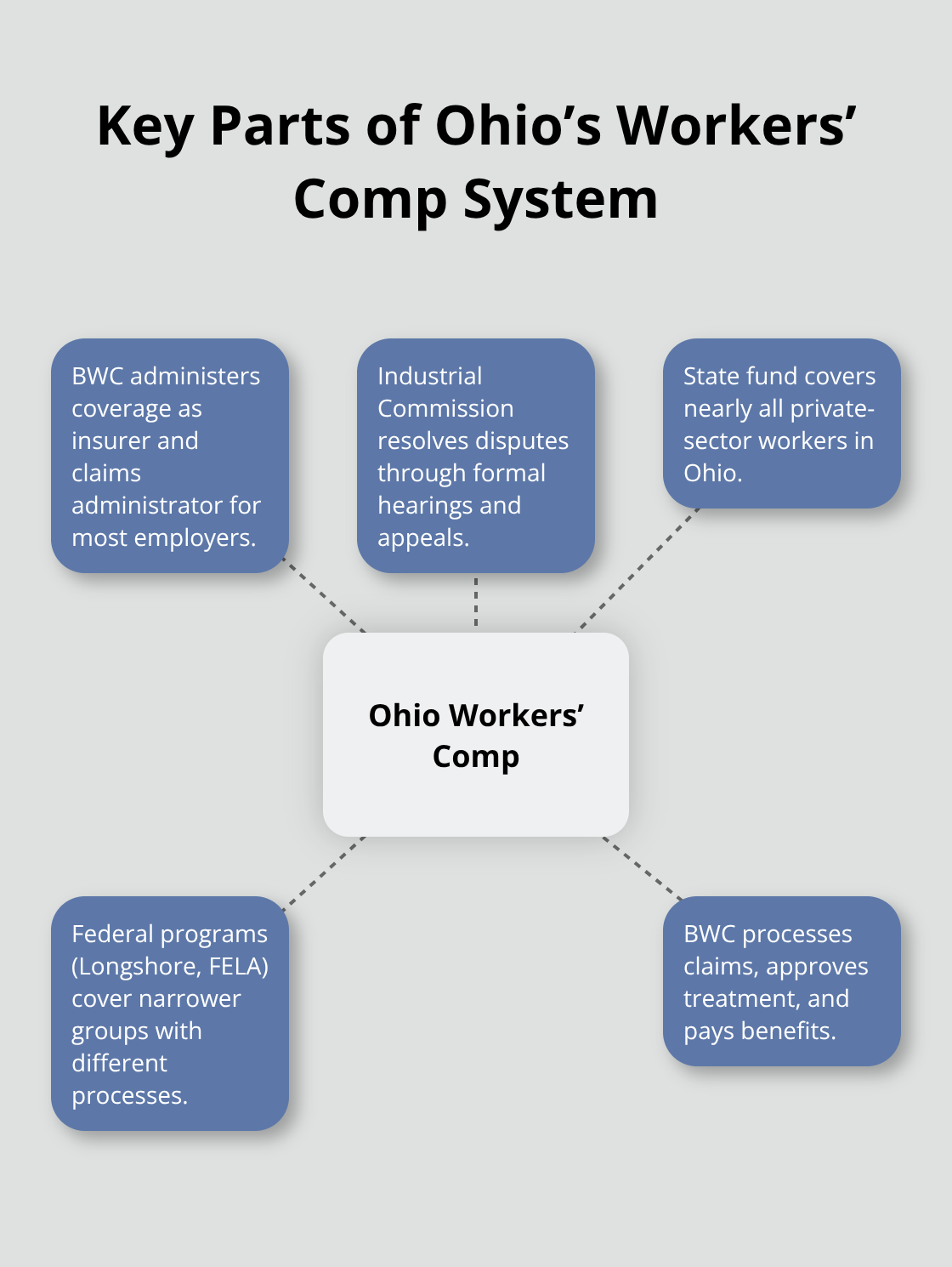
The Ohio Bureau of Workers’ Compensation administers coverage for work-related injuries across the state, operating as both an insurance provider and claims administrator for most employers. Unlike federal workers’ comp, which covers specific industries like maritime workers under the Longshore and Harbor Workers’ Compensation Act or railroad employees under the Federal Employers’ Liability Act, Ohio’s system covers nearly all private-sector workers through the state fund. The BWC processes claims, approves medical treatment, and manages benefit payments, while the Industrial Commission of Ohio handles disputes when injured workers disagree with the BWC’s decisions.
The Exclusive Remedy Framework
Many workers mistakenly believe they can sue their employer for a workplace injury, but Ohio’s workers’ comp system operates under a no-fault framework. Accepting workers’ comp benefits typically prevents lawsuits against employers. This trade-off gives injured workers guaranteed access to medical care and wage replacement without having to prove negligence, but it also limits recovery compared to personal injury litigation.
What Federal Workers’ Comp Actually Covers
Federal workers’ comp applies to a narrow slice of workers, not the majority. Longshoremen and harbor workers covered under federal law receive benefits through a different process than Ohio state workers, with cases sometimes involving maritime employers or federal contractors. Railroad workers under the Federal Employers’ Liability Act can actually pursue lawsuits against their employers-a major difference from Ohio’s system. Defense-base workers and federal employees have separate programs entirely. Most Ohio workers fall under the state system, which means understanding the BWC’s specific rules and timelines matters far more than knowing federal frameworks. The confusion between state and federal systems leads workers to miss deadlines or file claims incorrectly.
Common Misconceptions That Cost Workers Money
One persistent misconception is that workers’ comp only covers sudden injuries, not conditions that develop gradually on the job. Ohio’s system does cover occupational diseases and conditions that arise from work activities, though proving the connection requires documentation. Another false belief is that workers must report injuries within a specific window or lose eligibility entirely. While prompt reporting helps, the actual deadline rules are more nuanced than most workers realize.
Some injured workers avoid filing claims because they fear retaliation or believe their employer will face penalties, but Ohio law protects workers from retaliation. Employers’ premiums typically reflect their claims history rather than being punished for individual injuries. Workers also frequently underestimate the value of professional guidance early in the process, thinking they can navigate the BWC’s requirements alone. This assumption often leads to missed benefit opportunities or inadequate settlements.
Why Professional Guidance Matters From Day One
The complexity of Ohio’s workers’ comp system means that early decisions shape your entire claim. An attorney experienced in Ohio workers’ comp law can identify what benefits you actually qualify for and help you avoid costly mistakes. The Industrial Commission of Ohio and the BWC have specific procedures and deadlines that workers must follow, and missing these steps can result in denied claims or reduced benefits. Getting qualified legal representation early protects your rights and maximizes your recovery.
Where to Find Official Help for Your Ohio Workers Comp Claim
The Ohio Bureau of Workers’ Compensation Website
The Ohio Bureau of Workers’ Compensation website serves as your primary resource for filing claims, tracking status, and accessing forms, but most injured workers never fully explore what’s actually available there. The BWC operates a Help Center with step-by-step guidance on filing claims, understanding your rights, and navigating appeals. You can locate a nearby service office for in-person assistance at 30 W. Spring St. in Columbus or one of their regional locations. The site also provides access to find approved medical providers, report suspected fraud, and apply for safety services if you’re an employer. The BWC offers real-time claim status updates through their online portal, which means you don’t have to call repeatedly to learn where your claim stands. Translation services are available if English isn’t your first language, and accessibility features ensure you can navigate the site regardless of disability. The News section announces policy changes and new resources before they affect your claim-most workers overlook this entirely.
The Industrial Commission and the Ombuds Office
The Industrial Commission of Ohio handles the disputes that matter most. When the BWC denies your claim or you disagree with their decision on benefits, the Commission resolves those cases through formal hearings and appeals. The Ombuds Office within the Commission offers independent assistance to explain processes and resolve concerns without charging you a fee, which means you have a neutral party to turn to if you feel the system isn’t working fairly. This distinction matters: the BWC processes claims and makes initial decisions, while the Commission only gets involved when disagreement arises.
Filing Your Claim: Steps That Actually Work
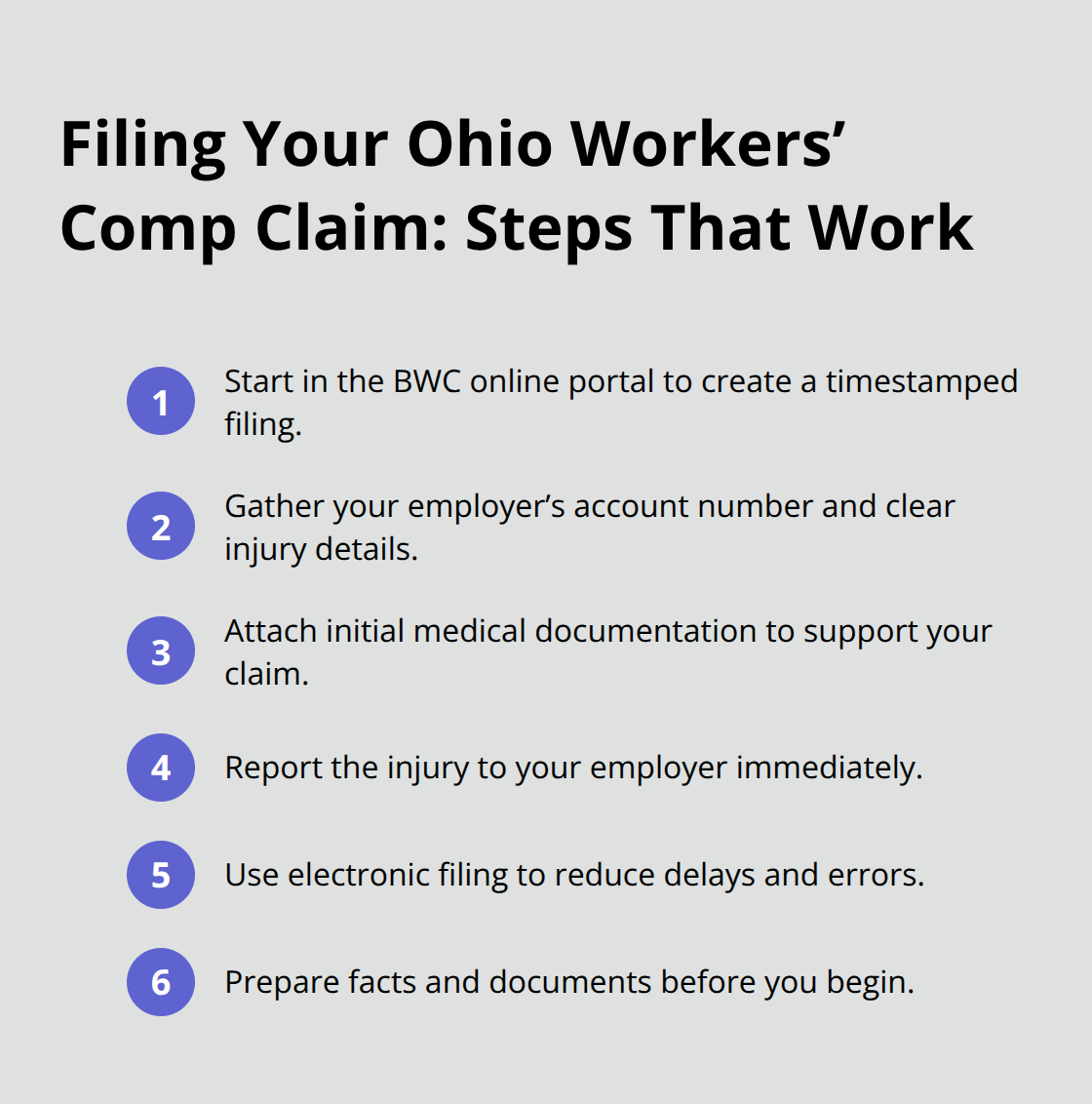
Filing a claim in Ohio requires specific steps that most workers get wrong on their first attempt. Start through the BWC’s online portal rather than mailing forms, since electronic filing creates a documented timestamp and reduces processing delays. You’ll need your employer’s account number, details about how the injury occurred, and documentation of medical treatment-have these ready before you start. Report your injury to your employer immediately, as prompt notification protects your claim and demonstrates good faith, even though the actual legal deadline provides more time than most employers claim.
Understanding Timelines and Appeal Rights
Once filed, the BWC has specific timelines for approving or denying your claim, and knowing these deadlines matters because missing procedural windows can forfeit your right to appeal. If the BWC denies your claim or offers benefits you believe are inadequate, you have the right to request a hearing before the Industrial Commission. The Commission’s procedures differ significantly from the initial BWC claim process, with formal evidence rules and procedural requirements that catch unrepresented workers off guard. This is where experienced legal representation becomes invaluable-the difference between navigating these procedures alone and having someone guide you through them shapes your entire outcome.
Legal Help and Professional Guidance
Most injured workers wait too long to contact an attorney, assuming they can handle their Ohio workers’ comp claim alone until something goes wrong. The truth is straightforward: hiring an experienced attorney early in your claim prevents costly mistakes that become irreversible once the BWC makes an initial decision.
When You Need an Attorney Right Away
You need legal representation immediately if the BWC denies your claim, offers benefits you believe don’t match your injury’s severity, or if your employer disputes that the injury occurred at work. You also need an attorney if you face a hearing before the Industrial Commission, since these formal proceedings follow strict procedural rules that unrepresented workers consistently mishandle. The Industrial Commission’s hearing process involves presenting evidence, cross-examining witnesses, and understanding legal standards for proof that differ dramatically from the initial claim filing. Workers who attempt this alone frequently lose benefits they actually qualified for simply because they didn’t present evidence correctly or missed critical procedural deadlines.
If your injury prevents you from returning to your previous job, an attorney can help you pursue vocational rehabilitation benefits or argue for wage loss compensation that the BWC might otherwise overlook.
What a Workers’ Compensation Attorney Actually Does
An experienced workers’ compensation attorney does far more than represent you at a hearing. Your lawyer identifies what benefits you actually qualify for based on the specific details of your injury, your job history, and Ohio’s compensation formulas, which most workers never fully understand on their own. Attorneys negotiate with the BWC to ensure your approved medical treatment covers what you actually need rather than what the BWC initially authorizes, potentially saving months of delays in getting proper care.
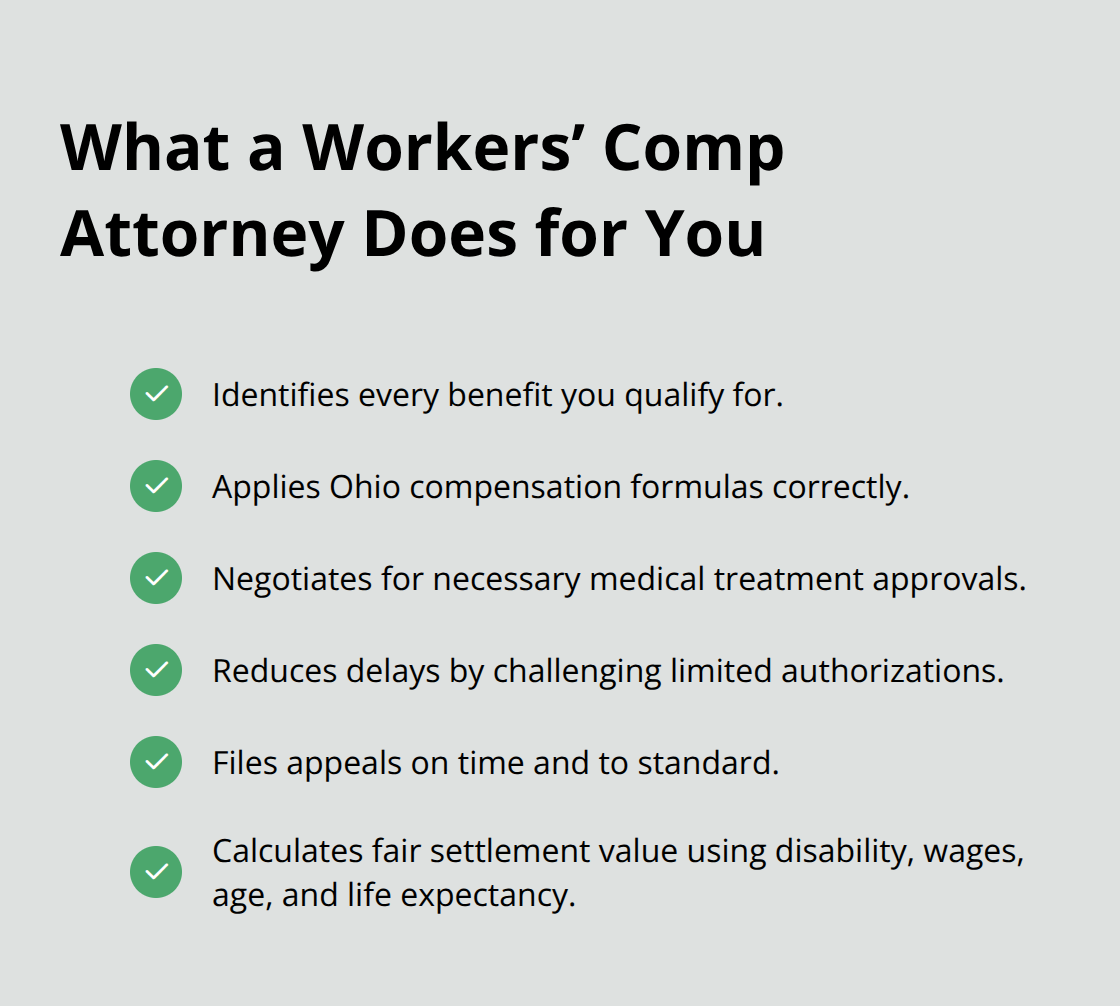
They also handle the technical requirement of filing appeals within strict deadlines (something that sounds simple but trips up unrepresented workers constantly). If your case involves a settlement, an attorney calculates what your claim is genuinely worth based on your permanent disability rating, age, wage history, and life expectancy, rather than accepting the first offer the BWC presents.
Finding Qualified Legal Representation in Ohio
Finding qualified representation in Ohio means contacting firms that specifically handle workers’ compensation rather than general practice attorneys who dabble in workers’ comp cases. Try asking potential attorneys about their experience with the specific Industrial Commission district where your case will be heard, since each district has different judges and slightly different procedural practices that matter enormously. Attorneys with deep roots in Ohio’s workers’ compensation system (particularly those serving the Cleveland, Akron, and Canton areas) understand how regional BWC offices operate and how local judges approach common claim disputes.
Final Thoughts
Ohio workers comp resources exist throughout the system, but accessing them effectively requires more than knowing they’re available. The Ohio Bureau of Workers’ Compensation provides foundational tools through their Help Center and online portal, while the Industrial Commission and Ombuds Office resolve disputes when disagreements arise. These agencies administer the system neutrally rather than advocating for your specific interests.
An experienced workers’ compensation attorney transforms how you navigate Ohio’s system by identifying what you actually qualify for, negotiating for appropriate medical care, and protecting you from procedural deadlines that cost benefits. The difference between handling your claim alone and securing professional support often produces substantially better outcomes through systematic knowledge of how Ohio’s workers’ comp system operates. Early guidance prevents costly mistakes that become irreversible once the BWC makes initial decisions.
Contact Robin J Peterson Company, LLC to discuss your situation and protect your rights from the start. We serve injured workers throughout the Cleveland, Akron, and Canton areas with dedicated focus on Ohio workers’ compensation law.