
Workplace injuries happen fast, but filing your Ohio workplace injury claim doesn’t have to be complicated. We at Robin J Peterson Company, LLC have helped countless workers navigate the process and get the benefits they deserve.
This guide walks you through each step, from reporting your injury to your employer to submitting your claim to the Ohio Bureau of Workers’ Compensation. You’ll also learn the mistakes that slow down claims and when to bring in legal help.
How Ohio’s Workers’ Compensation System Actually Works
The Ohio Bureau of Workers’ Compensation Administers Most Claims
The Ohio Bureau of Workers’ Compensation administers the vast majority of workplace injury claims in the state, operating as a centralized system that handles both medical benefits and wage replacement. The BWC isn’t optional-most employers in Ohio must carry workers’ compensation insurance through the state fund or an approved private insurer. This system differs fundamentally from federal workers’ compensation, which applies only to federal employees and certain maritime workers. If you work for a private employer, a municipality, or a school district in Ohio, the state BWC system governs your claim. The federal system exists in parallel but covers only specific populations, so understanding which system applies to you matters from the start.
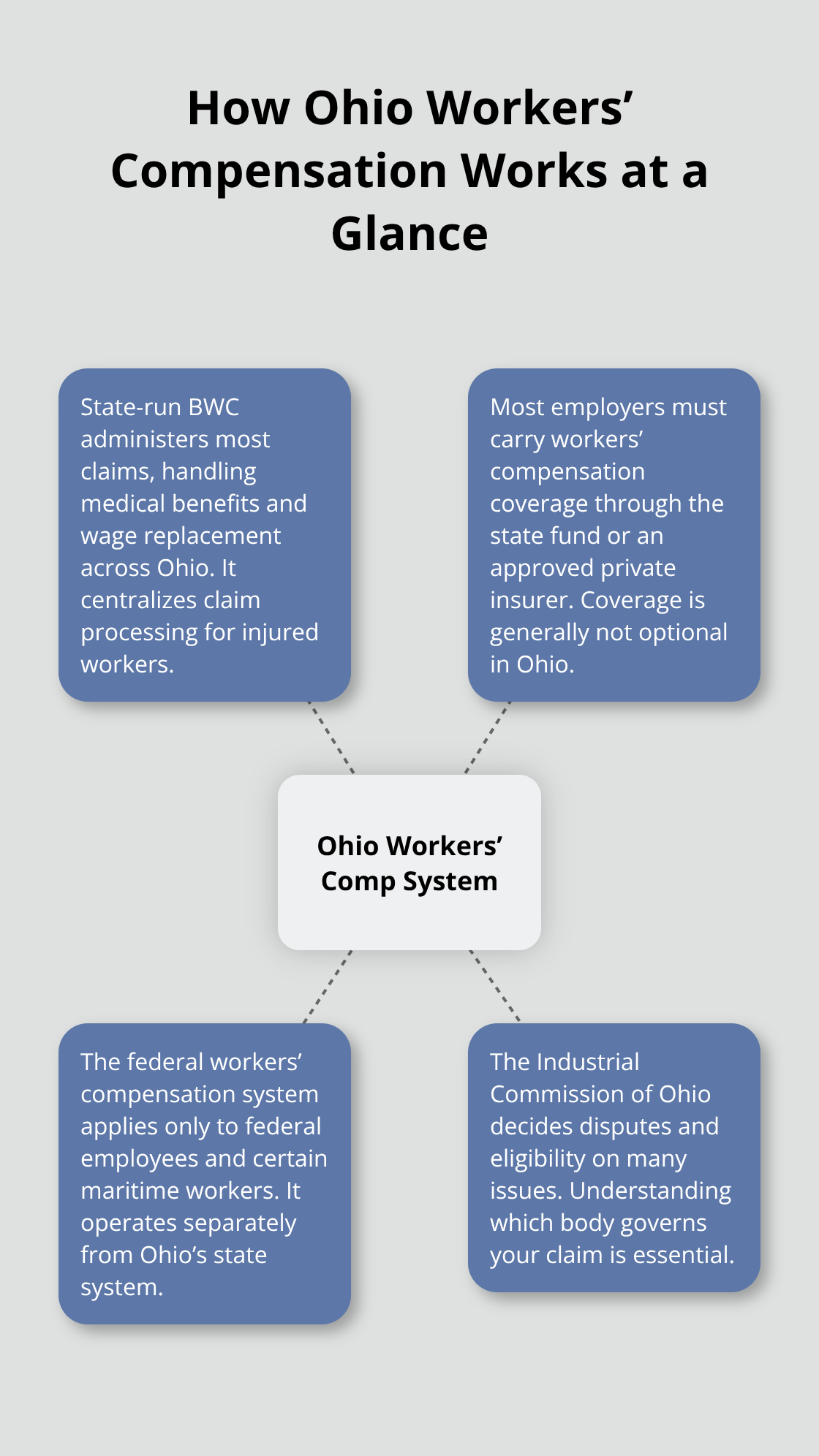
Most injured workers in Ohio fall under the state system, which means the Ohio Bureau of Workers’ Compensation and the Industrial Commission of Ohio determine your eligibility and benefits.
What Rights You Have as an Injured Worker
Your rights as an injured worker in Ohio are substantial, though they come with specific requirements you must follow. Ohio operates a no-fault system, meaning you don’t have to prove your employer was negligent to receive benefits-you only need to show the injury happened during work-related duties and was serious enough to require medical treatment and time off work. The system covers four main categories of injuries: musculoskeletal injuries like lower back strains and rotator cuff tears, traumatic brain injuries from falls or being struck by objects, fractures from equipment accidents or falls, and occupational diseases from workplace exposure to substances like asbestos or lead.
Your Access to Information and Appeals
You have the right to access your claim file and all medical records used in your claim, to appeal a denial, and to request a hearing before the Industrial Commission if your claim is rejected. The Ombuds Office exists specifically to help navigate disputes with the BWC. However, the system also requires you to report your injury promptly, provide accurate medical documentation, and meet filing deadlines. Delays in reporting your injury to your employer or the BWC significantly weaken your claim and can result in denial of benefits. Many workers make the mistake of assuming they understand the process without consulting official resources-the Ohio BWC website provides forms like the First Report of Injury and detailed procedural guidance that directly impacts your outcome. Understanding these requirements upfront puts you in the strongest position to move forward with your claim.
How to Report Your Injury and File Your Claim
Report your injury to your supervisor or human resources immediately after it happens. Speed matters because the clock starts ticking on several fronts. Your employer typically has a responsibility to file the First Report of Injury with the Ohio Bureau of Workers’ Compensation, but don’t assume they will without confirming it. Contact the BWC directly at 30 W. Spring St., Columbus, OH 43215-2256 or through their online application portal to verify your claim has been filed. This dual notification approach protects you because delays in reporting significantly weaken your claim.
Document Everything Right Away
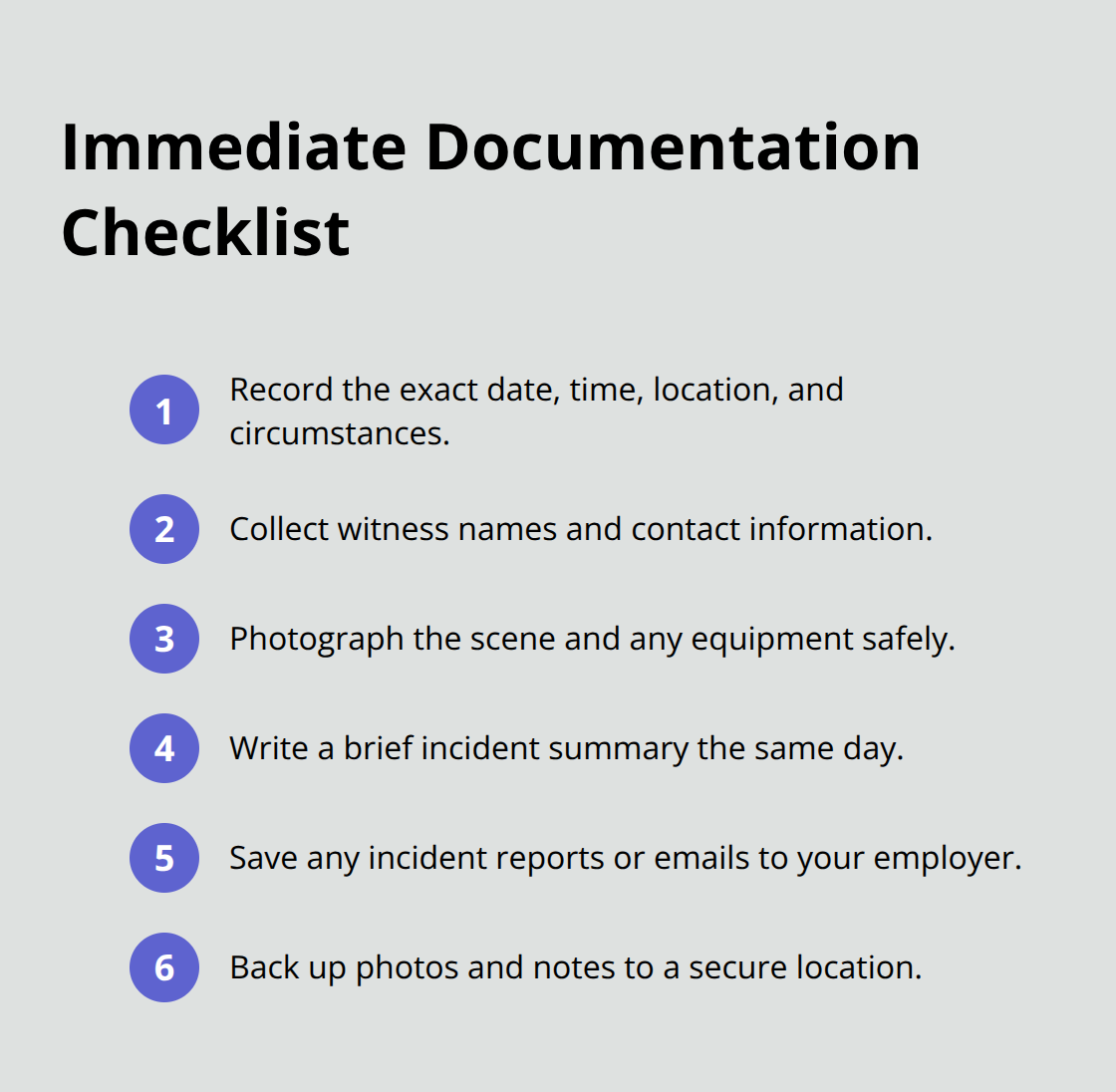
You must document the exact date, time, location, and circumstances of your injury immediately while details are fresh. If witnesses were present, collect their names and contact information right away. Take photographs of the accident scene and any equipment involved if you can do so safely. This documentation becomes critical evidence later, especially if your employer or the BWC questions whether the injury actually happened during work-related duties.
Seek Medical Attention and Build Your Medical Record
Prompt medical attention matters more than you might think. The medical record you create becomes your primary proof that the injury happened and was serious enough to warrant treatment. When you see your healthcare provider, describe all symptoms-pain, numbness, reduced mobility, or any other effects you’re experiencing. Request that your physician document the work-related cause of the injury in your medical records. Keep copies of every medical bill, prescription, imaging report, and treatment note. Many workers lose claims because their medical documentation is incomplete or doesn’t clearly establish the connection to their job.
Attend all follow-up appointments your doctor recommends, as missed appointments can give the BWC grounds to deny your claim or reduce your benefits. Maintain a symptom journal that documents daily pain levels, functional limitations, and how the injury affects your work capacity. Track all out-of-pocket expenses (travel to medical appointments, medical supplies, and other recovery-related costs) to ensure full reimbursement.
Submit Your Claim Through the Proper Channels
The online application through the Ohio Bureau of Workers’ Compensation provides the fastest way to initiate your claim, though you can also submit the First Report of Injury by mail. Complete the form accurately with precise details about your injury, job duties at the time, and how the incident occurred. Submit your claim as soon as possible after reporting to your employer. Once filed, the BWC will assign a claims adjuster who investigates your case.
Request copies of everything the BWC receives about your claim, including medical records, investigation reports, and any correspondence. Ohio law gives you the right to access your complete claim file. Do not sign settlement documents or settlement agreements without fully understanding what you’re agreeing to, as signing away rights can lock you into unfavorable terms.
Know Your Appeal Rights Before Problems Arise
If the BWC denies your claim or disputes coverage, you have the right to appeal and request a hearing before the Industrial Commission of Ohio. Many workers navigate this process alone and miss critical deadlines or procedural requirements that result in benefit denials. This is where the complexity increases significantly, and having professional guidance becomes invaluable as you move forward.
What Mistakes Slow Down Your Claim
Delays happen in Ohio workers’ compensation claims for predictable reasons, and most are entirely preventable. The first mistake workers make is waiting too long to report their injury to their employer or the BWC. Ohio law doesn’t specify an exact deadline for reporting, but delays create skepticism about whether the injury actually happened during work-related duties. The longer the gap between when your injury occurred and when you report it, the harder it becomes to prove the connection to your job.
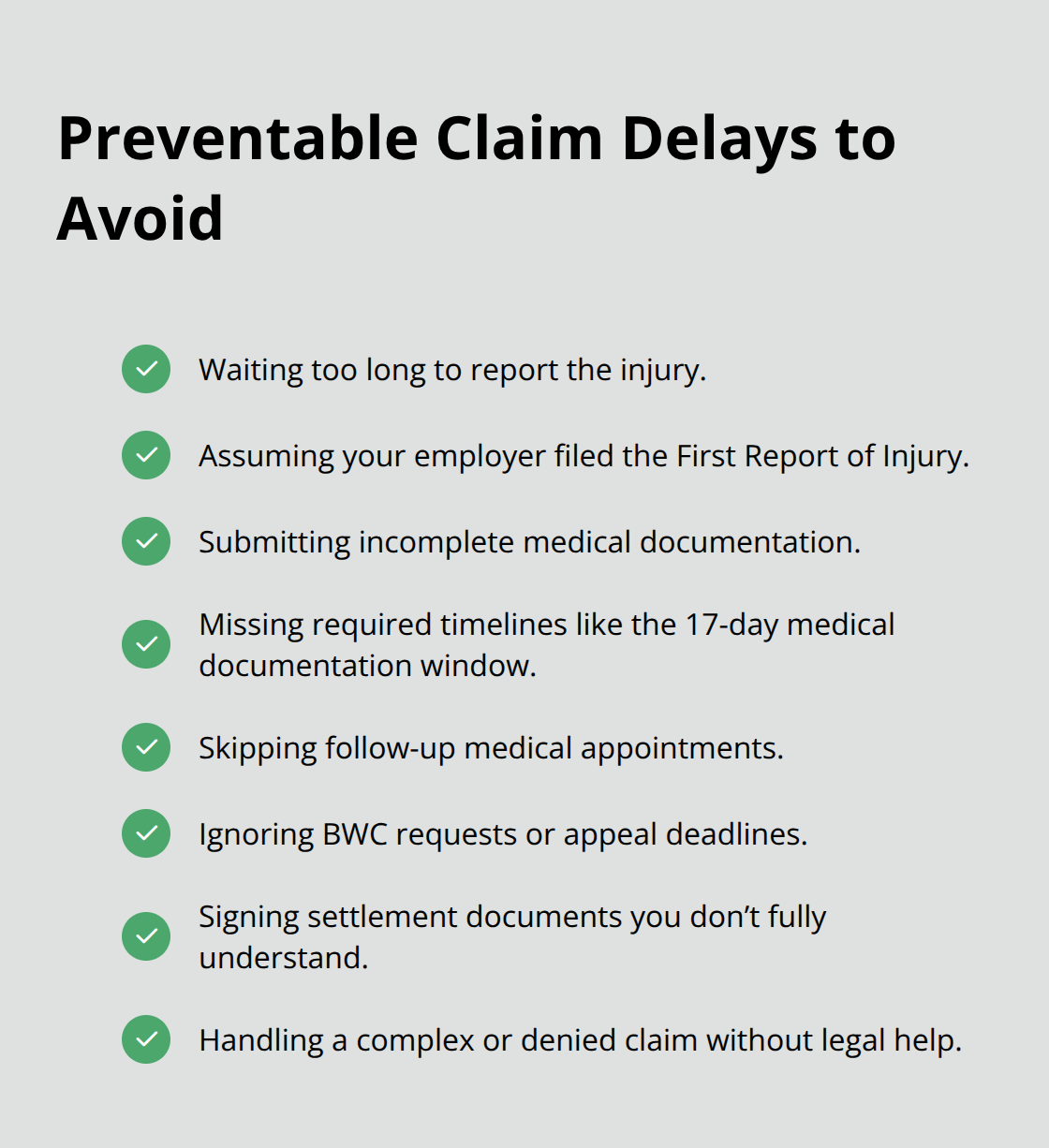
Witnesses disappear, memory fades, and the BWC questions your credibility. Report your injury immediately to your supervisor or human resources, then contact the Ohio Bureau of Workers’ Compensation directly to confirm your claim was filed. Don’t assume your employer will handle this without verification.
Incomplete Medical Documentation Weakens Your Case
Another critical mistake is incomplete medical documentation. Many workers describe only their primary symptom to their doctor-lower back pain, for example-without mentioning secondary effects like numbness, reduced mobility, or sleep disruption. The BWC uses your medical records to determine not just whether you’re injured, but how serious your injury is and what benefits you deserve. Describe every symptom you experience, even minor ones that seem unrelated. Request that your physician explicitly document the work-related cause of your injury in your medical records. Keep originals of every medical report, bill, and prescription. Ohio workers compensation requires specific medical documentation within 17 days of claim submission to avoid denial. Workers who lose claims often have gaps in their medical documentation or records that don’t clearly establish the work connection.
Handling Complex Claims Without Legal Help
The third major mistake is handling a complex claim without legal help, especially once complications arise. Many workers file claims successfully on their own initially, but encounter problems when the BWC denies coverage, disputes the severity of their injury, or offers inadequate wage replacement. At that point, representing yourself against a government agency with its own procedures and legal standards puts you at a serious disadvantage. An Ohio workers’ compensation attorney understands the Industrial Commission’s hearing procedures, knows which evidence carries weight, and can identify when the BWC made procedural errors that strengthen your appeal. Consult with an attorney early if your claim involves a serious injury, if your employer contests the claim, or if the BWC initially denies coverage. Many workers’ compensation attorneys in Ohio offer free initial consultations, so the cost of getting professional guidance upfront is minimal compared to the risk of losing benefits you’re legally entitled to. The mistake isn’t hiring an attorney-it’s waiting until after problems develop to seek help.
Final Thoughts
Filing an Ohio workplace injury claim successfully requires three core actions: report your injury immediately, document everything thoroughly, and contact an attorney when complications arise. Speed matters because delays weaken your credibility with the BWC and make it harder to prove the injury happened during work-related duties. Complete medical documentation that clearly connects your injury to your job is non-negotiable, as vague or incomplete records are the primary reason claims get denied or underpaid.
We at Robin J Peterson Company, LLC represent injured workers throughout the Cleveland, Akron, and Canton areas, fighting to secure the benefits you’re legally entitled to. Whether your claim is straightforward or you face complications with the BWC or your employer, our experienced team can guide you through the process and protect your rights at every stage. Most workers handle straightforward claims on their own, but the moment your claim faces denial, disputes over severity, or inadequate wage replacement, professional representation becomes essential.
After you file your claim, stay organized and responsive by keeping copies of all medical records, correspondence from the BWC, bills, and your symptom journal. Attend all medical appointments and follow your doctor’s treatment recommendations, then respond promptly if the BWC requests additional information. Contact an attorney immediately if your claim is denied or you receive an inadequate settlement offer, as the Industrial Commission of Ohio handles appeals and professional representation significantly improves your chances of success.