
Workplace injuries happen fast, but the process of filing an Ohio BWC claim doesn’t have to be confusing. At Robin J Peterson Company, LLC, we’ve helped countless injured workers navigate this system and understand exactly what they need to do.
This guide walks you through each step, from knowing when to file to gathering the right documentation and submitting your claim to the correct agency.
When to Report Your Injury
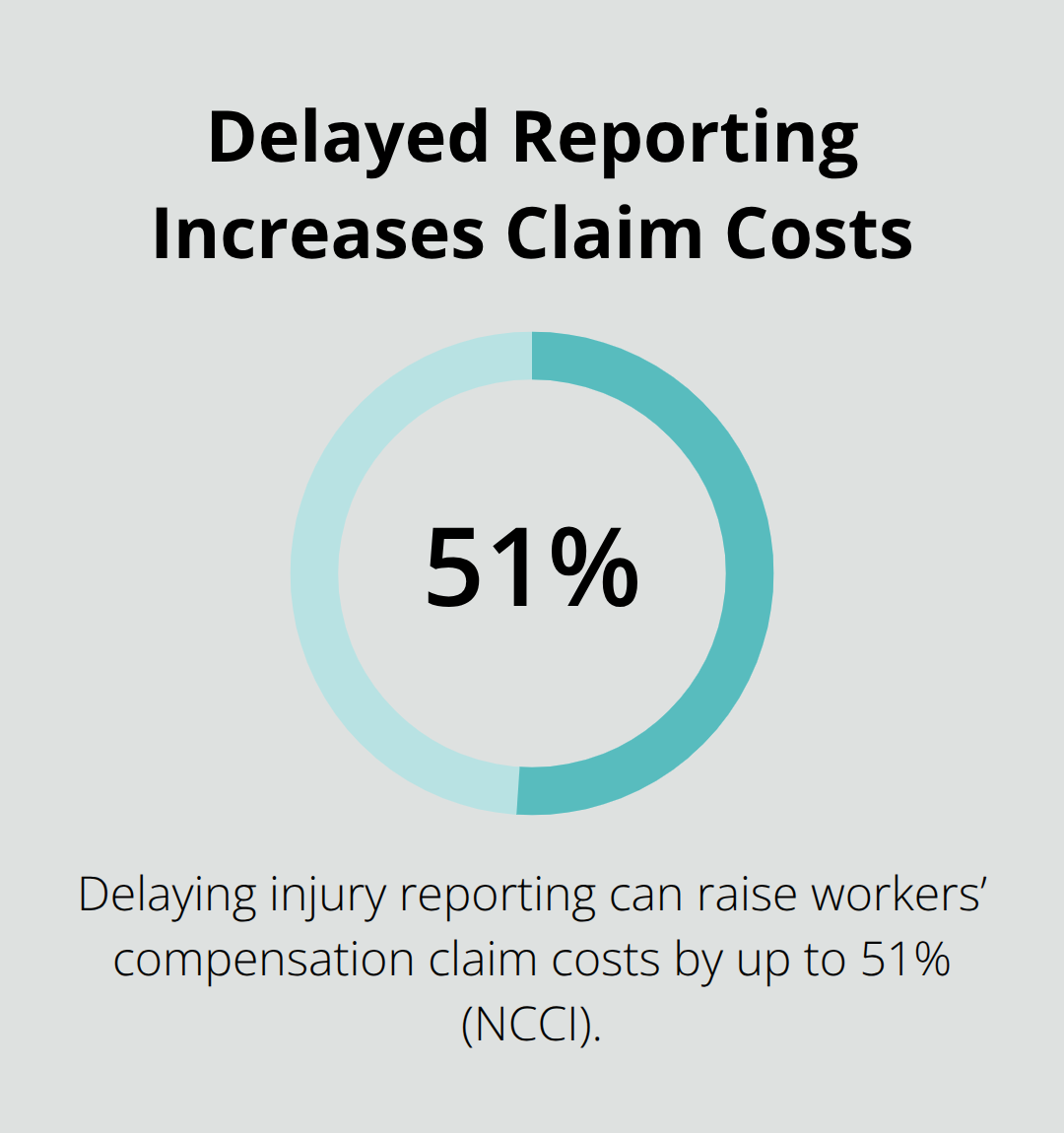
Report your workplace injury to your employer within 24 hours. This isn’t a suggestion-it’s the single most important action you can take to protect your claim. Delayed reporting directly correlates with longer claim durations and more lost workdays, according to data from Sedgwick Managed Care Ohio between 2020 and 2024. The National Council on Compensation Insurance found that delaying injury reporting raises workers’ compensation claim costs by up to 51 percent.
When you notify your employer immediately, you trigger the First Report of Injury filing with the Ohio Bureau of Workers’ Compensation, which is the mandatory starting point for all claims.
Filing the First Report of Injury
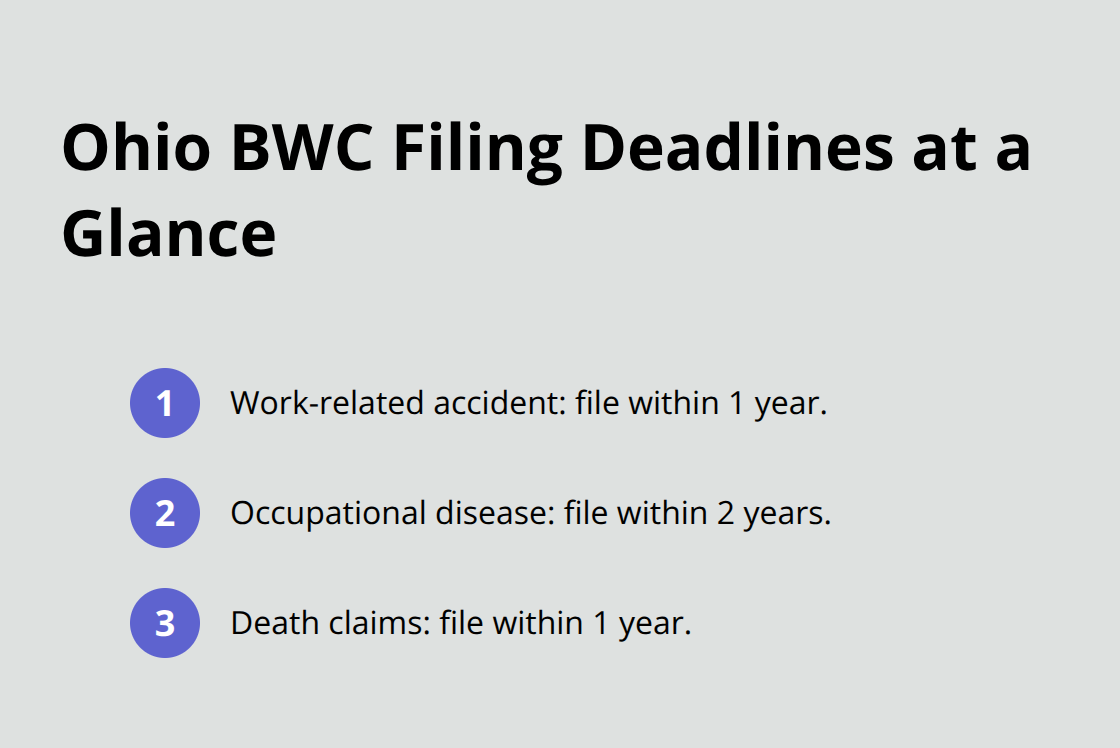
Your employer or their managed care organization must file the FROI form to officially begin the process. If you’ve already received medical treatment, confirm with the BWC that a claim has been filed-sometimes a healthcare provider files it on your behalf, but gaps do occur. Accuracy matters when the FROI is completed. Incomplete or incorrect information delays processing, so the form must include the exact date of your injury, your last day worked, a detailed description of what happened, the medical treatment you received, and your employer’s signature. You have specific deadlines to work within: one year from the date of a work-related accident to file the FROI, two years for occupational diseases, and one year for death claims. Missing these deadlines results in claim denial, so act fast.
The 28-Day Investigation Window
The BWC has 28 days to investigate your claim after submission and will request additional information from you, your employer, or your healthcare providers if needed. To avoid delays during this window, attend all medical appointments without exception, accurately report your symptoms every time, and promptly provide any records or information the BWC requests. Vague or incomplete injury descriptions rank among the most common mistakes that slow down processing. Instead of saying you hurt your back, explain exactly what you were doing, what equipment was involved, whether witnesses saw the incident, and what symptoms you felt immediately and afterward.
Documentation and Record-Keeping
Keep detailed written notes about the injury-time, location, tools involved, witness names, and photos of the area if possible. Store all claim documents in one secure location with backups. After the FROI is filed, monitor your claim status through the online BWC portal, where you can upload documents, check payments, and review official notices. If you disagree with a decision about your claim, you have the right to request a hearing with the Ohio Industrial Commission.
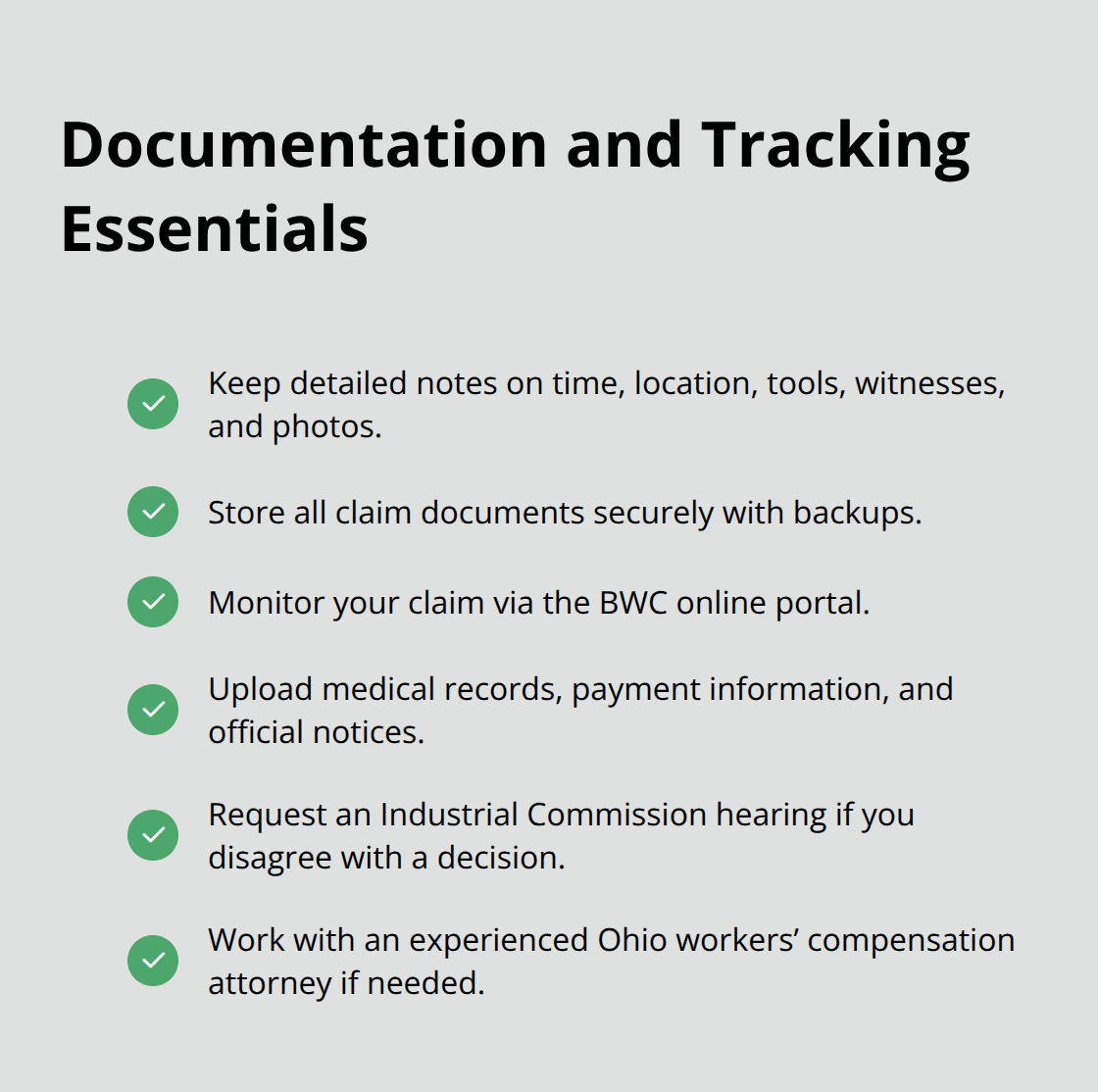
An experienced Ohio workers’ compensation attorney can guide you through this process, help you gather necessary evidence, and represent you in appeals if needed. With the investigation period underway and your documentation in place, the next phase involves understanding what evidence strengthens your position and how to present it effectively.
What Documentation Strengthens Your Ohio BWC Claim
Medical records form the backbone of your claim, and you must treat them as evidence, not just paperwork. Every visit to your doctor, physical therapist, or specialist creates a documented trail that connects your injury directly to your work. Request copies of all medical reports, imaging results, lab work, and treatment notes the moment you receive care. The Ohio Bureau of Workers’ Compensation reviews these records during the 28-day investigation window, so gaps or delays in obtaining them stall your entire claim. Don’t wait for the BWC to ask for records-gather them proactively and upload them through the online portal. Include any prescriptions filled, pharmacy receipts, and notes about how the injury affects your daily activities. When medical documentation is thorough and submitted early, the BWC completes investigations faster and approves claims with fewer follow-up questions.
Witness Statements Carry Real Weight
Witness statements from coworkers who saw the incident happen are far more powerful than you might think. The BWC investigates disputed claims by cross-checking narratives against records and witness statements, according to best practices in claim handling. If someone witnessed your injury, obtain their written account immediately while the memory is fresh. Include their name, job title, contact information, and a detailed description of exactly what they observed before, during, and after the incident. A vague witness statement saying you fell does almost nothing for your claim. A specific one stating that a coworker watched you slip on spilled hydraulic fluid near the press machine at 2:15 p.m. on the date of injury carries substantial weight. Photograph the incident location if possible, showing equipment, safety conditions, and hazards. These photographs combined with witness statements create a compelling factual record that contradicts any employer attempts to minimize or dispute the injury later.
Your Own Documentation and Employer Records
Create a detailed written log of the incident as soon as possible after it happens. Write down the exact time, location, tools or equipment involved, weather conditions if relevant, safety measures in place or missing, and your immediate symptoms. This contemporaneous account becomes essential evidence if the claim is disputed months later. Your employer’s records also matter significantly-shift schedules, job descriptions, safety training records, and prior incident reports all paint a picture of your work environment and duties. Request copies of your personnel file, including any safety certifications or training documentation. If your employer has incident report forms or safety logs, obtain those too. Organize all documents chronologically in one secure location with digital backups. When you meet with an attorney, having organized, dated documentation allows them to build your case efficiently and identify weak spots before the BWC does.
Moving Forward With Your Claim Package
You now have the evidence foundation in place. The next phase involves understanding how to submit this documentation to the right agency and what happens after the BWC receives your complete claim package.
Submitting Your Claim and Moving Through the System
Your complete claim package is ready, and now comes the critical step of getting it into the right hands at the right time. The Ohio Bureau of Workers’ Compensation processes claims filed online faster than paper submissions, so upload your FROI, medical records, witness statements, and incident documentation all at once through the BWC’s online portal rather than trickling them in over weeks. The BWC has 28 days from submission to investigate and issue a decision, but that timeline only holds if your documentation is complete and accurate from day one. Incomplete submissions restart the clock, meaning a missing witness statement or vague injury description costs you real time in your recovery process.
What Happens After You Submit
After you submit, the BWC adjuster assigned to your case will contact you, your employer, and your medical providers. Respond to every request immediately, even if you think the information is obvious or already provided. Adjuster communication typically comes by phone or through the online portal, so check both regularly and keep your contact information current with the BWC. If your claim receives approval, you’ll receive notice of benefits eligibility. If the BWC denies your claim, you have the right to appeal, and this is where understanding the Industrial Commission of Ohio becomes essential.
Understanding Your Appeal Rights
A claim denial does not mean your case is finished. The Industrial Commission of Ohio handles appeals, and you have the right to request a hearing where an administrative law judge reviews the evidence and the BWC’s decision. Many injured workers accept a denial without understanding that appeals exist, or they miss appeal deadlines because they did not know the timeline. You typically have 14 days to request a hearing after receiving a denial notice, so act immediately if you disagree with the decision. At the hearing, you present your evidence, witness testimony if available, and medical documentation to the judge. The judge then issues a decision that either overturns the BWC’s denial or upholds it.
When You Need Legal Representation
This is precisely where an experienced Ohio workers’ compensation attorney makes a measurable difference. An attorney knows how to present evidence persuasively, cross-examine BWC witnesses, and argue the law in your favor. We at Robin J Peterson Company, LLC represent injured workers throughout these appeals, and our experience navigating the Industrial Commission helps clients recover benefits that were initially denied. Throughout this entire process, monitor your claim status through the BWC online portal, where you can see all correspondence, decisions, and payment activity (keeping detailed records protects your interests and strengthens any future appeals). Stay engaged, respond promptly, and do not hesitate to seek legal representation if the claim is denied or if the process stalls.
Final Thoughts
Filing an Ohio BWC claim requires speed, accuracy, and persistence from the moment you report your injury. The steps outlined in this guide-immediate notification to your employer, complete documentation, timely submission, and active monitoring-form the foundation of a successful claim. Most injured workers who follow these steps see their claims approved without dispute, while those who delay reporting, submit incomplete documentation, or ignore BWC requests face extended timelines and higher denial rates.
Your role does not end after submission. Check the online portal regularly, respond to adjuster requests within 24 hours, and keep organized records of every communication. If the BWC denies your claim, understand that an appeal is your right and that the Industrial Commission of Ohio exists specifically to review these decisions. Many workers accept denials without realizing they can challenge them, which is a costly mistake.
An experienced workers’ compensation attorney knows how to present evidence persuasively, identify weaknesses in the BWC’s reasoning, and argue effectively at the Industrial Commission. Contact Robin J Peterson Company, LLC for a consultation if you have filed and face a denial or delays. The sooner you act, the sooner you move toward resolution.