
Construction injuries happen fast, but understanding your rights in Ohio doesn’t have to be complicated. We at Robin J Peterson Company, LLC know that injured workers often feel lost navigating the system alone.
This guide walks you through Ohio’s workers’ compensation process, common pitfalls to avoid, and how to protect your future after an injury.
What Ohio’s Workers’ Compensation System Actually Covers
No-Fault Protection in Ohio
Ohio operates a no-fault workers’ compensation system through the Ohio Bureau of Workers’ Compensation, which means you don’t have to prove your employer was negligent to receive benefits. This differs fundamentally from personal injury lawsuits in other states. If you suffer a work-related injury, the system covers medical expenses, temporary wage replacement, and permanent disability benefits regardless of who caused the accident. The trade-off is that workers’ compensation typically doesn’t cover pain and suffering damages, which is why understanding what falls outside this system matters as much as knowing what the law protects.
What Construction Injuries the System Covers
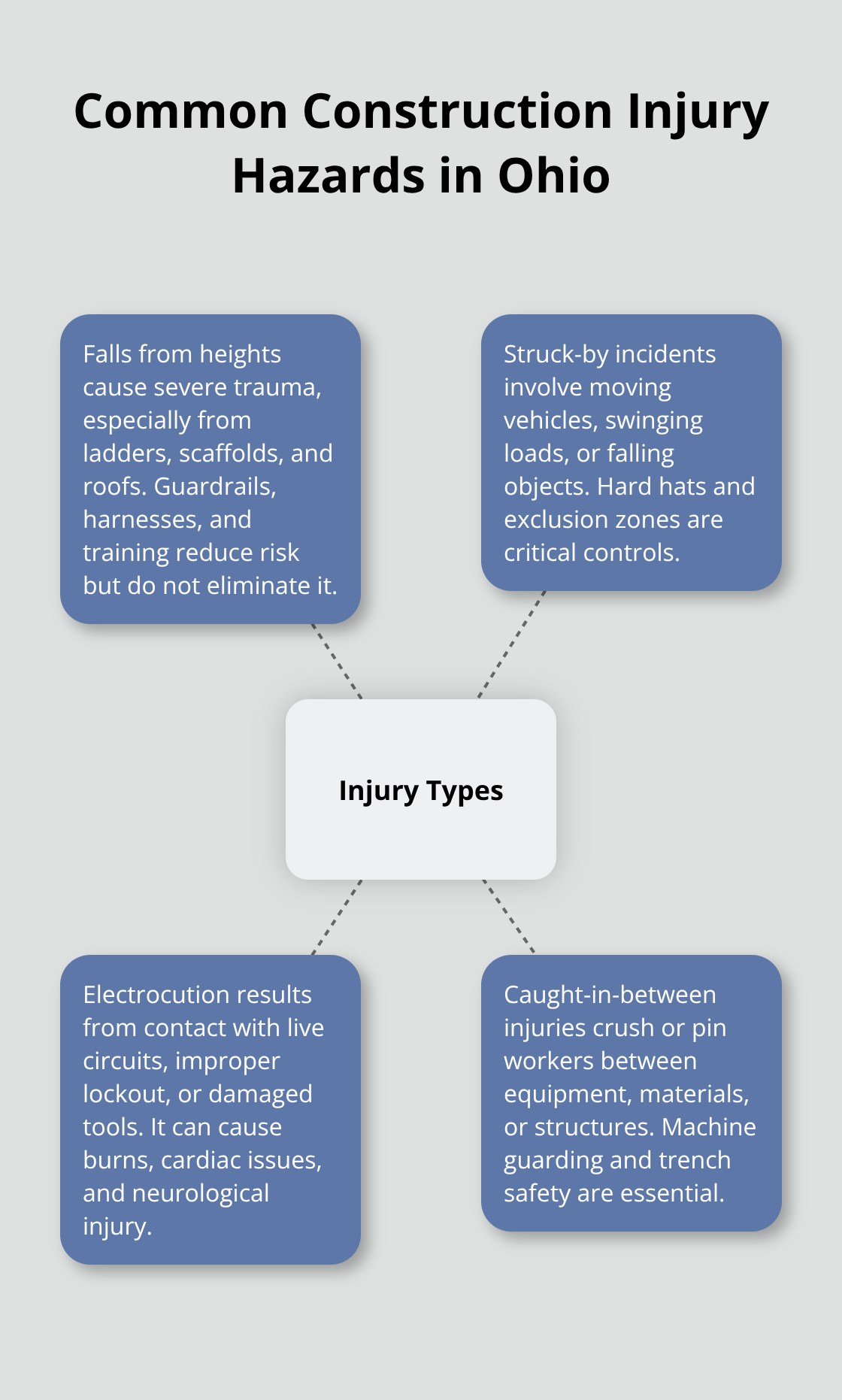
Construction remains one of Ohio’s most hazardous industries, with falls from heights, struck-by incidents, electrocution, and caught-in-between crush injuries accounting for the majority of serious claims. Your job site exposure to heavy machinery and elevated work creates legitimate risk, and the law recognizes this by making almost all construction injuries compensable if they occur during employment. The Ohio Bureau of Workers’ Compensation determines what qualifies as a compensable injury using a straightforward standard: the injury must arise from your work and occur during employment. This includes acute injuries from falls, equipment failures, or accidents, but also occupational diseases that develop over time from job conditions.
When Your Injury Qualifies
If a defective tool causes an injury, if unsafe scaffolding fails, or if a coworker’s negligence injures you, the injury is compensable under Ohio law. Your legal protections begin the moment you’re hired and extend through the entire claims process. If your claim is denied, you have the right to appeal through the Ohio Industrial Commission, and you can request a hearing where evidence is presented. The Ohio Industrial Commission Ombuds Office exists specifically to help workers navigate disputes and resolve issues with the system. This protection means you shouldn’t accept a denial without understanding your options, and seeking legal guidance early can prevent costly mistakes that bar future compensation.
How to File and Move Through the Ohio BWC Process
Report Your Injury Immediately
File your claim with the Ohio Bureau of Workers’ Compensation within one year of your injury, though waiting that long weakens your case significantly. Report the injury to your employer immediately and request the BWC claim form, which your employer must provide by law. The sooner you initiate the process, the stronger your documentation becomes and the less room exists for disputes about when the injury occurred. Delays create gaps in medical records and allow memories to fade, making witness statements less reliable and timelines harder to establish.
Submit Complete Documentation
The Ohio Bureau of Workers’ Compensation processes your claim through a structured timeline: once you submit your form, the BWC has up to 28 days to approve, deny, or request additional information. During this waiting period, document everything meticulously. Gather medical records from your initial treatment, take photographs of the injury and job site conditions if possible, and collect written statements from coworkers who witnessed the accident.
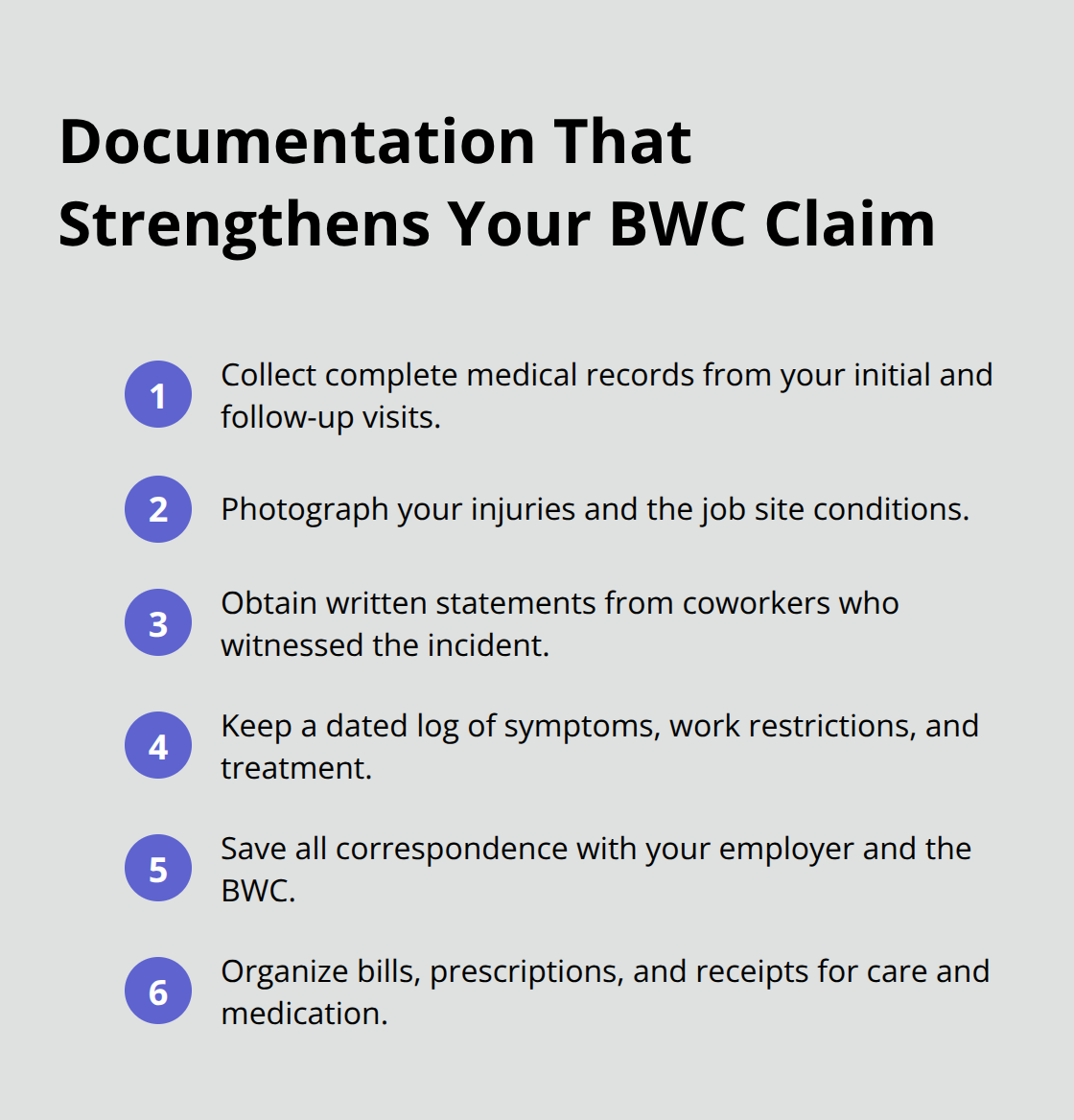
These pieces of evidence directly influence whether your claim receives approval on the first submission or faces unnecessary delays. Medical documentation proves particularly critical because the BWC relies heavily on clinical findings to establish that your injury is work-related and compensable. If your employer claims they have no record of the injury, your contemporaneous medical records become your strongest proof of what happened and when.
Understand Your Benefits Timeline
The timeline for receiving benefits depends on your injury classification. Temporary Total Disability benefits begin once the BWC approves your claim and you cannot work, typically within weeks if documentation is complete. Permanent Partial Disability benefits compensate for lasting impairments and are calculated based on the body part injured and your percentage of permanent loss of function. Permanent Total Disability benefits apply only to workers who cannot perform any sustained work activity, and these require additional medical evaluation and evidence.
Navigate the Appeal Process
If the BWC denies your claim, you have the right to request a hearing before the Ohio Industrial Commission, where a hearing officer reviews evidence and can overturn the initial decision. Many workers lose appeals because they fail to present adequate medical evidence or miss the filing deadline for their appeal request. The Ohio Industrial Commission Ombuds Office can guide you through the appeal process if you need assistance understanding your options. Workers who face denials often make critical mistakes by accepting the decision without exploring their legal remedies, which is why understanding what happens next matters as much as filing correctly the first time.
Mistakes That Cost You Compensation
Injured construction workers in Ohio lose thousands in benefits every year through preventable errors early in the claims process. The most damaging mistake is waiting to report your injury to your employer. Many workers postpone filing, hoping the injury will resolve on its own or fearing workplace retaliation. This delay creates immediate problems: the Ohio Bureau of Workers’ Compensation questions whether the injury truly occurred on the job, medical records show a gap between when the injury happened and when treatment began, and coworkers’ memories fade before they can provide statements. If your employer claims no record of the incident, your delayed report becomes evidence against you rather than proof of what happened.
Report Your Injury the Same Day It Happens
Report the injury to your employer immediately when it occurs. Request the BWC claim form right away, and file within days rather than weeks. This single action protects your entire claim from the start. The Ohio Bureau of Workers’ Compensation uses your report date to establish the injury timeline, and any significant gap between the accident and your claim raises red flags during the review process. Coworkers who witnessed the accident will still remember details clearly, medical records will show treatment began promptly after the incident, and your employer cannot later claim ignorance about what happened.
Never Accept Settlement Offers Without Legal Review
The second critical mistake is accepting a settlement offer without independent legal review. Insurance adjusters and employers often present settlement amounts that seem reasonable on the surface but fall far short of what you’re entitled to receive. They count on workers lacking knowledge of permanent disability calculations, future medical care needs, and vocational rehabilitation options available under Ohio law. Once you accept a settlement and sign the release, you forfeit the right to pursue additional benefits for that injury, even if your condition worsens or medical expenses exceed what the settlement covers.
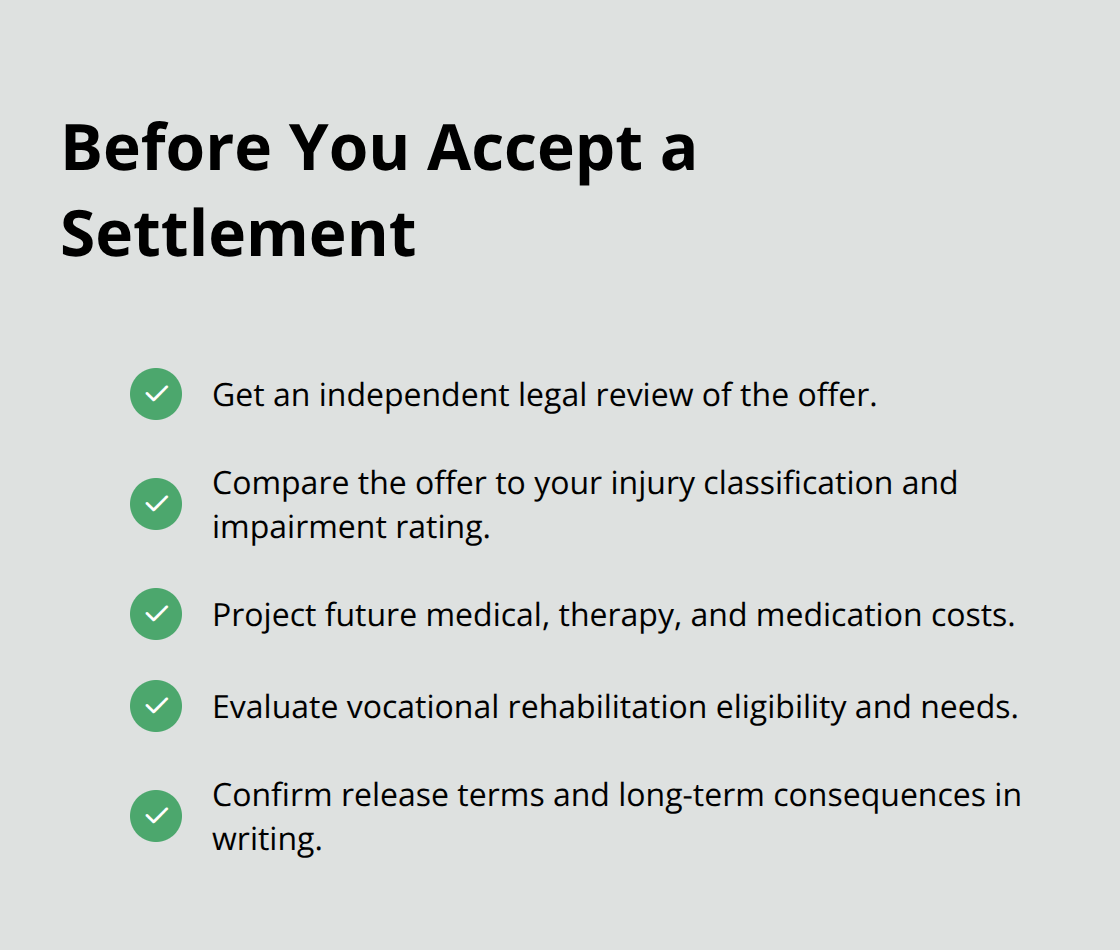
Before signing anything, have an attorney review the offer against your actual injury classification and projected long-term needs.
Collect Evidence at the Injury Scene
The third mistake compounds the first two: failing to collect witness statements and photographs at the injury scene. Coworkers who saw the accident represent your strongest evidence when the claim is disputed, yet many workers never ask for written statements or contact information. Take photographs of the job site conditions, the equipment involved, and the injury itself if possible. Collect names and phone numbers from everyone present. Document the exact location, time, and what you were doing when injured. This evidence becomes invaluable if the BWC requests additional information or if your claim faces denial and requires appeal before the Ohio Industrial Commission.
Build Your Documentation Record Immediately
Medical documentation proves particularly critical because the BWC relies heavily on clinical findings to establish that your injury is work-related and compensable. Gather medical records from your initial treatment and maintain copies of all subsequent medical reports. Request written statements from coworkers while the incident remains fresh in their minds-these statements carry significant weight in disputes. Photograph the job site conditions that contributed to the accident, the equipment involved, and any visible injuries. If your employer later claims they have no record of the injury, your contemporaneous medical records and witness statements become your strongest proof of what happened and when.
Final Thoughts
Construction injury Ohio rights provide comprehensive protection, but only when you understand the system and take deliberate action to enforce those rights. An attorney from Robin J Peterson Company, LLC can review your claim before submission, identify documentation gaps, and ensure you present the strongest possible case from the start. If the Ohio Bureau of Workers’ Compensation denies your claim, legal representation becomes critical because the appeal process demands specific evidence and procedural compliance that workers often mishandle alone.
Medical documentation proving your injury is work-related carries the most weight during appeals, followed by witness testimony and job site photographs that establish how the accident occurred. Workers frequently appeal with incomplete medical records or without addressing the specific reason the BWC cited for denial, which leads to repeated rejections. An attorney ensures your appeal directly counters the denial reason with targeted evidence and proper procedural filing.
Long-term benefits and vocational rehabilitation options exist under Ohio law but require proactive pursuit. Permanent Total Disability benefits apply when your injury prevents any sustained work activity, and Permanent Partial Disability benefits compensate for lasting functional loss. The difference between workers who receive full benefits and those who accept inadequate settlements often comes down to whether they sought professional guidance when facing complex decisions or claim denials.