
A workers’ compensation claim in Ohio can feel overwhelming when you’re injured and unsure what comes next. We at Robin J Peterson Company, LLC have helped countless workers navigate the Ohio BWC claim guidance process from start to finish.
This guide walks you through each stage-from reporting your injury to resolving your claim. You’ll learn what documents you need, how to handle denials, and when to request a hearing.
How Ohio’s Workers’ Compensation System Actually Works
The Ohio Bureau of Workers’ Compensation administers a no-fault system that pays benefits regardless of who caused your injury. This matters because you don’t have to prove your employer was negligent to receive medical treatment and wage replacement. The BWC collects premiums from employers, manages the insurance fund, and processes payouts, while the Industrial Commission of Ohio manages hearings and determines eligibility for total disability and investigates safety violations.
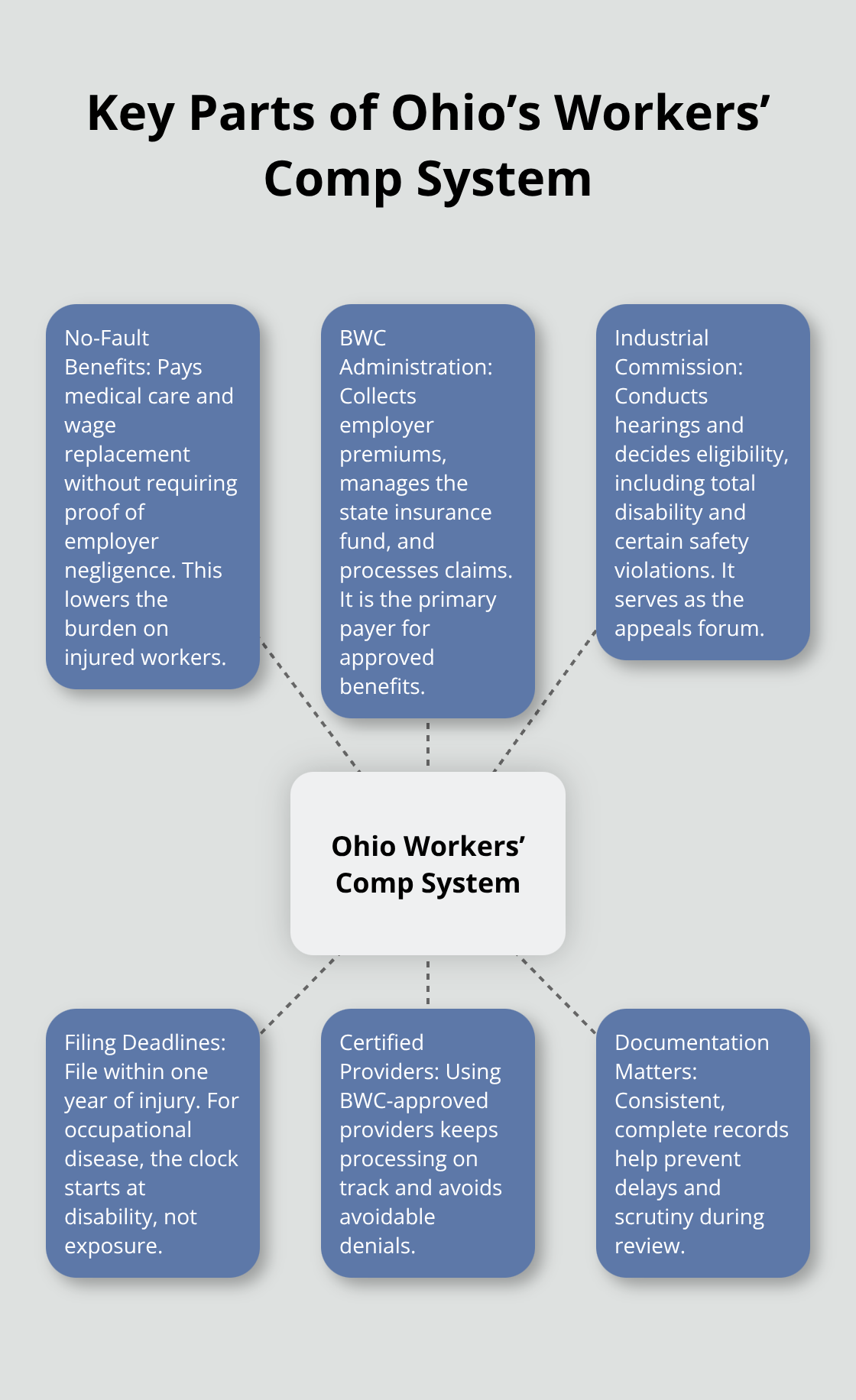
You have one year from your injury date to file a claim with the BWC, and for occupational diseases, the clock starts when you become disabled rather than when exposure occurs. This distinction matters because some occupational diseases (like chemical-related conditions) can have a shorter window before disability symptoms trigger your filing deadline.
What You Can Actually Claim
Your claim covers medical treatment from BWC-approved providers and lost wage benefits typically equal to about two-thirds of your normal weekly salary while you’re unable to work. You must report your injury to your employer within 24 hours of the incident or discovery to protect your rights. The BWC aims to issue a decision within 28 days of filing, though this timeline depends on how complete your submission is. If your claim involves a pre-existing condition that work aggravated, medical evidence showing the work-related aggravation can still secure benefits. Third-party liability claims involving defective equipment or negligent third parties can be pursued alongside your workers’ compensation claim, potentially opening additional recovery paths.
Critical Timing and Documentation Steps
Act quickly to protect evidence and streamline processing. Complete and file the First Report of Injury form available on the Ohio Bureau of Workers’ Compensation website or through your employer’s HR department. Submit this form to the BWC by mail or online and wait for approval before benefits begin. Maintain thorough documentation including precise injury reports, medical records, dates, communications, wage statements, photos, and witness statements. Use only medical providers on the BWC’s certified list to avoid processing issues that delay or deny claims. Missing the one-year deadline, discrepancies between injury and accident reports, failure to seek prompt medical treatment, or using uncertified providers rank among the most common reasons claims face delays or denials.
Moving Forward With Your Claim
Once you understand how the system works and what you can claim, the next step involves navigating what happens when the BWC questions your eligibility or denies your claim outright.
Filing Your Claim Within the Critical 24-Hour Window
Report Your Injury to Your Employer Immediately
The moment you’re injured at work, a clock starts ticking. You have 24 hours from the incident or discovery to report your injury to your employer, and this deadline isn’t flexible. Delaying this report weakens your position because the BWC uses the employer’s injury notification as a key reference point for your claim timeline. When you report to your employer, be direct and specific: state the date, time, location, and exact nature of your injury.
Don’t minimize what happened or assume it will heal on its own. Provide written documentation whenever possible, either through an email to HR or a written incident report. Your employer is legally prohibited from retaliating against you for filing a workers’ compensation claim under Ohio law, so don’t hesitate to report even if you’re concerned about workplace relationships. If your employer resists taking your report seriously, that’s a red flag worth noting for later reference.
Seek Medical Treatment From a Certified Provider
After reporting to your employer, your next priority is securing medical treatment from a BWC-approved provider within the same timeframe if possible. Tell the provider explicitly that this visit relates to a workers’ compensation case. This creates a medical record tied directly to your injury date and establishes the treatment timeline the BWC will reference.
The provider you select matters significantly. Using only medical providers on the BWC’s certified list prevents processing issues that delay or deny claims. An uncertified provider, even an excellent one, can trigger automatic complications with your claim.
Complete the First Report of Injury Form Accurately
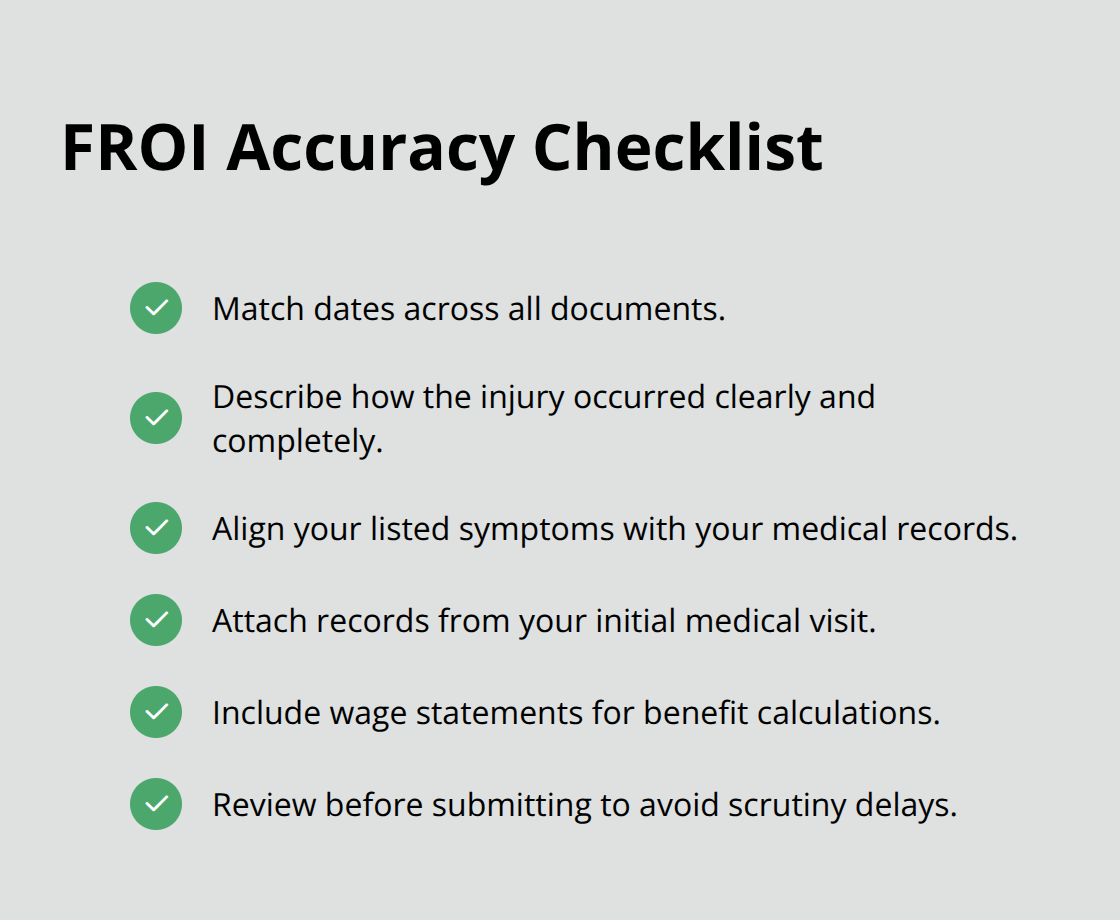
Simultaneously, obtain the First Report of Injury form from the Ohio Bureau of Workers’ Compensation website or your employer’s HR department. This form is the official gateway to your claim, and accuracy matters enormously. Common errors include mismatched dates between your injury report and the FROI, incomplete descriptions of how the injury occurred, or listing symptoms that don’t align with your medical records.
The BWC receives thousands of claims monthly, and discrepancies flag your file for additional scrutiny, extending processing time. Fill out every field completely and attach all relevant medical documentation from your initial visit. Include wage statements showing your normal weekly salary since lost wage benefits depend on this figure.
Submit Your FROI and Monitor Your Claim Status
Submit the FROI to the BWC by mail or through their online portal and retain a copy for your records. The BWC aims to issue a decision within 28 days, but incomplete submissions routinely miss this target. Once submitted, monitor your claim status through the BWC’s online system and document every communication you receive.
What happens next depends on whether the BWC approves your claim or questions your eligibility. Understanding how to respond to denials and appeals will determine whether you receive the benefits you’re entitled to.
When the BWC Says No
The BWC denies claims for specific, identifiable reasons, and understanding these triggers gives you a strategic advantage in prevention and appeal. Missing the one-year filing deadline tops the list, followed by discrepancies between your employer’s injury report and your First Report of Injury form. If you report a back injury to your employer but file a claim for a shoulder injury, the BWC flags this as fraud risk and denies the claim outright. Slow medical treatment after injury weakens your position because the BWC views delayed treatment as inconsistent with genuine injury. Using an uncertified medical provider creates automatic processing problems that the BWC uses as grounds for denial, even if the provider delivered excellent care. Injuries occurring outside the workplace, injuries deemed not benefit-eligible under Ohio law, or failure to report to your employer within 24 hours also trigger denials. When your claim faces denial, the BWC sends a letter stating the exact reason and the window to file an appeal, typically 14 days from the denial date. This letter is not the end of your claim; it is the beginning of the formal appeals process where you have structured opportunities to overturn the decision.
The Three-Level Appeal Path
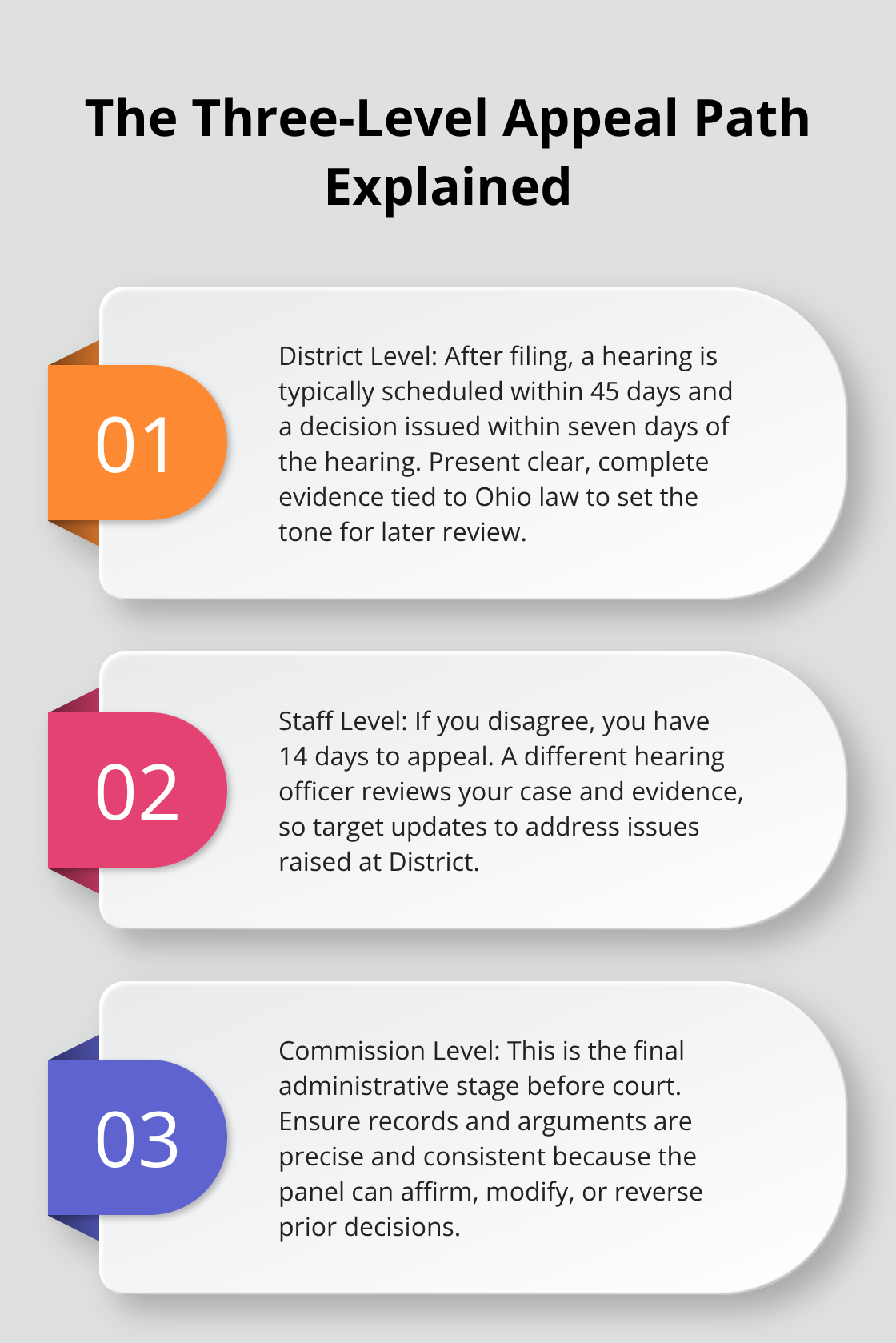
The Ohio Industrial Commission administers a three-tier appeals system: District, Staff, and Commission levels. When you file an appeal at the District level, a hearing officer schedules your case within 45 days and issues a decision within seven days of the hearing. If you disagree with the District decision, you have 14 days to appeal to the Staff level, where another hearing officer reviews your case and evidence. If the Staff level upholds the denial, you can appeal to the Commission level, the final stage before pursuing relief in the Ohio court system. Each level applies the same standard of review, examining whether the BWC properly applied Ohio workers’ compensation law to your specific facts.
Evidence That Carries Weight at Hearings
Straightforward cases with clear medical evidence and accurate documentation move through appeals faster, while complex cases involving pre-existing conditions or occupational diseases require more extensive evidence. Hearing officers prioritize medical records from certified providers, wage statements, employer communications, and witness testimony over general statements about your injury. The strength of your medical documentation often determines the outcome at each appeal level. Presenting organized, complete records (medical visits, treatment dates, provider notes) signals credibility to the hearing officer and supports your position more effectively than verbal arguments alone.
Why Legal Representation Matters at Appeal Hearings
Bringing an experienced Ohio workers’ compensation attorney to your hearing dramatically improves your chances because attorneys know how to present evidence, cross-examine BWC representatives, and argue Ohio law persuasively. An attorney understands which evidence carries the most weight at each stage and how to structure your case for maximum impact. The Industrial Commission hears thousands of appeals annually, and workers without legal representation often struggle to navigate procedural rules and present their evidence effectively. An attorney handles the technical aspects of your appeal, allowing you to focus on your recovery while your case receives professional advocacy.
Final Thoughts
Speed, accuracy, and documentation determine whether your Ohio BWC claim guidance succeeds or stalls. Report your injury within 24 hours, submit your First Report of Injury with complete information, and use only certified medical providers to prevent the most common denial triggers. Missing deadlines, providing inconsistent information, or delaying medical treatment creates obstacles that extend your timeline and complicate your path to benefits.
When the BWC denies your claim, the three-level appeals process gives you structured opportunities to challenge that decision. Hearing officers at the District, Staff, and Commission levels review your evidence and apply Ohio law to your specific circumstances. The strength of your medical records, wage documentation, and organized evidence determines outcomes at each stage, and straightforward cases with clear medical support move faster than complex cases involving pre-existing conditions or occupational diseases.
An experienced Ohio workers’ compensation attorney becomes invaluable when your claim faces denial or when you navigate the appeals process. Attorneys understand how to present evidence persuasively, cross-examine BWC representatives, and argue Ohio law effectively before hearing officers. Contact our firm to discuss your situation and explore how legal representation can strengthen your position.