
A workplace injury in Ohio can feel overwhelming, especially when you’re unsure about your rights and options. The state’s workers’ compensation system operates differently than most people expect, and missing key steps can cost you significantly.
We at Robin J Peterson Company, LLC work with injured workers across Ohio who face denials, confusing regulations, and pressure from insurers. A workplace injury attorney in Ohio can be the difference between getting the support you deserve and struggling alone.
What Makes Ohio Workplace Injury Cases Different
Ohio operates a no-fault workers’ compensation system through the Ohio Bureau of Workers’ Compensation, which means your employer’s negligence or carelessness doesn’t matter. What matters is whether your injury happened during work duties. This no-fault approach protects you from having to prove your employer caused the accident, but it also limits what you can recover from workers’ comp alone. The system provides medical benefits and wage replacement, but excludes pain and suffering damages.
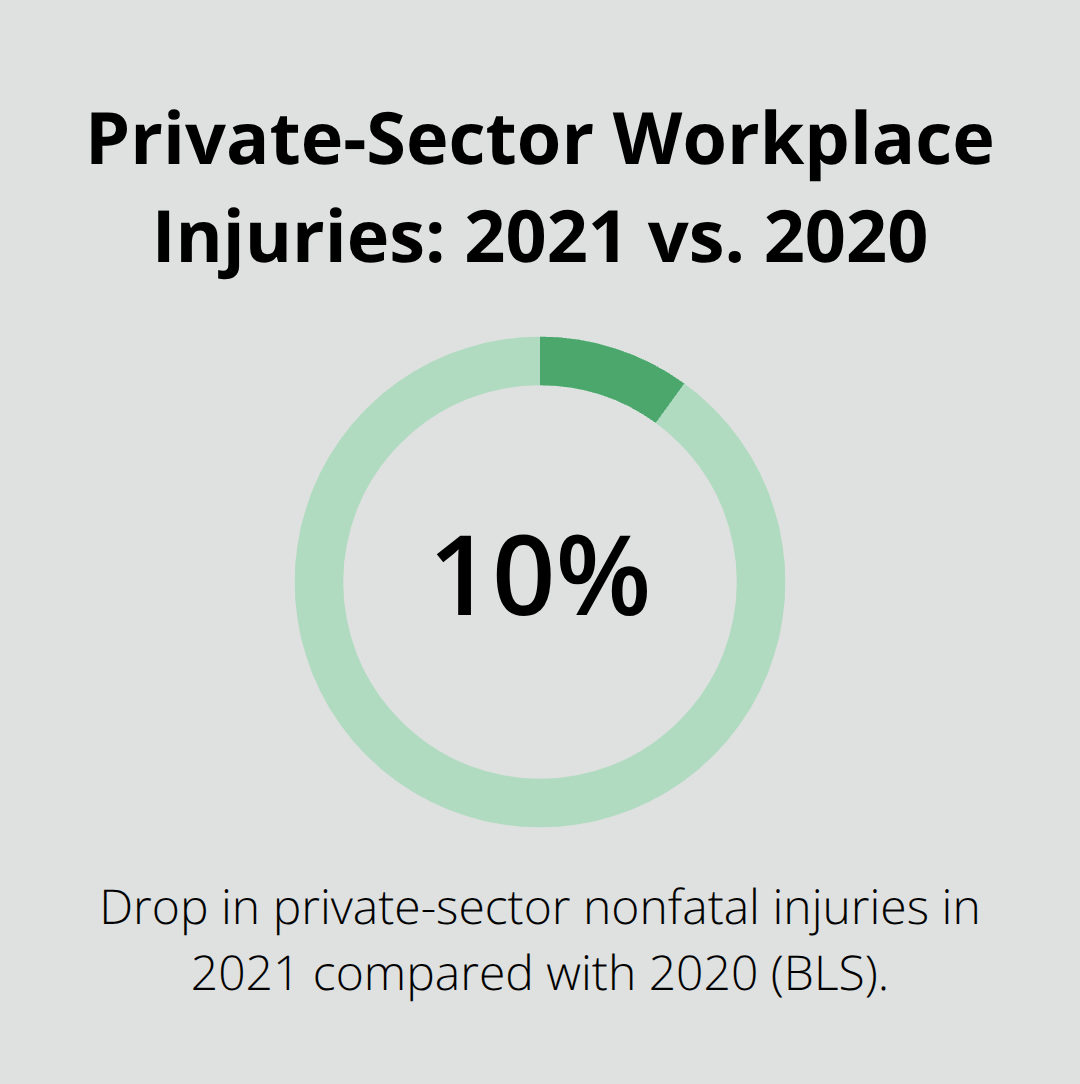
If you were injured in 2021, you were part of a larger trend: the Bureau of Labor Statistics reported that private-sector nonfatal injuries reached 2.6 million that year, though this represented a 10% drop from 2020. Transportation and warehousing sectors experienced the biggest jump, with more injuries in 2021 than in 2019. The retail sector also surged due to understaffing and high demand.
Understanding where your injury falls within these industry patterns helps frame your case because sector-specific risks influence how the BWC evaluates similar claims.
The BWC and Industrial Commission Create Two Layers of Decision-Making
The Ohio Bureau of Workers’ Compensation handles initial claims and benefit determinations, but disputes don’t stop there. The Industrial Commission of Ohio oversees appeals when the BWC denies your claim or reduces benefits. This two-layer system means you have a second chance if the initial decision goes against you, but you must act quickly.
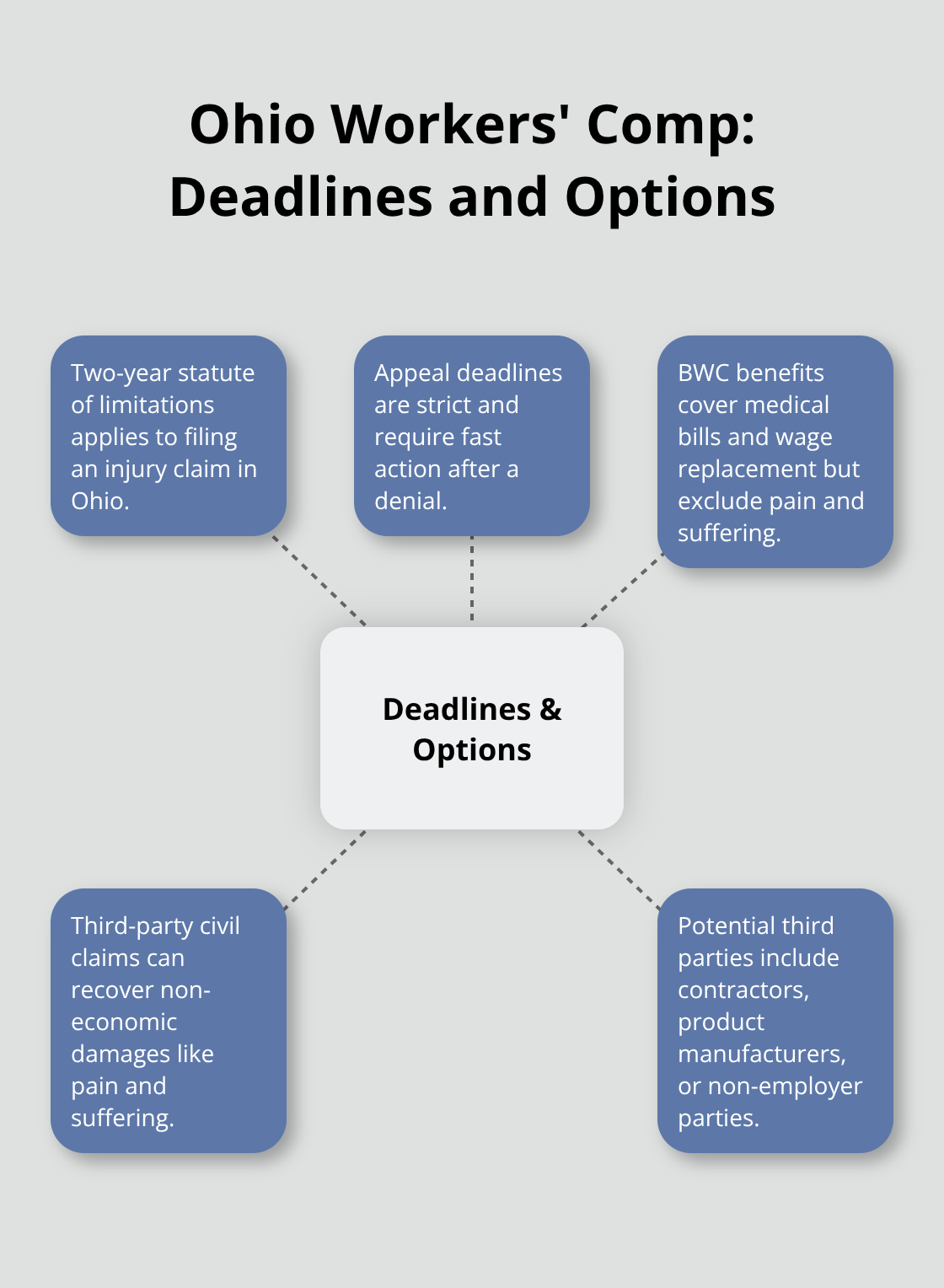
Ohio imposes a two-year statute of limitations for filing injury claims, and appeal deadlines are strict. Missing these deadlines jeopardizes your entire case. When a third party caused your injury-a contractor, a product manufacturer, or someone outside your employer-you can pursue a separate civil claim alongside workers’ comp. This separation is critical because workers’ comp covers medical bills and lost wages, but a third-party claim can recover pain and suffering damages that workers’ comp explicitly excludes.
Misconceptions That Cost Workers Real Benefits
Many Ohio workers believe they cannot sue their employer, which is true under most circumstances, but they wrongly assume workers’ comp is their only path to recovery. Others think minor injuries don’t warrant a claim or that reporting an injury will trigger retaliation. Employers sometimes pressure workers not to file, claiming the injury is preexisting or unrelated to work duties. The truth is that Ohio law protects you from retaliation for filing a legitimate claim.
Another widespread misconception is that you can handle any claim without legal help. While straightforward claims may proceed smoothly, problems with the employer, the managed care organization, or the BWC itself justify seeking an attorney. If your claim is denied, if benefits are delayed or unpaid, or if an adjuster makes promises that don’t materialize, legal representation becomes essential. The stakes are real: a successful claim requires clear proof that your injury occurred during job duties and required medical treatment or time off work.
Understanding these three realities-how Ohio’s no-fault system works, how the two-layer appeals process functions, and which misconceptions trap workers-positions you to make informed decisions about your case. The next section explains why having an attorney matters when you face these complexities.
When You Need an Attorney for Your Workplace Injury
The moment your claim hits a snag, you realize that workers’ compensation in Ohio isn’t a simple process. The Ohio Bureau of Workers’ Compensation receives thousands of claims annually, and many face initial denials or disputes over benefit amounts. An attorney becomes necessary when the system works against you, not for you. Common reasons injured workers call an attorney include employer denial of the injury itself, insurer rejection of benefits, inability to access medical treatment approved by your doctor, delayed or unpaid benefits stretching weeks beyond expected dates, and promises from adjusters that never materialize into actual payments.
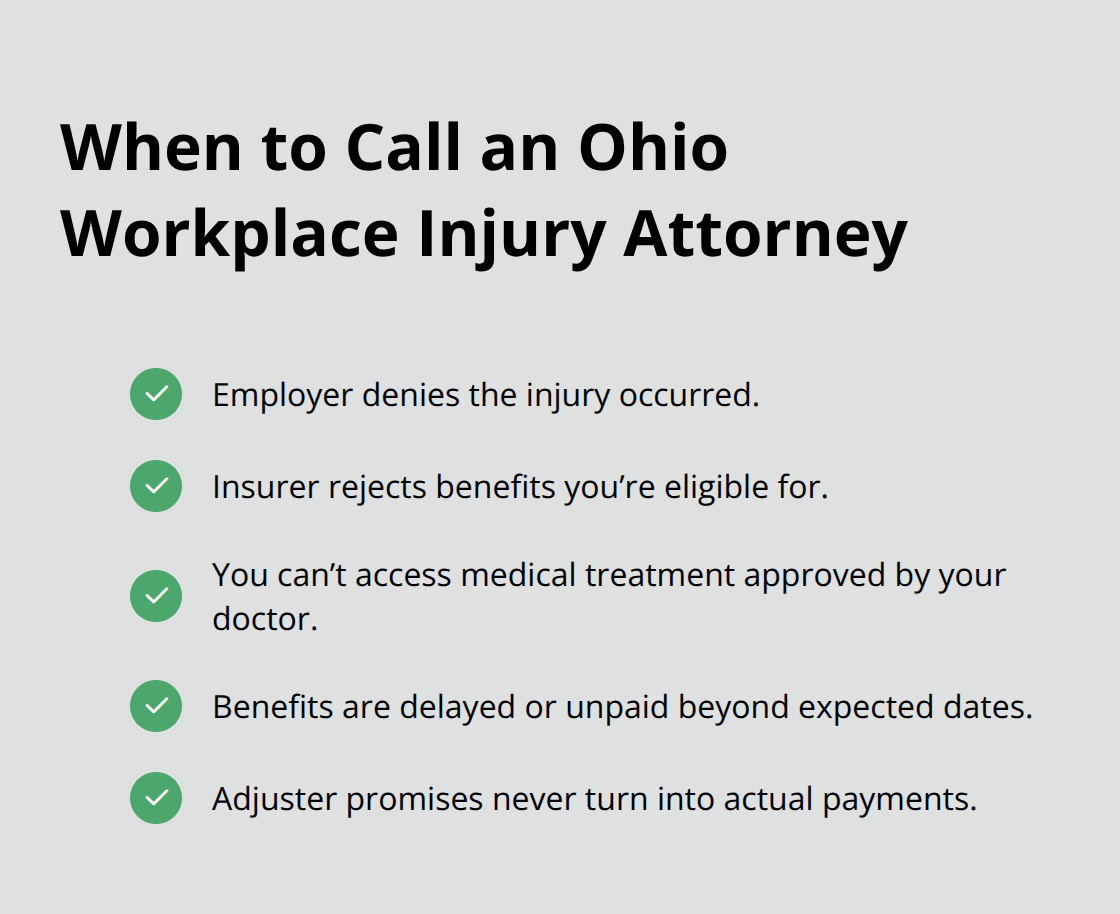
These situations demand immediate legal action because Ohio’s statute of limitations gives you two years to file a claim, but appeal deadlines are far tighter and unforgiving.
Most Claims Proceed Smoothly-Until They Don’t
Straightforward claims often proceed without serious problems, but complications with your employer, the managed care organization, or the BWC itself transform your situation entirely. When the BWC denies your claim, you must appeal to the Industrial Commission of Ohio, and this process requires specific evidence, proper documentation, and persuasive arguments about why your injury occurred during work duties. The Industrial Commission reviews thousands of appeals annually, and cases without legal representation succeed at lower rates than those with attorney representation. Your injury must show a clear causal relationship to your job duties, supported by medical records that explicitly tie your condition to the workplace incident. Without this documentation properly organized and presented, the Industrial Commission may uphold the denial.
An attorney gathers incident reports, medical records, prescription records, wage information, and witness statements, coordinating with medical providers to demonstrate how your injury impacts your ability to work and what treatment remains necessary. This evidence collection separates successful appeals from failed ones. The attorney presents your case to the Industrial Commission with the documentation and arguments that persuade decision-makers to overturn the initial denial.
Third-Party Claims Multiply Your Recovery Options
Ohio workers often overlook a critical pathway: if a contractor, product manufacturer, or any party outside your employer caused your injury, you can pursue a separate civil claim alongside workers’ compensation. This matters because workers’ comp covers medical bills and wage replacement but explicitly excludes pain and suffering damages. A third-party claim recovers those non-economic damages that workers’ comp won’t touch. You may also have grounds for a civil claim if your employer violated safety regulations that directly caused your injury.
An experienced Ohio workplace injury attorney evaluates whether your case qualifies for both workers’ comp and third-party recovery, maximizing your total compensation. This dual-pathway strategy (workers’ comp plus third-party claims) often produces substantially better outcomes than workers’ comp alone. The attorney coordinates evidence across both claims, ensuring nothing falls through the cracks and that you pursue every available avenue for recovery.
How We at Robin J Peterson Company, LLC Approach Your Case
We at Robin J Peterson Company, LLC represent injured workers across the Cleveland, Akron, and Canton areas who face these complex situations. Our firm fights to secure medical benefits, wage replacement, and any available third-party recovery. We understand that the BWC system demands persistence and expertise-two things that separate successful claims from denied ones. When you work with us, you gain a partner who knows the Industrial Commission, understands how the BWC evaluates evidence, and recognizes when third-party claims strengthen your position. The next section explains what happens when you decide to move forward with legal representation and what you can expect from the process.
How We Help You Win Your Ohio Workers’ Compensation Claim
We at Robin J Peterson Company, LLC focus on one thing: getting injured workers the benefits and compensation they deserve from the Ohio Bureau of Workers’ Compensation and the Industrial Commission. Our experience across Cleveland, Akron, and Canton has taught us that successful claims require three critical elements that most workers handle poorly on their own. First, you need medical evidence that explicitly connects your injury to your workplace duties, not vague treatment notes that fail to mention work. Second, you need documentation of every deadline, denial letter, and communication with the BWC because Ohio’s appeal system punishes missed deadlines with permanent loss of benefits. Third, you need to identify whether a third party caused your injury, which opens a separate recovery pathway that workers often miss entirely.
Gathering Evidence That Wins Appeals
We collect incident reports immediately after you contact us and coordinate with your medical providers to ensure treatment records tie your condition to the workplace. We track every BWC deadline on your behalf so nothing slips through the cracks. When the BWC denies your claim, we file appeals to the Industrial Commission with organized evidence and written arguments that address the specific reasons for denial. Most injured workers attempt this alone and lose because they don’t understand what evidence the Industrial Commission actually requires to overturn a denial.
The Industrial Commission reviews thousands of appeals annually, and cases without legal representation succeed at lower rates than those with attorney support. Your injury must show a clear causal relationship to your job duties, supported by medical records that explicitly tie your condition to the workplace incident. Without this documentation properly organized and presented, the Industrial Commission may uphold the initial denial.
Identifying Third-Party Claims You Might Miss
If a contractor, product manufacturer, or any party outside your employer caused your injury, you can pursue a separate civil claim alongside workers’ compensation. This matters because workers’ comp covers medical bills and wage replacement but explicitly excludes pain and suffering damages. A third-party claim recovers those non-economic damages that workers’ comp won’t touch. You may also have grounds for a civil claim if your employer violated safety regulations that directly caused your injury.
An experienced Ohio workplace injury attorney evaluates whether your case qualifies for both workers’ comp and third-party recovery, maximizing your total compensation. This dual-pathway strategy (workers’ comp plus third-party claims) often produces substantially better outcomes than workers’ comp alone.
Our Focused Approach to Workers’ Compensation
Our approach differs from general personal injury firms that dabble in workers’ compensation. We focus exclusively on helping injured workers navigate the BWC and Industrial Commission, which means we know exactly how these agencies evaluate evidence and what persuades decision-makers. We handle the coordination across both claims so nothing falls through the cracks and you pursue every available avenue for compensation. When you work with us, you gain a partner who fights against the BWC on your behalf and ensures the Industrial Commission hears the strongest possible case for overturning denials and securing the benefits you earned through your workplace injury.
Final Thoughts
A workplace injury in Ohio disrupts your life in ways that extend far beyond the initial accident. Medical bills accumulate, lost wages create financial pressure, and navigating the Ohio Bureau of Workers’ Compensation system adds stress when you’re already struggling. The reality is that injured workers who attempt to handle claims alone face significantly lower success rates than those with legal representation.
The path forward begins with understanding that you have options beyond what the initial BWC decision offers. If your claim was denied, if benefits are delayed, or if you suspect a third party caused your injury, a workplace injury attorney Ohio can transform your situation by handling the coordination, gathering proper documentation, and presenting your case to the Industrial Commission with the strength it deserves. We at Robin J Peterson Company, LLC represent injured workers across the Cleveland, Akron, and Canton areas who face these exact situations.
Contact us at rjplawohio.com to discuss your injury and explore whether workers’ comp, third-party claims, or both pathways apply to your situation. We provide straightforward guidance about your rights and the realistic outcomes your case may produce. Your workplace injury doesn’t have to define your financial future when you have experienced legal support fighting on your behalf.