
Workplace injuries happen fast, and the aftermath can feel overwhelming. When you’re hurt on the job in Youngstown, you need someone who understands both your situation and the system designed to help you.
We at Robin J Peterson Company, LLC know that having a Youngstown workers compensation attorney in your corner makes the difference between getting the support you deserve and facing unnecessary roadblocks. This guide walks you through what to expect and how legal representation protects your rights.
What to Expect When Working with a Youngstown Workers Compensation Attorney
Your First Meeting: What Attorneys Need to Know
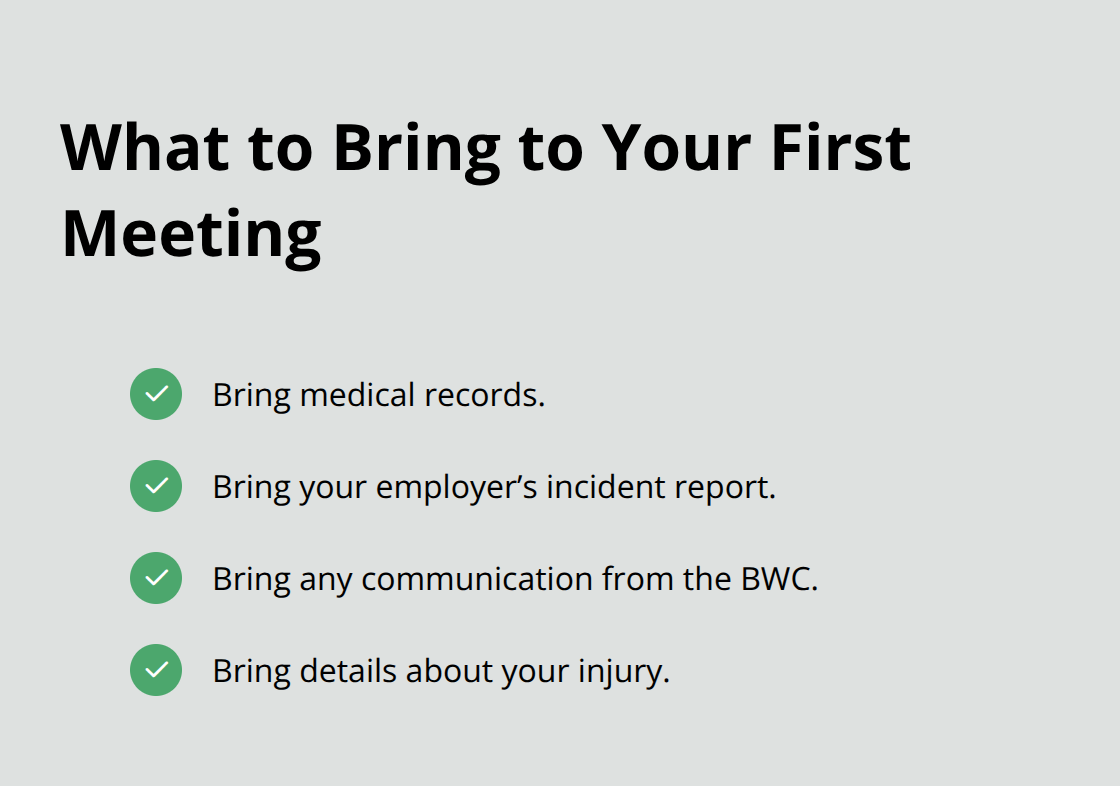
Your first meeting with a workers compensation attorney should feel like a conversation, not an interrogation. Bring whatever documents you have: medical records, the incident report from your employer, any communication from the BWC, and details about your injury. The attorney will ask specific questions about how the injury occurred, what symptoms you’re experiencing, and whether you’ve already filed a claim. This initial conversation typically takes 30 minutes to an hour.
The attorney needs to understand the timeline because Ohio has strict deadlines. Injury-based claims must be filed within one year of the injury, while occupational disease claims have a two-year window from when you could no longer work or within six months of diagnosis. Missing these deadlines eliminates your eligibility entirely. A good attorney will immediately flag whether your claim is at risk based on timing alone.
What the BWC Does After You File
After you file, the BWC typically issues a formal decision within 28 days-allowing or denying your claim. This matters because if the BWC denies your claim, you have only 14 days to file a notice of appeal with the Industrial Commission of Ohio. Your attorney will assess whether your injury qualifies under Ohio’s no-fault system, which covers most workplace injuries that require recovery beyond three days.
Navigating the Paperwork and Medical Requirements
Once your attorney takes your case, they handle the paperwork that most injured workers find confusing. The First Report of Injury form must be complete and accurate because incomplete submissions delay decisions. Your attorney ensures all details align and submits everything correctly.
They also coordinate your medical care because the BWC requires you to use a certified Physician of Record. If you see a provider not on the BWC’s approved list, you may end up responsible for those bills. Your attorney prevents this mistake.
The Appeal Process and Hearing Preparation
If the BWC denies your claim, the appeal process begins immediately. A district hearing officer conducts a hearing within about 45 days, and a decision typically comes within a week after that hearing. Your attorney prepares you for this hearing, gathers medical evidence, and presents your case. If you lose at the district level, you can appeal to a Staff Hearing Officer with similar timelines. Continuing appeals can reach the Commission and even state courts, each with their own 14- to 60-day deadlines. An experienced attorney knows these deadlines and does not let them slip.
Protection Against Retaliation
Employers sometimes retaliate against workers who file claims. Ohio law prohibits this, and wrongful discharge claims can follow if your employer punishes you for filing. Your attorney watches for these violations and acts quickly when they occur. Understanding how your employer might respond to your claim-and knowing your legal protections-shapes the entire strategy moving forward.
Common Workplace Injuries and How Legal Representation Helps
Types of Injuries That Require Legal Support
Slips and trips cause more workers compensation claims than any other category in Ohio. Falls from heights, electrical shocks, burns, and injuries from defective equipment follow closely behind. Not every workplace injury needs an attorney-the deciding factor is whether the BWC will approve your claim or whether complications will arise that require experienced navigation. Injuries involving toxic exposures, physical assaults, or vehicle-related incidents frequently trigger denials because the BWC questions causation or disputes the severity.
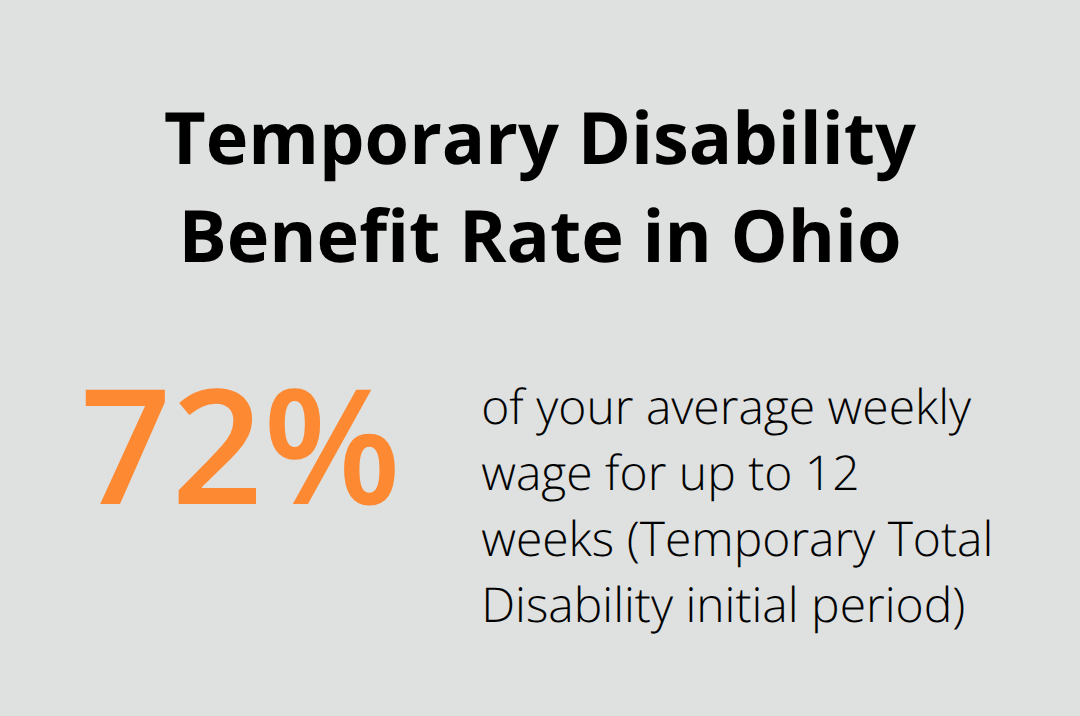
When your injury prevents you from returning to your prior work, legal representation becomes necessary. Temporary disability benefits pay 72 percent of your average weekly wage for up to 12 weeks, then drop to two-thirds of your wage subject to the state maximum. If your injury lasts longer or causes permanent limitations, permanent disability benefits enter the picture.
Permanent Total Disability covers workers for life, while Permanent Partial Disability assigns a disability rating based on your specific condition.
Occupational Diseases and the Evidence Problem
The BWC regularly denies claims involving occupational diseases because proving the connection between your job and your illness requires detailed medical evidence and expert testimony. An attorney strengthens this evidence by coordinating with medical providers and gathering documentation that clearly links your condition to workplace exposure. This type of claim demands someone who understands how hearing officers evaluate causation and what medical experts carry credibility in Youngstown hearings.
How Attorneys Navigate the BWC System
The BWC system operates on specific rules, and the agency interprets those rules strictly. Your attorney knows how the Industrial Commission of Ohio has decided similar cases, what evidence persuades hearing officers, and which medical providers carry weight in local proceedings. When the BWC denies your claim, you have 14 days to file a notice of appeal or lose your right entirely. A district hearing officer conducts the hearing within approximately 45 days, and the decision arrives roughly one week after.
Your attorney prepares medical records, gathers witness statements, and coaches you on testimony because how you present your injury matters as much as the injury itself. An experienced attorney recognizes which cases merit escalation and which require settlement negotiation, protecting you from costly mistakes and missed deadlines.
Fighting Denials and Appeals
If you lose at the district level, a Staff Hearing Officer review follows with comparable timelines. Many injured workers believe one denial means the end, but continued appeals can reach the Commission and state courts, each with their own 14- to 60-day deadlines. An attorney who handles these cases regularly knows which path your specific situation demands. The emotional and time costs of fighting a denial make having experienced legal support essential-especially when the stakes involve your ability to work and support your family. This is where understanding your local options becomes critical as you move forward.
Why Local Expertise Changes Everything
How Youngstown Attorneys Understand Your District
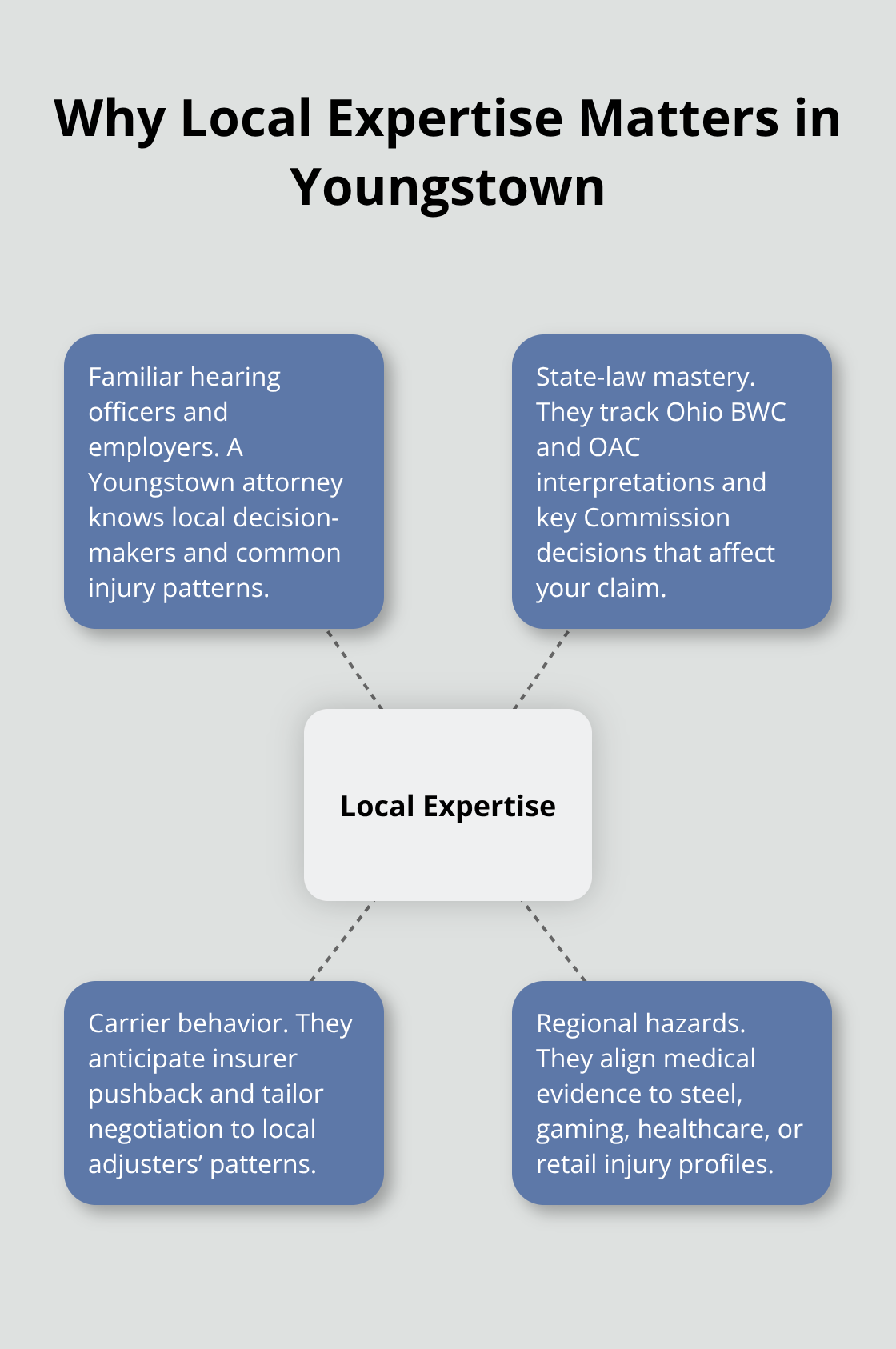
A Youngstown attorney brings something a Cleveland or Columbus firm cannot: familiarity with the specific employers, insurance carriers, and hearing officers who control your case outcome. The Industrial Commission of Ohio’s Youngstown district handles cases with particular patterns. Hearing officers here know the major employers-Vallourec’s steel operations, Hollywood Gaming, the region’s healthcare systems-and understand the injury patterns these workplaces generate. When your attorney has argued cases in front of the same hearing officer multiple times, that officer knows your attorney’s reputation for accuracy and honest presentation. This credibility influences how evidence gets weighted during hearings.
An attorney unfamiliar with local dynamics must spend time learning what a Youngstown-based firm already knows.
Ohio Law Requires Deep State Knowledge
Ohio workers compensation law contains layers that trip up attorneys without deep state experience. The BWC interprets the Ohio Revised Code and Ohio Administrative Code (OAC) safety rules with considerable discretion, and how they apply those rules shifts based on case precedent and agency policy updates. The Industrial Commission of Ohio regularly issues decisions that clarify how the system works, but these decisions accumulate over years. A local firm tracks these decisions and knows which ones affect your specific injury type. When the BWC denies your claim citing a particular rule interpretation, your attorney immediately recognizes whether that interpretation aligns with recent Commission decisions or contradicts them. This knowledge determines whether your appeal has strong footing or faces an uphill battle. Attorneys from outside the region must research these nuances, consuming time and delaying action when your 14-day appeal window is closing.
Insurance Carriers Operate on Predictable Patterns
Insurance carriers operating in the Youngstown area develop patterns in how they handle claims, which providers they trust, and where they typically push back hardest. A local attorney recognizes these patterns and adjusts strategy accordingly. Some carriers delay approvals for occupational disease claims systematically; others dispute causation aggressively for toxic exposure cases. Your attorney’s prior interactions with these same adjusters inform negotiation tactics and settlement discussions. This experience prevents wasted effort on ineffective arguments and focuses resources on what actually persuades decision-makers in your district.
Regional Workplace Hazards Shape Legal Strategy
Steel mill injuries carry different medical and legal considerations than retail accidents or healthcare worker injuries. A Youngstown attorney understands the specific hazards at major regional employers and what medical evidence hearing officers expect to see for those injury types. This prevents wasted effort gathering irrelevant documentation and focuses resources on evidence that persuades decision-makers in your district. The attorney knows which medical providers carry credibility when testifying about mill-related conditions versus service industry injuries, and that distinction affects case strength significantly.
Final Thoughts
A workplace injury in Youngstown forces you to navigate a system that operates on strict timelines and unforgiving rules. The BWC denies claims systematically, insurance carriers fight approvals, and missed deadlines eliminate your eligibility permanently. Without experienced guidance, you face permanent loss of benefits you earned through your work.
A Youngstown workers compensation attorney changes this equation entirely. Your attorney knows the hearing officers who decide your case, understands how local employers and insurance carriers operate, and recognizes which medical evidence persuades decision-makers in your district. When the BWC denies your claim, your attorney acts within 14 days because waiting means losing your right to appeal.
If you’ve been injured on the job in Youngstown, contact Robin J Peterson Company, LLC today. We represent injured workers throughout Ohio with deep experience navigating the Industrial Commission of Ohio and the BWC system. Our firm fights for the benefits and compensation you deserve.