
Knee injuries at work can derail your career and finances fast. Understanding your knee injury rights in Ohio is the first step toward protecting yourself and your family.
At Robin J Peterson Company, LLC, we help workers navigate workers’ compensation claims when injuries strike. This guide walks you through your legal protections, filing requirements, and the benefits you’re entitled to receive.
Knee Injuries That Qualify for Workers’ Compensation
Knee injuries at work fall into distinct categories, and understanding which ones qualify for Ohio workers’ compensation matters for your claim. Construction workers face knee injuries at a rate of 13.2 per 10,000 full-time employees according to the Bureau of Labor Statistics, while warehousing, healthcare, and delivery driving workers encounter similarly high exposure.
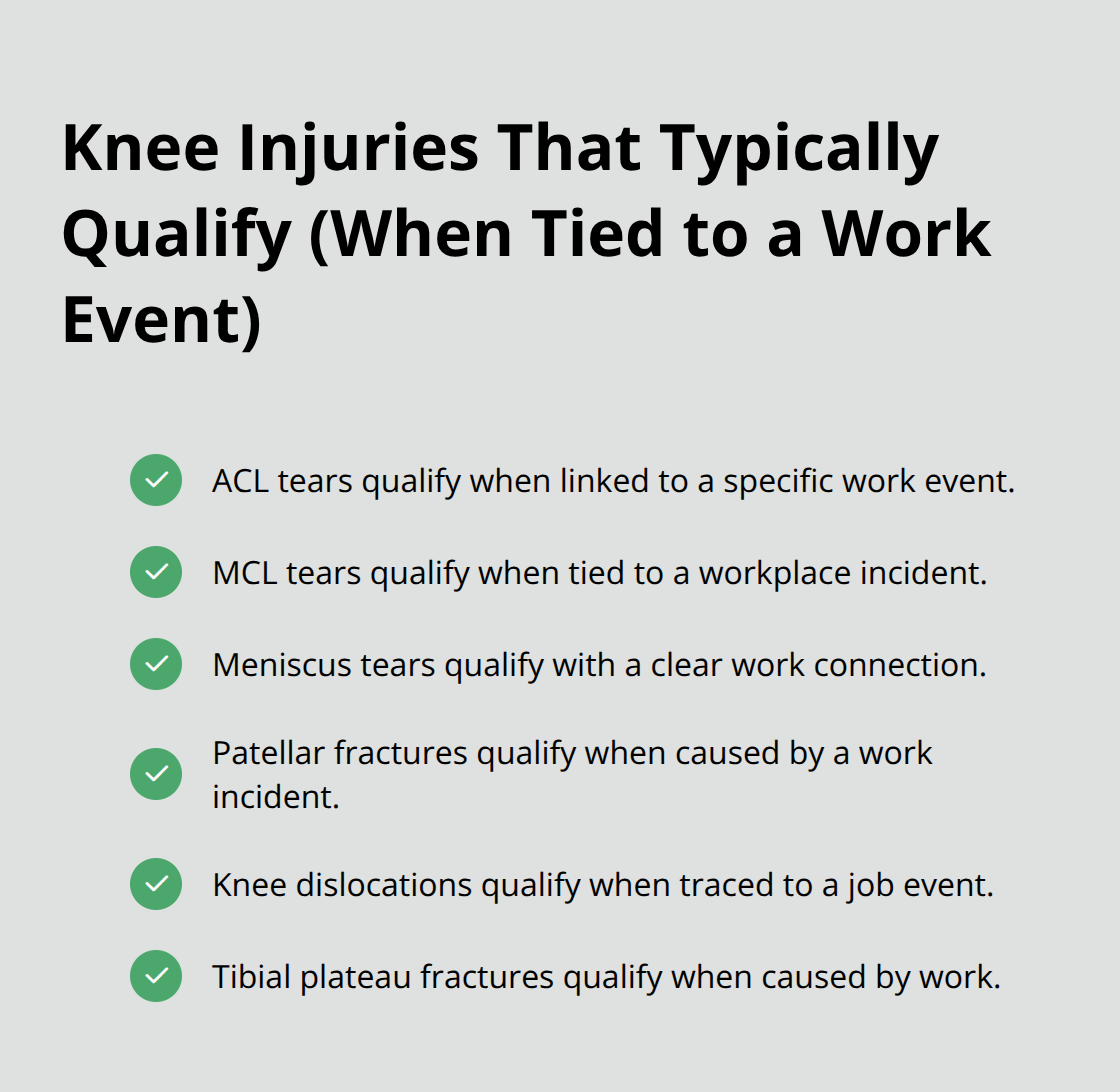
Acute traumatic injuries-sudden damage from a specific incident-are the clearest cases for approval. ACL tears, MCL tears, meniscus tears, patellar fractures, knee dislocations, and tibial plateau fractures all qualify when you can trace them to a work event. These injuries typically require immediate medical attention and show up clearly on imaging like MRIs and X-rays, which strengthens your claim significantly.
Establishing the Work Connection
The key to approval lies in reporting the exact mechanism of how the injury happened to your physician and supervisor. Tell your treating doctor precisely how your knee twisted, what you were lifting when it happened, or how you fell. This work-connection detail is what the Ohio Bureau of Workers’ Compensation scrutinizes most carefully, and vague descriptions invite claim denials. The BWC requires a clear causal link between your job duties and the knee damage. Bursitis and tendonitis from workplace activities qualify, but you need solid medical documentation showing the connection. Photograph the location where the injury occurred, document hazards present at that spot, and collect witness names immediately.
Medical Evidence Strengthens Your Position
Medical records are your strongest proof. Seek treatment within 24 hours of injury-this timing demonstrates you took the injury seriously and helps establish severity. Workers in your industry who sustain similar injuries strengthen your case because it shows your job environment created the risk. When you file with the Ohio Bureau of Workers’ Compensation within seven days of reporting to your employer, include this evidence from day one. Incomplete or delayed reporting weakens even legitimate claims.
Building a Comprehensive Case File
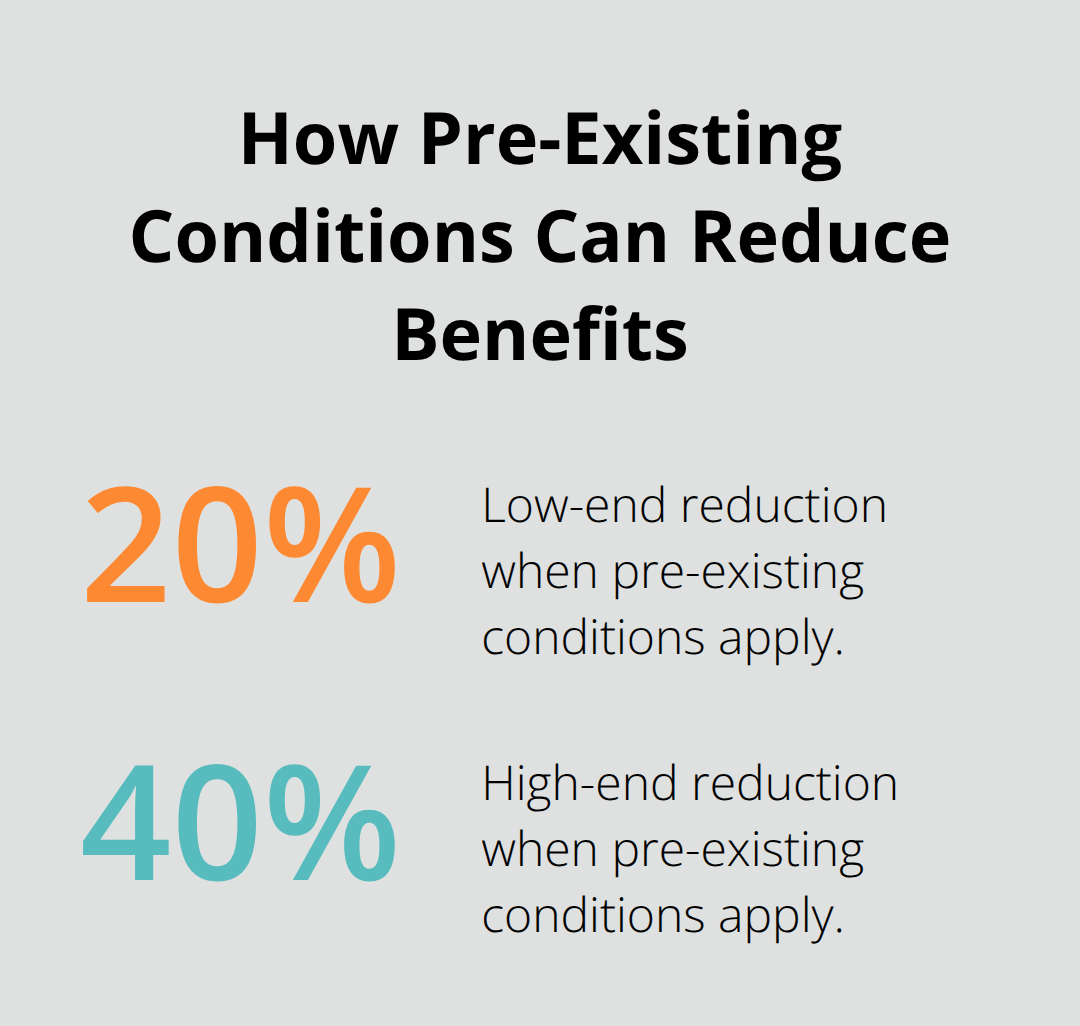
The difference between an approved claim and a denial often comes down to medical evidence and witness statements. Complete MRI and X-ray results, surgical reports (if applicable), and detailed medical histories showing no pre-existing knee problems give you the strongest position. Pre-existing conditions can reduce your benefits by 20 to 40 percent, which is why documenting your knee health before the injury matters. Write your own account of what happened immediately after the injury while details are fresh.
This personal statement, combined with witness statements and hazard photographs, creates a comprehensive case file that the BWC cannot easily dispute. Workers who skip this documentation step frequently face unnecessary delays or denials that require appeals to overturn.
Your claim’s strength depends on how thoroughly you document everything from the moment the injury occurs. Once you understand what qualifies and how to prove it, the next step involves knowing exactly what rights and benefits Ohio law guarantees you.
What You’re Actually Entitled to After a Knee Injury
Ohio workers’ compensation law guarantees you specific protections the moment your knee injury qualifies, and knowing exactly what those protections cover prevents you from leaving benefits on the table. Your eligibility hinges on one fundamental requirement: your knee injury must have a clear work connection. The Ohio Bureau of Workers’ Compensation approves claims when you can prove the injury arose out of and occurred during your employment. This means a sudden twist while performing job duties qualifies, but a pre-existing knee condition that flares up without a specific workplace trigger does not. The BWC does not care whether your employer carries full insurance or operates under a self-insuring arrangement; once your claim is accepted, you receive the same legal protections and benefit structure. Your employer has ten days from when you report the injury to accept or reject your claim, and acceptance immediately triggers your benefit eligibility.
Medical Treatment Coverage Without Limits
Medical treatment coverage under Ohio law is remarkably comprehensive once your claim is accepted. The BWC covers all reasonable and necessary medical care related to your knee injury with zero out-of-pocket costs to you, and there are no dollar limits or copayment requirements within the approved provider network. This includes emergency room visits, specialist consultations, MRIs, X-rays, surgical procedures, physical therapy, prescription medications, and bracing or orthotic devices. You can select a BWC-certified physician of your choice, giving you control over who treats your injury. If the insurer directs you to a specific provider and that care proves inadequate, you can request a change of physician in writing; the BWC cannot force you to stay with a provider delivering substandard treatment.
Wage Loss Compensation While You Recover
Wage loss compensation replaces approximately two-thirds of your pre-injury average weekly wage while you are unable to work, capped at 1,058 dollars per week as of 2024 according to BWC guidelines. This temporary total disability benefit continues until you reach maximum medical improvement or return to work, whichever comes first. Most workers miss around two weeks on average for knee injuries, though complex cases requiring surgery extend that timeline significantly. Once your physician releases you to return to work, wage replacement stops even if you cannot physically perform your previous job duties.
Permanent Partial Disability When Injury Causes Lasting Damage
If a knee injury permanently reduces your earning capacity, you become eligible for permanent partial disability compensation. The BWC determines this compensation by multiplying an assigned disability rating against your average weekly wage. The BWC assigns these ratings after maximum medical improvement is reached, typically six to eighteen months after injury, based on objective medical evidence like imaging results and surgical reports. Subjective pain complaints carry far less weight than measurable functional limitations documented in medical records. Understanding what the BWC covers is only half the battle-what happens when the insurer denies your claim or restricts your care is where many workers stumble without proper guidance.
Filing Your Claim the Right Way
The speed and accuracy of your initial report determine whether your knee injury claim receives fast-track approval or faces months of delays while the Ohio Bureau of Workers’ Compensation investigates gaps in your documentation. Report the injury to your supervisor immediately, not the next day or when you remember it. Within 24 hours, write down what happened while details remain sharp: describe the exact mechanism of how your knee twisted, what you were lifting, or how you fell. Collect names of anyone who witnessed the injury and photograph the location, equipment involved, and any hazards present. This immediate action creates an undeniable record that insurers cannot later claim was fabricated or exaggerated.
Timing Your Report to the BWC
Your employer must report the injury to the Ohio Bureau of Workers’ Compensation within ten days of learning about it, but you should file your own First Report of Injury with the BWC within seven days to protect yourself. Many workers assume their employer will handle the filing correctly or promptly; they often do not. Filing yourself ensures the BWC receives accurate information directly from you and establishes your claim date definitively. Seek medical treatment the same day as the injury or within 24 hours at the latest. Tell your treating physician explicitly that this is a work-related injury and describe the exact mechanism again. Medical records created within 24 hours of injury carry far more weight with the BWC than treatment delayed by weeks. The physician’s contemporaneous notes documenting the work connection form the foundation of your entire case.
Protecting Your Claim Through Smart Communication
Once you initiate the claim, the insurer will contact you to gather information, and this is where many workers sabotage their own cases through careless communication. Do not post about the injury on social media, do not discuss it casually with coworkers beyond what is necessary, and do not speculate about fault or severity in writing. Insurers monitor social media and emails, and a single off-hand comment can be twisted to suggest your injury is less serious than medical records indicate. Respond to the insurer’s requests for information promptly and in writing; if they ask questions verbally, follow up with an email summarizing what you discussed.
Handling Denials and Care Restrictions
Request written copies of all decisions, denials, or care restrictions from the insurer immediately. If the insurer denies your claim or restricts your medical care, request the denial in writing and have your treating physician submit additional medical evidence or authorization requests to overturn it. Many initial denials are reversed without ever reaching a hearing simply because workers push back with proper documentation. Experienced workers’ compensation attorneys improve outcomes substantially (particularly when denials occur or insurers restrict necessary treatment), and representation operates on a contingency basis so you pay nothing unless your case succeeds.
Final Thoughts
Your knee injury rights in Ohio protect you from financial ruin after a workplace injury, but only if you act decisively from the moment the injury occurs. The Ohio Bureau of Workers’ Compensation guarantees medical coverage without limits, wage replacement while you recover, and permanent disability compensation if your injury causes lasting damage. Your employer cannot retaliate against you for filing a claim, and the BWC cannot force you to accept inadequate medical care.
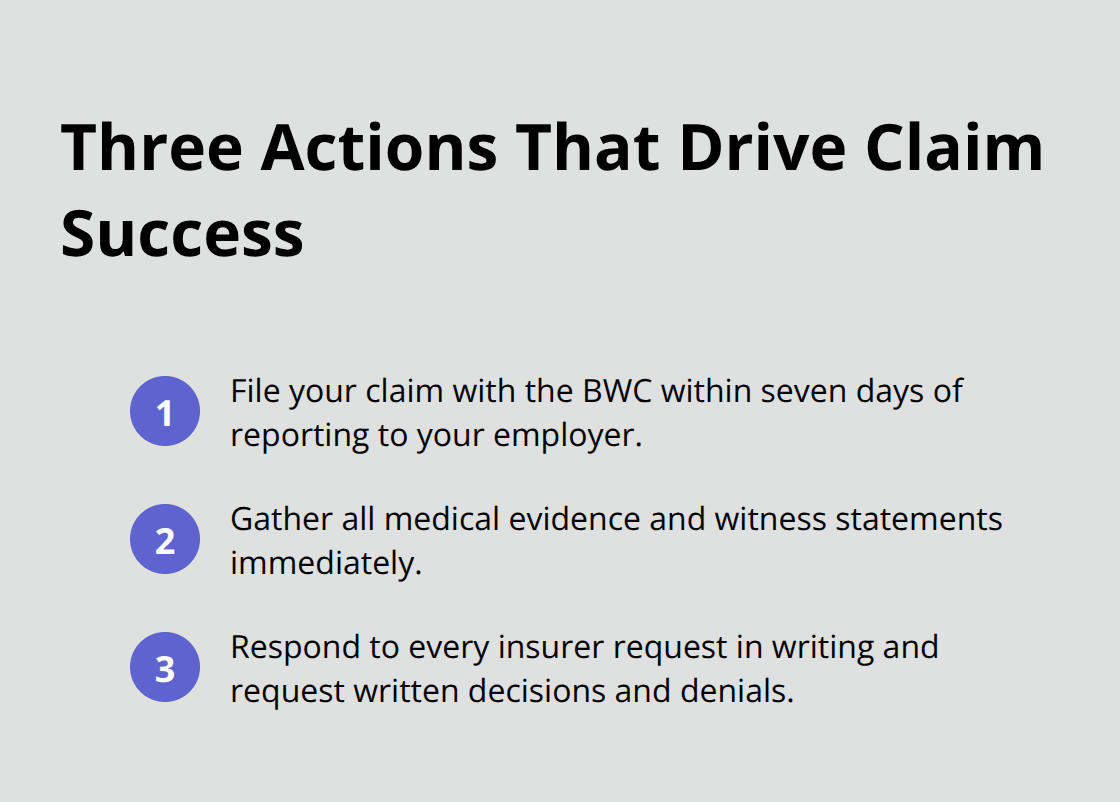
Three concrete actions determine your success. File your claim with the BWC within seven days of reporting to your employer, gather all medical evidence and witness statements immediately while details remain fresh, and respond to every insurer request in writing while requesting written copies of all decisions and denials. Many workers leave benefits on the table simply because they fail to push back against initial denials or care restrictions that lack proper medical justification.
Legal representation fundamentally changes outcomes for knee injury claims in Ohio. Workers represented by experienced attorneys consistently secure better results than those navigating the system alone, particularly when denials occur or insurers restrict necessary treatment. We at Robin J Peterson Company, LLC represent injured workers throughout Ohio, fighting to secure the benefits you deserve-contact our firm to discuss your situation and protect your knee injury rights in Ohio.