
A knee injury at work can derail your career and finances fast. At Robin J Peterson Company, LLC, we help injured workers understand their rights under Ohio’s workers compensation system.
This guide walks you through everything from filing your initial claim to fighting a denial. You’ll learn what benefits you’re entitled to and when legal representation makes sense.
What Knee Injuries Count for Workers Compensation
Knee injuries dominate workplace compensation claims across Ohio. About one in eight workplace injuries involve the knee, and these injuries typically force workers off the job for roughly two weeks on average. The problem is that not every knee problem qualifies for benefits, and understanding what counts matters before you file.
Which Knee Injuries Qualify
Knee injuries covered under Ohio’s workers compensation system must have a clear connection to your job duties. ACL tears, MCL tears, meniscus tears, and patellar fractures all qualify if they happen at work. So do knee dislocations, tibial plateau fractures, bursitis, and tendonitis. The injury itself matters less than the fact that it occurred while you performed work tasks or on company property. This distinction separates compensable injuries from pre-existing conditions or injuries that happened outside work. Construction workers, warehouse employees, healthcare staff, and delivery drivers face the highest risk because their roles demand physical demands on their knees-climbing, kneeling, squatting, and prolonged standing. Manufacturing and transportation workers experience similar exposure. If your job requires these movements and you injured your knee performing them, you have a strong case for benefits.
How Knee Injuries Happen at Work
Workplace knee injuries rarely happen in isolation. A worker steps into a hole on a construction site and tears their meniscus. Another twists their knee while reaching for a box on a high shelf. A healthcare worker’s knee buckles under a patient’s weight during transfer. These aren’t freak accidents-they’re predictable consequences of job demands combined with workplace conditions.
What You Must Do Immediately After Injury
The moment an injury happens, your actions determine the strength of your claim. You must report the injury to your supervisor or manager immediately, even if it feels minor. Many workers delay reporting because they think they can walk it off, but a knee that swells later in the day looks suspicious to insurers. You should document exactly what happened, where it happened, and what you were performing. If witnesses saw the injury, collect their names. Take photos of the location and any hazards that contributed (uneven surfaces, wet floors, missing guardrails). You must seek medical attention the same day if possible, or within 24 hours at the latest. Tell the medical provider that this is a work injury and describe the exact mechanism-how your knee twisted, what you were lifting, how you fell. Medical records that clearly document the work connection form the backbone of your claim.
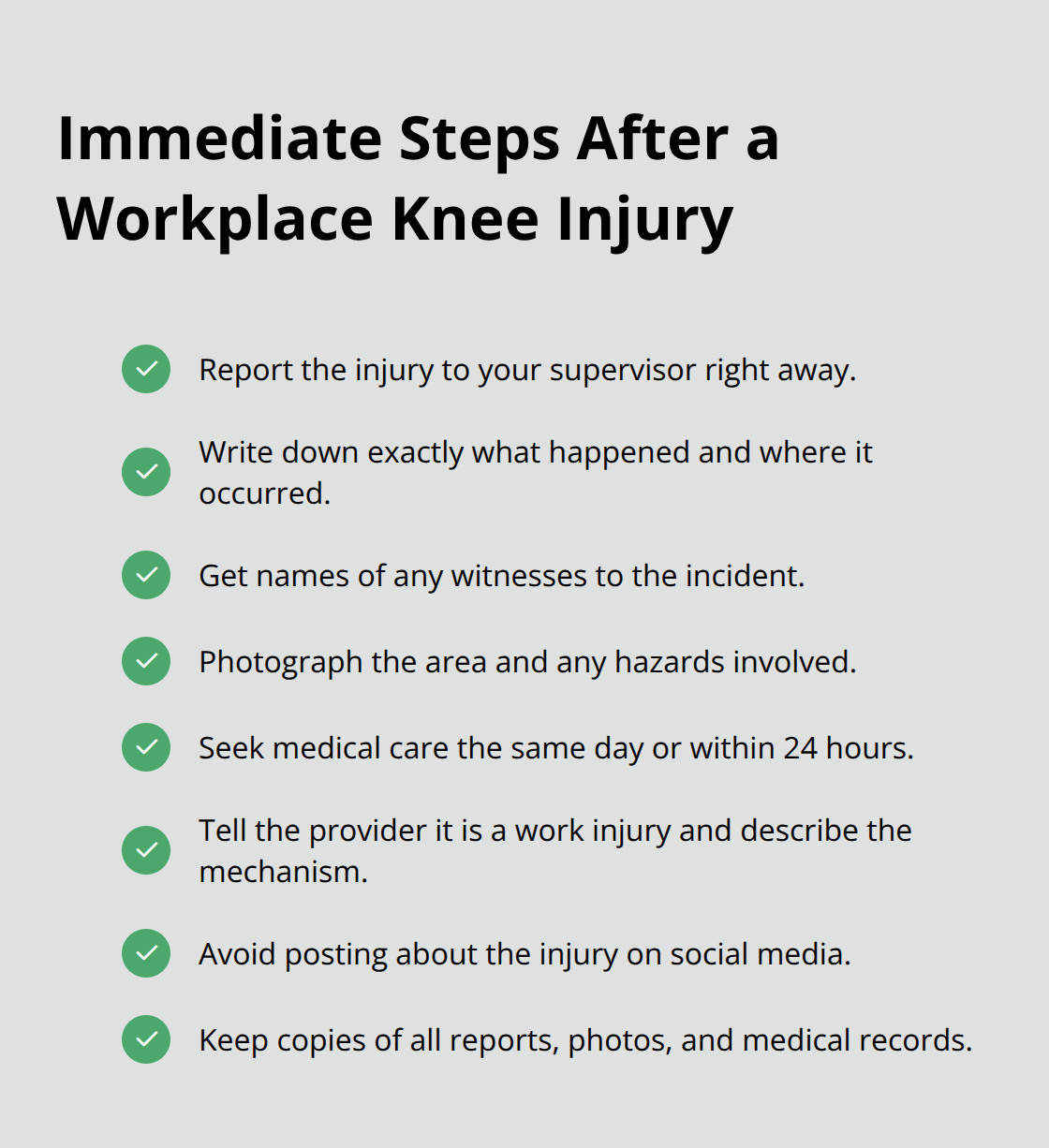
You should avoid posting about the injury on social media, and you should not discuss it casually with coworkers beyond factual reporting. Insurance companies monitor these communications, and casual comments about activities you performed after the injury can be used against you later.
Building Your Claim Foundation
The documentation you create in those first hours and days shapes everything that follows. Medical records that establish the work connection, witness statements, photos of hazards, and your own written account of what happened all work together to create a compelling narrative. When you file your claim with Ohio’s Bureau of Workers Compensation, these materials demonstrate that your injury is legitimate and work-related. The stronger your initial documentation, the less room insurers have to dispute your claim or undervalue your benefits. What happens next depends on how the BWC processes your claim and whether your employer or their insurer accepts or contests it.
Filing Your Claim and Getting Medical Care Approved
Submit Your Claim Quickly and Completely
Ohio law gives you one year from the injury date to file your claim, but waiting weeks or months weakens your position because memory fades and documentation becomes harder to obtain. When you file, the BWC assigns your claim a number and notifies your employer. Your employer then has ten days to accept or reject the claim. If they accept it, benefits begin flowing. If they reject it, you move into dispute territory.
Submit your claim with all documentation attached from day one. Include medical records showing the work connection, your written account of how the injury occurred, witness statements, and photos of the workplace hazard. The BWC processes thousands of claims monthly, and incomplete submissions get delayed or questioned.
Understand What Medical Treatment the Insurer Must Cover
Medical treatment coverage under Ohio law is straightforward once your claim is accepted: the employer’s insurer must pay for all reasonable and necessary medical treatment related to your knee injury. This includes emergency room visits, orthopedic surgeons, physical therapy, imaging like MRI scans, and surgery if needed. You do not pay out of pocket for covered treatment.
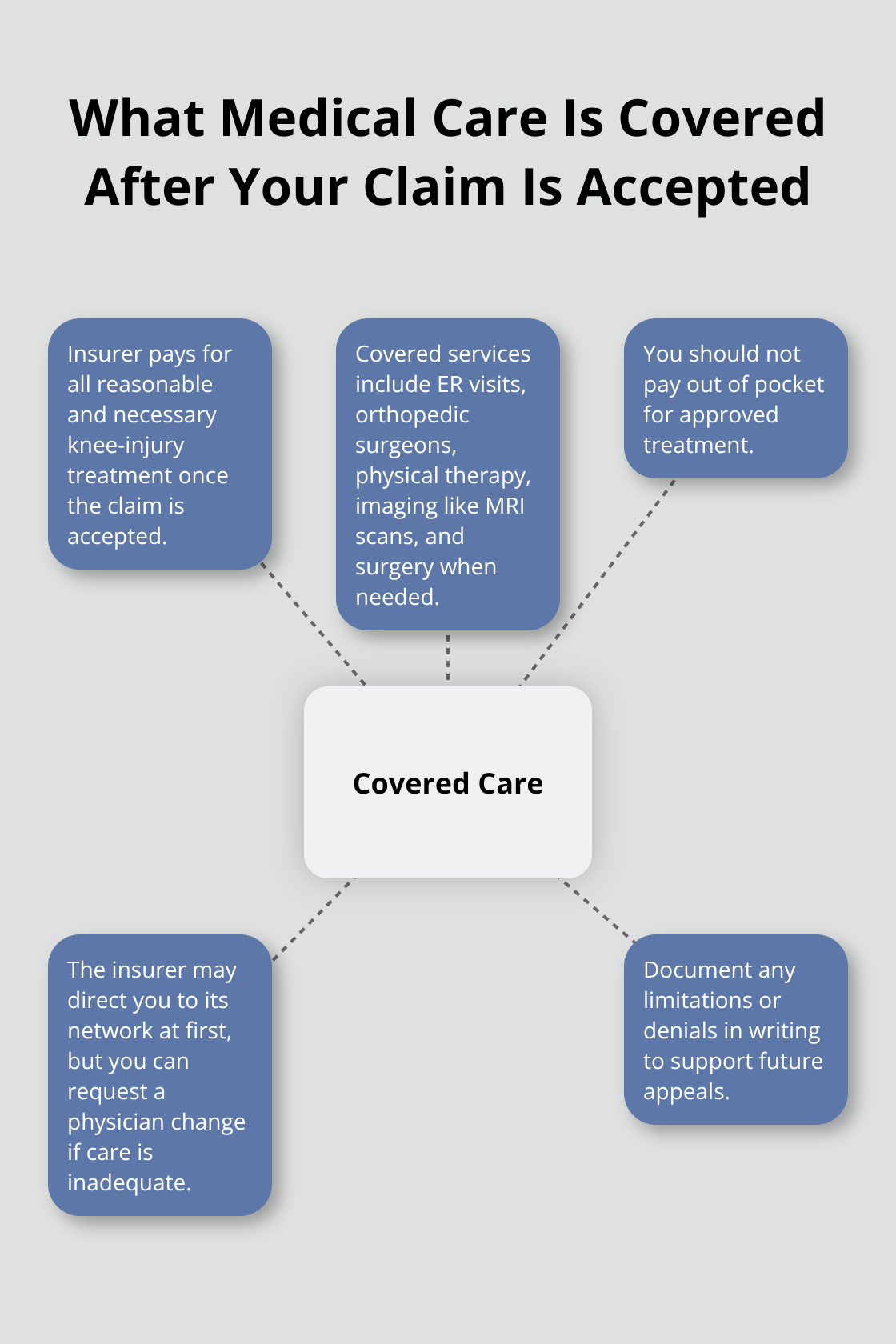
The catch is that the insurer controls which providers you can see initially. They may direct you to their preferred medical network, but you have the right to request a change of physician if that provider is not properly treating your injury. Document every limitation the insurer imposes and every treatment they deny in writing. If they refuse to cover physical therapy or surgery that your doctor recommends, request that denial in writing so you have proof for later appeals.
Challenge Denials and Disputed Claims
When claims get denied or disputed, most workers assume the decision is final. It is not. Ohio law allows you to request a hearing before the Industrial Commission of Ohio if your claim is rejected or your benefits are inadequate. The BWC denies claims for several reasons: the employer contests the work connection, medical evidence is insufficient, or the injury is deemed pre-existing.
Disputing a denial requires submitting additional medical evidence showing the injury is work-related and current medical records from your treating physician stating that your condition prevents you from working. If the insurer denies specific treatments or limits your medical care, your doctor can submit a written request for authorization that explains medical necessity. Many denials are reversed at the hearing stage because workers present stronger evidence than they submitted initially.
You should request your hearing within two years of the denial decision. Waiting longer costs you benefits. Preparing for a hearing means organizing all medical records chronologically, having your treating physician available to testify about your functional limitations, and documenting how the knee injury prevents you from performing your job duties. The Industrial Commission hearing officer reviews the evidence and makes a decision. If you lose, you can appeal to the Commission’s appellate panel.
Know When Legal Representation Becomes Essential
Most workers benefit from legal representation during disputes because insurers hire experienced adjusters and defense attorneys who know how to minimize claims. Having your own advocate levels the playing field and substantially increases the odds of winning your dispute. The next section covers your broader rights as an injured worker in Ohio, including protections that apply whether your claim moves forward smoothly or faces obstacles.
Your Rights as an Injured Worker in Ohio
Protection Against Retaliation
Ohio law shields you from retaliation the moment you file a workers compensation claim, and this protection is absolute. Your employer cannot fire you, demote you, reduce your hours, or cut your pay because you reported a knee injury or filed for benefits. The law treats retaliation as a separate violation with its own remedies, meaning you can sue your employer for damages beyond your workers comp benefits if they punish you for claiming benefits.
Document every negative employment action after your claim is filed: termination notices, performance reviews that suddenly turn negative, schedule changes, or exclusion from opportunities. Write down the date, what happened, and who was involved. If your employer fires you shortly after you file, the timing itself suggests retaliation, and Ohio courts view these situations skeptically toward employers.
Many workers hesitate to assert their rights because they fear losing their job, but the law exists precisely because employers used that fear as leverage. Retaliation claims have real value when documented properly.
Access to Vocational Rehabilitation Services
Vocational rehabilitation services become critical when your knee injury prevents you from returning to your previous job. Ohio’s BWC offers vocational retraining programs that help injured workers transition to different roles that accommodate their physical limitations. If your knee cannot handle the climbing and kneeling your construction job requires, vocational services can support retraining for administrative, supervisory, or desk-based work.
The state funds this retraining, so you do not pay for it. You must request vocational services through your BWC claim, and your treating physician should document that returning to your previous job is not feasible due to permanent knee restrictions. The vocational counselor assigned to your case develops a retraining plan based on your age, education, work history, and physical capabilities.
Some workers complete retraining within months; others need longer depending on the new field. Wage replacement continues during approved retraining, so your income does not stop while you learn new skills. Without vocational services, workers with permanent knee limitations often accept jobs below their earning capacity simply to survive financially. With proper vocational planning, you can pursue meaningful work that pays reasonably well and respects your physical restrictions.
Compensation for Lost Wages and Medical Expenses
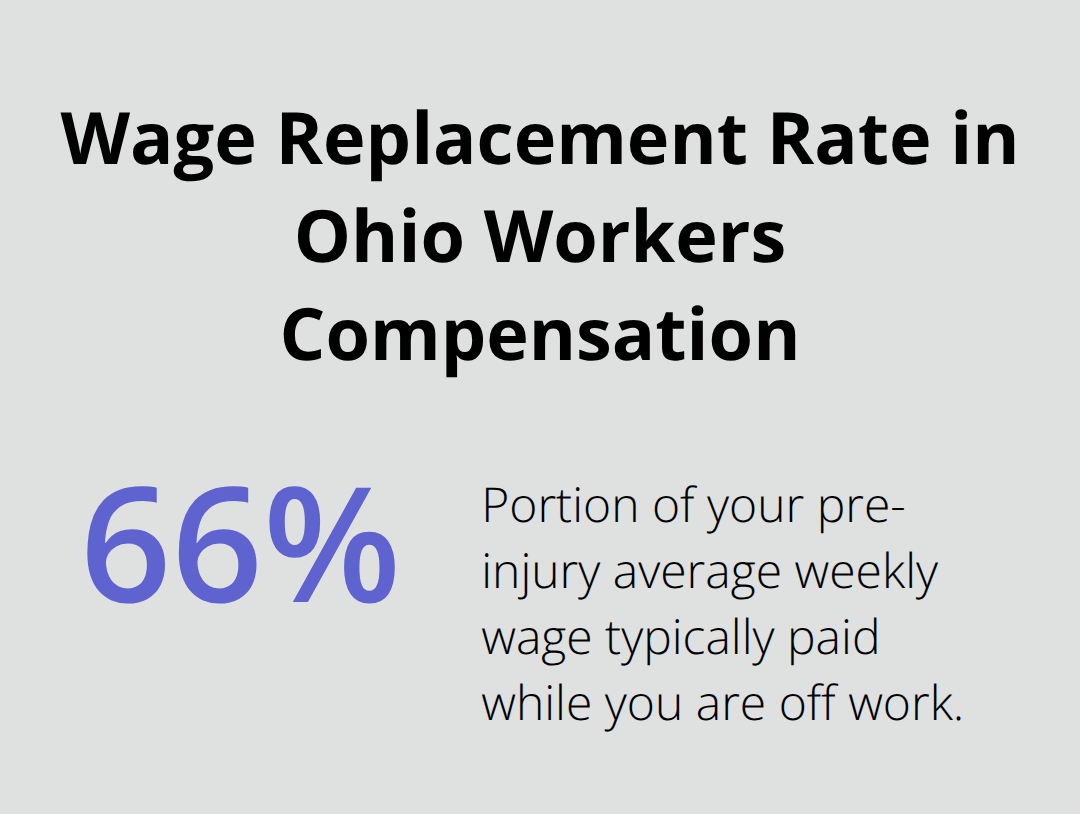
Lost wages compensation covers the time you cannot work while healing, calculated as a percentage of your average weekly wage before the injury. Ohio typically pays 66.67 percent of your pre-injury weekly earnings while you are off work, and this continues until your doctor releases you to work or determines you have reached maximum medical improvement.
If your knee injury prevents you from ever returning to work at your previous wage level, you may qualify for permanent partial disability compensation that accounts for your reduced earning capacity. This is separate from wage replacement and recognizes that your injury has permanently diminished your ability to earn.
Medical expenses related to your knee injury are covered entirely by the employer’s insurer once your claim is accepted. This includes all doctor visits, surgeries, imaging, physical therapy, bracing, and medications directly related to the knee injury. You never receive a bill for covered medical treatment. The insurer cannot impose annual caps or limits on medical care for accepted claims, though they can dispute whether specific treatments are medically necessary.
If your knee worsens years after your initial injury and develops post-traumatic arthritis, the insurer must cover treatment for that condition because it stems from the original work injury. This long-term coverage obligation makes it essential that you preserve all medical records and maintain relationships with treating physicians who can document the ongoing effects of your knee injury.
Final Thoughts
A knee injury at work disrupts your life immediately and can affect your earning power for years. The path forward depends on understanding your rights, documenting your injury thoroughly, and knowing when to fight back against denials or inadequate benefits. Your knee injury workers comp claim succeeds when you act fast-report the injury to your supervisor the same day, seek medical attention immediately, and gather evidence about how the injury happened.
Ohio’s workers compensation system provides real protections that insurers often try to minimize to protect their bottom line. Your employer cannot retaliate against you for filing a claim, medical treatment is covered in full once your claim is accepted, and lost wages replace a portion of your income while you heal. When insurers deny your claim, dispute the work connection, or refuse to cover treatments your doctor recommends, most workers lack the experience to fight back effectively.
An experienced workers compensation attorney understands how insurers operate and knows the evidence needed to win disputes. At Robin J Peterson Company, LLC, we represent injured workers throughout Ohio who face denied claims or inadequate benefits, and we work on contingency, meaning you pay nothing unless we win your case. Contact Robin J Peterson Company, LLC for a free consultation about your knee injury claim.