
Work injuries happen, and navigating medical benefits Ohio BWC shouldn’t add to your stress. The system exists to get you the care you need, but understanding how it works makes all the difference.
At Robin J Peterson Company, LLC, we help injured workers access their full medical benefits without confusion or delays. This guide walks you through every step of the process.
What Ohio BWC Actually Covers
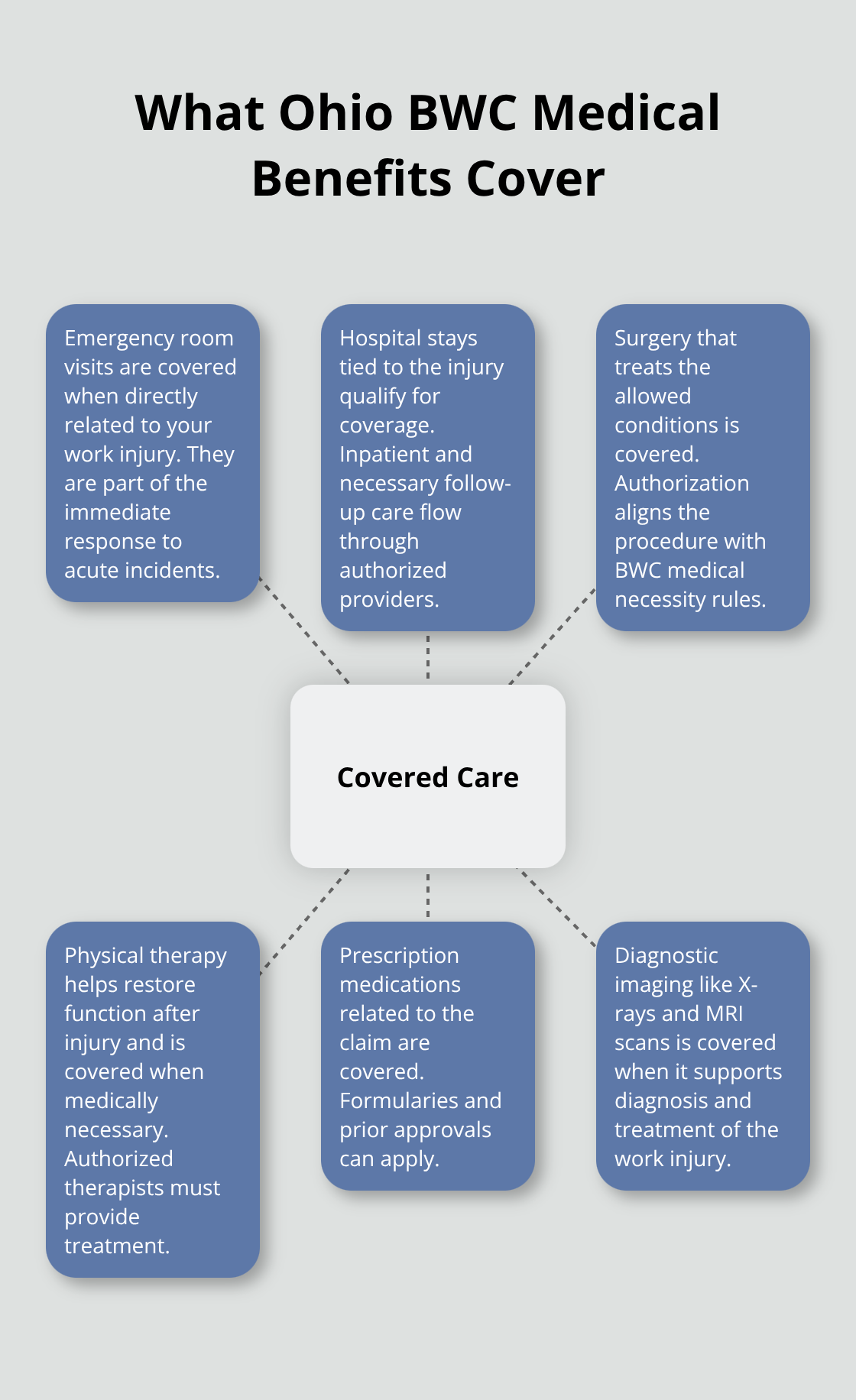
Ohio’s Bureau of Workers’ Compensation covers medical treatment directly related to your work injury, and understanding exactly what qualifies matters because the system won’t automatically pay for everything you might think it should. The BWC covers emergency room visits, hospital stays, surgery, physical therapy, prescription medications, and diagnostic imaging like X-rays and MRI scans. Authorized providers deliver ongoing treatment through the official network. What the BWC does not cover are treatments considered experimental, cosmetic procedures unrelated to your injury, or care from providers outside the authorized network without prior approval.
Pursuing unauthorized treatment can leave you responsible for the bills yourself, even if you believe the treatment was necessary.
The BWC publishes a Fee Schedule that lists reimbursement rates for specific procedures, and these rates vary significantly depending on the type of care. Physical therapy sessions typically reimburse between 40 and 60 dollars per session depending on complexity, while emergency room visits follow different payment structures entirely. One critical reality: the BWC decides what counts as medically necessary for your specific injury, not you and not always your doctor. This means your physician might recommend treatment that the BWC could deny if they determine it falls outside their coverage guidelines.
Accessing Care Through the Authorized Network
The BWC maintains a network of authorized providers, and you must use these providers to receive covered benefits unless you obtain prior authorization for exceptions. When you first report your injury to your employer, your employer should direct you to an authorized Ohio BWC provider, typically within the first 30 days. The provider then reports your injury details back to the BWC, creating your official claim file.
Finding authorized providers is straightforward because the BWC maintains a searchable database on their website where you can filter by location, specialty, and type of treatment. Your first appointment with an authorized provider establishes the medical record that the BWC will use to determine your ongoing coverage. Bring documentation of your injury, the date it occurred, and details about how it happened (including the specific circumstances and any witnesses present).
The authorized provider examines you, orders necessary tests, and submits their findings to the BWC. Your treatment plan then flows through the authorized provider system, which communicates directly with the BWC about your progress and any additional care you need. This direct communication between your provider and the BWC keeps your claim moving forward and prevents gaps in coverage that could delay your treatment.
What Happens When Your Provider Submits Your Case
Once your authorized provider submits your medical findings to the BWC, the agency reviews the documentation to determine what treatment they will cover going forward. The BWC typically responds within a specific timeframe, either approving your treatment plan or requesting additional information from your provider. Your provider receives this decision and informs you about what the BWC will cover. If the BWC approves your treatment, you can proceed with confidence knowing the system will pay for authorized care. If complications arise or the BWC requests more information, your provider handles most of that communication directly with the agency. Understanding this process helps you recognize when delays occur and what steps you can take to address them.
How Claims Move Through the Ohio BWC System
Your initial claim starts the moment you report your injury to your employer, and getting this step right determines everything that follows. Ohio law requires you to notify your employer of a work-related injury within a reasonable time, and while there’s no hard deadline, reporting immediately eliminates any argument later about when the injury occurred. Your employer then has 10 days to file the claim with the BWC, though most employers file much faster to avoid penalties. You should receive a claim number within days of your employer’s filing, and this number becomes your reference point for every future interaction with the BWC.
Getting Your Claim Number and Tracking Progress
Request your claim number in writing from your employer if they don’t provide it automatically, because you’ll need it to check your claim status online through the BWC’s system. The BWC publishes average processing times on their website, showing that initial claim acceptance typically takes between 5 and 15 business days depending on documentation completeness. Your authorized provider submits medical findings during this window, and incomplete submissions are the primary reason claims stall at this stage.
Identifying Communication Gaps Before They Become Problems
Communication gaps between your employer, your provider, and the BWC create most delays, and knowing this allows you to stay ahead of problems. Contact your employer’s workers’ compensation coordinator or insurance carrier within two weeks of filing to confirm they submitted your claim and to get the claim number. Then contact your authorized provider’s billing department to verify they’ve submitted your medical records to the BWC using the correct claim number.
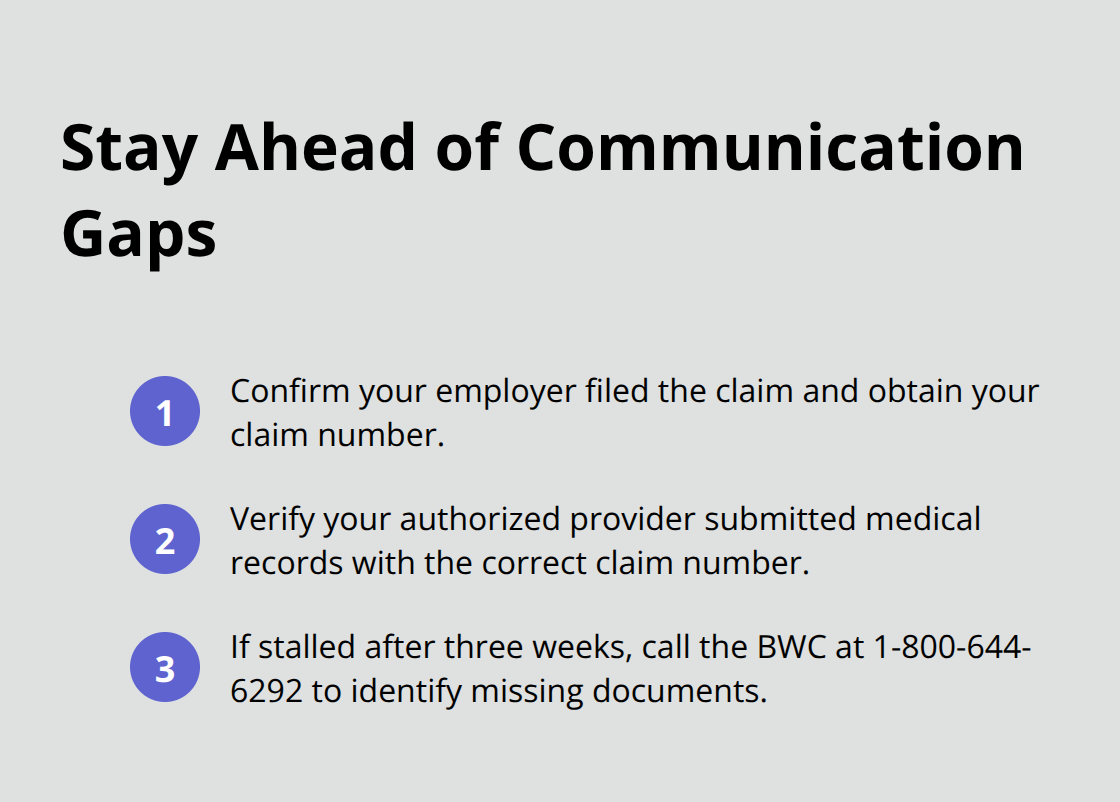
The BWC denies or delays approximately 15 to 20 percent of initial claims due to missing information, according to data from the Ohio Workers’ Compensation Research Institute, and these denials often stem from providers submitting incomplete medical documentation rather than coverage disputes. If your claim hasn’t moved forward within three weeks, call the BWC’s customer service line directly at 1-800-644-6292 and ask them to review your file for missing documents. They’ll tell you exactly what information they’re waiting for, and you can then push your provider or employer to submit it.
Taking Action When Delays Occur
This proactive approach cuts typical delays from months down to weeks because you’re identifying bottlenecks rather than waiting for notifications that may never arrive. Once your claim moves through initial processing and the BWC approves your medical treatment plan, you’ll face new decisions about which providers can treat you and what happens if the BWC limits your care. Understanding your rights at this stage becomes critical because the system allows you to challenge decisions you believe are wrong.
Challenging the BWC When Coverage Gets Limited
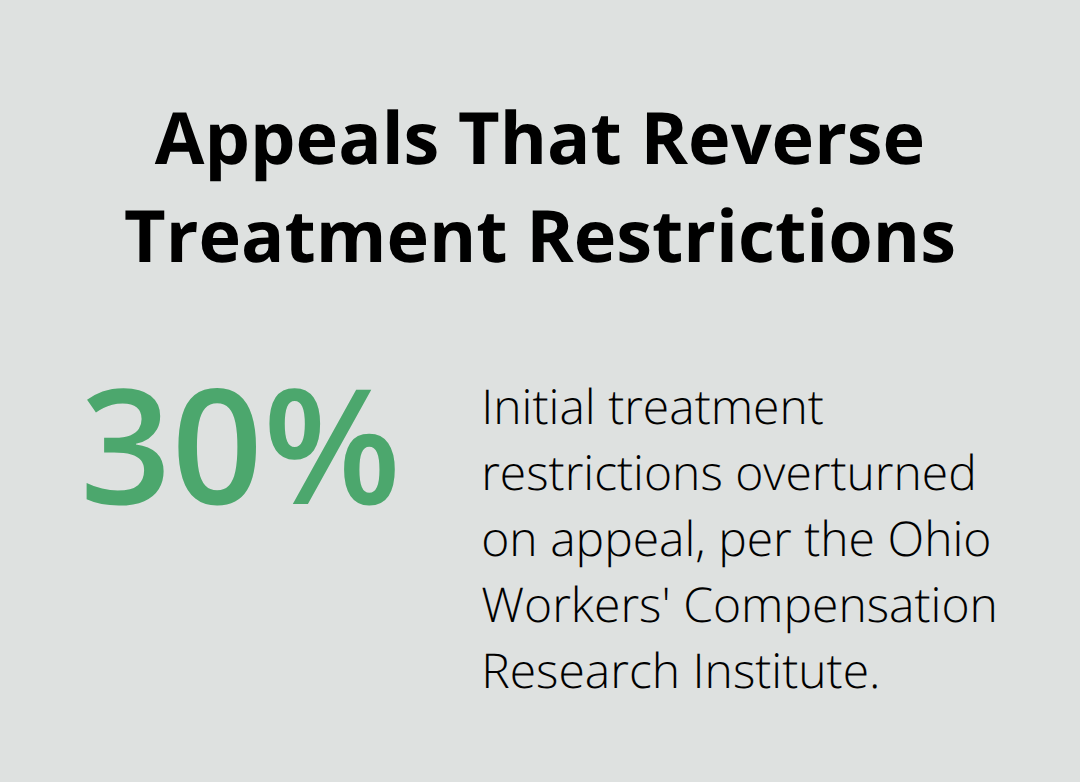
The BWC denies or restricts medical treatment far more often than most injured workers expect, and accepting their first decision without question leaves money and care on the table. When the BWC limits your treatment, reduces your authorized provider list, or denies a procedure your doctor recommended, you have concrete options to fight back. The Ohio Workers’ Compensation Research Institute reports that approximately 30 percent of initial treatment restrictions get overturned on appeal, meaning the system works in your favor if you take action. Most injured workers never appeal because they don’t understand the process, which is exactly why the BWC counts on silence.
Understanding Why the BWC Denied Your Treatment
Start by obtaining the specific reason the BWC gave for their decision in writing. Call the BWC at 1-800-644-6292 and request a written explanation if you only received a verbal denial, because you cannot appeal effectively without understanding their reasoning. The explanation matters because the BWC uses different standards for different types of care-they might deny ongoing physical therapy while approving surgery, or they might limit you to one provider when your injury requires multiple specialists. Your authorized provider should help you gather medical documentation showing why the denied treatment is necessary for your recovery. If your provider won’t support your appeal, that’s a warning sign that you may need a second opinion from another authorized provider who specializes in your type of injury.
Moving Through the Appeal Process
The appeal process in Ohio involves submitting additional medical evidence to the BWC’s medical review unit, which re-examines your case within 30 days according to state timelines. During this window, continue documenting your symptoms and limitations because new medical records strengthen your position. If the BWC denies your appeal at this stage, you can request a hearing before an administrative law judge through the Industrial Commission of Ohio, which is where disputes get resolved through actual legal proceedings rather than paperwork review.
When Your Case Needs Legal Representation
Navigating appeals alone works for straightforward cases, but complex injuries or repeated denials require experienced legal guidance. An attorney becomes essential when the BWC denies life-altering treatments, when your injury involves multiple body parts requiring coordinated care, or when you’ve already lost one or two appeals and need a fresh strategy. Most workers’ compensation attorneys in Ohio work on contingency, meaning you pay nothing unless you win your case, so cost shouldn’t prevent you from getting professional help. The Industrial Commission of Ohio hears approximately 15,000 cases annually, and injured workers represented by attorneys win significantly more often than those representing themselves (though specific win rates vary by case type and injury severity). If the BWC has denied your medical benefits or limited your coverage, Robin J. Peterson Company, LLC represents injured workers throughout the Cleveland, Akron, and Canton areas who face coverage disputes with the BWC.
Final Thoughts
The Ohio BWC system works when you actively engage with it instead of waiting for notifications that may never arrive. You now understand what medical benefits Ohio BWC covers, how to access authorized providers, and what to do when the system denies or limits your care. Communication gaps create most delays, and staying ahead of those gaps cuts your wait time dramatically.
Your rights matter more than the BWC’s initial decisions-approximately 30 percent of treatment restrictions get overturned on appeal, which means fighting back works. Gather medical documentation supporting why denied treatment is necessary, submit your appeal within the required timeframe, and request a hearing before an administrative law judge if the BWC denies your appeal. Complex injuries or repeated denials demand professional legal guidance, and an attorney working on contingency means you pay nothing unless you win.
If the system has denied your medical benefits or limited your coverage, contact Robin J. Peterson Company, LLC to discuss your options and fight for the care you deserve. We represent injured workers throughout Cleveland, Akron, and Canton who face coverage disputes with the BWC.