
A denied workers’ compensation claim can feel like a dead end, but it’s not. At Robin J Peterson Company, LLC, we know that understanding why the BWC denies claims is your first step toward fighting back.
Most denials happen for specific, fixable reasons. This guide walks you through the common BWC claim denial reasons, how to spot a wrongful denial, and what you can do about it.
Why the BWC Rejects Claims
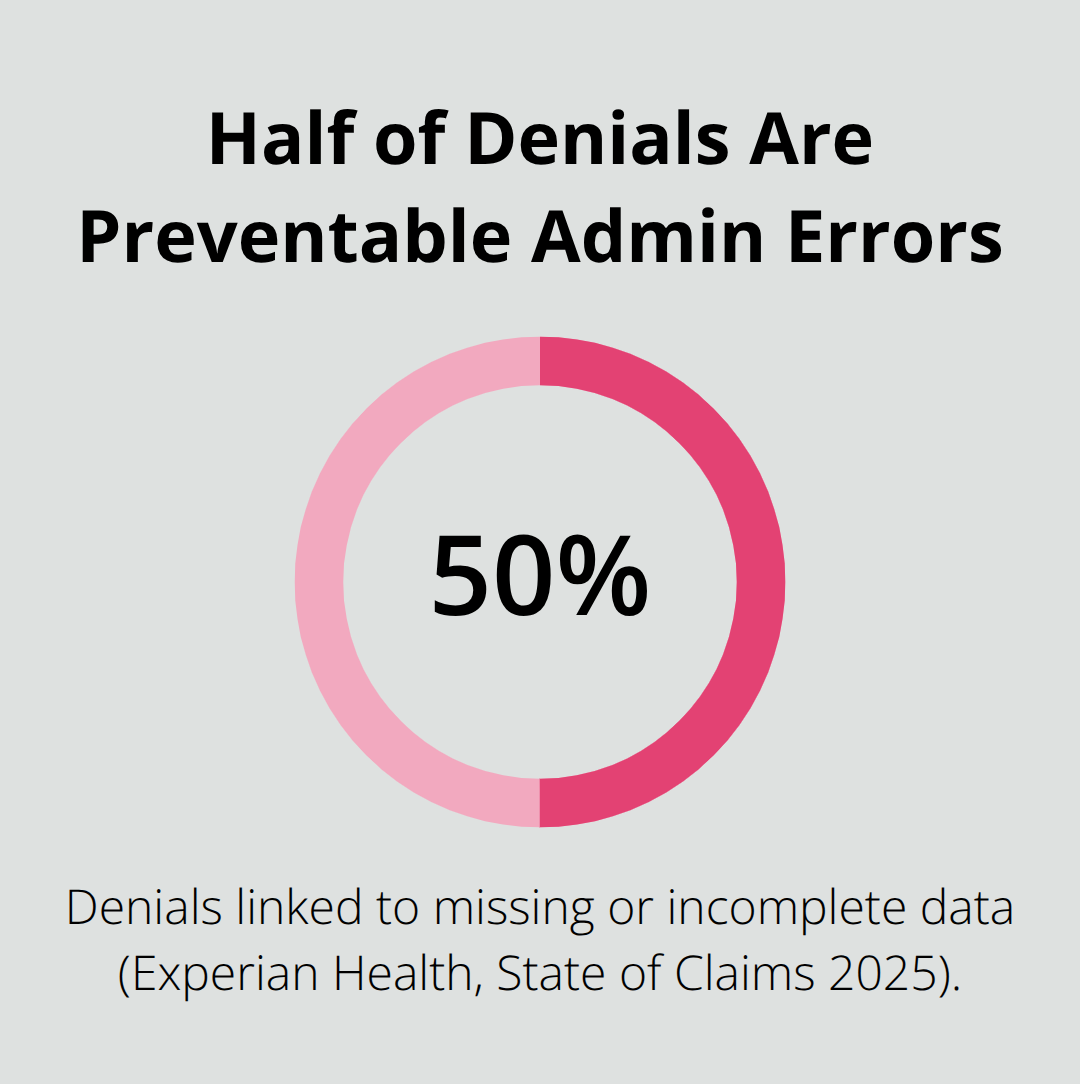
The Ohio Bureau of Workers’ Compensation denies thousands of claims annually, and according to Experian Health’s State of Claims 2025 report, missing or incomplete data accounts for about 50% of these denials. This statistic matters because it means half of all rejections stem from preventable administrative mistakes rather than legitimate reasons to deny your injury. The three most common preventable denial reasons are late reporting, insufficient medical evidence linking your injury to work, and employer disputes about work causation.
Understanding these specific triggers gives you the knowledge to avoid them or to challenge a denial if one lands in your mailbox.
Reporting Your Injury Too Late Costs You
Timing is everything in workers’ compensation. Injuries must reach the BWC promptly because delays trigger automatic denials. Report the injury on the day it happens and follow up with a written report within 24 hours. This creates a credible paper trail that the BWC cannot ignore. Many injured workers delay reporting because they think the injury is minor or they want to see how they feel after a few days. That hesitation is a mistake. Even minor injuries reported late face denial. You should also immediately tell your employer about the injury and document that conversation with the names of people you spoke to and the exact time. This employer notification serves as your first line of evidence that the injury was real and work-related.
Medical Records Must Explicitly State Work Causation
The second major denial reason involves weak medical documentation. Generic notes like “back injury” or “shoulder pain” without any statement connecting the injury to your job duties are insufficient. The BWC needs explicit language from your healthcare provider stating how the injury occurred at work and what specific job duties caused it. Select a healthcare provider certified by the BWC and provide them with a written description of exactly what happened during the incident, including the date, time, location, and the specific movements or actions that caused the injury. This written description becomes critical because it forces the provider to document the mechanism of injury with precision. Medical records must reach the BWC within 17 days of your initial injury report to avoid automatic denial. Coordinate directly with your provider’s office to confirm that records were submitted electronically to the BWC and obtain confirmation of that submission. Attend all recommended medical appointments and maintain organized copies of every test result and treatment note because consistency in your medical record strengthens your case significantly.
Pre-Existing Conditions Require Proof of Aggravation
The third common denial reason involves pre-existing conditions. The BWC will deny your claim if you had a prior back problem, knee issue, or similar condition before the workplace injury. However, the law allows recovery if the work injury aggravated your pre-existing condition. To win this type of claim, collect your prior medical records showing that your condition was stable before the incident. Obtain written statements from your physician explicitly linking the worsening of your condition to the job duties you performed during the incident. Without prior documentation of stability, the BWC assumes your condition was already deteriorating, making it harder to prove the work injury caused the aggravation.
What Happens When You Identify the Problem
Once you understand which denial reason applies to your claim, you move into the next critical phase: determining whether the BWC made an error. The denial letter itself contains the roadmap you need. It outlines the exact issues the Industrial Commission of Ohio will review and the evidence you must address to succeed on appeal. Knowing the specific reason behind your denial transforms a vague rejection into a concrete problem you can solve.
Is Your Denial Actually Wrongful
Read the Denial Letter Word-for-Word
The denial letter sitting on your desk contains far more information than you might realize. Read it word-for-word and identify the exact reason the BWC rejected your claim. The letter will cite specific policy sections or administrative codes, and those citations are your roadmap. If the denial states your injury is not work-related, the BWC is claiming you failed to prove compensability. If it mentions a missed deadline, the issue is procedural timing. If it references missing medical records, the problem is documentation. This distinction matters enormously because each denial reason requires different evidence to overturn.
Check for Administrative Errors
Compare what the BWC says you submitted against what actually went into your file. Administrative intake errors such as wrong dates, incomplete medical histories, or mismatched employer information can reject a claim before medical review even begins, according to industry data on claims processing failures. Check whether your name appears consistently across all documents, whether dates match between your injury report and medical records, and whether your employer information is accurate. A single transposed digit in your social security number or a misspelled street address can trigger a denial that has nothing to do with the legitimacy of your injury.
Request a detailed written explanation from the BWC that cites the exact denial reason and the specific policy section supporting it. Do not accept the initial denial notice as complete; the BWC must provide this information if you ask, and this documentation becomes essential evidence for your appeal.
Organize and Examine Your Documentation
Gather every document related to your claim and organize them chronologically. Pull your original injury report, all medical records submitted to the BWC, any prior medical records showing your baseline health status, incident reports filed with your employer, and witness statements from coworkers who saw what happened. If your denial involves a pre-existing condition, prior medical records showing stability before the injury are critical because they prove the work incident caused aggravation rather than revealing an existing problem.
Electronic submission confirmations from your healthcare provider matter too; they prove the BWC received medical documentation and when it arrived. Examine each medical note to see whether your provider explicitly stated the mechanism of injury and connected it to your job duties. Insufficient medical evidence ranks among the top denial reasons, so generic language like “patient reports work-related injury” is weaker than specific documentation such as “patient lifted heavy box using improper technique on August 15, 2026, at 2:45 p.m., causing acute lower back strain.” If your medical records lack this specificity, that gap likely explains the denial, and you now know what evidence to add during appeal.
Spot Inconsistencies That Undermine Your Case
Look for inconsistencies between what you reported to your employer, what you told your healthcare provider, and what appears in medical notes. Inconsistencies give the BWC ammunition to question your credibility, even if the inconsistencies are minor or accidental. These gaps in your documentation reveal exactly what you must address when you file your appeal with the Industrial Commission of Ohio.
How to File Your Appeal and Strengthen Your Case
Meet the 20-Day Deadline
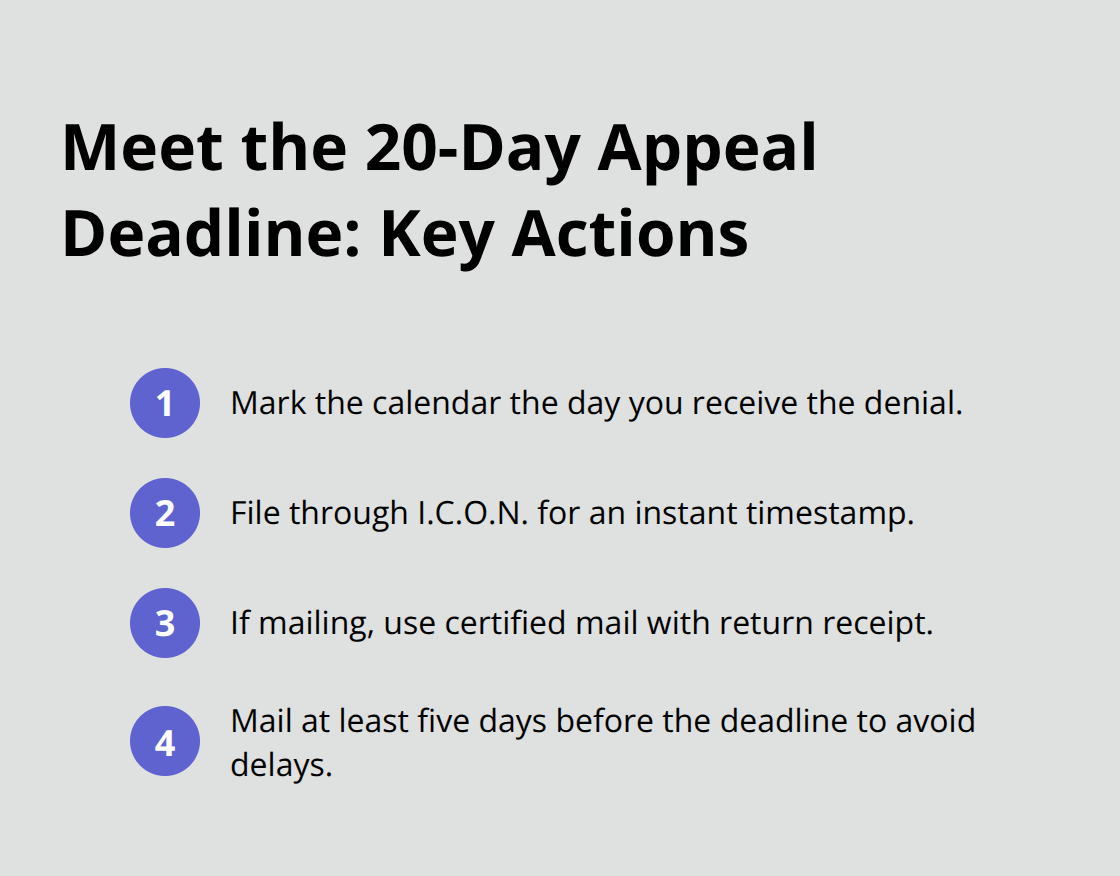
You have 20 days from the mailing date on your denial letter to file your appeal with the Industrial Commission of Ohio, and missing this deadline eliminates your right to appeal entirely. This window is non-negotiable, so the moment you receive your denial, mark the calendar and start gathering evidence. You can file your appeal through the Industrial Commission of Ohio Online Network, known as I.C.O.N., which timestamps your submission instantly and removes any ambiguity about whether you met the deadline. If you prefer mailing your appeal, use certified mail with return receipt and submit it at least five days before the deadline to account for postal delays.
Organize Your Appeal Package
The Industrial Commission reviews only the material you submit; they do not search for missing documents on their own, so your appeal package must be complete and self-contained from the start. Create an organized file containing the original denial letter, copies of everything you submitted initially, and the new evidence addressing the specific denial reason. Label each document clearly and organize materials chronologically because a well-organized package signals credibility to the Industrial Commission and improves consideration of your case.
If the denial states your injury is not work-related, include medical evidence explicitly connecting the injury to your job duties and witness statements from coworkers who saw the incident occur. If administrative errors caused the denial, submit corrected information with a one-page letter pinpointing the original mistakes. If the denial cites missing medical records, gather those records immediately and include them with a cover letter explaining their relevance to your claim.
Leverage Witness Statements and Medical Evidence
Witness statements carry substantial weight in appeals, particularly for claims involving work causation disputes. Coworkers who observed your injury or the conditions that caused it can corroborate your account and provide details that strengthen your credibility. Request written statements from these witnesses that include their name, job title, how long they have worked with you, what they witnessed, and the date and time of the incident.
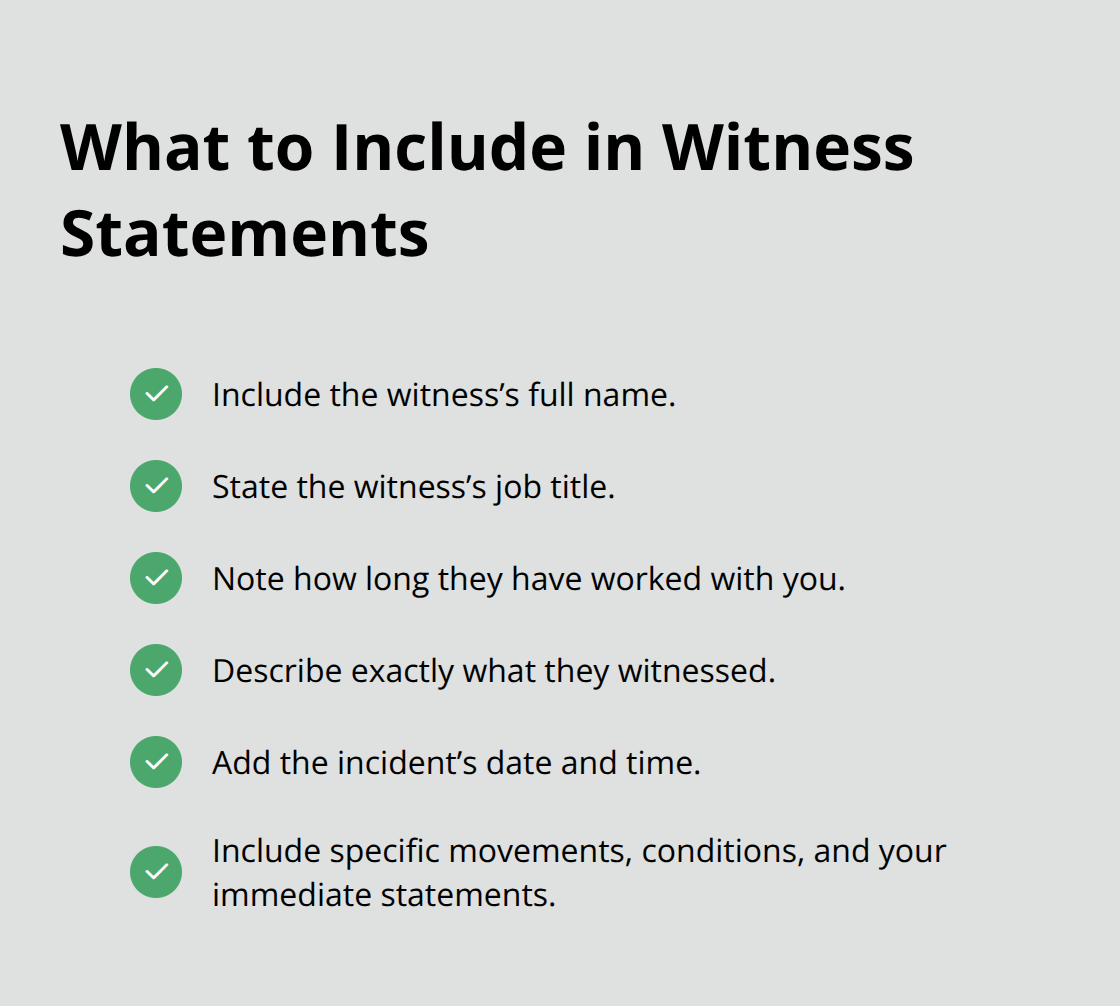
Statements should describe specific details such as the exact movements or actions you performed, environmental conditions, and any statements you made immediately after the injury.
If your claim involves a pre-existing condition, gather prior medical records showing your condition was stable before the work injury and obtain written statements from your physician explicitly stating that the workplace incident aggravated your pre-existing condition. These physician statements are decisive because the Industrial Commission relies heavily on credible medical opinions about causation.
Consider Legal Representation
Legal representation from an experienced Industrial Commission attorney can substantially improve your odds of success, particularly for complex denials involving work-relatedness or compensability disputes. An attorney manages deadlines, organizes evidence, coordinates with medical providers, and develops hearing strategy tailored to the specific denial reason your case faces. Attorneys who focus on Ohio workers’ compensation law understand how the Industrial Commission evaluates evidence and can present your case in the format most likely to persuade the hearing officer.
They also handle communication with the BWC and manage any Independent Medical Examination reports that may have contributed to your denial. Most workers’ compensation attorneys in Ohio work on contingency, meaning you pay no upfront fees and the attorney only receives compensation if your appeal succeeds. This arrangement removes financial barriers to securing experienced legal help and aligns the attorney’s interests with yours. Many firms offer free consultations to evaluate your case and discuss your options.
Final Thoughts
A denied workers’ compensation claim does not have to remain permanent. Understanding the common BWC claim denial reasons transforms a vague rejection into a concrete problem you can solve and overcome. The path from denial to resolution requires action within strict deadlines, organized documentation, and often professional guidance to navigate successfully.
Your next step depends on the complexity of your situation. If your denial involves straightforward administrative errors or missing medical records, you may successfully appeal by gathering the correct documents and submitting them within the 20-day window. If your denial hinges on work causation or involves disputes about whether your injury is compensable, the stakes are higher and the evidence requirements more demanding, making legal representation increasingly valuable.
An attorney experienced in Ohio workers’ compensation law understands how the Industrial Commission evaluates evidence and knows which arguments persuade hearing officers. We at Robin J Peterson Company, LLC represent injured workers throughout Ohio who face denied claims, and we serve clients in the Cleveland, Akron, and Canton areas while focusing exclusively on workers’ compensation law. Contact our firm to discuss your case during a free consultation, because many injured workers successfully overturn denials when they have the right evidence and experienced representation behind them.