
Work injuries happen fast, but understanding Ohio workers comp benefits doesn’t have to be complicated. We at Robin J Peterson Company, LLC created this guide to walk you through the system step by step.
From filing your claim to handling denials, you’ll find practical answers here. Let’s get started.
How Ohio’s Workers’ Compensation System Works
Understanding the Split Between BWC and the Industrial Commission
The Ohio Bureau of Workers’ Compensation administers workers’ comp in Ohio, but understanding how it actually operates requires knowing who does what. The BWC handles employer accounts, premium collection, and claim processing, while the Industrial Commission of Ohio manages disputes and appeals when claims are denied or contested. This split matters because it affects where you file, how long decisions take, and what options you have if something goes wrong.
What Happens When You Report an Injury
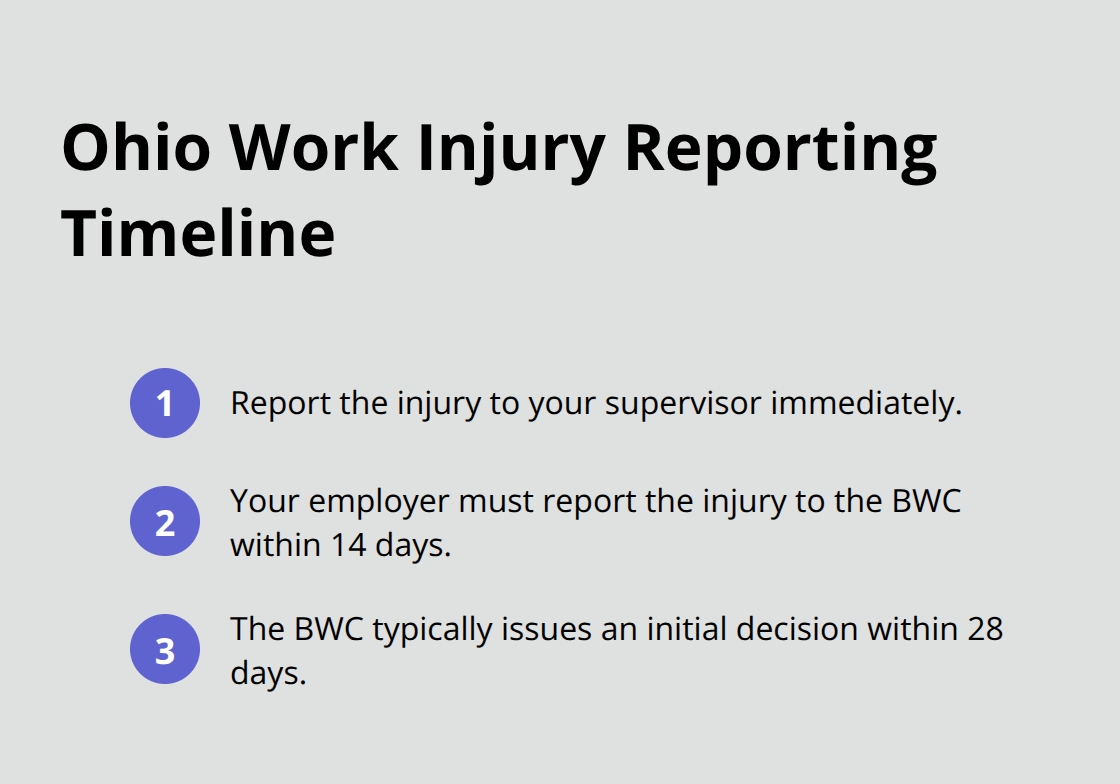
When you suffer an injury at work in Ohio, your employer must report it to the BWC within 14 days, though you should report it immediately to your supervisor regardless. The BWC then has specific timeframes to accept or deny your claim, typically making an initial decision within 28 days. Coverage in Ohio is mandatory for most employers with one or more employees, meaning your employer must carry this insurance or face serious penalties.
The state-run system means you cannot sue your employer for negligence in most cases, but you gain the benefit of no-fault coverage that pays regardless of who caused the accident.
Medical Treatment and Wage Replacement Benefits
Medical treatment and wage replacement represent the two main benefit categories available to injured workers. The BWC covers all reasonable and necessary medical treatment related to your work injury, including doctor visits, surgeries, medications, and physical therapy, with no copays or deductibles. If your injury causes you to miss work, you receive wage loss benefits equal to two-thirds of your average weekly wage, with weekly benefit amounts capped at a maximum set by the BWC each year. Temporary total disability benefits continue as long as you cannot work, while permanent disability benefits apply if you cannot return to your previous job.
Vocational Rehabilitation and the Claims Process
Ohio mandates vocational rehabilitation services for workers who cannot return to their original occupation, providing job retraining and job placement assistance at no cost to you. When you file a claim, you submit an application through the BWC portal or paper form, providing details about your injury and how it occurred. The BWC investigates your claim by reviewing medical records and employer information, then notifies you of acceptance or denial in writing. If the BWC denies your claim, you have appeal rights through the Industrial Commission, which handles disputes over benefit amounts and claim decisions.
What Benefits Can You Actually Receive After a Work Injury
After a work injury in Ohio, the BWC provides three primary benefit streams, and understanding what each covers prevents gaps in your recovery plan. Medical coverage under Ohio’s workers’ comp system is comprehensive compared to most private insurance plans-the BWC pays for all reasonable and necessary treatment related to your injury, including emergency room visits, surgeries, ongoing physical therapy, prescription medications, and medical devices like braces or prosthetics, all without copays or deductibles. Wage loss benefits replace two-thirds of your average weekly wage while you cannot work, with the maximum weekly benefit amount adjusted annually by the BWC based on statewide wage data. If your injury prevents you from returning to your original job, Ohio mandates that the BWC fund vocational rehabilitation services, which cover job retraining programs, job placement assistance, and related expenses-this matters because it gives you a structured path back to employment rather than leaving you to figure out a career transition alone.
The Reality of Wage Replacement Timing
Wage loss benefits do not start immediately after injury. The BWC typically begins paying temporary total disability benefits after a waiting period, usually within two to three weeks of claim acceptance, though this varies based on how quickly your employer reports the injury and medical documentation arrives. The two-thirds replacement rate sounds straightforward until you calculate it against your actual bills-if you earned $1,200 weekly before injury, your benefit covers approximately $800 per week, leaving a gap you must cover with savings or other income sources. Permanent partial disability benefits apply if you have lasting effects from the injury but can still work in some capacity, with the BWC assigning an impairment rating that determines your benefit amount based on objective medical findings. Permanent total disability is rare but applies when you genuinely cannot work in any capacity; Ohio considers factors like your age, education, and job skills when making this determination, not just the severity of the injury itself.
Vocational Rehabilitation as Your Return-to-Work Tool
Vocational rehabilitation in Ohio functions as a practical return-to-work program, not just a benefit category. If the BWC determines you cannot perform your previous job, they assign you a vocational counselor who evaluates your skills, interests, and physical limitations to identify realistic employment options. The program covers tuition for retraining programs, tools and equipment needed for a new job, and job placement services-Ohio does not cap these expenses, meaning if you need extensive retraining to return to work, the BWC pays for it. The counselor works with you for up to 52 weeks to achieve successful job placement, though extensions occur in cases that require longer training periods. This service matters significantly because returning to your exact previous job is often impossible after serious injuries, and without structured vocational support, many workers either remain unemployed or accept positions far below their previous earning capacity.
What Happens When the BWC Denies Your Claim
Not every claim receives approval on the first submission. The BWC may deny your claim if they determine your injury did not occur at work, if you failed to report it within the required timeframe, or if medical evidence does not support a work-related connection. A denial does not end your options-you have the right to appeal through the Industrial Commission of Ohio, which reviews the BWC’s decision and can overturn it if evidence supports your claim. Understanding your appeal rights and the evidence you need to present separates workers who accept incorrect denials from those who fight for the benefits they earned.
When Your Claim Gets Denied
Claim denials from the BWC happen more often than injured workers expect. The BWC denies roughly 20 percent of initial claims submitted, according to data from the Ohio Bureau of Workers’ Compensation annual reports.
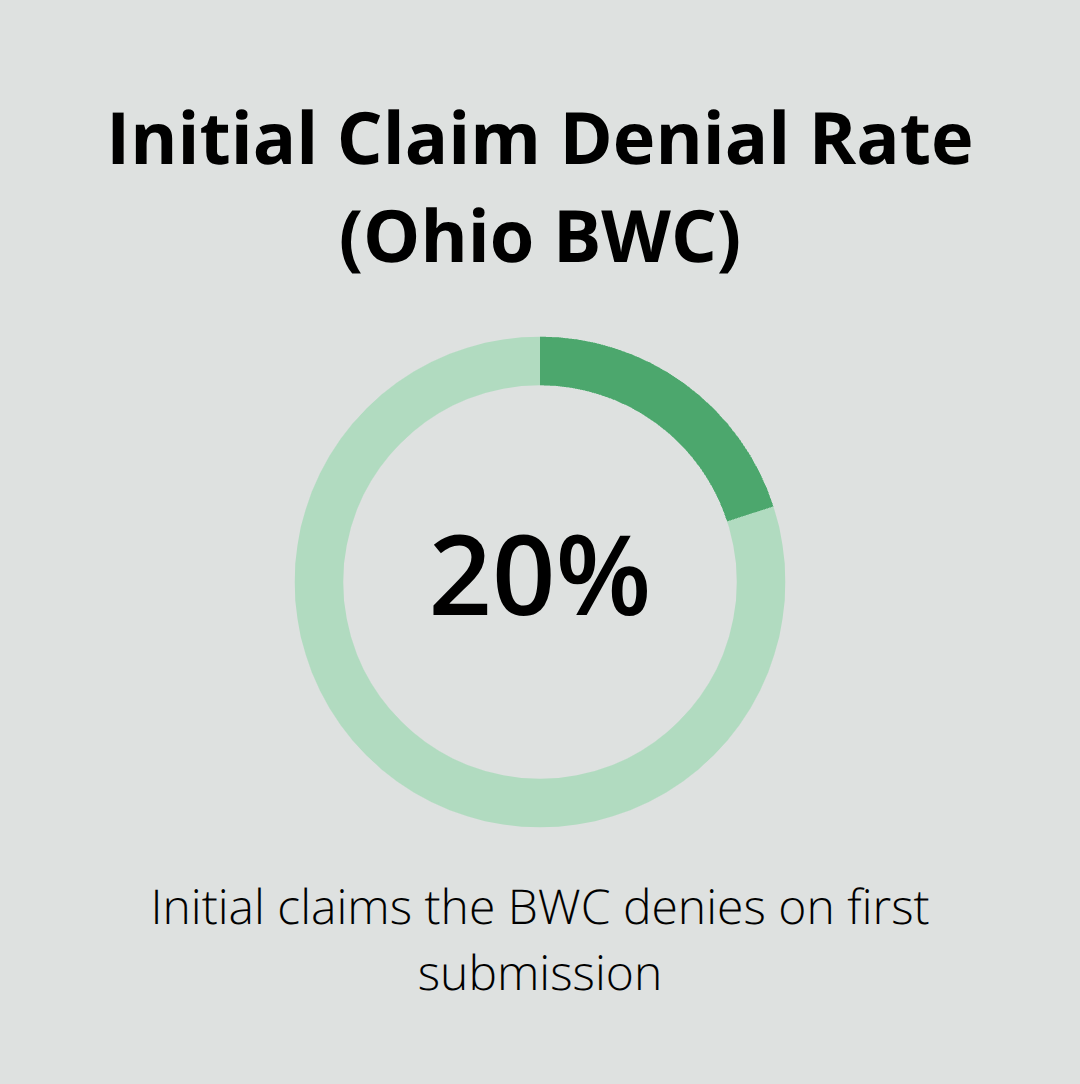
Common denial reasons include insufficient medical documentation linking your injury to work, missed reporting deadlines, or the BWC’s determination that your injury did not occur during employment.
Most workers treat a denial as final, but that approach costs them benefits they earned. You have appeal rights, and the Industrial Commission of Ohio overturns BWC denials regularly when proper evidence is presented. Understanding what triggered your denial matters because your appeal strategy depends on the specific reason.
Identifying Why the BWC Rejected Your Claim
The BWC provides a written explanation with every denial, so read it carefully and identify exactly which factor caused rejection before proceeding. If the BWC cites insufficient medical evidence, you need additional documentation from your doctor. If they argue your injury happened outside work, you need witness statements or surveillance showing otherwise. If you missed a reporting deadline, you need to demonstrate you reported the injury as soon as reasonably possible.
Each denial reason requires a different response strategy. Medical evidence gaps require your treating physician to submit supplemental reports. Work-relatedness disputes require testimony from coworkers or supervisors who witnessed the injury. Procedural issues (like late reporting) require you to show you acted promptly once you became aware of the injury.
How the Industrial Commission Reviews Your Appeal
The Industrial Commission of Ohio reviews denied claims through a formal hearing process, not a quick paperwork review. After receiving a denial, you have 14 days to file your appeal with the Industrial Commission, though the process extends well beyond that initial deadline.
You can file the appeal yourself without representation, submitting a request through the Industrial Commission’s office in Columbus or through designated district hearing offices in Cleveland, Cincinnati, and other major cities. The hearing typically occurs within 60 to 90 days of filing, and an administrative law judge reviews your case, the BWC’s denial, and any new evidence you provide.
Presenting Evidence at Your Hearing
You can present medical records, testimony from your treating physician, witness statements from coworkers, and your own testimony about how the injury occurred and affected your work. The judge makes a recommendation, which then goes to the Industrial Commission for final review. This process takes several months total, so do not expect quick resolution.
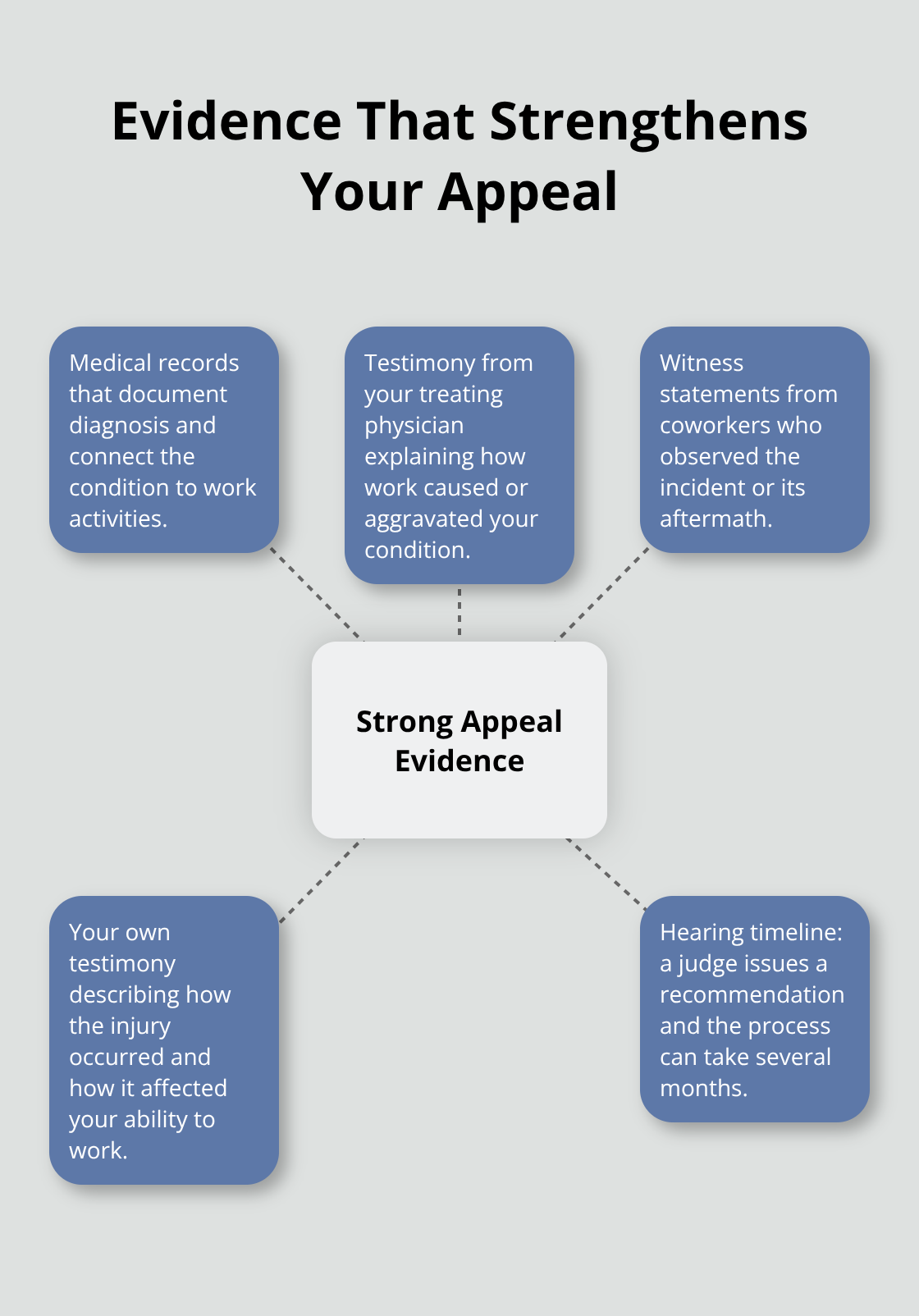
The good news is that judges often side with injured workers when medical evidence clearly supports a work-related injury, especially if your doctor testifies that your condition stems from workplace activities. Strong medical documentation and credible witness testimony shift the outcome in your favor.
When You Should Hire an Attorney
Handling an appeal alone is possible but risky. Workers who hire representation win appeals at significantly higher rates than those proceeding alone. An attorney experienced in Ohio workers’ compensation law knows how to present evidence effectively, identify gaps in the BWC’s reasoning, and anticipate arguments the BWC will raise.
More importantly, an attorney understands Ohio workers’ compensation statutes and case law that judges rely on when making decisions. The Industrial Commission requires that any attorney you hire be approved to practice before them, so you cannot simply hire any lawyer. Most workers’ compensation attorneys work on contingency, meaning you pay nothing unless you win your appeal.
You should contact an attorney immediately after receiving a denial, not months later when evidence has disappeared and witnesses have moved on. The longer you wait, the harder your appeal becomes because the circumstances surrounding your injury fade from memory and supporting documentation becomes difficult to locate.
Final Thoughts
Ohio workers comp benefits protect you after a work injury, but only if you act decisively when problems arise. Report your injury immediately to your supervisor, keep detailed records of all medical visits and BWC communications, and appeal any denial rather than accepting it as final. The Industrial Commission overturns many initial denials when you present proper evidence, so a rejection from the BWC does not end your options.
Hiring an attorney early in the process-especially after a denial-significantly improves your chances of receiving the benefits you earned. An experienced workers’ compensation attorney knows how to present evidence effectively, identify weaknesses in the BWC’s reasoning, and navigate the Industrial Commission’s formal hearing process. The team at Robin J Peterson Company, LLC represents injured workers throughout Ohio and understands the specific challenges you face when fighting for your rights.
Contact the BWC Help Center for guidance on filing claims and understanding procedures, or use the Ombuds Office if you encounter disputes. Take action quickly rather than waiting, because delays in reporting, filing appeals, or gathering evidence weaken your position significantly.