
Getting a workers’ compensation claim denied in Ohio can feel like a dead end. But it isn’t.
We at Robin J Peterson Company, LLC know that denied claims don’t have to be final. You have real options to fight back, whether through appeal or reopening your case. This guide walks you through the exact steps the Ohio Bureau of Workers’ Compensation requires.
Understanding Why Workers’ Compensation Claims Get Denied in Ohio
Common Reasons for Claim Denials from the BWC
A workers’ compensation claim denial in Ohio often results from preventable mistakes rather than legitimate grounds for rejection. The Ohio Bureau of Workers’ Compensation denies thousands of claims annually, and understanding what triggers these denials positions you to fight back effectively. Untimely filing ranks as the most common culprit-claims filed more than one year after the injury date face automatic denial under Ohio Bureau of Workers’ Compensation rules. This hard deadline catches many injured workers off guard, particularly those who delayed reporting because they expected their injury to resolve independently.
Insufficient evidence that your injury arose from and occurred during employment causes frequent denials as well. Off-site injuries, gradual-onset conditions, and non-standard work activities fall into this category because the BWC demands clear documentation that links the injury directly to your job duties. Employer disputes represent another major denial trigger. When your employer contests the claim, you must prove the incident happened at work and was genuinely work-related.
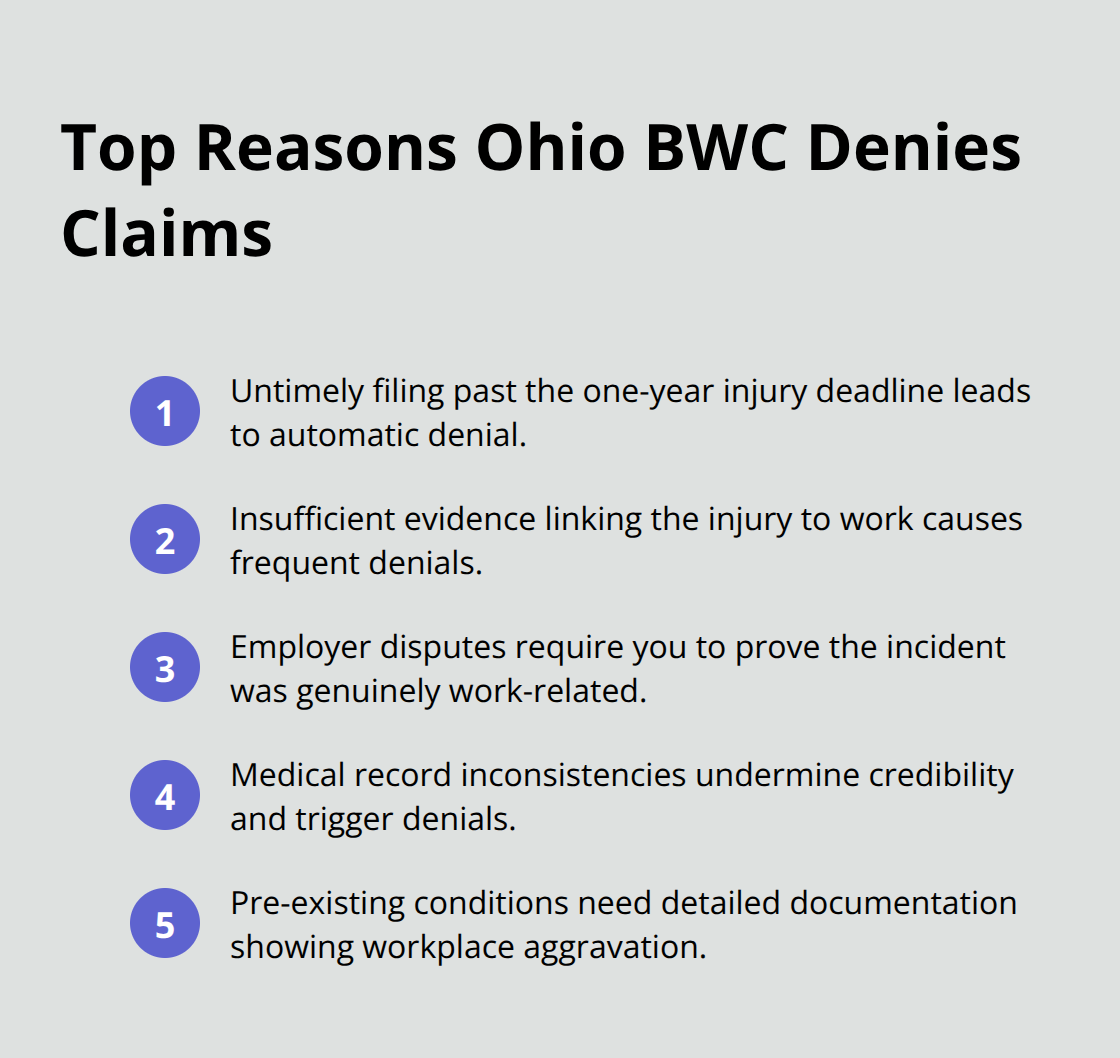
Medical record inconsistencies also seal denial decisions. If your reported symptoms fail to match what your physician documented, or if you ignored work restrictions after receiving them, the BWC treats these gaps as red flags. Pre-existing conditions aggravated by work can be denied without detailed documentation that shows exactly how the workplace incident made your condition worse.
The Distinction Between Denial and Closure
The distinction between a denial and a closure matters significantly for your next move. A denial rejects your claim before any benefits are paid, while a closure ends benefits after they were already distributed. The BWC notification letter specifies which one you received, and this determines whether you file a protest or a reopening request. Understanding this difference prevents you from taking the wrong legal action and missing critical deadlines.
What the Industrial Commission Examines
When you appeal to the Industrial Commission of Ohio, an Administrative Judge reviews whether the BWC’s denial decision was justified. The judge examines your medical evidence first-objective findings like imaging results and physician notes carry far more weight than your subjective complaints about pain or limitation. You must therefore assemble comprehensive medical documentation from every treating provider since your injury date.
Witness statements about the incident also influence the judge’s assessment, particularly statements that detail workplace conditions and any communications from your employer about medical restrictions. The judge weighs whether you reported the injury promptly and whether your employer disputed the claim, as employer disputes require stronger evidence on your part to overcome.
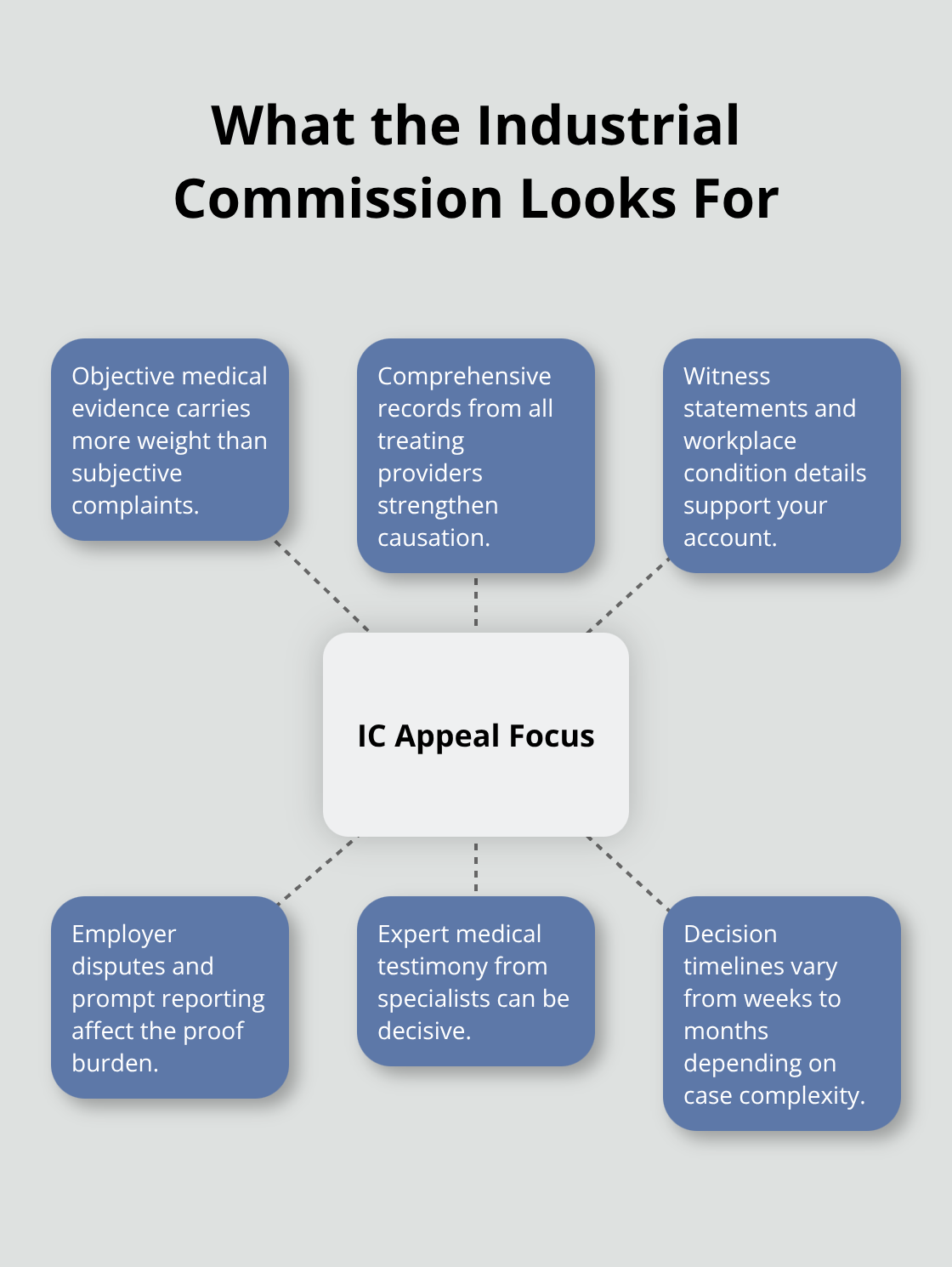
Expert medical testimony from a treating physician or occupational health specialist significantly strengthens your case. The judge wants to hear directly from your doctor about causation-how the workplace incident specifically caused or aggravated your condition. If your treating physician cannot attend the hearing, a detailed written statement still influences the decision, though live testimony proves more persuasive. The timeline for the judge’s decision typically ranges from weeks to months depending on case complexity and hearing schedules.
With a clear understanding of what the Industrial Commission examines, you can now focus on the specific steps required to file your appeal and present the strongest possible case.
How to File Your Appeal with the Industrial Commission
The 14-Day Deadline That Controls Everything
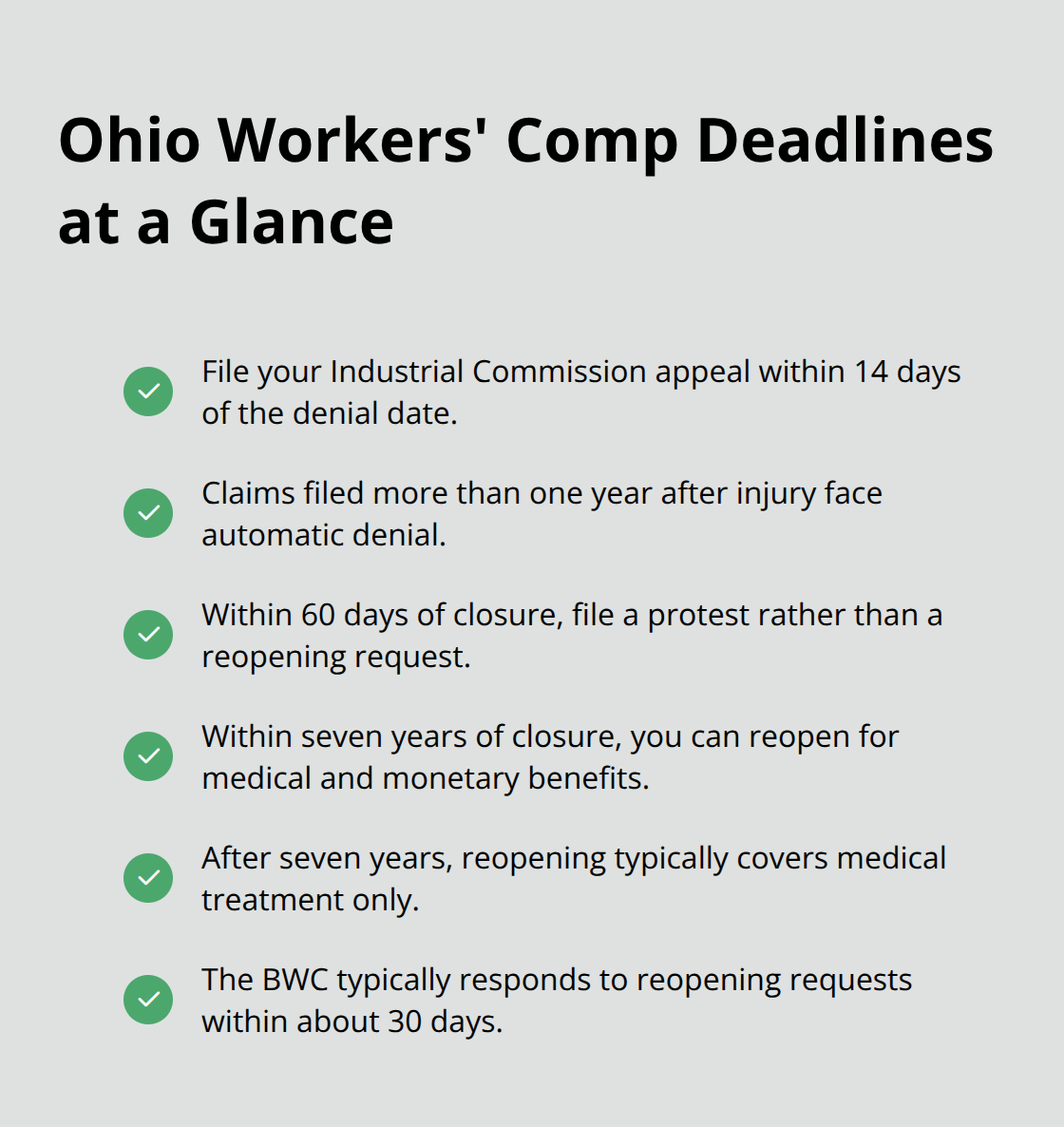
You have 14 days from the denial date to file your appeal with the Industrial Commission of Ohio. Missing this deadline bars further review, so you must act immediately. The appeal form itself is straightforward, but most injured workers underestimate how heavily the supporting medical records and evidence influence whether the Administrative Judge takes their case seriously.
Collecting Medical Documentation That Wins Cases
Start collecting medical documentation immediately from every treating provider since your injury date. Request imaging results, physician notes, treatment summaries, and any restrictions your doctor issued. Objective findings like X-rays or MRI results carry substantially more weight than your description of pain or functional limitations.
Medical records that contradict your reported symptoms will be weaponized against you during the appeal, so accuracy matters enormously. If your physician documented that you were pain-free during an exam but you reported severe pain on your initial claim, the BWC will cite this inconsistency to support the denial. Request a detailed statement from your treating physician addressing the specific reasons the BWC cited for denial. Ask your doctor to explain how the workplace incident caused or aggravated your condition in medical terms the judge will understand.
Building Evidence Against Employer Disputes
If your employer disputed the claim, you must gather witness statements from coworkers who observed the incident or can attest to workplace conditions. Include any written communications from your employer about medical restrictions, return-to-work demands, or pressure to continue working despite your injury. These documents directly counter employer disputes and demonstrate that the incident was genuinely work-related.
Expert Medical Testimony and Physician Participation
Live testimony from your physician at the Industrial Commission hearing carries far more persuasive power than a written statement alone, though a well-prepared written report still influences the judge’s decision if attendance is impossible. For gradual-onset or off-site injuries, expert medical testimony becomes essential because causation is harder to establish without specialist input. An occupational medicine physician or relevant specialist can provide the credible opinion the judge needs to overturn the denial. You should secure expert opinions early in the appeal process rather than scrambling to find them after your hearing date is set.
Why Legal Representation Transforms Your Appeal
Legal representation during appeal significantly strengthens your position because an experienced attorney identifies the strongest arguments against the denial, manages procedural rules that trip up unrepresented workers, and negotiates directly with the BWC. An attorney also handles communication with the Industrial Commission and ensures your evidence arrives properly formatted and on time. With your appeal filed and your evidence organized, you now move into the critical phase of preparing for your hearing before the Administrative Judge.
Reopening a Closed Claim in Ohio
A closed workers’ compensation claim differs fundamentally from a denied claim, and Ohio’s rules for reopening are strict. According to the Ohio Bureau of Workers’ Compensation, if your claim closed less than 60 days ago, you must file a protest rather than a reopening request-this is the critical distinction most injured workers miss. If your claim closed within the past seven years, you can reopen for both medical and monetary benefits, but after seven years have passed, reopening typically covers medical treatment only. The BWC notification letter specifies whether you received a denial or closure order, so examine that document carefully before taking action.
Acting on the wrong assumption costs you time and may forfeit your eligibility window entirely.
When Your Condition Worsens After Closure
The strongest reopening cases involve objective medical evidence that your condition worsened after the claim closed. If you completed treatment and returned to work, then months later developed complications directly traceable to the original injury, that documented deterioration justifies reopening. Collect medical records from your current treating provider that explicitly link the worsening to your work injury rather than a new, separate condition. The BWC scrutinizes reopening requests heavily because they represent additional liability, so vague complaints about ongoing pain will not succeed. Your physician must document specific functional losses, imaging findings, or treatment requirements that did not exist when the claim closed. If your doctor can state in writing that the worsening is a natural progression of the original work injury and not a new injury, that statement becomes your most valuable evidence.
Medical Evidence That Supports Reopening
Without clear medical nexus, the BWC will deny your reopening request outright. Your physician’s documentation must address the specific deterioration, not general statements about your condition. Request that your treating provider explain how the worsening connects to your original workplace incident in medical terms the BWC will understand. Imaging results, lab findings, and treatment records from the period after closure all strengthen your case. The more objective your evidence, the higher your chances of success.
Submitting Your Reopening Request
Submit your reopening request directly to the Ohio Bureau of Workers’ Compensation with complete medical documentation attached. Include the original claim number, the closure date, and a detailed explanation of what has worsened and when. Attach medical reports from your current provider that address the specific deterioration, along with any imaging, lab results, or treatment records from the period after closure. The BWC typically responds within 30 days, though complex cases may take longer.
Appealing a Denied Reopening Request
If the BWC denies your reopening request, you have the right to appeal to the Industrial Commission of Ohio, and the same 14-day deadline applies. This appeal follows the same evidence-gathering and hearing preparation process outlined for initial denials. An experienced workers’ compensation attorney can evaluate whether your medical evidence meets the threshold for reopening and can advocate aggressively if the BWC initially rejects your request.
Final Thoughts
Denied claims in Ohio require immediate action because the 14-day appeal deadline controls everything. You must choose between appealing to the Industrial Commission or reopening your closed claim, and this decision hinges on what your BWC notification letter states. The strongest cases share one foundation: comprehensive medical documentation, witness statements, and expert testimony that directly address why the denial was wrong.
Legal representation transforms your appeal significantly because an experienced workers’ compensation attorney identifies which arguments carry the most weight, manages procedural deadlines that trip up unrepresented workers, and presents your evidence persuasively before the Administrative Judge. Your physician’s statement must explain causation in medical terms the judge understands, and your evidence must arrive organized and on time. Employer disputes demand witness testimony about workplace conditions, while gradual-onset injuries require specialist opinions that establish the work connection.
We at Robin J Peterson Company, LLC represent injured workers throughout Ohio who face denied claims and closed cases. Contact us to discuss your denied claims Ohio guidance and explore whether appeal or reopening offers your strongest path forward.