
Filing a BWC claim in Ohio requires knowing the right steps and avoiding common pitfalls that can delay your benefits.
We at Robin J Peterson Company, LLC have helped many injured workers navigate this process successfully. This guide walks you through each stage, from reporting your injury to tracking your claim status.
How Ohio’s BWC System Works
The State-Funded Structure That Sets Ohio Apart
Ohio operates one of the few fully state-funded workers’ compensation systems in the country, which means the Bureau of Workers’ Compensation administers all claims without involving private insurance companies. This structure matters because it removes the profit motive that exists in private insurance models. The BWC doesn’t benefit financially from denying your claim, though it does maintain standards for approving benefits. Understanding this distinction helps you approach the filing process with realistic expectations.
What the BWC Actually Covers
The BWC covers medical expenses and wage replacement for work-related injuries and illnesses across virtually all employment sectors in Ohio. You qualify regardless of who caused the accident, which is why Ohio calls this a no-fault system. This removes the burden of proving your employer was negligent, but it also means the BWC scrutinizes claims carefully to prevent fraud and misuse of state funds.
Critical Deadlines You Cannot Miss
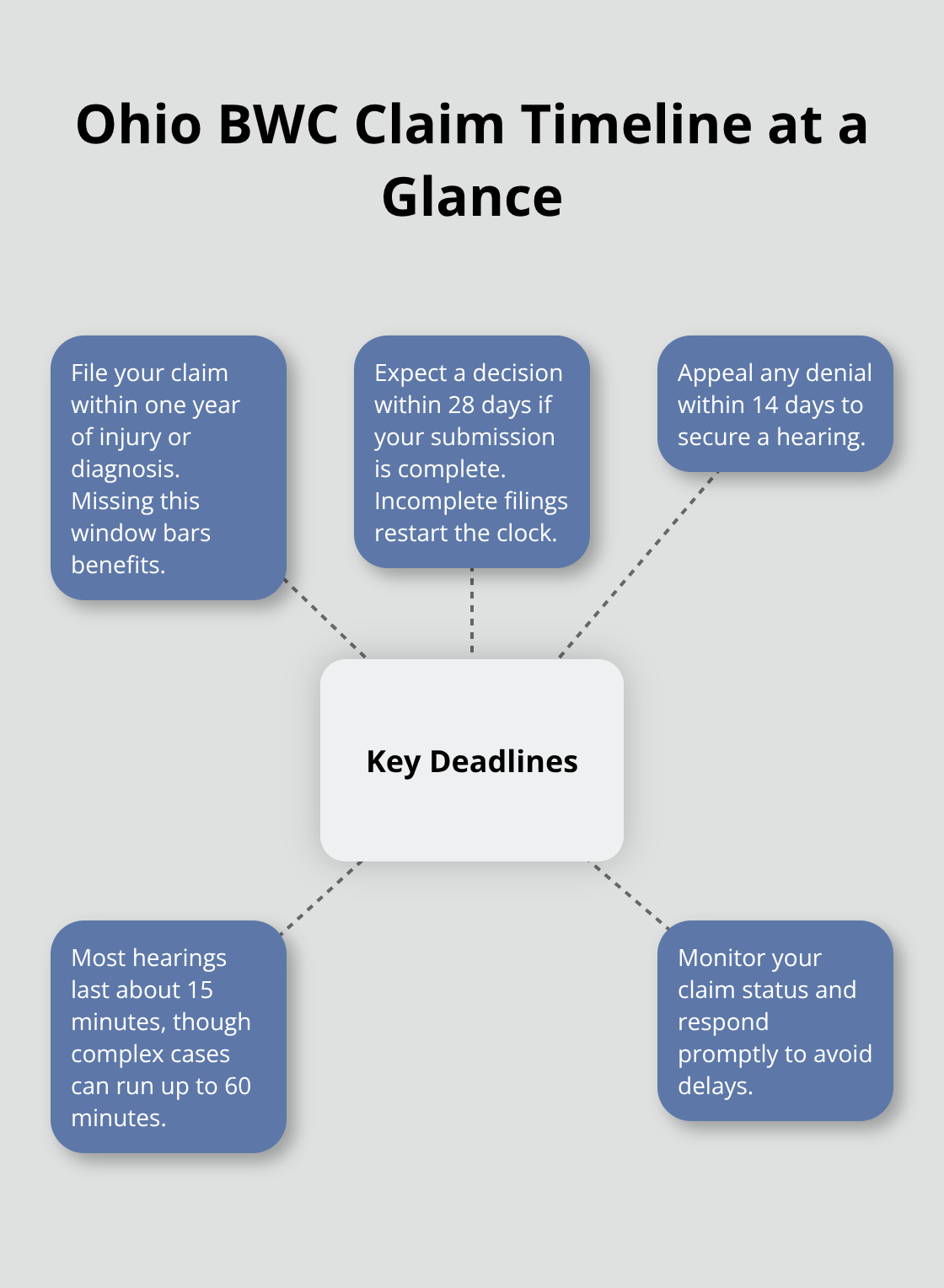
The filing window in Ohio is roughly one year from the date of injury or diagnosis, though waiting longer significantly increases your risk of complications. The BWC must issue a claim decision within 28 days of receiving your complete submission, which is faster than many private insurance processes. However, this timeline only applies if you submit accurate, complete information on your First Report of Injury form. Incomplete submissions restart the clock, causing delays that can affect when you receive wage replacement benefits.
What Happens If Your Claim Gets Denied
If your claim is denied, you have exactly 14 days to appeal and request a hearing before the Industrial Commission of Ohio. These hearings are typically brief, lasting around 15 minutes on average, though complex cases can extend to 60 minutes. You should bring medical evidence and prepare to describe your symptoms and how the injury affects your ability to work. Missing any deadline in this process results in losing your right to appeal entirely, making timeliness non-negotiable throughout the entire process.
Now that you understand how Ohio’s system operates and the timelines involved, the next step focuses on what you must do immediately after your injury occurs.
Taking Action After Your Injury
Report Your Injury Immediately
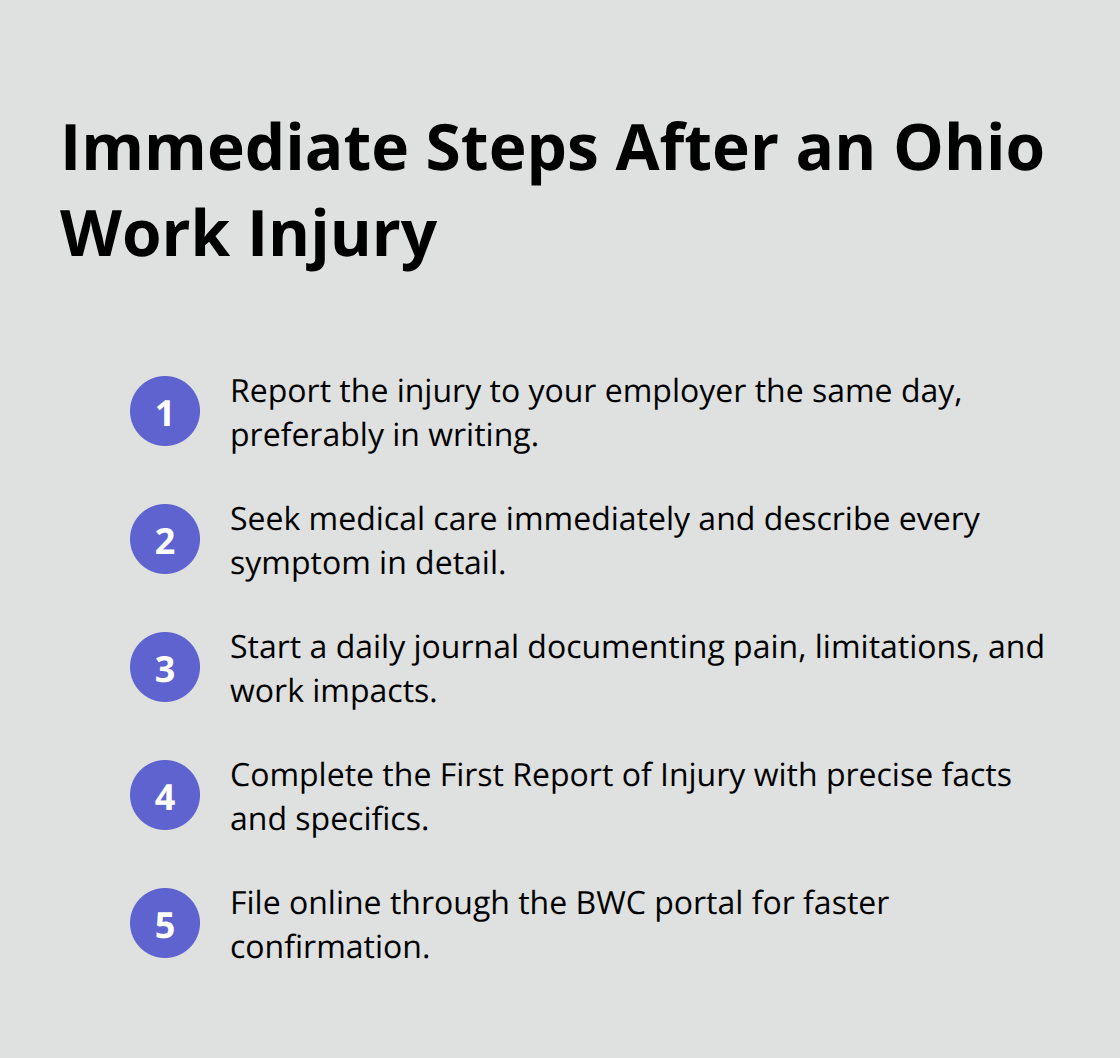
You must report your injury to your employer or supervisor on the same day it occurs, even if symptoms seem minor. This creates an immediate paper trail linking your health issue to work, which the BWC uses to establish causation when reviewing your claim. Many injured workers wait days or weeks before reporting, thinking minor pain will resolve on its own, then face skepticism later when they file. The BWC treats same-day reports as more credible because they reflect your genuine reaction to an incident rather than a delayed decision made after symptoms worsened. Notify your HR department or management in writing if possible, and ask for written confirmation that they received your report. This written documentation becomes evidence if your employer later disputes the injury date or circumstances.
Seek Medical Care and Document Everything
You should seek medical attention immediately and describe every symptom to your healthcare provider, including pain levels, reduced mobility, numbness, tingling, or any other physical changes you notice. Your medical records form the foundation of your entire claim because the BWC relies on them to determine whether your condition is work-related and what benefits you qualify for. Tell your doctor exactly how the injury happened and when, so this information appears in your medical file. Many workers downplay symptoms during initial visits, thinking they’re being tough or not wanting to seem like complainers, then struggle later when the BWC questions whether their injury was truly severe.
You must document every medical visit, test result, prescription, and recommendation your healthcare provider makes. Start a daily journal that records your symptoms, limitations, and how the injury affects your ability to work and perform daily activities. This journal becomes powerful evidence during appeals because it shows a consistent pattern of symptoms over time rather than relying on memory months later.
Complete and Submit Your First Report of Injury
You need to gather your employer’s injury report forms immediately after reporting your injury, as these become your First Report of Injury submission to the BWC. Complete these forms with extreme accuracy and provide detailed, truthful information about exactly what happened, where it occurred, what time it happened, and which body parts were affected. The BWC receives thousands of claims monthly, and inaccurate submissions get flagged for manual review, causing delays that can extend your waiting period for benefits by weeks. Include specific details rather than vague descriptions, such as naming the exact machinery or equipment involved, the specific task you were performing, and the exact nature of your injury.
You can submit your completed First Report of Injury to the Ohio Bureau of Workers’ Compensation at 30 W. Spring St., Columbus, OH 43215-2256, or file online through the BWC’s official portal to start your application. Filing online typically processes faster than mailing paper forms, and you receive immediate confirmation that your submission was received.
Maintain Records and Monitor Your Claim
You must keep copies of everything you submit, including the forms, your medical records, receipts for out-of-pocket medical expenses, and any correspondence from your employer or the BWC. These records protect you if the BWC requests additional information or if your claim requires an appeal. After filing, the BWC issues a decision within 28 days, so monitor your claim status through the online portal or contact the BWC directly if you don’t receive a decision by day 28.
If complications arise or the BWC denies your claim, an experienced Ohio workers’ compensation attorney can protect your rights and prepare you for the appeals process. The next section covers what happens when the BWC reviews your submission and how to respond if your claim faces denial.
What Mistakes Cost You the Most
The Three Errors That Destroy Your Claim
The difference between an approved claim and a denied one often comes down to three preventable errors that injured workers make repeatedly. Missing the one-year filing window is the most catastrophic mistake because it eliminates your right to claim benefits entirely, regardless of how severe your injury is. The BWC enforces this deadline strictly with no exceptions for workers who didn’t know about it or thought they had more time. If you injure yourself in January, you must file by January of the following year or lose everything. This isn’t a guideline or a suggestion; it’s a hard legal requirement that the BWC applies consistently across all claims.
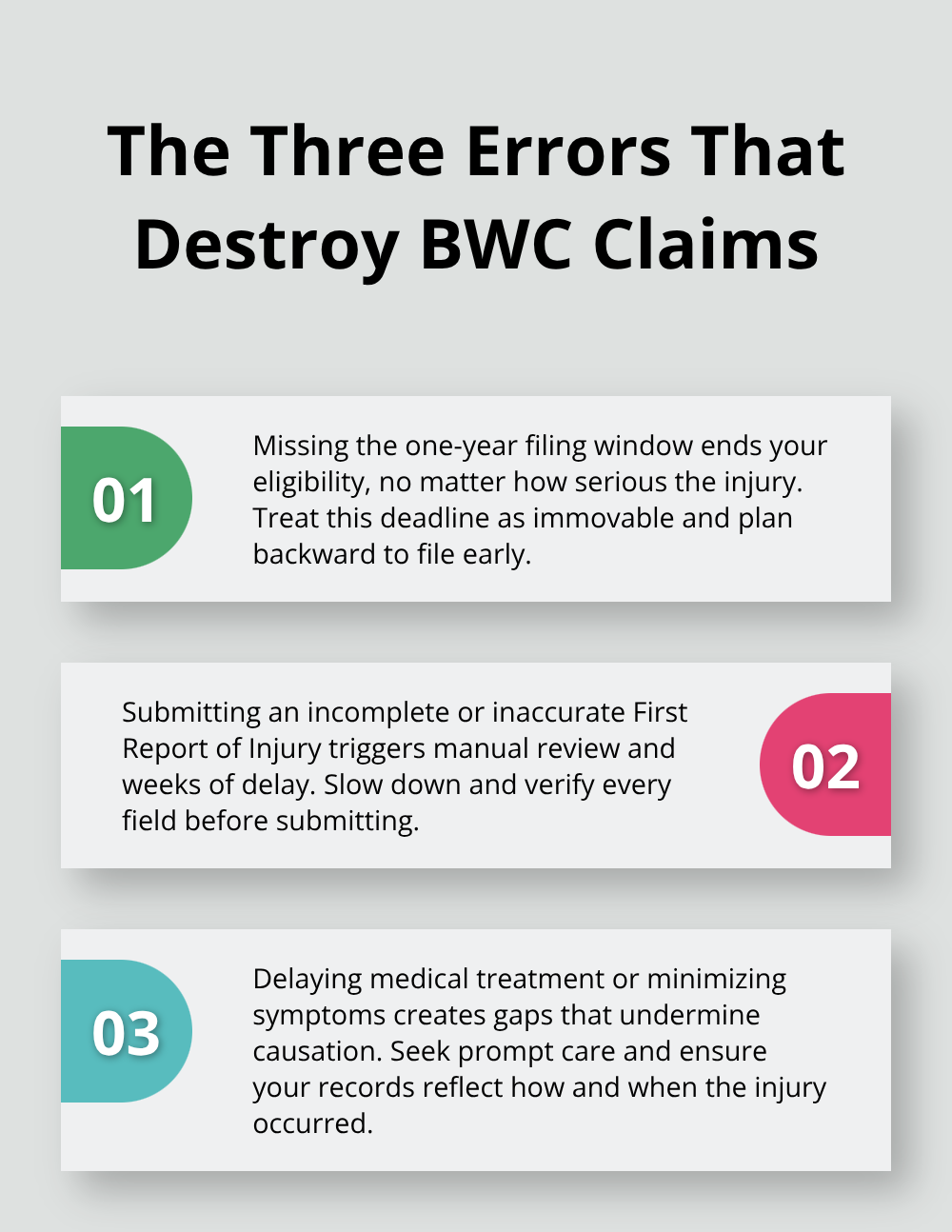
The second major error involves submitting incomplete or inaccurate information on your First Report of Injury form, which triggers manual review delays that typically add two to four weeks to your processing time. Workers often rush through these forms or leave sections blank, thinking they can provide details later, but the BWC treats incomplete submissions as red flags for fraud and investigates them more thoroughly. The third critical mistake is delaying medical treatment or minimizing symptoms during your first medical visit, which creates a permanent gap in your medical record that the BWC uses to question whether your injury was truly work-related or as severe as you claim.
How Processing Times Reveal Your Mistakes
The BWC processes roughly 100,000 claims annually in Ohio, and their data shows that claims with complete, accurate first submissions receive decisions within the standard 28-day window, while those with errors face review periods extending to 60 days or longer. When you report your injury to your employer, that conversation should be documented in writing immediately, not days later when you remember to send an email. If your employer claims they never received your report, you have no proof, and the BWC may delay your claim while investigating the discrepancy.
What Your Medical Records Must Contain
Your medical records must explicitly state how the injury occurred and when, so if your doctor’s notes say you came in with back pain but don’t mention the machinery malfunction that caused it, the BWC questions the causation. Fill out your First Report of Injury as if you’re describing the incident to someone who wasn’t there, including specific times, exact locations within your workplace, names of witnesses if applicable, and precise descriptions of what your body was doing when the injury happened. Vague entries like “fell down” or “hurt myself” provide almost no useful information and invite the BWC to request clarification, which restarts their 28-day decision clock.
Getting Your Forms Right Before Submission
An experienced Ohio workers’ compensation attorney can review your forms before submission to catch errors that would otherwise cause delays or denials, turning a potential problem into a clean filing that moves through the system quickly. Firms like Robin J Peterson Company, LLC represent injured workers throughout Ohio and understand exactly what the BWC scrutinizes during initial review. These attorneys know which details matter most and how to present your injury in language that satisfies the BWC’s requirements without triggering additional investigation.
Final Thoughts
Filing BWC claim guidance successfully hinges on three actions that determine your outcome: report your injury immediately, submit complete and accurate forms, and maintain detailed medical records throughout recovery. The Ohio Bureau of Workers’ Compensation processes claims systematically, and workers who follow these steps receive decisions within the standard 28-day window. Those who miss deadlines, provide incomplete information, or delay medical treatment face denials and appeals that proper preparation could have prevented.
You should seek legal assistance if your claim faces denial, if complications emerge during appeals, or if you’re uncertain about what information belongs on your First Report of Injury. An attorney who understands Ohio workers’ compensation law can review your forms before submission, identify potential problems, and represent you during Industrial Commission hearings. The difference between handling your claim alone and working with experienced legal counsel often determines whether you receive the benefits you’re entitled to.
We at Robin J Peterson Company, LLC represent injured workers throughout Ohio and understand exactly what the BWC requires for claim approval. If you’re facing a denied claim or need guidance on filing, contact our firm to discuss your situation and learn what options are available to you.