
A workers’ compensation claim denial can feel like a dead end, but it’s not. At Robin J Peterson Company, LLC, we know that denied claim remedies in Ohio exist, and understanding your options is the first step toward recovery.
The path forward involves knowing why your claim was denied, how to appeal the decision, and when to bring in legal support. This guide walks you through each stage so you can reclaim the benefits you deserve.
Why the BWC Denies Workers’ Compensation Claims
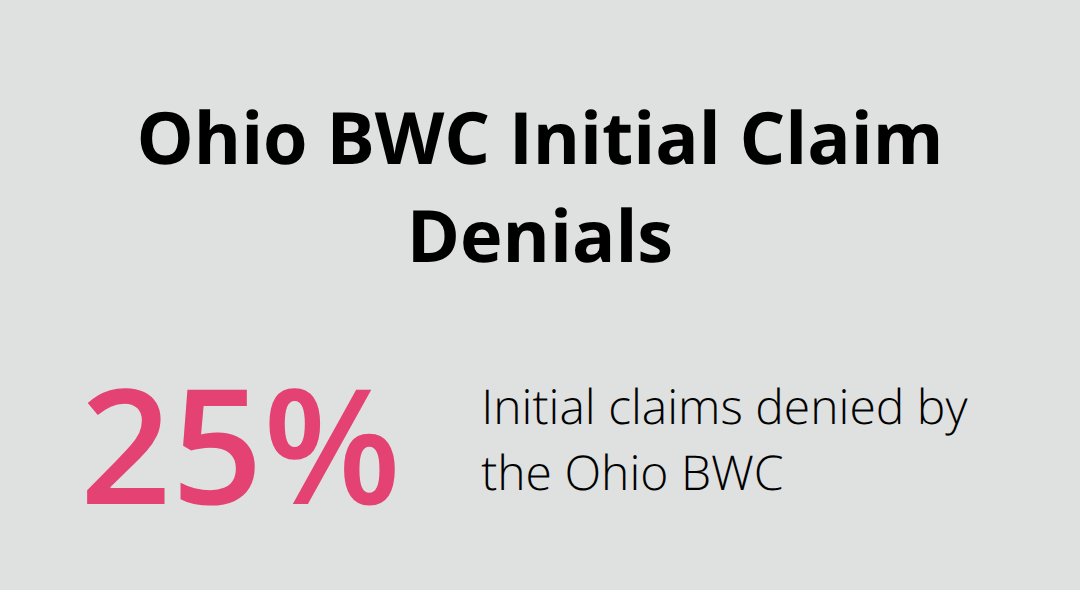
The Ohio Bureau of Workers’ Compensation denies roughly 25 percent of initial claims, and most denials stem from three preventable problems. Understanding what triggers a denial gives you a concrete advantage when you build your appeal. The reasons the BWC rejects claims are not mysterious-they follow predictable patterns that you can address head-on.
Insufficient Medical Evidence
Medical evidence that falls short of BWC requirements ranks as the leading culprit behind denials. The BWC does not accept vague descriptions of pain or general statements about your condition. Your treating physician must document specific findings: objective test results, imaging reports like X-rays or MRIs, clear descriptions of your functional limitations, and a direct connection between your injury and your inability to work.
Many workers submit claims with only a few brief doctor visits and minimal documentation, which the BWC interprets as a weak case. You need comprehensive medical records that paint a detailed picture of your injury’s severity and impact on your work capacity. If your doctor has not documented how your condition affects your ability to perform your job duties, the BWC will question whether the injury truly prevents work.
Inconsistent medical treatment also weakens your claim. If you see your doctor once and then disappear for months, the BWC assumes your condition improved or was never serious. You must maintain regular treatment visits, detailed physician notes, and explicit statements about work limitations to build a strong medical foundation.
Failure to Report Within Required Timeframes
Timing failures create unnecessary denials that you could have avoided. Ohio law requires you to report your workplace injury to your employer within specific timeframes; you miss this deadline and the BWC rejects your claim immediately. Your employer must also file the injury report with the BWC promptly, and delays at their end can derail your claim even though you acted correctly.
Documentation of the exact circumstances matters enormously. You must establish what you were doing, how the injury happened, and who witnessed the incident. Written statements from coworkers or supervisors describing the incident strengthen your case significantly.
Disputes Over Work-Related Causation
Disputes over whether your injury occurred at work represent the third major denial category. The BWC scrutinizes claims where the injury mechanism is unclear, where you delayed reporting, or where coworkers did not witness the incident. You cannot establish a clear causal link between your workplace activities and your injury, and the BWC will deny the claim.
The BWC applies a burden-of-proof standard that favors the employer unless you present credible evidence (medical records, witness statements, and detailed incident documentation) showing the injury arose out of and in the course of your employment. This is why the specifics of how and when your injury occurred matter so much to your case outcome.
When you understand these three denial categories, you position yourself to address each one directly in your appeal. The next step involves knowing exactly how to challenge the BWC’s decision through the formal appeals process.
How to Appeal a Denied Workers’ Compensation Claim
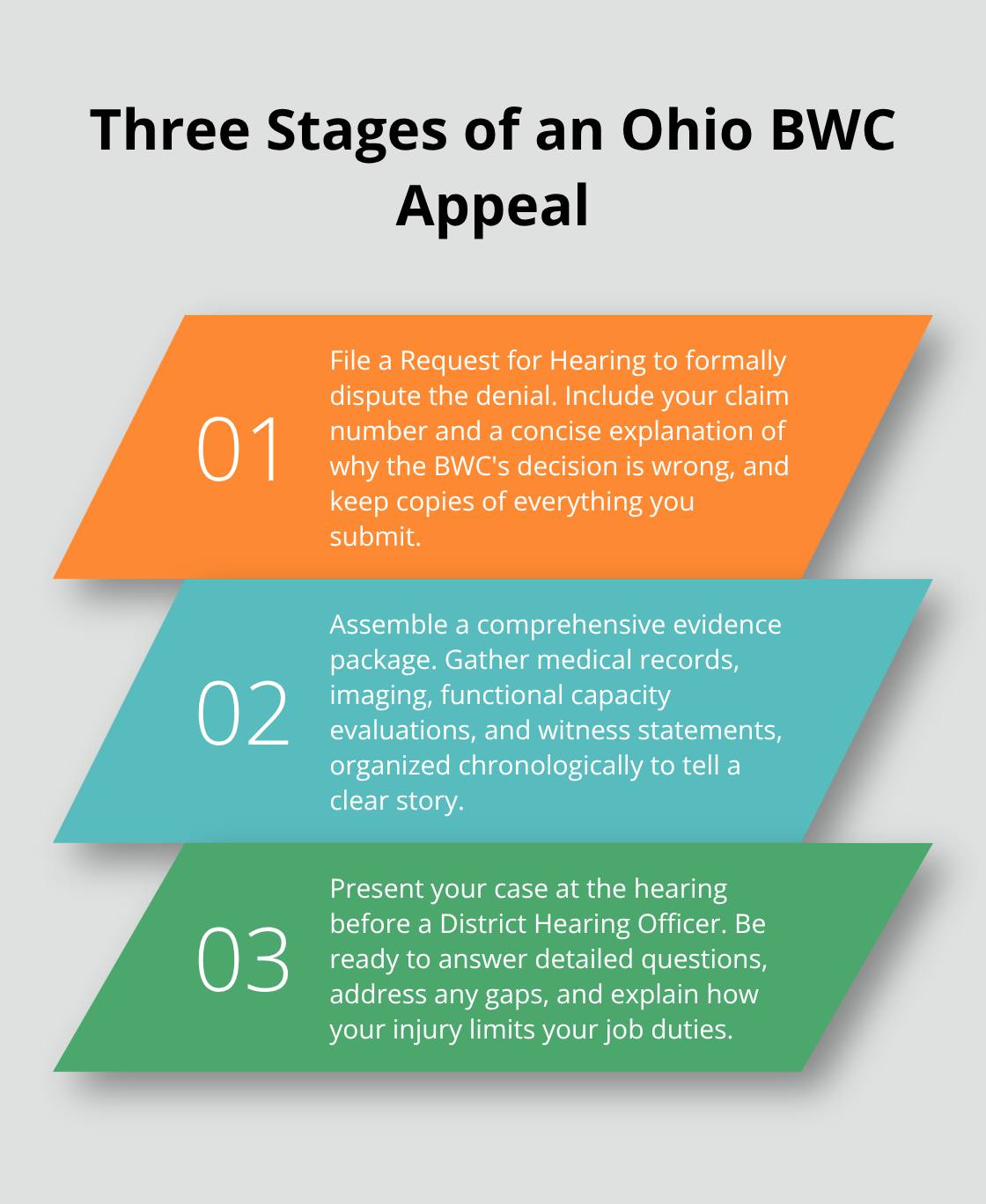
The Industrial Commission of Ohio provides a formal pathway to challenge the BWC’s denial, and speed matters more than you might think. You have a limited window to file your appeal, and missing the deadline eliminates your right to challenge the decision entirely. Ohio law sets strict timelines, so you must mark your calendar and act within those windows. The appeal process itself has three distinct stages: filing a request for hearing, submitting your evidence package, and presenting your case at the hearing itself. Gaps at any point can undermine your entire appeal.
File Your Request for Hearing Promptly
File a Request for Hearing with the Industrial Commission of Ohio within the timeframe specified in your denial letter. This formal document notifies the commission that you dispute the BWC’s decision and demand a hearing before a District Hearing Officer. The BWC will not automatically notify the commission of your intent to appeal; you must file this request yourself or have an attorney file it on your behalf. Submit your request in writing, include your claim number and detailed explanation of why you believe the denial was incorrect, and keep copies of everything you submit.
Assemble a Comprehensive Evidence Package
Your evidence package becomes your case’s foundation. Collect medical records from every treating physician, imaging results like X-rays or MRIs, lab work, prescription records, and any functional capacity evaluations that document your work limitations. Include written statements from coworkers or supervisors who witnessed your injury or can attest to how your condition affects your work performance. Organize these documents chronologically so the hearing officer can follow your injury’s timeline and progression.
A physician letter explicitly connecting your condition to your inability to perform your job duties carries significant weight. Ask your treating doctor to write a detailed statement addressing the specific reasons the BWC denied your claim and explaining why those reasons are medically unfounded. This medical opinion transforms your case from a collection of records into a coherent narrative that directly counters the denial.
Prepare and Present Your Case at the Hearing
At the hearing itself, you will present your case to a District Hearing Officer who acts as an impartial decision-maker. Prepare a clear narrative of your injury, your treatment, and your functional limitations. Anticipate questions about gaps in your medical treatment, delays in reporting your injury, or unclear causation. Bring all original documents and answer detailed questions about your work duties and how your injury prevents you from performing them.
The hearing officer will also hear from the BWC representative, who will defend the denial. This is not a casual conversation; treat it as a formal legal proceeding where every word matters. An Ohio workers’ compensation attorney representing you at the hearing significantly improves your odds of overturning the denial. The attorney can cross-examine the BWC’s witnesses, present medical evidence effectively, and argue why the denial should be reversed based on Ohio law and the facts of your case.
Why You Need an Attorney for Your BWC Appeal
The Complexity of Ohio Workers’ Compensation Law
An Ohio workers’ compensation attorney transforms your appeal from a solo effort into a strategic legal campaign. The BWC and Industrial Commission of Ohio operate under complex procedural rules, evidentiary standards, and case law that shift frequently. Attempting to navigate these systems alone means you will miss critical deadlines, submit incomplete evidence packages, and fail to counter the BWC’s arguments effectively. A workers’ compensation attorney handles the procedural mechanics so you can focus on recovery.
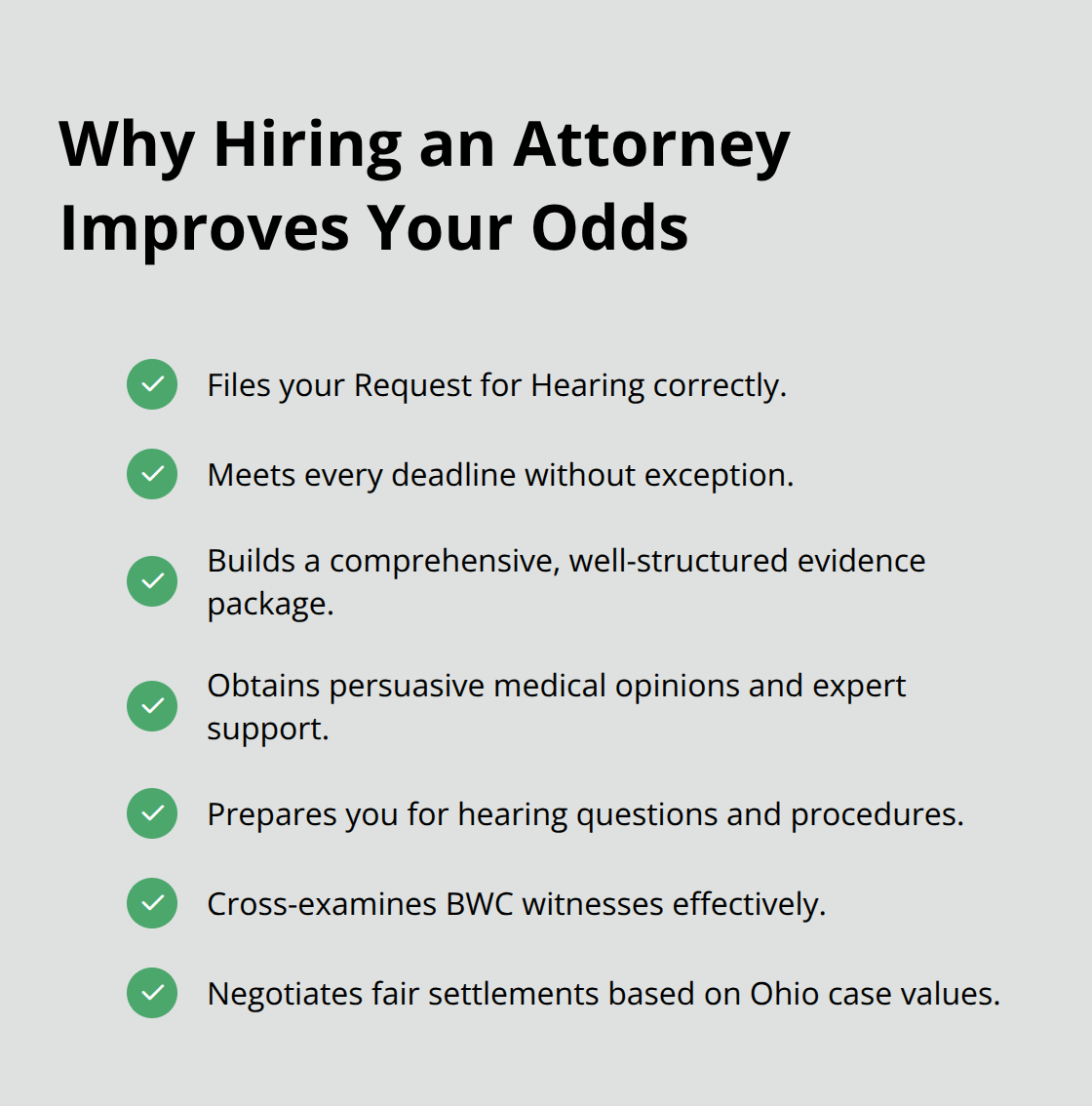
The difference in outcomes is measurable. Workers represented at hearings win significantly more often than unrepresented workers. An attorney files your Request for Hearing correctly, meets every deadline without exception, and structures your evidence to address the specific reasons the BWC cited in your denial.
Building and Presenting Your Evidence
Your attorney knows which medical records carry the most weight, how to obtain functional capacity evaluations that quantify your work limitations, and which expert witnesses strengthen your case. They understand the hearing officer’s expectations and present your case in the format most likely to persuade them.
At the hearing, your attorney cross-examines BWC witnesses, challenges weak medical opinions, and identifies contradictions in the agency’s reasoning. This aggressive advocacy shifts the balance in your favor when the hearing officer weighs the evidence.
Negotiating Fair Compensation
Beyond the hearing room, an Ohio workers’ compensation attorney negotiates settlement agreements that compensate you for denied benefits, medical treatment, and lost wages. They understand the value of your claim based on the type of injury, your wage loss, and comparable settlements in Ohio. Many workers accept inadequate settlements because they lack this negotiation experience; an attorney protects your interests and secures fair compensation for your injuries.
How Attorney Fees Work
Workers’ compensation attorneys in Ohio operate on a contingency fee basis, meaning you pay no upfront costs. Fees come only from your awarded benefits if you win your case, removing the financial barrier to legal representation. This structure aligns the attorney’s interests with yours: they succeed only when you recover benefits.
Representation in the Cleveland, Akron, and Canton Areas
Robin J. Peterson Company, LLC represents injured workers throughout the Cleveland, Akron, and Canton areas who face denied claims. The firm handles the procedural complexity, builds comprehensive evidence packages with medical experts, and presents your case at hearings with the aggressive advocacy your claim deserves.
Final Thoughts
A denied workers’ compensation claim does not end your fight for benefits. Ohio law grants you the right to challenge the BWC’s decision through a formal appeals process, and understanding your options determines whether you recover the benefits you earned. Your first action after receiving a denial letter is to mark the appeal deadline on your calendar, as missing this deadline eliminates your right to challenge the decision entirely. Read the denial notice carefully to identify exactly which benefits the BWC denied and the stated reasons, since this information guides your entire appeal strategy.
Gather new medical records, test results, and physician letters that directly address each denial reason. Include written statements from coworkers or supervisors who witnessed your injury or can describe how your condition affects your job performance, and organize everything chronologically so the hearing officer can follow your case’s progression. Submit your Request for Hearing using the correct form, include all required attachments, and keep copies of everything you send, as many workers lose appeals because they submit incomplete evidence packages or miss procedural requirements that carry legal weight.
An Ohio workers’ compensation attorney handles the procedural complexity and presents your case with the aggressive advocacy that hearing officers respect. Denied claim remedies Ohio workers pursue with attorney representation succeed at significantly higher rates than unrepresented appeals because attorneys know how to structure evidence, cross-examine BWC witnesses, and argue why the denial should be reversed. Contact Robin J. Peterson Company, LLC to discuss your case and learn how legal representation can help you recover your benefits.