
Filing a workers’ compensation claim in Ohio can feel overwhelming when you’re injured and unsure what comes next. We at Robin J Peterson Company, LLC have helped countless workers navigate the Ohio BWC claim steps and understand their rights.
This guide walks you through each stage of the process, from reporting your injury to your employer through receiving benefits. You’ll learn what documentation matters, why claims get denied, and when professional help makes a difference.
Report Your Injury Within 24 Hours
The first critical action after a workplace injury is notifying your employer within 24 hours. This isn’t a suggestion-it’s the foundation of a successful claim. Many workers delay reporting because they underestimate the injury or hope it resolves on its own, but studies from Sedgwick and the National Council on Compensation Insurance show that delays beyond 24 hours can increase claim costs by up to 51 percent and significantly damage your credibility with the Ohio Bureau of Workers’ Compensation. When you report, provide a detailed written account rather than just mentioning it verbally. Send an email to your supervisor or HR department describing exactly what happened, when it happened, where it occurred, which body parts were affected, and any witnesses present. Request an accident report form from your employer; if they don’t offer one, document the conversation in an email follow-up and keep copies of everything. This written trail protects you because it creates an official record with a timestamp that the BWC can reference during the investigation.
What to Include When You Report
Your written report should contain specifics, not vague descriptions. Instead of saying you felt pain in your back, explain that you strained your lower back while lifting a 50-pound box from a shelf at approximately 2:15 p.m. on the date of injury. Include the names and contact information of any coworkers who saw what happened. The more precise you are, the stronger your claim becomes because the BWC examiner won’t need to spend extra time requesting clarification, which extends the 28-day investigation window.
Gather Documentation Immediately
Collect your wage history for the prior 52 weeks immediately-your employer’s payroll department can provide this-because the BWC calculates benefits based on your average weekly wage. Collect any medical records from before the injury to establish your baseline health, then seek treatment the same day if possible and tell the provider the injury is work-related. Take photographs of the equipment, work area, or conditions that contributed to the injury, and keep detailed notes about your symptoms and any restrictions the doctor imposes. Organize all documents chronologically in a single folder (medical records, wage history, photographs, witness statements) because the BWC wants a complete package when you file, and incomplete submissions restart the investigation clock and invite denials.
Moving Forward With Your Claim
Once you’ve reported the injury and gathered your documentation, the next phase involves understanding how the BWC processes your claim and what happens during the initial filing stage.
How the BWC Processes Your Claim
After you report your injury and submit your documentation to the Ohio Bureau of Workers’ Compensation, the agency has 28 days to investigate and decide whether to approve or reject your claim. This window is strict and non-negotiable. The speed of approval depends entirely on how complete your initial submission is. If you include the First Report of Injury, medical records, wage history, witness statements, and incident photographs all at once, the examiner won’t need to request missing pieces, and your claim moves through the system faster.
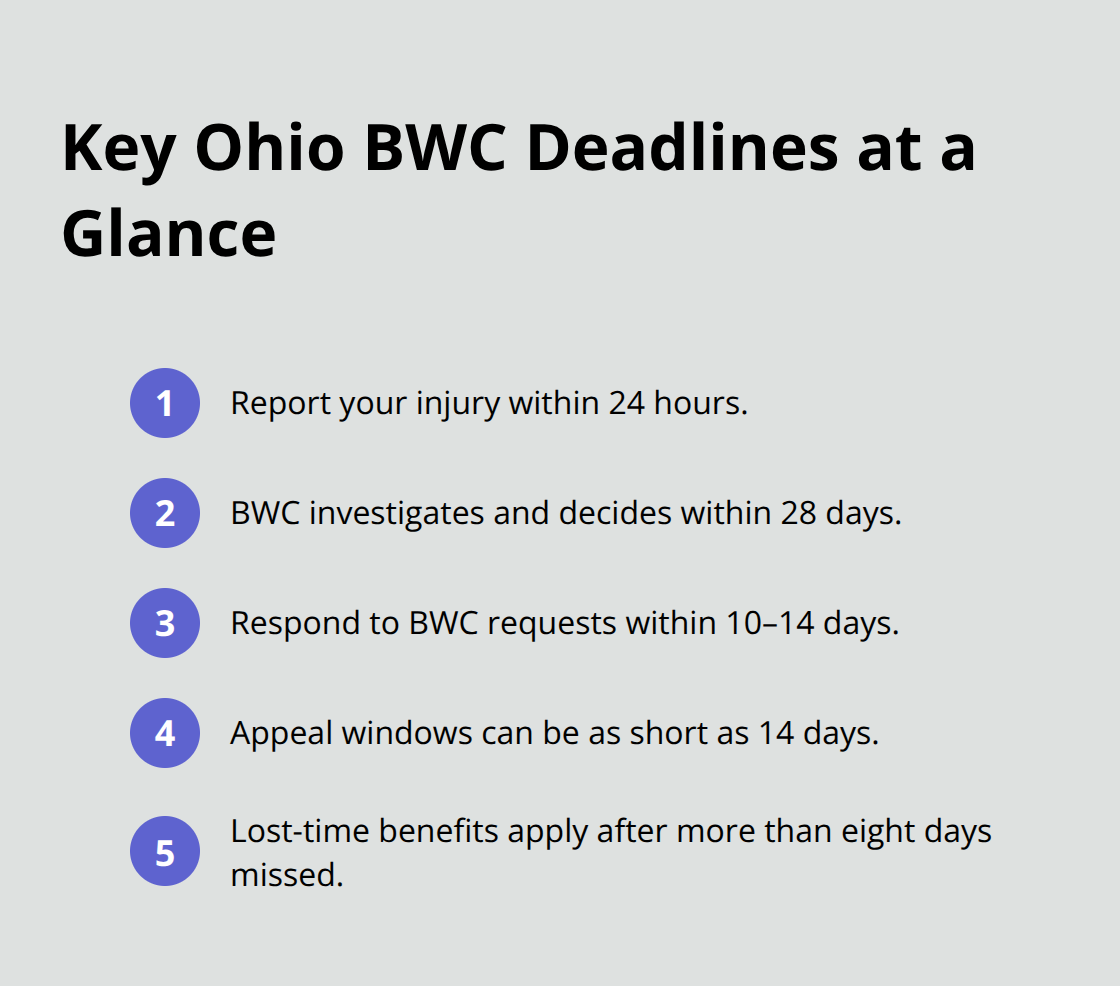
Incomplete submissions restart the 28-day clock and invite unnecessary delays.
Filing Through the BWC Online Portal
File through the BWC online portal using your OHID account, which you can create with ID.me. Upload everything as a single package rather than submitting documents piecemeal. Once filed, monitor your portal account religiously and respond to any BWC requests within 10 to 14 days. Many workers lose claims simply because they miss a deadline or ignore a request for additional information. The BWC will assign a Managed Care Organization to coordinate your medical care if your claim receives approval. This MCO acts as a gatekeeper between you and treatment decisions. Some MCOs are responsive and streamlined; others bottleneck requests and delay authorizations.
Setting Up Payment and Benefit Types
If you receive approval for benefits, set up direct deposit with your bank account so payments arrive within one to two business days after processing. The type of approval you receive determines what benefits you access. Medical-only claims cover your treatment costs but no lost wages. Lost-time claims, which apply when you miss more than eight days of work, include Temporary Total Disability payments calculated at roughly two-thirds of your average weekly wage (if you earned $1,000 per week before injury, expect approximately $667 in weekly disability payments while unable to work).
Understanding Wage Calculations and Vocational Services
The Ohio Bureau of Workers’ Compensation bases all benefit calculations on your average weekly wage from the prior 52 weeks, which is why wage documentation matters so much. Vocational rehabilitation services may become available if your injury prevents you from returning to your previous job, though eligibility depends on your specific circumstances. If the BWC denies your claim, you have a narrow window-sometimes as short as 14 days to appeal to the Industrial Commission of Ohio. This is where the process becomes procedurally complex and where legal representation makes a measurable difference in outcomes.
Why Claims Get Denied
The Ohio Bureau of Workers’ Compensation denies roughly 25 percent of initial claims, and most denials stem from preventable mistakes rather than legitimate disqualifications. The three most common rejection reasons are reporting delays, insufficient medical documentation, and ambiguity about work-relatedness. Understanding these triggers helps you avoid them entirely.
Reporting Delays Damage Your Credibility
Delayed reporting beyond 24 hours creates immediate credibility problems because the BWC questions why you waited and whether the injury truly happened at work. When you report late, the examiner assumes you either minimized the injury or fabricated details after the fact. This suspicion alone can sink an otherwise valid claim. Studies from Sedgwick and the National Council on Compensation Insurance show that delays beyond 24 hours increase claim costs by up to 51 percent, and this financial impact reflects how seriously the BWC treats timing violations.
Incomplete Medical Records Invite Rejection
Incomplete or vague medical records compound the problem because the BWC cannot approve benefits without clear evidence linking your injury to work activities. A doctor’s note that says lower back pain without mentioning how you sustained it leaves the examiner guessing, and guessing leads to denial. The BWC needs the specific mechanism of injury, the exact time and location, witness names, and your job responsibilities at that moment. Vague descriptions invite denials because the examiner cannot confidently establish causation.
Work-Relatedness Disputes and Pre-Existing Conditions
Work-relatedness disputes arise when your injury description doesn’t explicitly connect your job duties to the harm you sustained. Saying you felt pain during your shift differs drastically from documenting that you strained your back while lifting equipment required by your job. Additionally, pre-existing conditions complicate claims when medical records show previous back or shoulder problems. The BWC won’t deny you outright, but they will scrutinize whether your current injury is new or an aggravation of an old condition. Gather prior medical records proactively to show how your baseline health differs from your post-injury condition.
Missed Deadlines and Non-Certified Providers
Missing BWC deadlines or ignoring requests for additional information triggers automatic denials because the agency interprets silence as abandonment of the claim. The BWC typically allows 10 to 14 days to respond to requests, and many workers lose claims simply because they miss these windows or fail to check their OHID portal account regularly. Using non-certified medical providers creates another denial pathway because the BWC won’t reimburse treatment from doctors outside their network, leaving bills unpaid and creating documentation gaps that weaken your position. If your claim receives denial, you have a narrow appeal window to challenge the decision, and the appeals process operates under different procedural rules than the initial review.
Final Thoughts
Successfully navigating Ohio BWC claim steps requires discipline, documentation, and immediate action. The workers who succeed throughout this process all share one trait: they report injuries within 24 hours, gather complete documentation immediately, and submit everything to the BWC as a single package. This approach eliminates delays, prevents denials, and moves your claim through the 28-day investigation window without restarts or requests for missing information.
The most common mistake injured workers make is waiting too long before seeking help. Once deadlines pass, medical records become incomplete, and the BWC denies the claim, reversing that decision becomes exponentially harder because appeals operate under stricter procedural rules and require new medical evidence to overcome the initial rejection. Legal representation makes a measurable difference if your claim faces denial, if the BWC disputes work-relatedness, or if pre-existing conditions complicate your case.
We at Robin J Peterson Company, LLC represent injured workers throughout Ohio who face denied claims or complex circumstances. Our firm focuses exclusively on workers’ compensation law and understands how the BWC operates in the Cleveland, Akron, and Canton areas. If your claim has been denied or you’re uncertain about next steps, contact our firm for guidance on protecting your rights and securing the benefits you deserve.