
Workplace injuries in Northeast Ohio can leave you confused about your rights and next steps. The workers’ compensation system has strict rules, deadlines, and procedures that are easy to get wrong without proper guidance.
At Robin J Peterson Company, LLC, we help injured workers navigate these complexities and protect their claims from start to finish.
What Ohio Workers’ Compensation Actually Covers
Medical Treatment, Wage Loss, and Disability Benefits
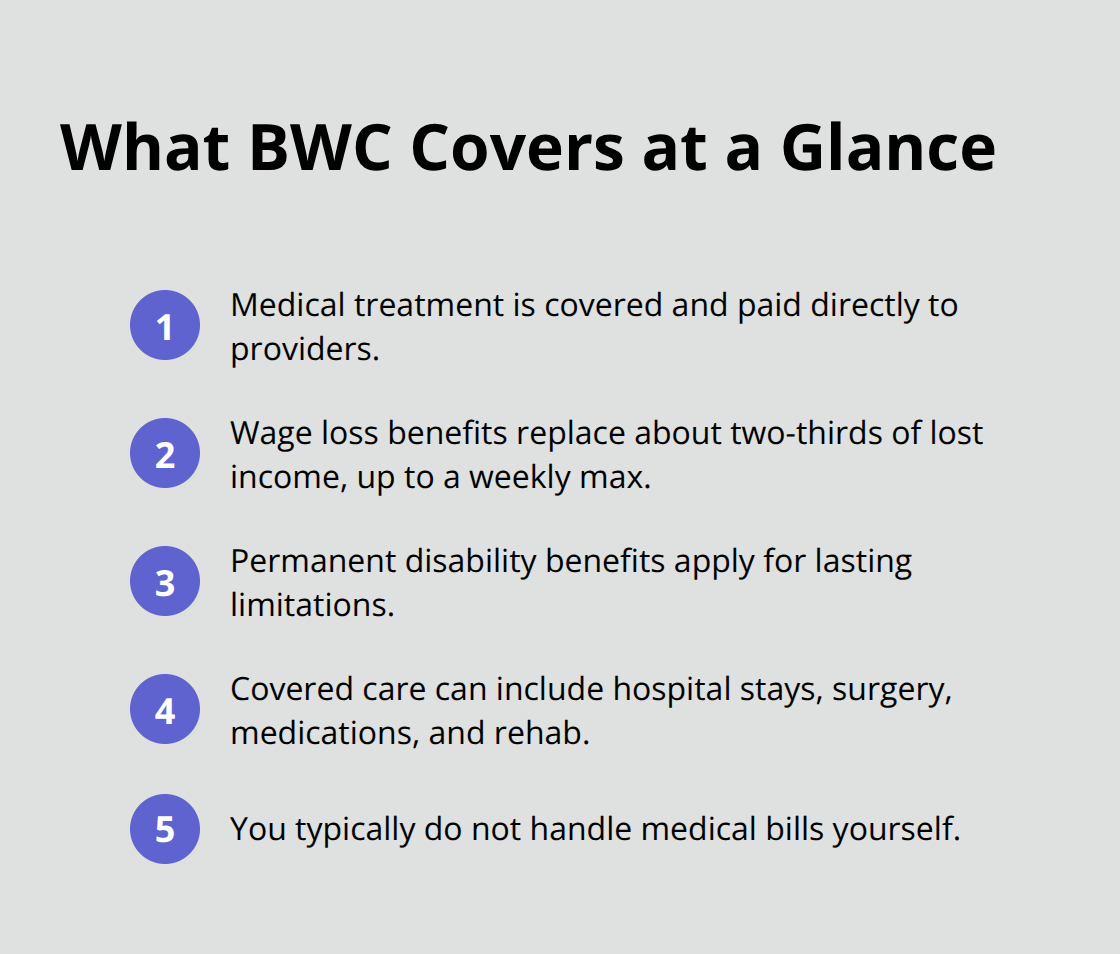
The Ohio Bureau of Workers’ Compensation covers medical treatment, wage replacement, and permanent disability benefits when you suffer a work-related injury. Medical coverage includes doctor visits, hospital care, surgery, medications, and rehabilitation-the BWC pays these expenses directly to providers, so you typically don’t handle the bills yourself. Wage loss benefits replace about two-thirds of your lost income if you miss work during recovery, though this has a weekly maximum set by the BWC. Permanent disability benefits apply if your injury leaves you with lasting physical limitations that affect your earning capacity.
What Falls Outside the Safety Net
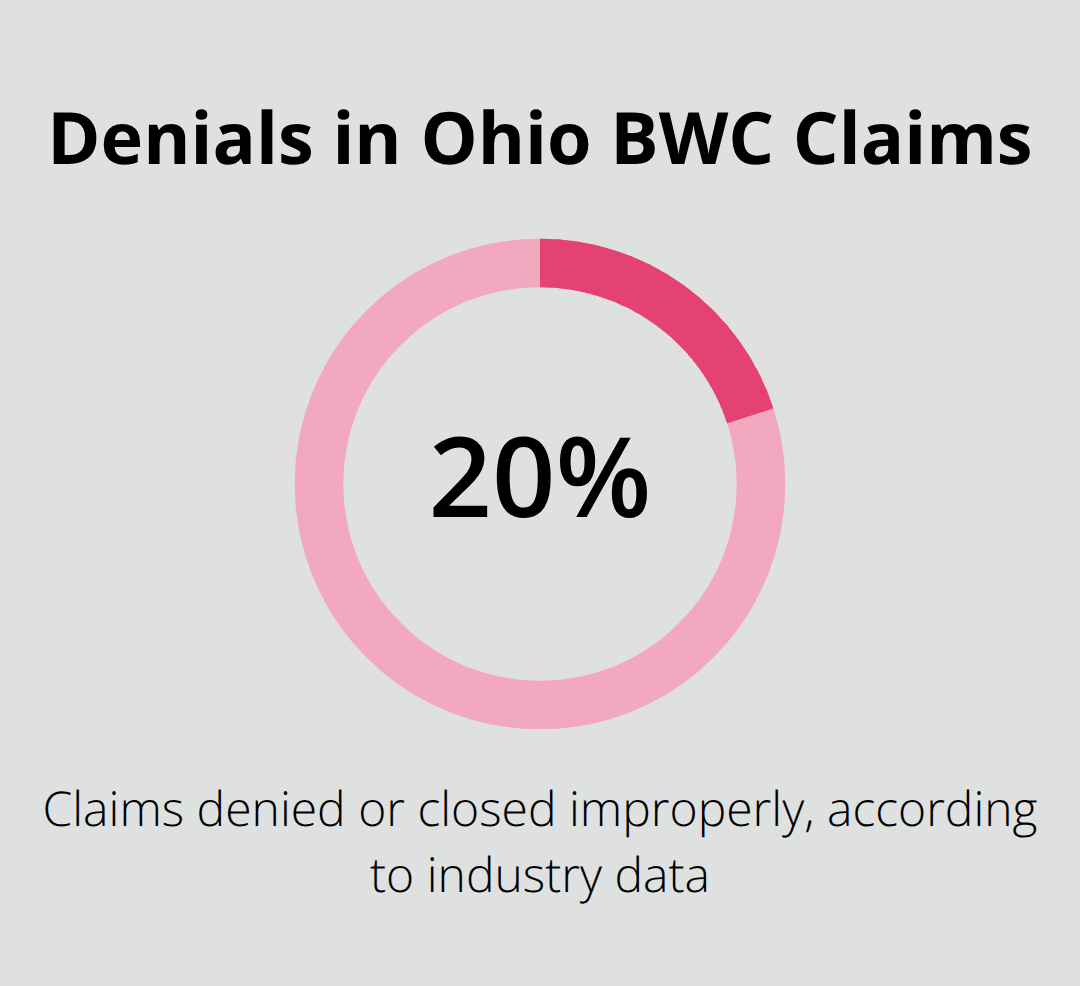
Most injured workers misunderstand what falls outside this safety net. If you were partly at fault for the accident, you still qualify for benefits-Ohio’s workers’ compensation system doesn’t penalize you for comparative negligence like personal injury claims do. However, injuries from your own willful misconduct, intoxication, or violation of safety rules can result in claim denial. The BWC also covers occupational diseases like hearing loss from workplace noise exposure or respiratory conditions from chemical inhalation, but these require medical documentation showing the disease developed from your job, not from external factors. Around 20% of BWC claims are denied or closed improperly according to industry data, which is why understanding exactly what you’re entitled to matters before disputes arise.
Critical Deadlines That Shape Your Claim
You must report your injury to your employer immediately-most employers have internal procedures, and Ohio law gives you 30 days to notify them, though waiting this long weakens your position. The BWC itself has no filing deadline from you; your employer or their insurance carrier typically files the claim. What catches workers off guard is the two-year statute of limitations for certain disputes. If the BWC denies your claim or closes it without paying benefits, you have two years from the denial date to appeal to the Industrial Commission of Ohio. Miss this deadline and you lose your right to contest the decision.
Occupational Diseases and the Medical Diagnosis Rule
For occupational diseases like asbestos exposure or chemical injuries, the clock starts when you receive a medical diagnosis confirming the disease connects to your work, not when exposure occurred. This distinction matters tremendously-someone exposed to hazardous chemicals decades ago can still file a claim if they’re diagnosed today, provided they file the appeal within two years of any BWC denial. The first 30 days after injury are critical because medical records created during this period establish the injury’s work-related nature. Delaying treatment or waiting weeks to see a doctor gives the BWC ammunition to argue your injury wasn’t serious or wasn’t caused by work.
Building Your Documentation from Day One
Document everything from day one: photographs of the accident scene, names of witnesses, the exact circumstances, and all medical visits. This evidence protects your claim when the BWC questions whether your injury truly arose from work. Local attorneys in Northeast Ohio understand how the Industrial Commission of Ohio evaluates these records and what documentation strengthens your position during appeals. Your next step involves understanding how a local workers’ compensation attorney navigates these rules on your behalf and fights for the benefits you’ve earned.
What a Local Attorney Does When the BWC Denies Your Claim
When the Ohio Bureau of Workers’ Compensation denies your claim or closes it without paying benefits, most injured workers assume the decision is final. It isn’t. You have two years from the denial date to appeal to the Industrial Commission of Ohio, but navigating that appeal without legal representation is extremely difficult.
Filing and Managing Your Appeal
A local workers’ compensation attorney steps in immediately after denial to review exactly why the BWC rejected your case and identify gaps in medical documentation. The Industrial Commission of Ohio operates under specific procedural rules that differ from standard civil litigation, and hearing officers in the Cleveland, Akron, and Canton areas develop patterns in how they evaluate evidence. An attorney familiar with these regional hearing officers knows which arguments resonate, what documentation the specific judge requires, and how to present your medical records in the most persuasive way. Your attorney also handles communication with your employer’s insurance carrier, which often has financial incentive to keep your claim closed. Many carriers count on injured workers accepting denials without challenge, so an attorney’s involvement signals you’re serious about pursuing benefits and shifts the carrier’s calculation toward settlement or improved offer.
Building Stronger Medical Evidence
Beyond the appeal itself, your attorney gathers missing medical evidence that strengthens your case. If your initial claim denial cited insufficient medical proof that your injury arose from work, your attorney works with your doctor to obtain detailed medical records, imaging reports, and clinical notes that establish the work-related connection. Many injured workers delay seeking additional medical opinions because they assume the BWC’s denial is correct, but a second opinion from a specialist in your injury type can completely change the outcome. Your attorney also coordinates with you to document how your injury affects your daily work capacity, lost wages, and permanent limitations, translating your lived experience into evidence the Industrial Commission understands and values.
Preparing for Your Hearing
This preparation typically takes weeks or months before your hearing date, and that preparation directly determines whether you win or lose. Your attorney builds an airtight case beforehand so the hearing officer has no reasonable basis to deny your benefits. The attorney manages all Industrial Commission deadlines so you don’t miss critical filing windows that cost you your claim. Understanding how local hearing officers evaluate specific injury types and what documentation they require gives you a significant advantage-an advantage that injured workers without representation rarely possess.
Why Local Representation Changes Your Outcome
Hearing Officers Evaluate Evidence Differently Across Northeast Ohio
Hearing officers at the Industrial Commission of Ohio don’t treat all cases the same. The judge assigned to your appeal in Cleveland evaluates evidence differently than the hearing officer in Akron, and that difference directly affects whether you win or lose your benefits. A workers’ compensation attorney with years of experience in Northeast Ohio understands these individual preferences and patterns. Some hearing officers demand detailed medical chronologies showing exactly when your symptoms emerged; others focus heavily on wage loss documentation. Some require expert testimony for occupational disease claims; others accept strong treating physician statements. An attorney who regularly appears before these specific judges knows which strategy wins in front of Judge Smith versus Judge Rodriguez, and that knowledge is worth far more than generic legal advice.
Medical Relationships Accelerate Your Appeal
Your treating physician matters tremendously, but not every doctor in Northeast Ohio understands how to document injuries for Industrial Commission appeals. Some physicians write vague clinical notes that fail to establish the work-related connection the BWC demands. Others provide detailed functional assessments that paint a clear picture of your limitations. An attorney with established relationships with regional medical providers knows which doctors communicate effectively with hearing officers and which ones need guidance on what documentation strengthens your case.
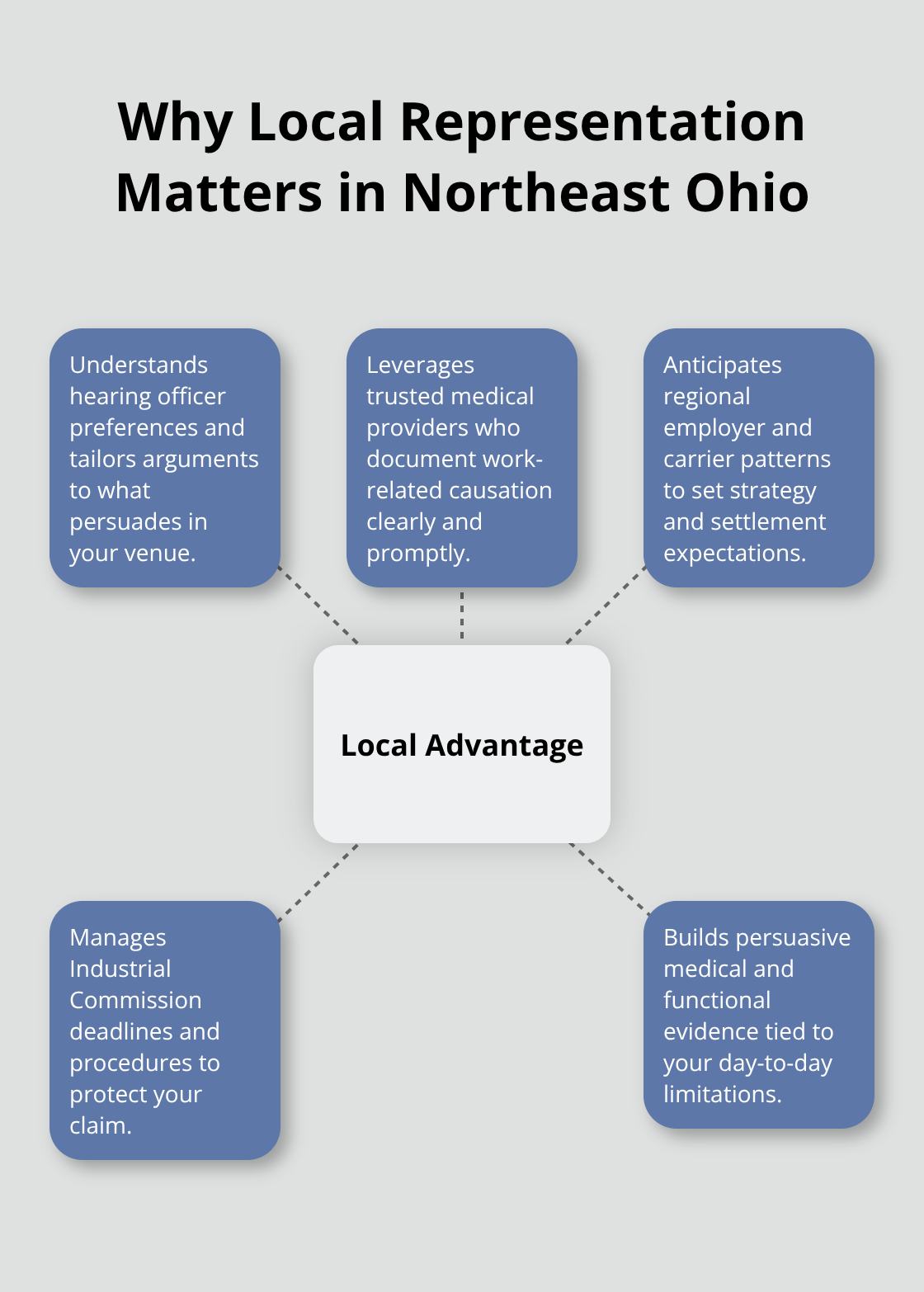
When your initial claim denial cited insufficient medical proof, your attorney reaches out to specialists and treatment centers across Cleveland, Akron, and the surrounding areas who understand how to present evidence in ways the Industrial Commission values. This network of local medical relationships accelerates your appeal timeline because your attorney doesn’t waste months searching for the right provider-they already know who handles your injury type effectively.
Regional Employer and Carrier Patterns Shape Strategy
Understanding how major Northeast Ohio employers typically respond to workers’ compensation claims gives your attorney strategic advantages. Large manufacturers in the Canton area operate differently than Cleveland-based service companies or Akron’s industrial base, and each region has different insurance carriers with different settlement tendencies. Your attorney uses this regional knowledge to anticipate how your employer’s carrier will respond to evidence, what settlement range is realistic based on similar cases in your area, and whether pushing toward hearing or accepting a settlement offer makes more sense for your specific situation.
Final Thoughts
Your workers’ compensation claim hinges on understanding Ohio’s rules, meeting strict deadlines, and presenting evidence that resonates with hearing officers in your region. The BWC covers medical treatment, wage loss, and permanent disability benefits, but roughly 20% of claims face denial or improper closure. Reporting your injury immediately and documenting everything from day one protect your rights when the Industrial Commission of Ohio reviews your appeal.
We at Robin J Peterson Company, LLC represent injured workers across Cleveland, Akron, and Canton by fighting for the benefits you’ve earned. Our experience navigating the Industrial Commission means we understand how local hearing officers think, which medical providers communicate effectively, and how regional employers and carriers typically respond to claims. We handle the procedural complexity so you can focus on recovery while we manage deadlines, build your medical evidence, and negotiate with insurance carriers who count on workers accepting denials without challenge.
Contact Robin J Peterson Company, LLC to discuss your claim in a free consultation and begin building a Northeast Ohio injury guidance strategy tailored to your specific situation. Whether your claim was recently denied or you’re facing closure without adequate benefits, two years remain to appeal and fight for what you deserve. Reach out today and let local expertise work for you.