
A BWC denial in Ohio can feel like a dead end, but it’s not. You have legal rights and specific steps available to challenge the decision.
At Robin J Peterson Company, LLC, we’ve helped workers navigate appealing BWC denials in Ohio. This guide walks you through the process, from understanding why your claim was denied to presenting evidence that supports your case.
Why the BWC Denies Claims and What Happens Next
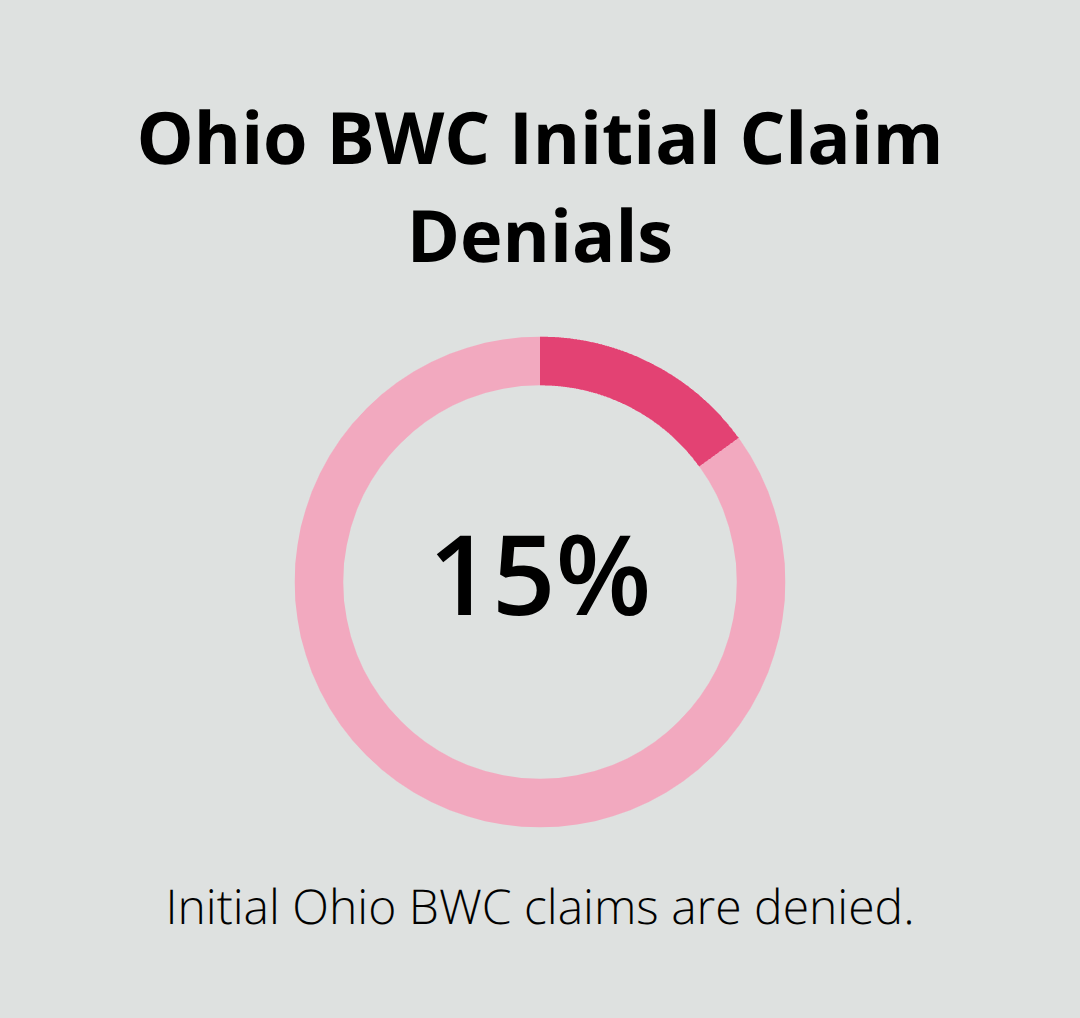
About 15% of initial Ohio BWC claims face denial, according to the Ohio Bureau of Workers’ Compensation. The most common reason is insufficient medical evidence linking your workplace injury to the treatment you received. The BWC requires documentation that clearly shows the injury occurred at work and that the medical care you’re receiving treats that specific injury.
Without this connection explicitly documented, your claim gets rejected even if the injury is real. Other frequent denial grounds include disputes over when the injury actually occurred, disagreement about which body parts qualify for compensation under your claim, and questions about whether you’re eligible for ongoing medical treatment. Misclassifying the injury or calculating your average weekly wage incorrectly also leads to denials, though these errors are easier to fix once identified.
The 14-Day Window Is Non-Negotiable
You have exactly 14 days from the date on your denial notice to file an appeal with the Industrial Commission of Ohio. This deadline is absolute-missing it means losing your right to challenge the decision. You file Form IC-12, Notice of Appeal, either at your local ICO office or online through the Industrial Commission Online Network.
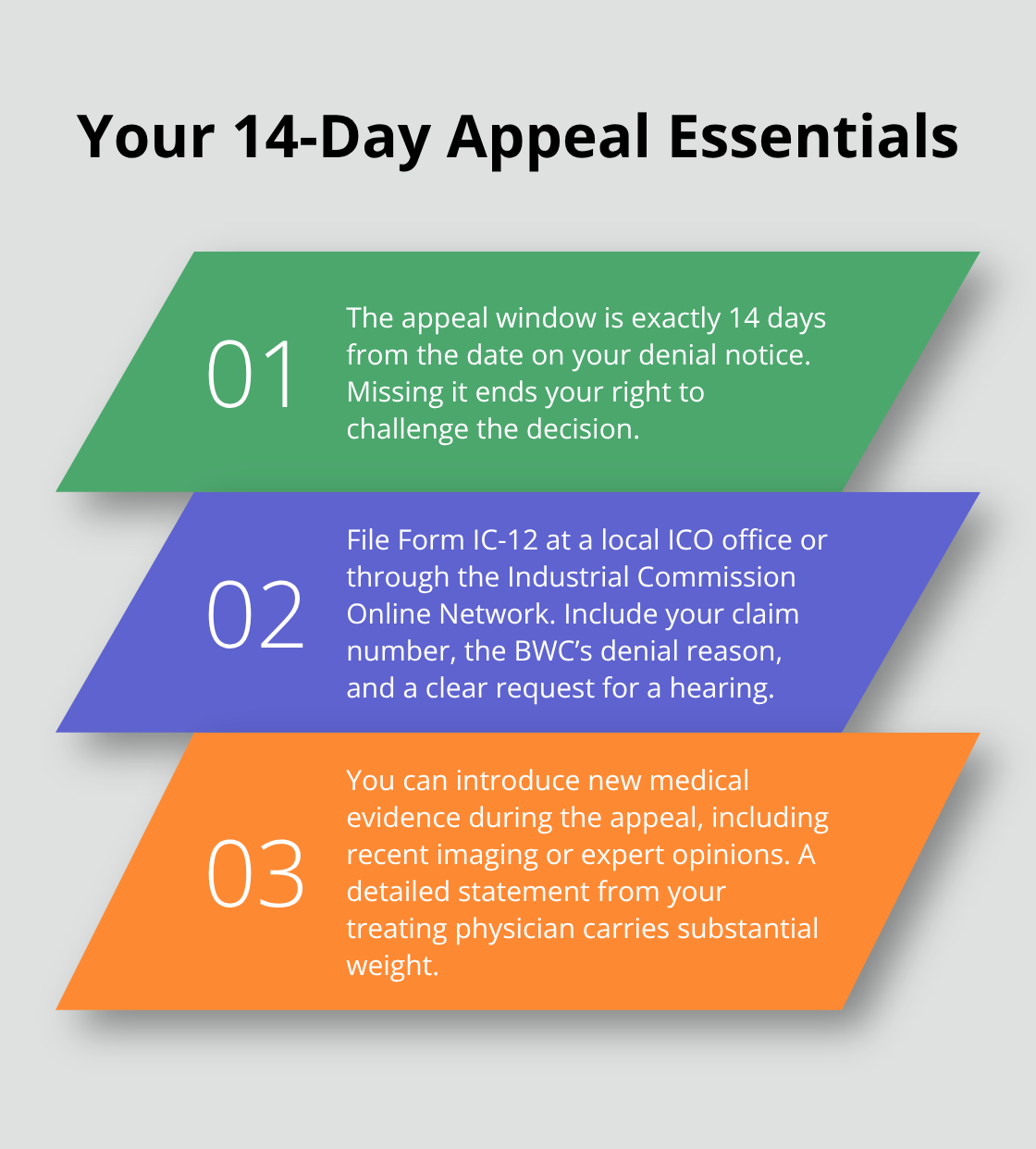
Most workers don’t realize they can introduce new medical evidence during the appeal that wasn’t part of the original claim, including recent imaging or expert opinions that directly contradict the BWC’s reasoning. Your treating physician’s opinion carries substantial weight with the hearing officer, so getting a detailed written statement from the doctor who treated you addresses the denial head-on. If the denial cited insufficient evidence, your physician can explain exactly why the treatment was necessary and work-related. If wage calculation was the problem, payroll records showing your correct average weekly wage resolve that specific issue quickly.
Acting Immediately Gives You an Advantage
The moment you receive your denial notice, gather it along with every medical record related to the injury-emergency room reports, treatment notes, imaging results, rehabilitation records, and any independent medical examinations. Organize these chronologically so you can reference them easily. Identify the exact reason the BWC gave for the denial and address that reason directly in your appeal materials. Self-representation in these appeals typically yields weaker results because most workers aren’t familiar with how hearing officers evaluate evidence or what legal standards apply. A specialized workers’ compensation attorney significantly improves your odds of success by collecting evidence strategically and focusing on documents that directly address the denial’s gaps.
Why Legal Representation Strengthens Your Position
An experienced attorney guides your testimony to highlight the most persuasive parts of your case and organizes your response to align with the hearing officer’s expectations. The firm serves clients throughout the Cleveland, Akron, and Canton areas, handling the entire process from evidence collection to hearing preparation and post-hearing strategy. Legal representation is typically paid from the eventual award if you win, so there are no upfront fees while the case is pending. With your denial notice in hand and the exact reason identified, the next step involves preparing for the actual hearing process.
How to File Your Appeal and Meet Critical Deadlines
Submit Form IC-12 Within the 14-Day Window
You must submit Form IC-12, Notice of Appeal, within 14 days of your denial notice date to the Industrial Commission of Ohio. The ICO accepts filings at local offices or online through the Industrial Commission Online Network, giving you two straightforward options. Accuracy matters at this stage-include your claim number, the specific denial reason from the BWC, and a clear statement requesting a hearing. Most workers weaken their appeals by omitting details or submitting incomplete forms, so double-check every field before you file. The 14-day deadline is absolute and non-negotiable; missing it eliminates your right to challenge the decision.
Prepare for Your Hearing Format and Length
The Industrial Commission of Ohio conducts hearings that typically last between 30 minutes and 2 hours, with most running about an hour. Many hearings happen by telephone rather than in person, which changes how you present evidence and respond to questioning. Prepare for a remote session by setting up a quiet space, having your claim number ready, and organizing your materials within arm’s reach. Without face-to-face interaction, the hearing officer relies entirely on what you say and the documents you reference, so clarity and organization become even more important.
Organize Your Medical Evidence Before the Hearing
Evidence collection determines whether your appeal succeeds or fails, which is why you must organize materials before the hearing rather than scrambling afterward. Start with your emergency room report from the injury date, then add every treatment note, imaging result, and rehabilitation record that followed. Independent medical examinations strengthen appeals significantly because they provide a neutral professional perspective that directly addresses the denial. If the BWC cited insufficient medical evidence, obtain a detailed written opinion from your treating physician explaining why the treatment was necessary and work-related-treating physician opinions carry substantial weight with hearing officers.
Address the Specific Denial Reason With Targeted Documentation
If wage calculation was the problem, payroll records showing your correct average weekly wage resolve that issue immediately. During the hearing, present your case by explaining exactly where the BWC’s reasoning is flawed and cite the applicable medical documents that support your position. Self-representation typically yields weaker results because most workers don’t understand how hearing officers evaluate evidence or what legal standards apply. An attorney strategically focuses on documents that directly address the denial’s gaps and clarifies wage calculations in plain terms during testimony, which is why legal representation significantly improves your odds of success.
Building Your Case for Appeal
How Specialized Legal Representation Transforms Your Appeal
An attorney who specializes in workers’ compensation law transforms your appeal from a collection of documents into a cohesive argument that directly counters the BWC’s reasoning. The hearing officer evaluates your case based on how well you address the specific denial reason, not on how much evidence you accumulate. If the BWC denied your claim for insufficient medical evidence, a skilled attorney obtains a detailed written opinion from your treating physician that explicitly connects the treatment to your workplace injury. If wage calculation was the problem, your attorney presents payroll records alongside tax documentation to establish your correct average weekly wage beyond dispute.
Structuring Your Testimony for Maximum Impact
During the hearing, your attorney guides your testimony to highlight only the most persuasive details and structures your responses to align with how hearing officers actually evaluate workers’ compensation cases. This strategic approach matters far more than presenting every document you possess. Self-representation typically yields weaker results because most workers misunderstand what hearing officers prioritize or how legal standards apply to their specific denial reason. An attorney strategically focuses only on documents that directly address the gaps in the BWC’s decision and eliminates irrelevant materials that distract from your core argument.
The Weight of Medical Evidence and Expert Testimony
Medical evidence and expert testimony form the backbone of successful appeals because treating physician opinions carry substantial weight with the Industrial Commission of Ohio. Your doctor who treated the injury knows the medical facts and can articulate why the treatment was necessary and work-related in language that addresses the BWC’s specific objection. Independent medical examinations strengthen your position significantly by providing a neutral professional perspective that directly contradicts the denial.
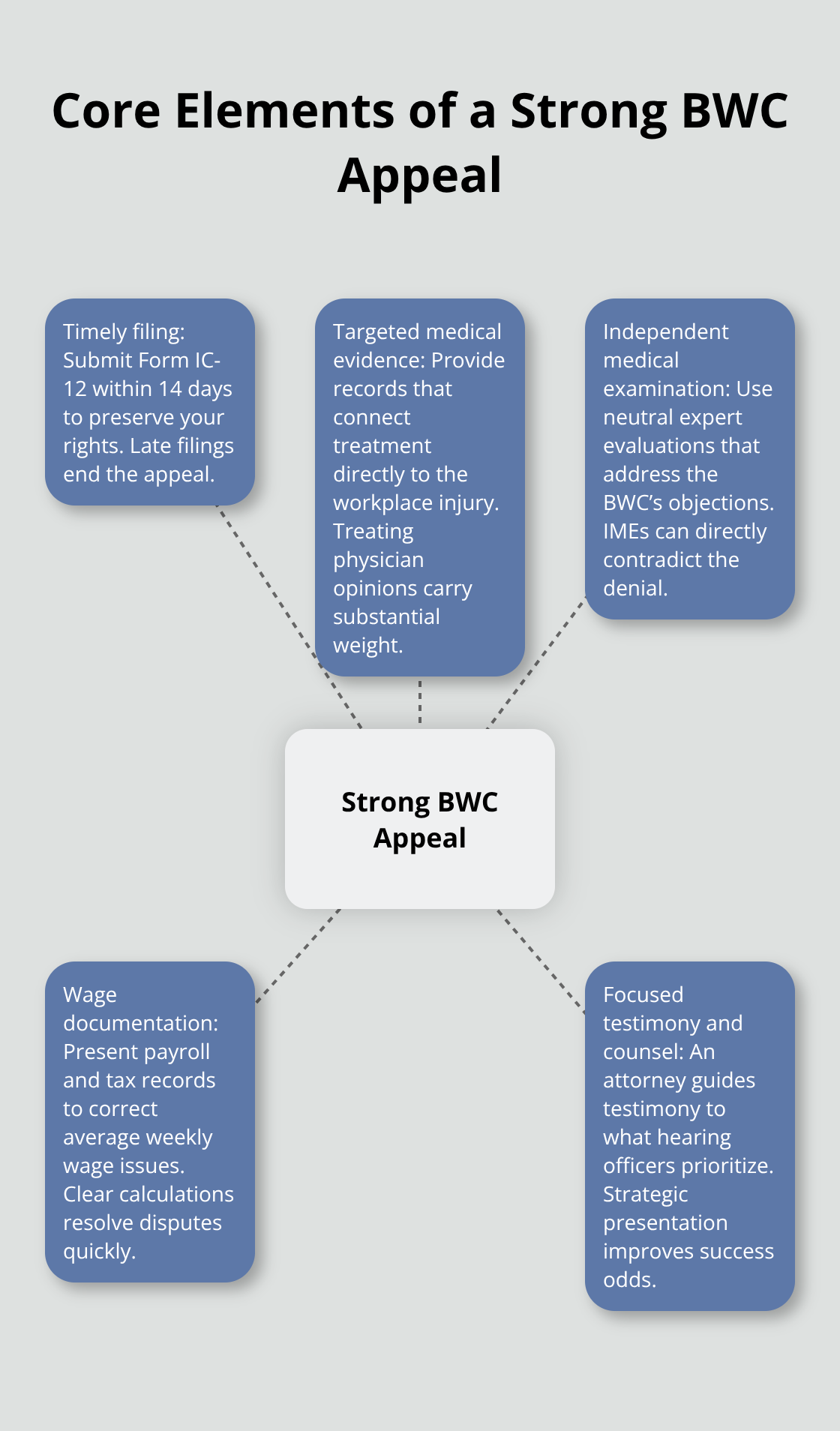
During the hearing, present your case by explaining exactly where the BWC’s reasoning failed and cite the medical documents that prove your point.
Why Legal Costs Don’t Drain Your Resources
Legal representation is paid from your eventual award if you win, which means there are no upfront fees while your case is pending. This arrangement removes the financial barrier that prevents many workers from obtaining skilled representation. Workers’ compensation attorneys in Ohio (including those at Robin J Peterson Company, LLC, who serve the Cleveland, Akron, and Canton areas) structure their fees this way to align their success with yours. You only pay if you recover benefits, making professional legal help accessible regardless of your current financial situation.
Final Thoughts
Appealing a BWC denial in Ohio requires you to file Form IC-12 within 14 days, organize medical evidence that directly addresses the denial reason, and present your case by explaining where the BWC’s reasoning failed. Most workers who handle appeals alone struggle because they don’t understand what hearing officers prioritize or how to structure evidence for maximum impact. The difference between success and rejection often comes down to whether you address the specific denial reason with targeted documentation rather than submitting every document you possess.
A specialized workers’ compensation attorney transforms your appeal from scattered paperwork into a cohesive argument that directly counters the BWC’s objection. Your attorney strategically focuses on documents that contradict the denial, guides your testimony to highlight persuasive details, and clarifies wage calculations or medical connections in language that hearing officers understand. Treating physician opinions carry substantial weight during hearings, and an experienced attorney knows exactly how to obtain and present these statements to strengthen your position.
The financial barrier that stops many workers from getting legal help disappears when you understand how workers’ compensation attorneys structure their fees-you pay nothing upfront while your case is pending, and your attorney’s payment comes from your eventual award if you win. We at Robin J Peterson Company, LLC serve injured workers throughout the Cleveland, Akron, and Canton areas, handling the entire appeal process from evidence collection through hearing preparation and post-hearing strategy. Contact us for a free consultation to discuss your specific denial and explore your options for challenging the BWC’s decision.