
Getting reimbursed for travel related to your workers compensation claim shouldn’t be complicated. Yet many injured workers miss out on legitimate reimbursements because they don’t know what qualifies or how to file properly.
At Robin J Peterson Company, LLC, we’ve seen firsthand how travel reimbursements workers comp claims get denied over preventable mistakes. This guide walks you through exactly what expenses qualify, how to submit your claim to the BWC, and the common errors that hold up approvals.
What Qualifies for Reimbursement
Travel expenses tied to your workers compensation medical care are reimbursable under Ohio BWC rules, but only if they meet specific criteria. The Ohio Bureau of Workers’ Compensation reimburses travel to medical examinations and treatment arranged by the BWC, your employer, the Industrial Commission, or your managed care organization. Routine visits to your own doctor chosen independently are typically not covered unless pre-authorized and the trip exceeds distance thresholds. This distinction matters because many injured workers assume all medical travel qualifies, then submit claims that get denied.
Know Which Appointments Qualify
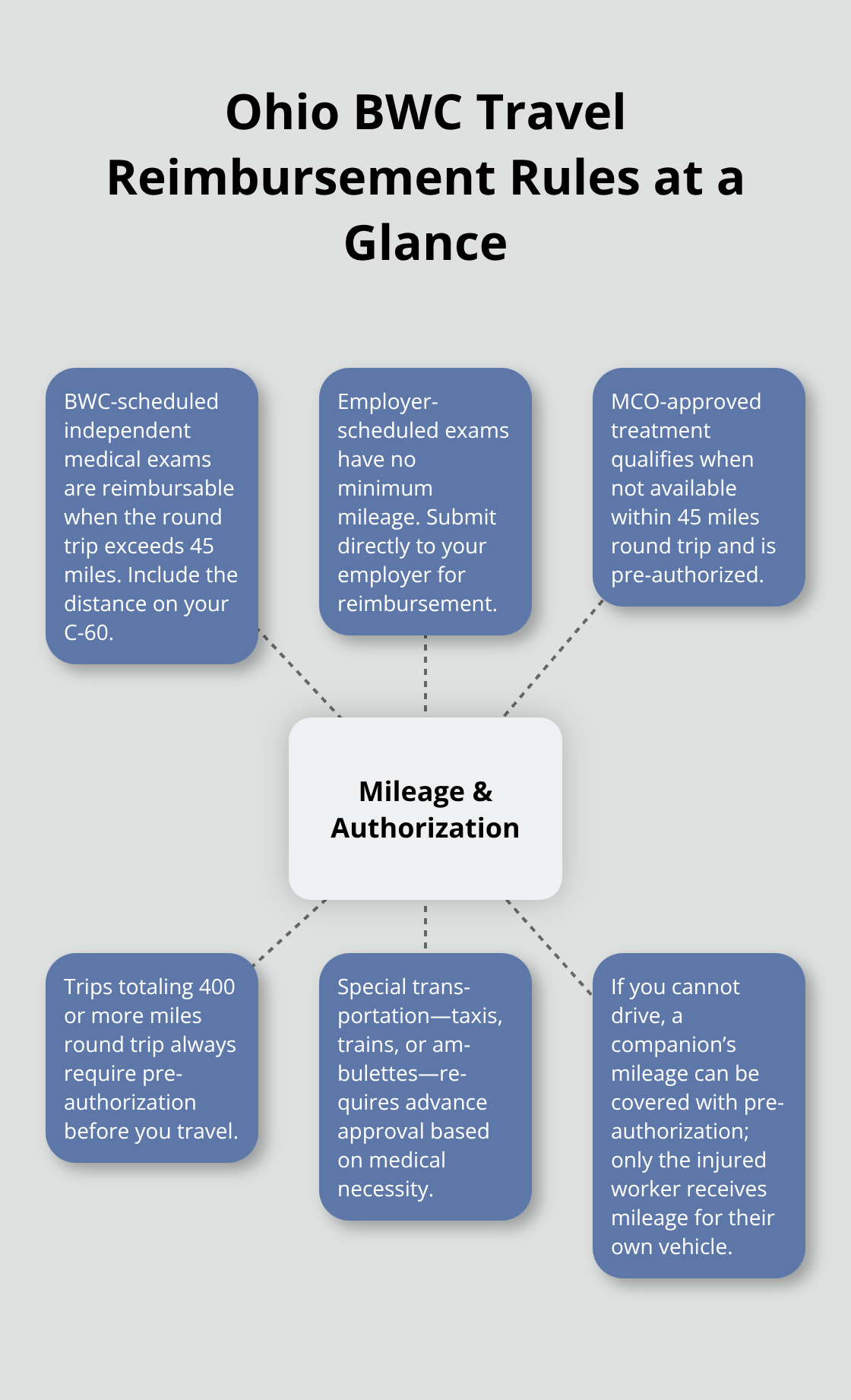
The BWC distinguishes between doctor visits you arrange yourself versus appointments the system directs you to attend. If the BWC schedules an independent medical exam, that travel is reimbursable when the round trip exceeds 45 miles. Employer-scheduled exams have no minimum mileage requirement, so you receive reimbursement regardless of distance. MCO-approved treatment not available within 45 miles round trip qualifies for reimbursement with pre-authorization. Very long trips totaling 400 or more miles round trip always require pre-authorization before you travel, not after.
Cover Special Transportation and Additional Costs
Special transportation like taxis, trains, or ambulettes requires advance approval based on medical necessity. Parking, tolls, and meal expenses with receipts are eligible, as is lodging when pre-authorized and capped at set limits. If you cannot drive due to your injury, a companion’s mileage reimbursement is covered if pre-authorized, though only the injured worker receives mileage compensation for their own vehicle.
Document Everything From Day One
Start documenting from your first medical appointment. Complete Form C-60, the Injured Worker Statement for Reimbursement of Travel Expense, listing each trip chronologically with the date, origin, destination, and mileage. Take photos of your odometer before and after trips to prove miles traveled, then attach parking receipts, toll slips, meal receipts, and lodging documentation if applicable. Payment rates vary based on the date of travel, so confirm the current rate on Form C-60A before submitting. Mail or fax your claim with all receipts attached; you cannot finalize online if receipts are required.
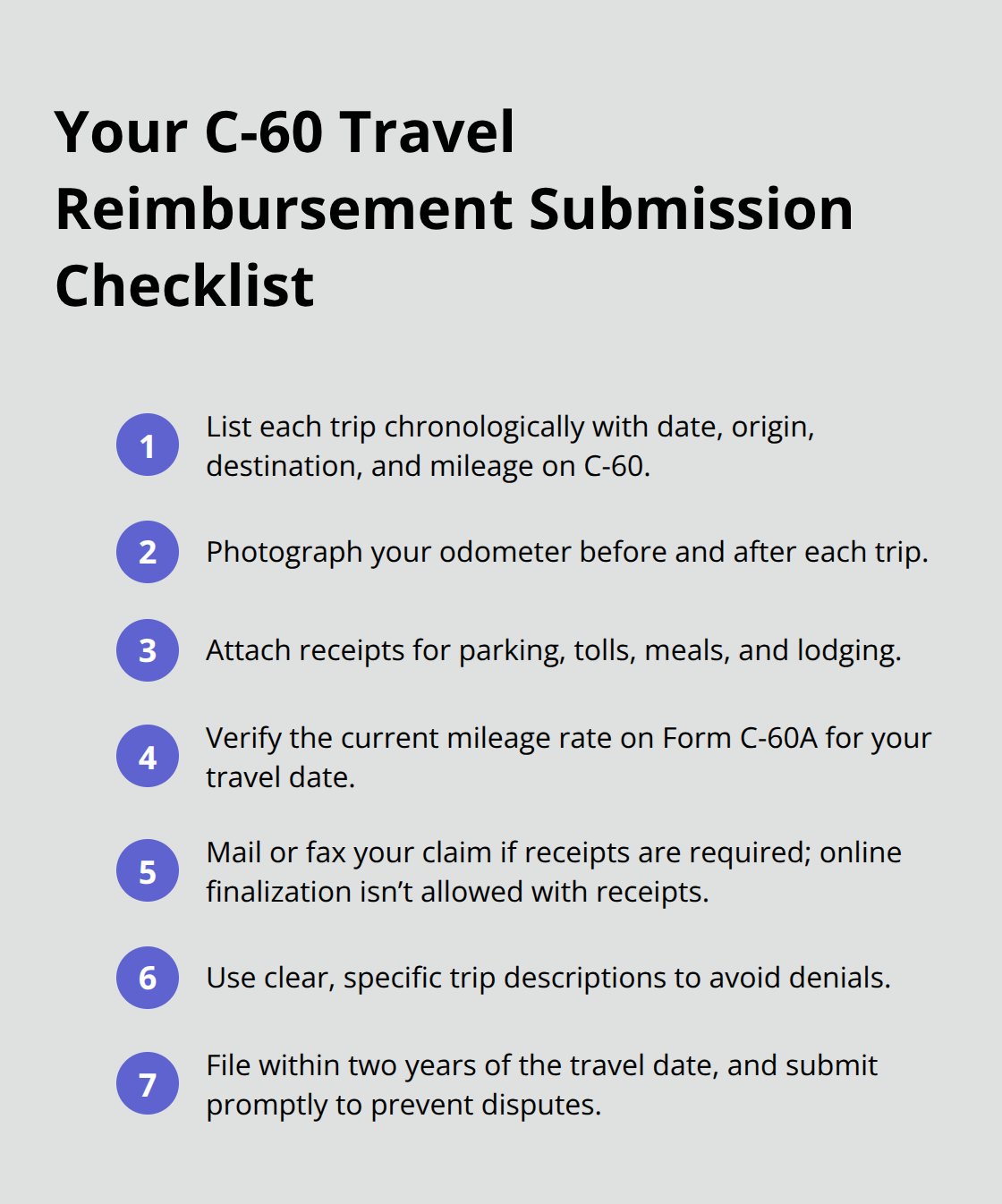
File within two years of your travel date, though filing promptly prevents disputes and speeds approval. Missing receipts or vague trip descriptions trigger denials or delays that we see repeatedly in claims.
The next step involves understanding exactly how to submit your claim to the BWC and what forms the agency requires.
Submitting Your Claim to the BWC
Complete Form C-60 with Precision
Start with Form C-60, the Injured Worker Statement for Reimbursement of Travel Expense. This form requires precision but remains straightforward to complete. List each trip chronologically with the date, starting point, destination, and total mileage. The BWC processes claims faster when information is organized and complete, so treat this form as your primary document. Before you submit anything, check Form C-60A for the current mileage rate in effect on your travel date, not the date you file. Rates change quarterly on January 1, April 1, July 1, and October 1, so using an outdated rate triggers automatic denials.
Gather and Attach All Required Documentation
Attach receipts for parking, tolls, meals, and lodging to your C-60. If your claim requires receipts, you cannot finalize your submission online; instead, print the form and mail it to the address listed on C-60A or fax it to the number provided. Do not submit incomplete claims expecting the BWC to contact you for missing information. Gather comprehensive medical documentation before submitting your claim, as incomplete submissions sit in queue while complete ones move forward.
Submit Your Claim Promptly
Mail your claim promptly after your trip ends rather than waiting months, as timely filing prevents disputes over whether expenses were actually work-related. The two-year deadline from your travel date sounds generous until you consider that missing documentation becomes harder to reconstruct over time. If you traveled for a BWC-ordered exam and the round trip exceeded 45 miles, include that information on the form to clarify reimbursability. For employer-scheduled exams, submit the C-60 directly to your employer since no minimum mileage applies.
Handle Pre-Authorization Requirements
MCO-approved treatment requires pre-authorization documentation attached to your claim showing the MCO approved the distant provider. Very long trips of 400 or more miles round trip need pre-authorization before you travel, not after submission, so contact the BWC or your claims administrator in advance rather than hoping for approval later. The BWC typically processes approved claims within 30 days of receipt, though incomplete submissions extend this timeline significantly.
Track Your Submissions and Maintain Records
Maintain a simple spreadsheet tracking submission dates, claim amounts, and correspondence details to prevent disputes and track what has been paid. This record-keeping habit protects you when questions arise about whether you filed a particular trip or when the BWC received your claim. With your submission complete and documentation in place, the next step involves understanding what mistakes commonly derail otherwise valid claims.
What Derails Valid Travel Reimbursement Claims
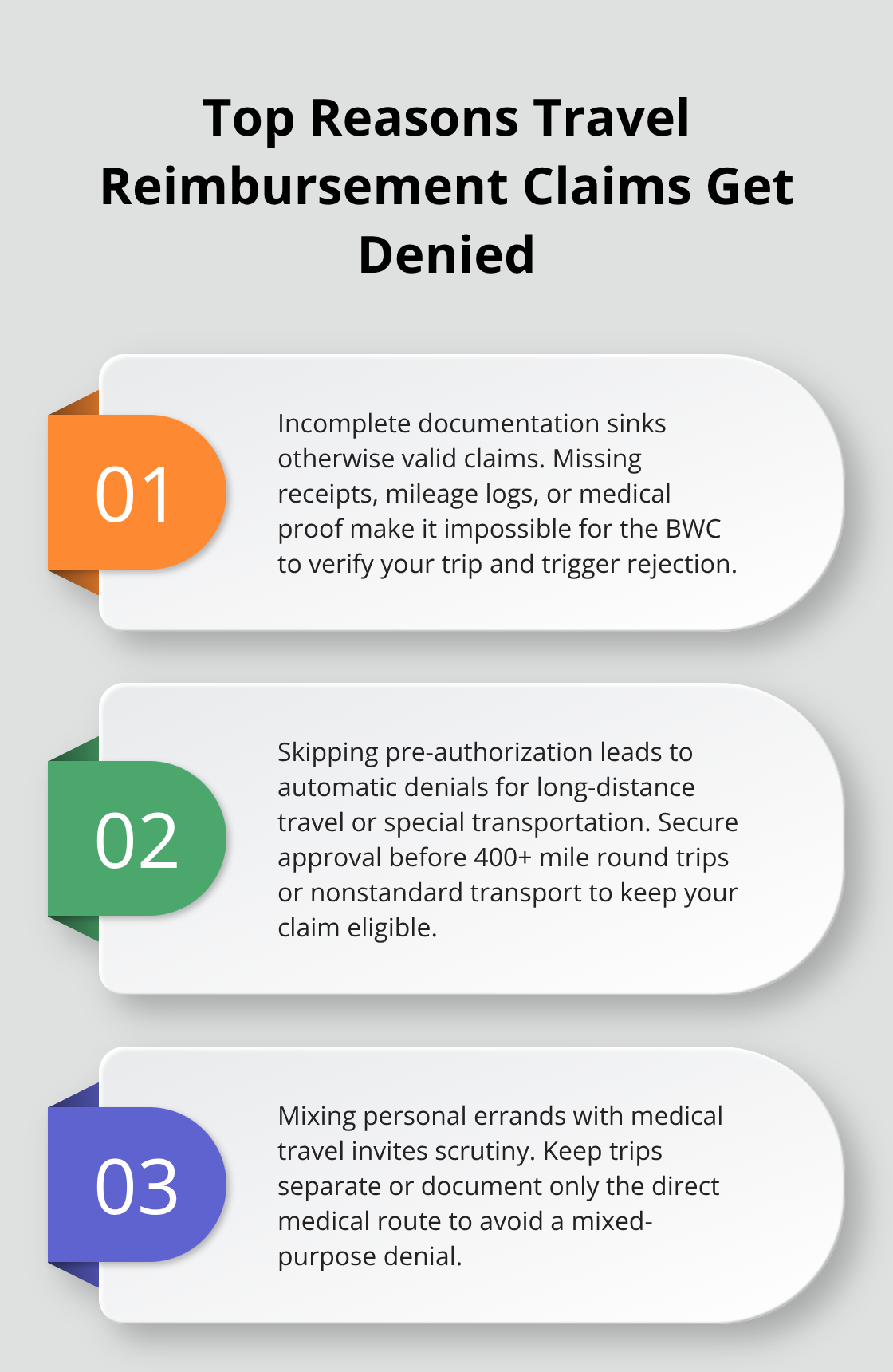
The gap between submitting a claim and receiving payment often comes down to one critical failure: injured workers treat documentation as optional rather than mandatory. We see dozens of denied claims monthly, and nearly all of them share preventable problems. The most common issue is submitting incomplete paperwork without receipts, mileage logs, or medical documentation that proves the trip was treatment-related. The BWC does not contact you to gather missing information or give you a second chance to provide receipts you forgot to attach. Your claim sits rejected in their system, and you must resubmit from scratch, which extends the timeline by weeks or months.
Obtain Pre-Authorization Before Long Trips
Many injured workers fail to obtain pre-authorization before traveling long distances or using special transportation. The BWC clearly states that trips exceeding 400 miles round trip require advance approval, yet workers submit reimbursement requests after the fact and face denials because they skipped this step. Pre-authorization takes days, not weeks, so contacting your claims administrator before you travel eliminates this entire category of denial. Special transportation like taxis, trains, or ambulettes also requires advance approval based on medical necessity, not after-the-fact justification.
Keep Medical Travel Separate From Personal Errands
Another critical mistake involves blending personal travel with work-related medical travel on the same trip. If you drive to a medical appointment but stop at the grocery store, run errands, or visit family, the BWC views the entire trip as mixed-purpose and may deny the entire claim rather than attempting to calculate the medical portion. The solution is simple: make separate trips for medical appointments and personal errands, or document only the direct route and mileage specifically tied to medical care. This distinction protects your claim from scrutiny and denial.
Verify Distances With Mapping Tools
Injured workers also frequently underestimate how thoroughly the BWC verifies trip details. If you claim a round trip of 90 miles but the actual distance between the medical facility and your home is 65 miles, the discrepancy raises red flags and invites scrutiny of your entire claim. Use mapping software like MapQuest or Google Maps to calculate exact distances, then verify those numbers match your odometer readings. Accuracy in distance reporting prevents disputes that delay payment.
File Claims Promptly After Travel
Many workers file claims months or years after traveling, which makes it nearly impossible to reconstruct receipts or explain trip details credibly. The two-year filing deadline exists, but claims filed promptly face far fewer verification challenges and process faster. Submit your C-60 within two weeks of your final trip whenever possible, while details remain fresh and documentation is accessible. Timely submission demonstrates that you took the claim seriously and kept accurate records from the start.
Final Thoughts
Travel reimbursements workers comp claims succeed when you treat documentation as non-negotiable and submit claims promptly. The three core principles that prevent denials are straightforward: obtain pre-authorization before long trips or special transportation, keep medical travel separate from personal errands, and file your C-60 with complete receipts within weeks of traveling. The BWC processes approved claims within 30 days, but incomplete submissions restart the clock and cost you weeks of waiting.
If your claim faces denial, if the BWC disputes your expenses, or if you encounter pressure from your employer or insurer, seeking legal guidance becomes important. At Robin J Peterson Company, LLC, we represent injured workers throughout Ohio who need help securing the benefits they earned, and our firm focuses specifically on workers compensation law. We fight to protect your rights against the BWC and employers who deny legitimate claims.
Contact Robin J Peterson Company, LLC if your travel reimbursement claim faces denial or if you need guidance navigating the claims process. The firm serves clients in Cleveland, Akron, and Canton and has the experience to challenge unfair denials and recover the reimbursement you deserve.