
Filing a workers’ compensation claim with Ohio’s Bureau of Workers’ Compensation can feel overwhelming if you don’t know where to start. We at Robin J Peterson Company, LLC created this BWC claim filing guide to walk you through each step of the process.
Whether you’re injured on the job or dealing with an occupational illness, understanding the filing requirements and deadlines matters. This guide covers what you need to know to file correctly and avoid costly mistakes.
Understanding Ohio Workers’ Compensation Claims
What the BWC Actually Covers
Ohio’s no-fault workers’ compensation system covers injuries and illnesses that occur while performing job duties, which means you don’t need to prove your employer was negligent to receive benefits. The Ohio Bureau of Workers’ Compensation administers these claims and covers two primary categories: traumatic injuries from accidents like falls or equipment-related incidents, and occupational diseases linked to workplace exposure. The schedule of occupational diseases includes cancers, infections, and poisonings from substances like asbestos, lead, mercury, and arsenic. Medical benefits cover reasonable and necessary treatment for work-related injuries, including doctor visits, hospital care, prescriptions, and ongoing treatment. Wage-replacement benefits apply if you cannot work due to your injury, with rates determined by BWC guidelines based on your average weekly wage.
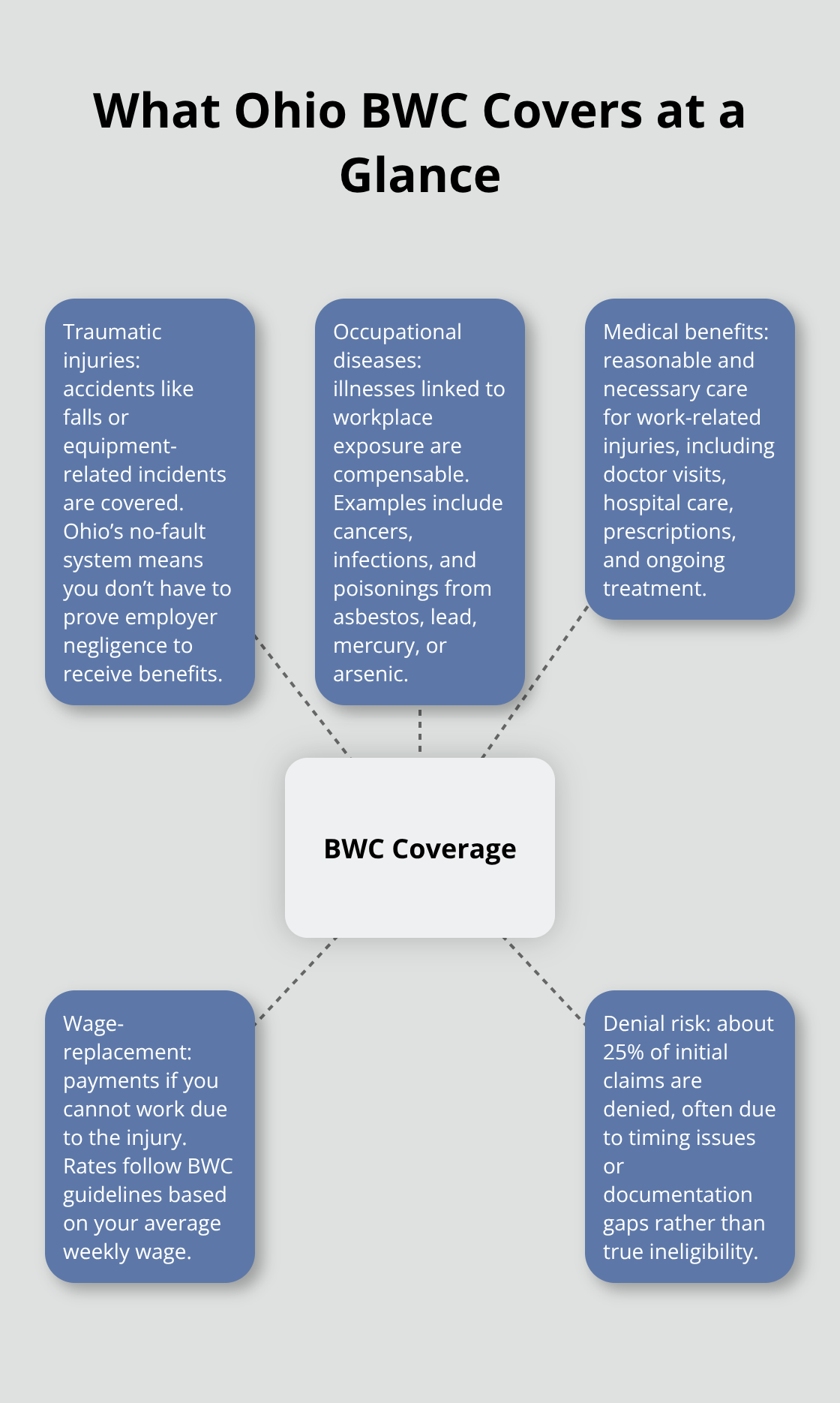
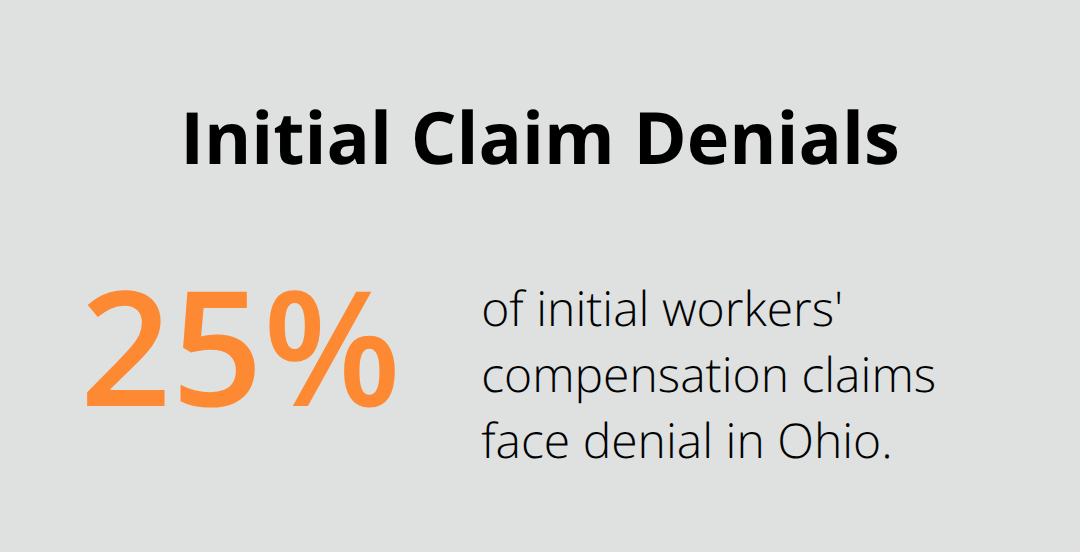
About 25 percent of initial claims face denial, often due to timing problems and gaps in documentation rather than ineligibility-which means many workers lose benefits they could have received simply by filing incorrectly or missing deadlines.
Report Your Injury Within One Year
Ohio law requires you to report your workplace injury to your employer within one year of the incident, but waiting that long is a mistake. Immediate written notice to your employer creates a verifiable paper trail and strengthens your claim significantly. Provide specific details about what happened, where it happened, when it happened, and which body parts were affected. Your employer must then file the First Report of Injury with the BWC, but if they fail to do so, you can file it yourself online, by mail, or by phone. Seek prompt medical care as soon as possible after the injury to protect your health and create an official medical record that links the injury to your job. Tell your healthcare provider about all symptoms, even minor ones, and attend all recommended follow-up appointments.
Get Medical Evidence Before Filing
Gather comprehensive medical documentation before submitting your claim to the BWC, as incomplete records are a primary reason claims face denial. Collect all medical records, test results, treatment notes, and physician statements that explicitly connect your injury to work duties. Use a BWC-certified medical provider for ongoing care, since non-certified providers can lead to rejected bills and claim complications. Submit the complete claim package via the BWC online portal, and the agency typically acknowledges receipt within about 10 business days. Keep detailed personal records of your injury (including a symptom journal and notes on how the injury affects your daily life and work capacity). Track all out-of-pocket costs related to your injury, such as travel to medical appointments or medical supplies, for potential reimbursement. With your medical evidence organized and your documentation complete, you’re ready to move forward with the actual filing process.
Step-by-Step Filing Process with the BWC
File Your First Report of Injury Immediately
Start the filing process immediately after you notify your employer and gather your medical documentation. Your employer is legally required to file the First Report of Injury with the Ohio Bureau of Workers’ Compensation, but don’t wait passively for them to act. Contact your employer’s HR or safety department within 24 to 48 hours of reporting your injury to confirm they’ve initiated the filing. If your employer drags their feet or claims they never received your report, file the FROI yourself through the BWC online portal, by mail, or by phone. The online portal is the fastest option and generates an immediate claim number, which you’ll need to track your case.
Complete the FROI with Accuracy
When filing online, you’ll enter the date and time of your injury, describe exactly what happened, identify which body parts were affected, and list your initial medical provider. Accuracy matters here because discrepancies between your accident report and your medical records are a common reason the BWC denies claims. Once the BWC receives your FROI, they typically acknowledge receipt within about 10 business days and assign a claim administrator to your case.
Track Your Claim Through the BWC Portal
After filing, monitor your claim status through the BWC online portal at least twice weekly during the first month. The portal shows whether the BWC has received your medical records, requested additional documentation, or made any decisions about your claim. Submit all medical documentation directly through the portal rather than relying on your doctor’s office to send it, since the BWC receives thousands of claims monthly and medical records often get lost in transit.
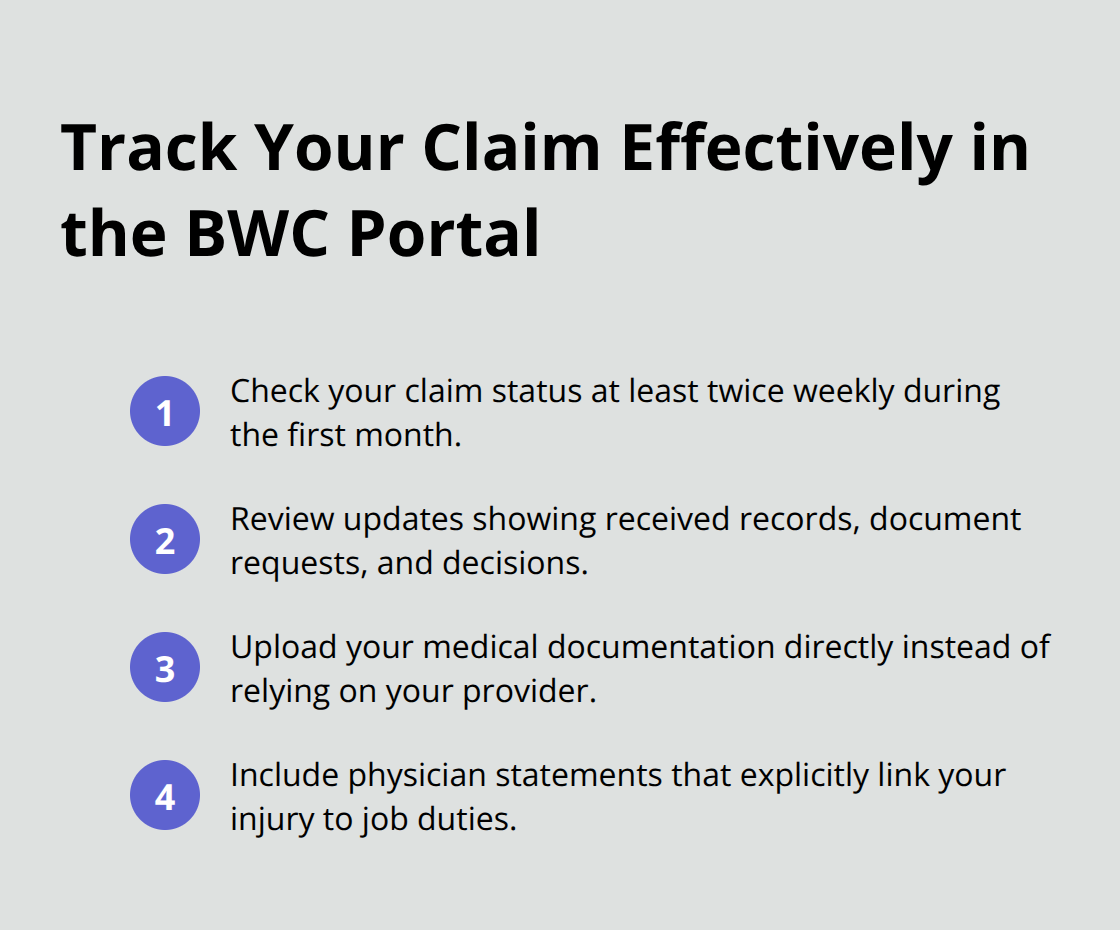
Include physician statements that explicitly link your injury to your job duties, not just generic medical notes.
Respond to BWC Requests on Time
If the BWC requests information, respond within the stated deadline, as missing response windows can result in claim denial. Keep your own file with copies of everything you submit, including the claim number, filing date, and all correspondence. Track your claim number in a safe place and reference it in every communication with the BWC. Missing even one deadline or failing to submit requested documents can derail your entire claim, which is why staying organized and proactive matters far more than most workers realize. The next section covers the mistakes that most workers make during this process-and how to avoid them.
Common Mistakes to Avoid When Filing
The gap between filing a claim and getting approved hinges on three critical areas where most workers sabotage themselves. Missing a single deadline with the Ohio Bureau of Workers’ Compensation results in automatic claim denial with no second chance to correct it. The BWC operates on strict timelines, and a 14-day window exists to appeal a denial once the decision arrives. After that window closes, you forfeit the right to challenge the decision, which is why workers who delay responding to BWC requests often lose benefits they were entitled to receive. Incomplete or inaccurate information on your FROI creates discrepancies that the BWC uses as grounds for denial, particularly when your accident report doesn’t align with your medical records or when you omit details about how the injury happened. About 25 percent of initial claims face denial, and the majority of those denials stem from documentation gaps or timing failures rather than actual ineligibility. The third major mistake involves passive claim management. Many workers file their FROI and then wait for the BWC to contact them, unaware that the agency processes thousands of claims monthly and yours could easily get lost in the shuffle. If you don’t actively manage workers compensation claims and respond immediately to requests for additional information, your case stalls indefinitely.
Deadlines Are Absolute, Not Suggestions
The moment you notify your employer of your injury, a clock starts running. Ohio law gives you one year to report the injury to your employer, but waiting even a few days weakens your claim’s credibility and creates opportunities for disputes about whether the incident was actually work-related. Your employer must file the FROI with the BWC, but you should contact their HR department within 24 to 48 hours to confirm they’ve submitted it. If they claim they never received your report or drag their feet filing, submit the FROI yourself immediately through the BWC online portal, by mail, or by phone. Once the BWC acknowledges receipt, they typically respond within about 10 business days, and from that point forward, every request they send has a specific response deadline. Missing a deadline by even one day results in claim denial, and the BWC rarely grants extensions regardless of your reason for the delay. If the BWC requests medical records, wage statements, or additional injury details, respond within the stated timeframe and submit documents through the online portal rather than via mail. Your claim number becomes your lifeline throughout this process, so write it down immediately when you receive it and reference it in every communication with the BWC.
Documentation Must Match Across Every Document
Discrepancies between your accident report and your medical records rank among the top reasons the BWC denies claims. If your FROI states you injured your right shoulder but your medical records indicate treatment for a left shoulder injury, the BWC will question whether you’re being truthful about the incident. When you file the FROI, describe exactly what happened, where it happened, when it happened, and which body parts were affected, using the same language and details in all subsequent communications. Gather physician statements that explicitly link your injury to your job duties before submitting your claim package. Generic medical notes that simply document your treatment without connecting the injury to work activities leave the BWC uncertain about causation. Use a BWC-certified medical provider for all ongoing care, since non-certified providers result in rejected bills and claim complications. If you have a pre-existing condition that the job aggravated, disclose this honestly and explain clearly how your work duties worsened the condition. Transparency here strengthens credibility rather than weakening it. Keep a personal file with copies of everything you submit to the BWC (including the claim number, filing date, all correspondence, medical records, and wage statements). This organized record protects you if disputes arise and allows you to respond quickly to any requests for clarification.
Stay Proactive With Your Claim Status
The moment you notify your employer of your injury, a clock starts running. Ohio law gives you one year to report the injury to your employer, but waiting even a few days weakens your claim’s credibility and creates opportunities for disputes about whether the incident was actually work-related. Your employer must file the FROI with the BWC, but you should contact their HR department within 24 to 48 hours to confirm they’ve submitted it. If they claim they never received your report or drag their feet filing, submit the FROI yourself immediately through the BWC online portal, by mail, or by phone. Once the BWC acknowledges receipt, they typically respond within about 10 business days, and from that point forward, every request they send has a specific response deadline. Missing a deadline by even one day results in claim denial, and the BWC rarely grants extensions regardless of your reason for the delay. If the BWC requests medical records, wage statements, or additional injury details, respond within the stated timeframe and submit documents through the online portal rather than via mail. Your claim number becomes your lifeline throughout this process, so write it down immediately when you receive it and reference it in every communication with the BWC.
Final Thoughts
Filing a BWC claim successfully requires speed, accuracy, and persistence. You now understand what the Ohio Bureau of Workers’ Compensation covers, how to file your First Report of Injury correctly, and which mistakes derail most claims. The workers who win their claims report injuries immediately, gather medical documentation before filing, respond to every BWC request on time, and track their claim status actively through the online portal.
About 25 percent of initial claims face denial, but most of those denials happen because workers miss deadlines or submit incomplete documentation, not because they’re ineligible. This BWC claim filing guide gives you the roadmap to avoid those mistakes. If your claim gets denied despite your best efforts, you have 14 days to appeal to the Ohio Industrial Commission, and that appeal window closes permanently if you miss it.
Handling a workers’ compensation claim alone can jeopardize your benefits, as the process involves strict timelines, complex documentation requirements, and interactions with the BWC that most injured workers have never navigated before. If you face a denial, need help organizing your medical records, or want someone to manage communications with the BWC on your behalf, contact Robin J Peterson Company, LLC to discuss your options.