
A workplace injury in Akron can feel overwhelming, especially when you’re unsure how to navigate the Ohio Bureau of Workers’ Compensation system. We at Robin J Peterson Company, LLC know that understanding the Akron BWC claim process is the first step toward getting the benefits you deserve.
This guide walks you through each stage, from reporting your injury to your employer through the claims review process. You’ll learn what documents you need, which deadlines matter, and how to respond if the BWC asks for more information.
Report Your Injury Immediately to Your Employer
Act Fast in the First 24 Hours
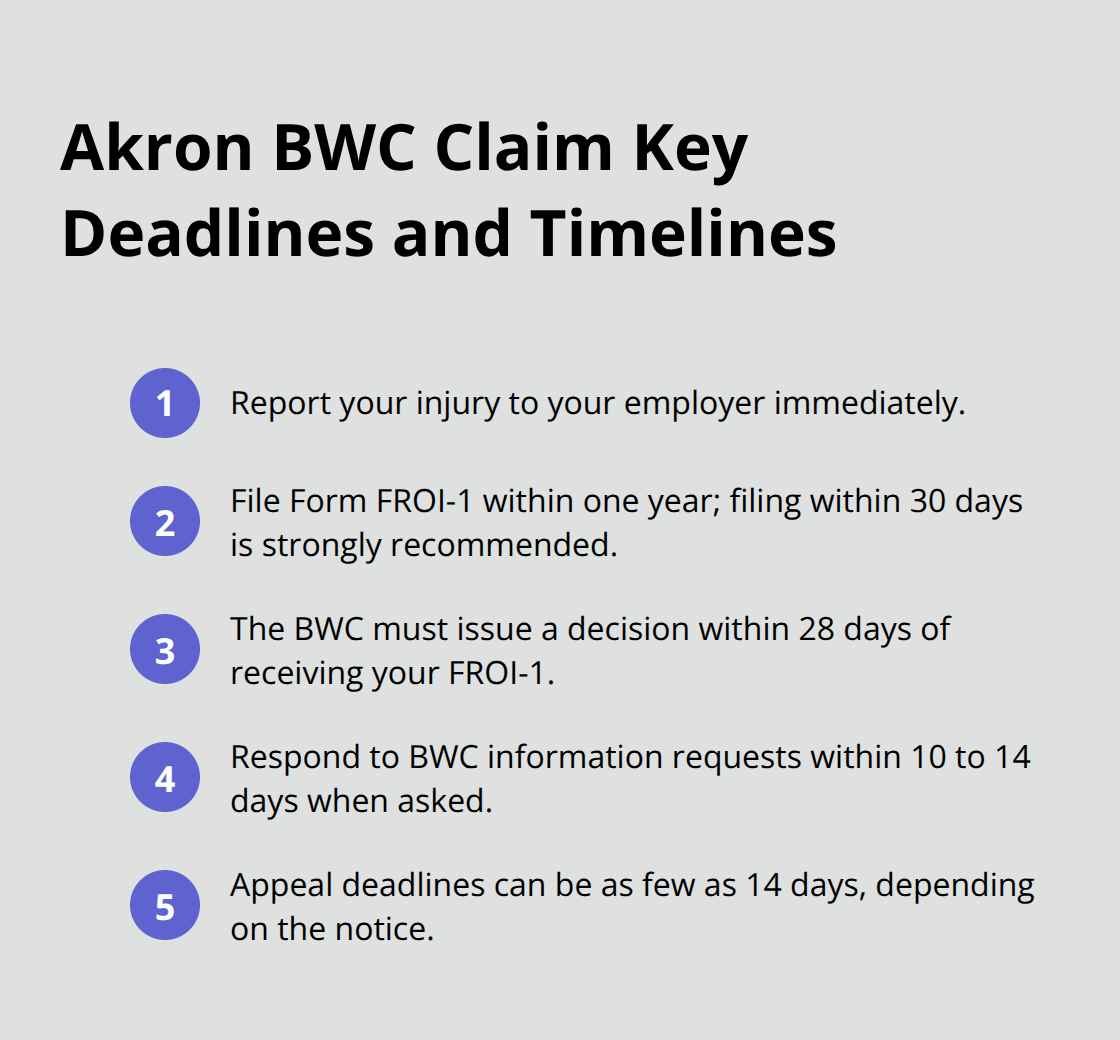
The first 24 hours after a workplace injury are critical. You must report the accident to your supervisor or manager as soon as it happens, even if the injury seems minor. Many injured workers delay reporting because they think the injury will resolve on its own, but this decision often backfires. The Ohio Bureau of Workers’ Compensation views prompt reporting as a sign of credibility. When you wait days or weeks to report, the BWC becomes skeptical about whether the injury actually occurred at work. This skepticism translates into claim denials.
Describe Your Injury with Specificity
You must tell your employer what happened, where it happened, and which body parts hurt. Be specific about your symptoms-say you have sharp pain in your lower back, not just that your back hurts. Describe what you were doing when the injury occurred and include environmental details like wet floors, faulty equipment, or lack of proper training. The more concrete your description, the stronger your claim becomes.
Create a Written Paper Trail
Verbal notification is a start, but written notification is what matters legally. Send an email to your supervisor and your HR department documenting the accident. If your workplace has an accident report form, complete it immediately and keep a copy for yourself. Written communication creates an official paper trail that proves you reported the injury on the correct date. This documentation becomes essential if the BWC or your employer later claims they never heard about your accident.
Seek Medical Treatment Without Delay
After reporting to your employer, seek medical treatment without delay. Visit an urgent care clinic, emergency room, or your primary care doctor on the same day as the injury if possible. Tell the healthcare provider that your injury occurred at work. This medical record establishes that you sought prompt treatment, which strengthens your credibility with the BWC. The one-year filing deadline for work-related injuries in Ohio starts from the date of injury, not from the date you report it. However, waiting months to file creates problems because memories fade, witnesses move away, and the BWC questions why you delayed.
Use BWC-Certified Providers and Maintain Records
File your First Report of Injury with the Ohio Bureau of Workers’ Compensation within 30 days of the injury. You can file online through the BWC website, by mail, or by phone. For ongoing medical treatment, use only a BWC-certified provider to ensure your medical bills get paid. Non-certified doctors may treat you, but the BWC can refuse to pay those bills, leaving you responsible for the costs. Keep copies of every medical record, accident report, and communication with your employer (these documents prevent misunderstandings and provide evidence if your claim faces denial or requires appeal). With your injury reported and medical treatment underway, you now move to the formal claim filing process with the Ohio Bureau of Workers’ Compensation.
Filing Your Claim with the Ohio Bureau of Workers’ Compensation
Submit Form FROI-1 Within the Required Timeframe
The formal claim filing process with the Ohio Bureau of Workers’ Compensation begins with Form FROI-1, officially called the First Report of Injury, Occupational Disease, or Death. This single form is the gateway to your entire claim. The Ohio BWC must receive your FROI-1 within one year from the date of your workplace injury, though filing within 30 days is strongly recommended. You can submit the form online through the BWC website, by mail to 30 W. Spring St., Columbus, OH 43215-2256, or by phone. Your employer or a medical provider can file on your behalf, but you should file it yourself or verify that your employer filed it correctly. Too many injured workers assume their employer will handle this, only to discover months later that the form was never submitted or was submitted with critical errors that triggered a denial.
Complete the FROI-1 with Precise Details
Precision matters more than you might think when you complete the FROI-1. The form requires a detailed description of exactly what happened-not vague language like hurt back, but rather the specific mechanism of injury such as fell from six-foot ladder while cleaning gutters or caught hand in machinery while operating the stamping press. Include your medical diagnosis from your doctor, the date and time of injury, the names of any witnesses, and your average weekly wage calculation. The BWC uses this information to investigate your claim and determine eligibility. If your description is vague or inconsistent with your medical records, the BWC will flag it for investigation.
Organize Your Supporting Documentation
Gather your medical records from your initial treatment visit, your employment records showing your wages for the 52 weeks before injury, and any documentation of witnesses. These documents support your FROI-1 and prevent delays during the review process. The Industrial Commission of Ohio states that the BWC has 28 days from receiving your FROI-1 to issue a decision allowing or denying your claim. After you file, the BWC assigns your case to a Managed Care Organization that reviews treatment requests and coordinates your medical care.
Act Quickly if You Receive a Denial
If the BWC denies your claim, you have limited time to appeal-as few as 14 days depending on the notice-so act immediately if you receive a denial letter. The appeal process involves the Industrial Commission of Ohio, and missing the deadline forfeits your right to challenge the decision. Understanding what happens during the claims review process helps you prepare for potential requests for additional information or denial scenarios.
Navigating the Claims Review Process
The BWC’s 28-Day Investigation Window
After the Ohio Bureau of Workers’ Compensation receives your FROI-1, the agency enters a structured review process with fixed timelines. The BWC has 28 days from receipt to issue a decision on whether your claim is allowed or denied. During this 28-day window, a claims examiner reviews your FROI-1, your medical records, your employment history, and any witness statements.
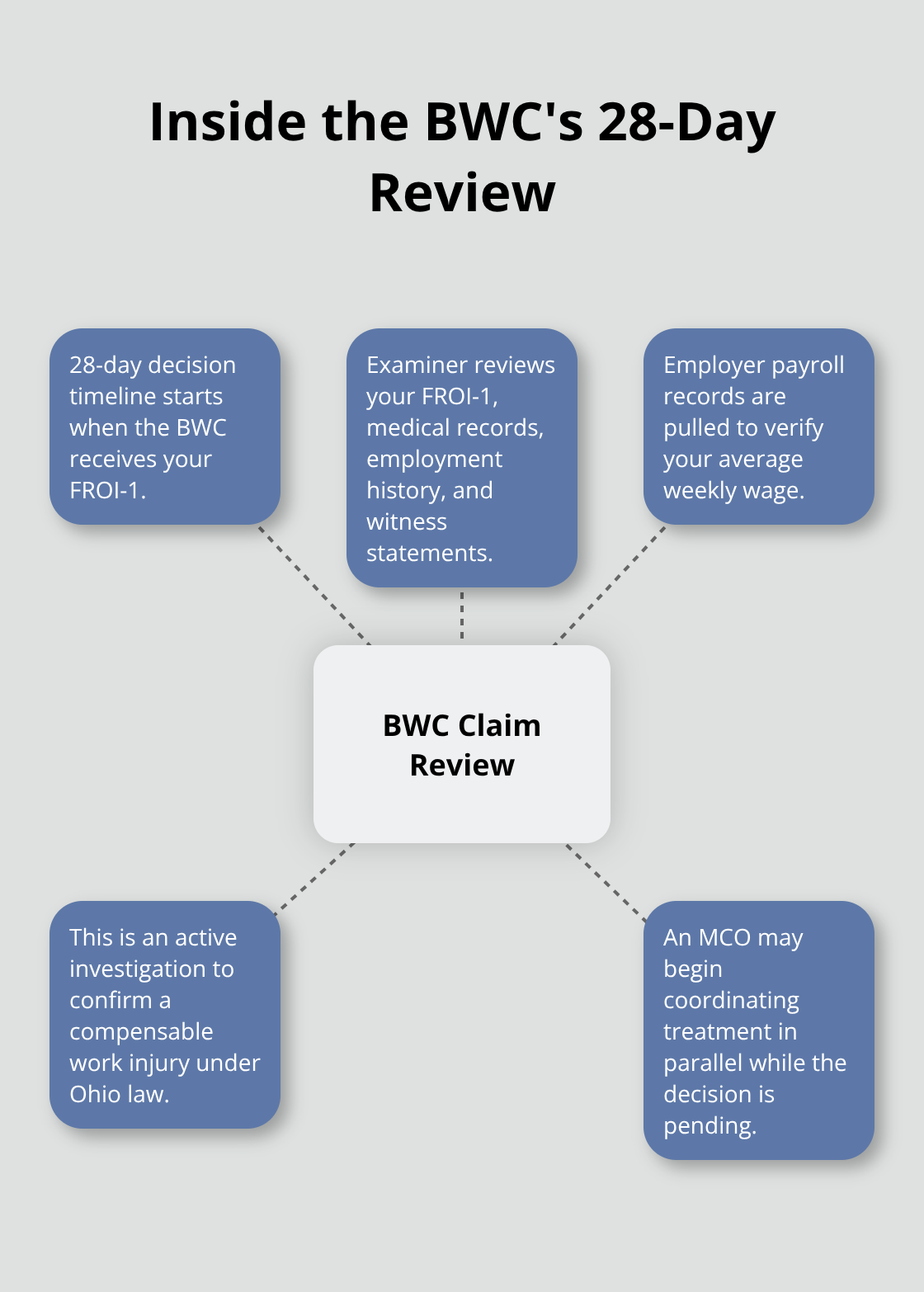
The examiner also pulls your employer’s payroll records to verify your average weekly wage calculation. This is not a rubber-stamp process-the examiner actively investigates whether your injury meets the legal definition of a compensable work injury under Ohio law.
How the BWC Investigates Your Claim
The BWC contacts your employer to obtain their accident report and any safety records related to your workplace. If your employer reports a different account of the accident than what you provided, the examiner flags this discrepancy for further investigation. Many claims face delays during this phase because the examiner requests additional information from your employer, your medical provider, or you. If the examiner needs clarification on your medical diagnosis or the mechanism of injury, they send a written request. You must respond promptly-typically within 10 to 14 days-or the examiner may proceed without that information, which can result in a denial.
The Managed Care Organization’s Role
The BWC assigns a Managed Care Organization to your case once your claim appears eligible. This MCO does not make the allowance or denial decision, but they begin coordinating your medical treatment and reviewing treatment requests even while your claim is under initial review. Understanding this parallel process matters because your medical care can start moving forward while the claim decision is still pending.
Why Claims Get Denied During Initial Review
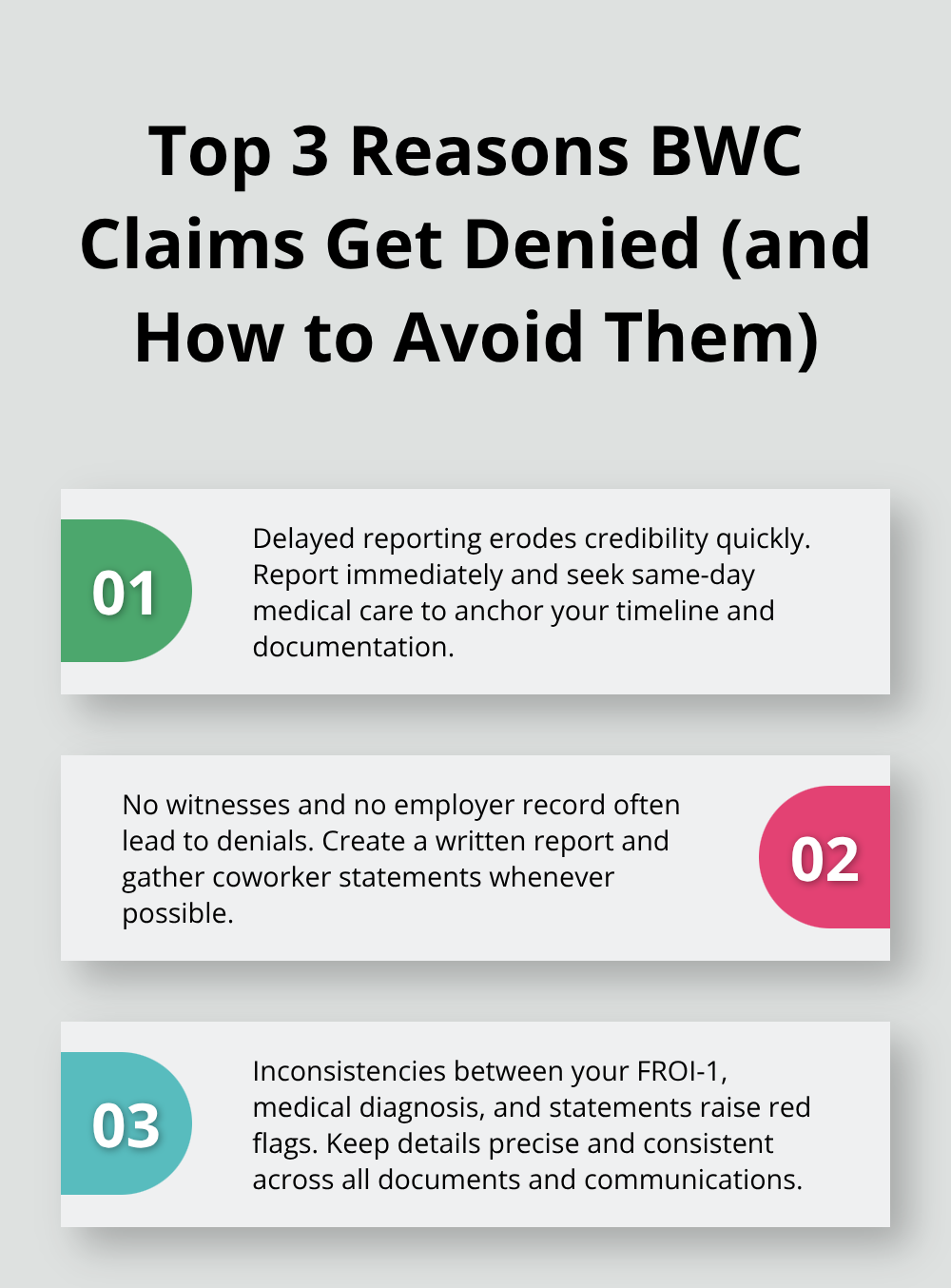
The most common reason the BWC denies claims is delayed reporting combined with lack of credible witness statements. The Bureau of Workers’ Compensation has stated that prompt reporting is a credibility indicator, and when you report an injury weeks after it occurs, the examiner becomes skeptical. If your employer also claims they have no record of your report, and no coworkers witnessed the accident, the examiner will likely deny your claim. This is why your written notification to your employer and your immediate medical treatment are so critical-they corroborate your account.
Responding to Information Requests and Avoiding Denial
If the examiner requests additional information, treat this as a red flag that your claim may be heading toward denial. Respond with exact, detailed information that matches your medical records and your original FROI-1 description. Inconsistencies between your accident description, your medical diagnosis, and your explanation to the examiner will trigger a denial. For example, if you reported on the FROI-1 that you fell and injured your lower back, but then tell the examiner you have neck pain, the examiner will question your credibility. If your claim is denied after the 28-day review period, the denial letter will explain the specific reason-typically delayed reporting, insufficient evidence of work relatedness, or pre-existing condition issues. At this point, you enter the appeal phase with the Industrial Commission of Ohio, which operates under different rules and timelines than the initial BWC review. Acting quickly on any information request from the BWC dramatically improves your chances of an allowance during this critical initial phase.
Final Thoughts
Starting your Akron BWC claim process requires speed, precision, and organization. You must report your injury immediately, file Form FROI-1 within 30 days, and respond promptly to any information requests from the Ohio Bureau of Workers’ Compensation. Your credibility matters more than anything else in this system, and when you report promptly, seek medical treatment without delay, and document everything in writing, you signal to the BWC that your injury is legitimate and work-related.
If the BWC denies your claim, you have a limited window to appeal-sometimes as few as 14 days. An appeal with the Industrial Commission of Ohio follows different procedures than the initial BWC review, and the stakes are high. This is where legal representation becomes invaluable, as an experienced workers’ compensation attorney can identify weaknesses in the BWC’s denial, gather additional medical evidence, and present your case effectively before a hearing officer.
Even if your claim is allowed, you may face disputes with your Managed Care Organization over treatment requests or benefit calculations. We at Robin J Peterson Company, LLC represent injured workers throughout the Cleveland, Akron, and Canton areas who navigate the Akron BWC claim process and fight denials. Contact us for a free case evaluation to discuss your situation and explore your options.