
If you’ve been injured while traveling for work in Ohio, you deserve to know what travel reimbursements workers’ comp covers. Many workers miss out on legitimate claims simply because they don’t understand the rules.
At Robin J Peterson Company, LLC, we’ve helped countless injured workers recover the reimbursement they’re entitled to. This guide walks you through what qualifies, how to document everything, and what to do when employers push back.
What Counts as Job-Related Travel in Ohio
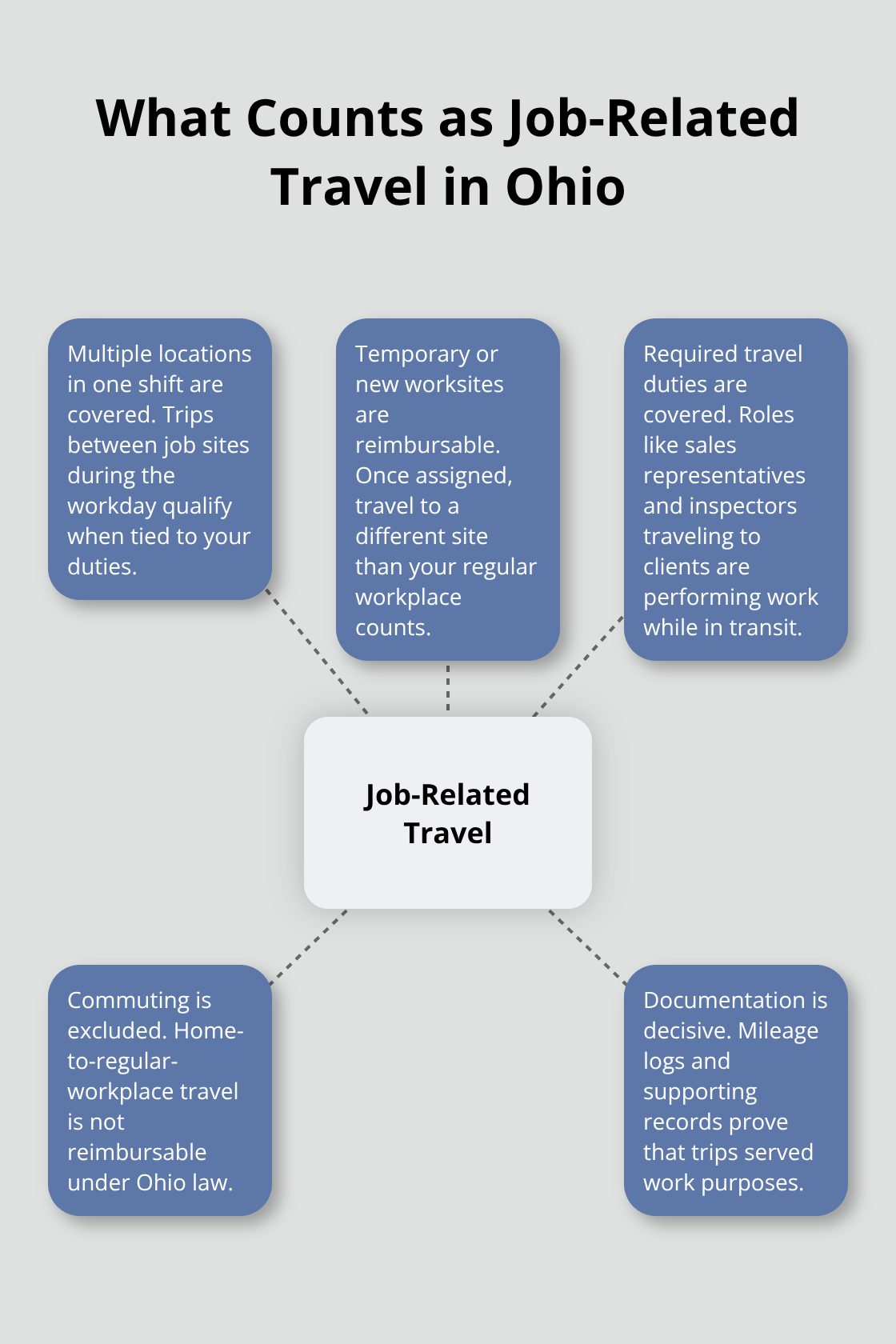
Under Ohio’s workers’ compensation system, the Ohio Bureau of Workers’ Compensation determines whether your travel qualifies for reimbursement based on a straightforward principle: the trip must connect directly to your employment. Travel that occurs as part of your job duties receives coverage, but commuting from home to your regular workplace does not. This distinction matters because it determines whether you file a claim at all.
Travel to Multiple Work Locations Counts
If your job requires you to travel between different job sites during a single shift, that travel qualifies for reimbursement. A construction worker moving between three different project locations in one day, a service technician visiting multiple client sites, or a delivery driver making stops across the region all qualify. The Ohio BWC recognizes that some jobs inherently involve movement, and those trips are work-related by definition.
You must document each trip with the date, starting location, ending location, and miles traveled. This is where most workers fail-they assume they’ll remember details later, but mileage logs created at the time of travel hold far more weight than reconstructed records months afterward.
Temporary Assignments and New Work Locations Differ from Commuting
When your employer assigns you to a temporary location or a new permanent job site that differs from your regular workplace, travel to that location qualifies for reimbursement. However, this applies only after the first trip. If you transfer to a facility 40 miles away and work there for six months, each trip to that facility counts as job-related travel. The critical factor is that the location is not your established home-to-work commute. Standard commuting-driving from your house to your usual workplace-remains non-compensable under Ohio law, even if you suffer injury during that commute. But if your employer sends you to a different site as part of your assignment, the calculus changes entirely.
Required Travel as Part of Job Duties Expands Coverage
Some jobs explicitly require travel as a core responsibility. Sales representatives, inspectors, auditors, and consultants who travel to client locations, job sites, or meetings perform work duties while traveling. If you suffer injury in a car accident, slip and fall in an airport, or experience any injury during these required trips, the travel itself was job-related. This distinction becomes important when disputes arise. Employers sometimes argue that injuries during travel occurred for personal reasons or happened during a break in work duties. You should document what you were doing before, during, and after the injury. If you were traveling to meet a client, attend a work meeting, or complete a job-assigned task, that travel was work-related regardless of where the injury occurred.
What Happens When Your Employer Disputes Your Claim
Disputes over travel reimbursement often stem from disagreements about whether the trip truly served work purposes. Your employer might claim you took a personal detour or that the travel fell outside your job responsibilities. The Ohio Bureau of Workers’ Compensation reviews these disputes based on the evidence you provide. Clear documentation-appointment confirmations, client meeting notes, work orders, or supervisor communications-establishes that your travel served legitimate job functions. Without this evidence, you face an uphill battle in proving your case.
How to Document and File for Travel Reimbursement
Create Mileage Logs Immediately After Each Trip
You must track mileage the moment you travel for work. The Ohio Bureau of Workers’ Compensation requires contemporaneous records-logs created during or immediately after each trip carry far more credibility than reconstructed records months later. Your mileage log should include the date, starting location, ending location, round-trip miles, and the specific work purpose. If you traveled to meet a client, include the client name. If you visited a job site, note which site. If you attended a work meeting, document that.
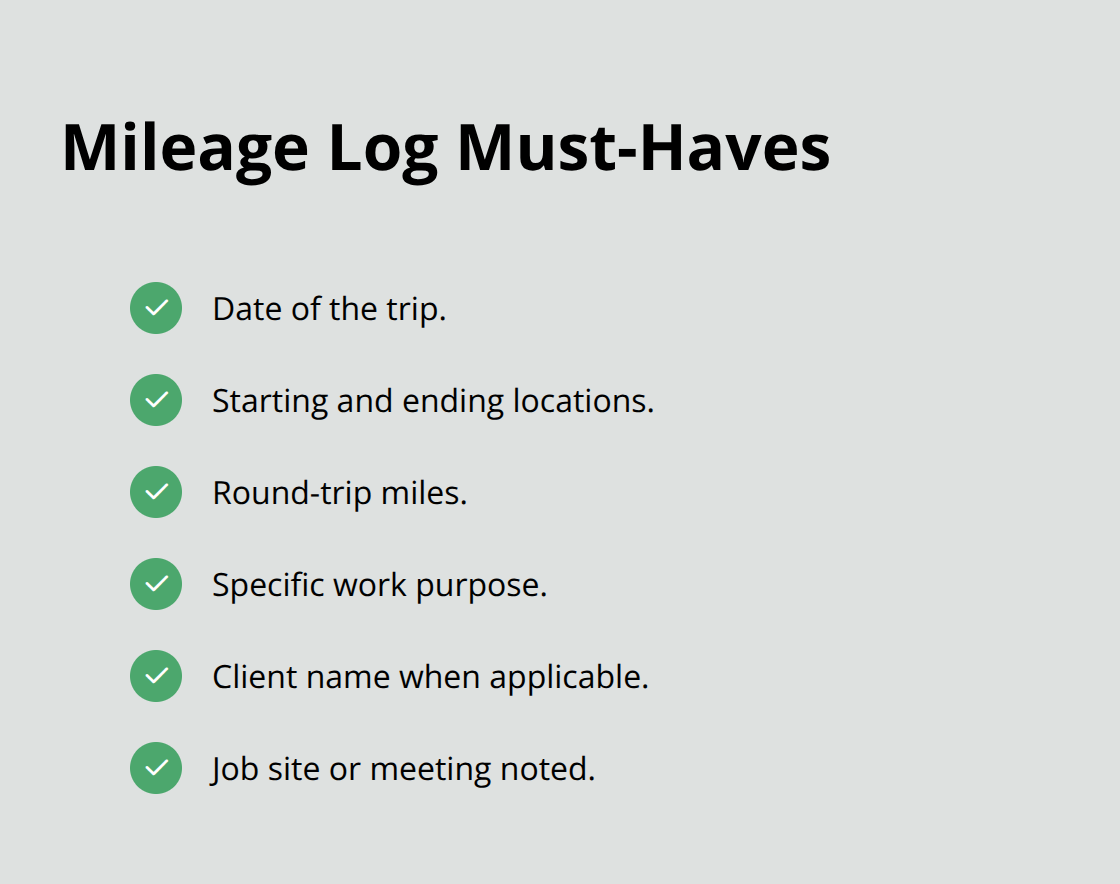
This specificity matters because the Ohio BWC uses these details to evaluate whether your travel genuinely served work purposes. Many workers lose reimbursement claims not because the travel was invalid, but because their documentation was vague or incomplete.
Collect and Preserve All Travel Receipts
Beyond mileage, you must preserve every receipt related to your travel. Keep receipts for parking fees, tolls, fuel, and rideshare services like Uber or Lyft. Ohio recognizes rideshare expenses when workers cannot drive due to injury, provided the travel is medically necessary and work-related. Take photos of your vehicle’s odometer before and after each medical or work-related trip-this corroborates your mileage claims and prevents disputes over distance. Store these photos with your receipts and mileage logs in one organized file. Track all out-of-pocket expenses to ensure full reimbursement.
Submit Claims Monthly, Not Quarterly
You should submit your travel reimbursement claim to your employer and the Ohio Bureau of Workers’ Compensation as soon as possible after incurring expenses. Do not wait until you’ve accumulated three months of mileage logs; submit monthly instead. This approach reduces the risk of missing deadlines, prevents disputes over forgotten details, and demonstrates that you’re actively tracking legitimate expenses. Include your mileage log, all receipts, and supporting documentation such as appointment confirmations, meeting notes, or work orders that prove the travel served job purposes. Keep copies of everything you submit and follow up if payment hasn’t been received within 30 days.
Counter Denial Tactics with Evidence
If your employer or the Ohio BWC denies your claim, request a written explanation of the denial. Carriers must provide formal dispute responses within 30 days under Ohio law. Common denial tactics include claiming closer medical providers were available or that your travel was excessive. Counter these arguments with medical evidence showing why you needed to travel to your chosen provider, referral documentation from your physician, or evidence that local options were unsuitable for your condition. When denials persist or seem unjustified, the appeals process with the Industrial Commission of Ohio becomes your next avenue-a process that requires careful attention to deadlines and procedural requirements.
Common Obstacles When Seeking Travel Reimbursement
Employers Question Whether Travel Served Work Purposes
Employers and the Ohio Bureau of Workers’ Compensation frequently reject travel reimbursement claims on grounds that seem legitimate on the surface but often lack substance. The most common rejection centers on whether your travel truly served work purposes. An employer might argue that you took a personal detour, stopped for personal errands, or that the trip fell outside your job responsibilities. The Ohio BWC requires concrete evidence that your travel directly connected to employment duties, and vague documentation gives them an easy out.
If your mileage log simply states “traveled to client meeting” without the client name, date, or location, the carrier can claim insufficient proof of work purpose. When you submit detailed logs with specific client names, meeting confirmations from your employer, and appointment documentation, denials become harder to justify. This specificity transforms your claim from questionable to defensible.
Carriers Deny Claims by Claiming Closer Providers Existed
Carriers also reject claims by asserting that closer medical providers existed in your area, making your travel excessive or unnecessary. This tactic appears reasonable until you examine the evidence behind it. Counter this argument immediately by obtaining written statements from your chosen provider explaining why they were medically appropriate for your condition, or documentation from your physician explaining why local options were unsuitable. Submit these materials with your reimbursement request before a denial occurs, not after. Proactive documentation prevents carriers from using this excuse to reduce their obligations.
The Appeals Process Shifts the Burden in Your Favor
Navigating the appeals process with the Industrial Commission of Ohio requires understanding that the burden shifts once you have documented everything properly. When the Ohio BWC or your employer denies your claim, you have the right to request a hearing before the Industrial Commission. The commission reviews your mileage logs, receipts, medical documentation, and the carrier’s denial reason. If the carrier failed to respond to your claim within 30 days, or if their denial lacks valid reasoning, the Industrial Commission frequently rules in your favor.
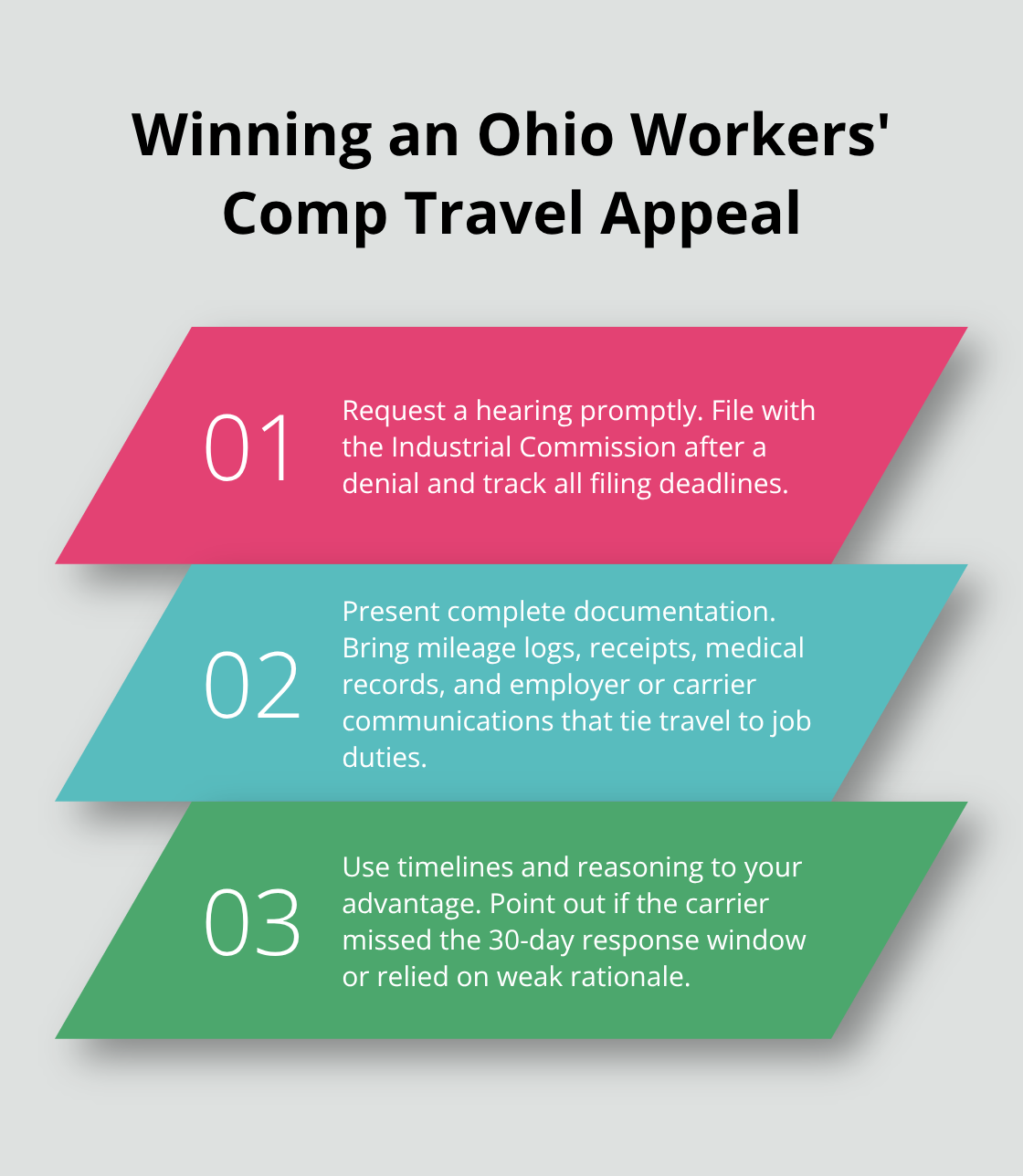
Many workers abandon legitimate claims after a single denial, not realizing that formal appeals succeed regularly when documentation is solid. The appeals process involves specific deadlines and procedural requirements, so filing without legal guidance risks missing critical windows or submitting incomplete appeals that the commission rejects on technical grounds. A workers’ compensation attorney can help you navigate these procedural complexities and present your case effectively before the commission.
Final Thoughts
Travel reimbursements workers’ comp claims succeed when you document everything and understand your rights under Ohio law. The Ohio Bureau of Workers’ Compensation recognizes that job-related travel deserves compensation, but you must prove your case with contemporaneous records, receipts, and supporting documentation. Vague logs and incomplete submissions invite denials that could have been prevented with proper preparation.
When carriers deny your request without valid reasoning or claim closer providers existed, you have grounds to appeal to the Industrial Commission of Ohio. The commission regularly rules in favor of workers whose documentation is solid and whose travel genuinely served work purposes. Many injured workers abandon legitimate claims after a single denial, unaware that formal appeals succeed when evidence supports your position.
A workers’ compensation attorney handles the procedural complexities of the appeals process, meets all deadlines, and presents your case effectively before the Industrial Commission. Contact Robin J Peterson Company, LLC to discuss your situation and learn whether an appeal or formal claim is your best path forward.