
The Ohio workers’ compensation system is designed to protect injured workers, but it’s far from simple. Claims get denied, settlements fall short, and employers sometimes push back hard.
We at Robin J Peterson Company, LLC have seen workers lose thousands in benefits because they didn’t understand their rights or made preventable mistakes early on. An Ohio workers’ comp attorney can be the difference between getting what you deserve and walking away empty-handed.
How Ohio’s Workers’ Comp System Actually Works
The State-Run Framework That Shapes Your Claim
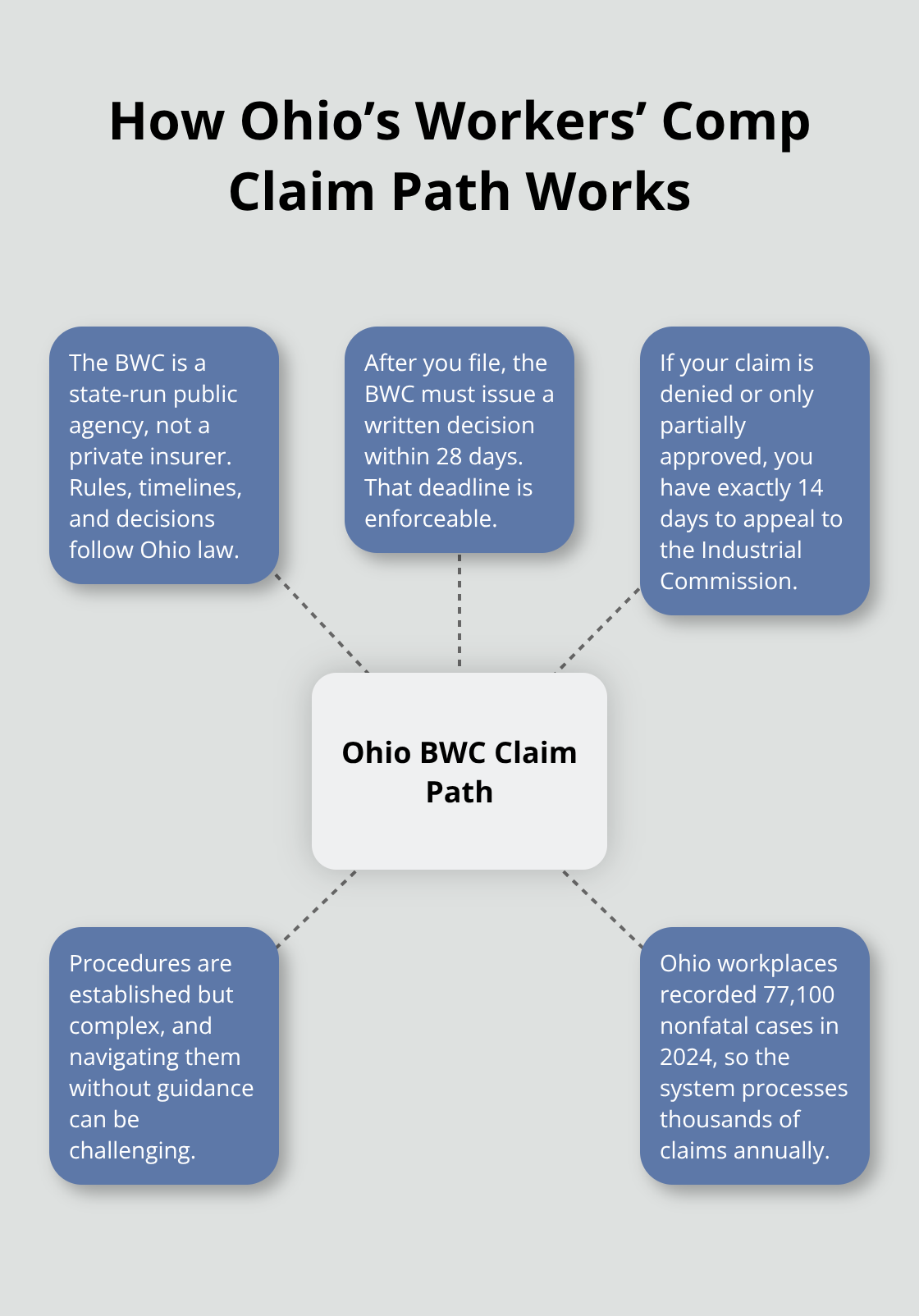
The Ohio Bureau of Workers’ Compensation operates as a state-run agency, not a private insurance company. This distinction matters because it shapes everything about how your claim gets handled. The BWC works within a public system with defined processes, specific timelines, and clear decision points. When you file a claim, you work within a statutory framework where the agency must follow Ohio law-you’re not negotiating with an insurance adjuster trying to minimize payouts. In 2024, Ohio private-industry workplaces recorded 77,100 nonfatal injuries and illnesses according to the U.S. Bureau of Labor Statistics. Education and health services experienced the highest incident rates at 2.8 cases per 100 workers, while manufacturing followed at 2.4 per 100 workers. These numbers show that the system processes thousands of claims annually with established procedures. However, established procedures don’t mean simple procedures. The BWC must issue a written decision on your claim within 28 days of filing. That deadline is real and enforceable. If the agency denies your claim or approves it partially, you have exactly 14 days to appeal to the Industrial Commission. Miss that window, and your appeal rights become significantly harder to exercise.
How You File and What Happens Next
A First Report of Injury starts your claim and goes to the BWC or an approved Managed Care Organization. You can file this online at info.bwc.ohio.gov, which moves faster than paper filing. Once filed, the BWC investigates your injury claim and determines whether it meets the definition of a work-related injury under Ohio law. Your benefits depend on the type of injury you sustained and how it affects your ability to work. Temporary Total Disability benefits replace your wages when you cannot work at all. Wage Loss Compensation helps when you return to work but earn less due to restrictions. Permanent Partial Disability provides a one-time payment for lasting impairment based on medical evaluation. The system prioritizes medical treatment first-the BWC coordinates with providers to cover necessary care.
The Settlement Trap That Costs Workers Thousands
Many workers fail to understand that accepting a settlement offer without legal review can permanently limit future benefits. Once you settle, you typically cannot reopen the claim for additional compensation related to that same injury, even if your condition worsens. This is where an Ohio workers’ comp attorney becomes invaluable. An attorney reviews settlement terms against your actual long-term medical needs and earning capacity, ensuring you don’t trade permanent benefits for inadequate compensation. The stakes are high enough that this single decision can affect your financial security for years. Workers in the Cleveland, Akron, and Canton areas who work with experienced legal counsel understand their true claim value before signing anything. The difference between a rushed settlement and a properly evaluated one often determines whether you receive fair compensation or leave money on the table.
What Mistakes Cost You the Most in Ohio Workers’ Comp Claims
Report Your Injury Immediately or Lose Your Claim
The moment you get injured at work, the clock starts ticking. Delays in reporting create gaps that the BWC will use against you later. Ohio law requires you to notify your employer as soon as possible, and you must file your First Report of Injury within specific timeframes or risk losing eligibility. Workers who wait days or weeks to report injuries often find their claims denied because the BWC cannot establish a clear connection between the work incident and the injury.
The agency needs contemporaneous evidence, medical records from the time of injury, and witness statements while memories are fresh. When you delay reporting, you hand the BWC a reason to question whether the injury actually occurred at work. This single mistake eliminates your claim before the investigation even begins.
Understand Settlement Offers Before You Sign
After the BWC investigates your claim and makes a decision within 28 days, many workers make a critical error: they accept whatever settlement offer comes first without understanding their true claim value. A settlement locks you out of future benefits for that injury, even if your condition deteriorates significantly in coming years.
An attorney calculates your settlement based on your actual medical prognosis, your earning capacity, the cost of ongoing treatment, and whether you can return to work at full capacity. The difference between a rushed acceptance and a properly evaluated settlement often amounts to thousands of dollars in lost compensation. Workers who review settlement terms with legal counsel understand exactly what they’re trading away before they sign.
Document Everything From Day One
Documentation during the entire claims process determines whether you win or lose. You must maintain detailed records of every medical appointment, every test result, every prescription, and every instance where your injury prevented you from working. The BWC requires medical evidence to approve benefits, and gaps in your medical record translate directly into gaps in approved benefits.
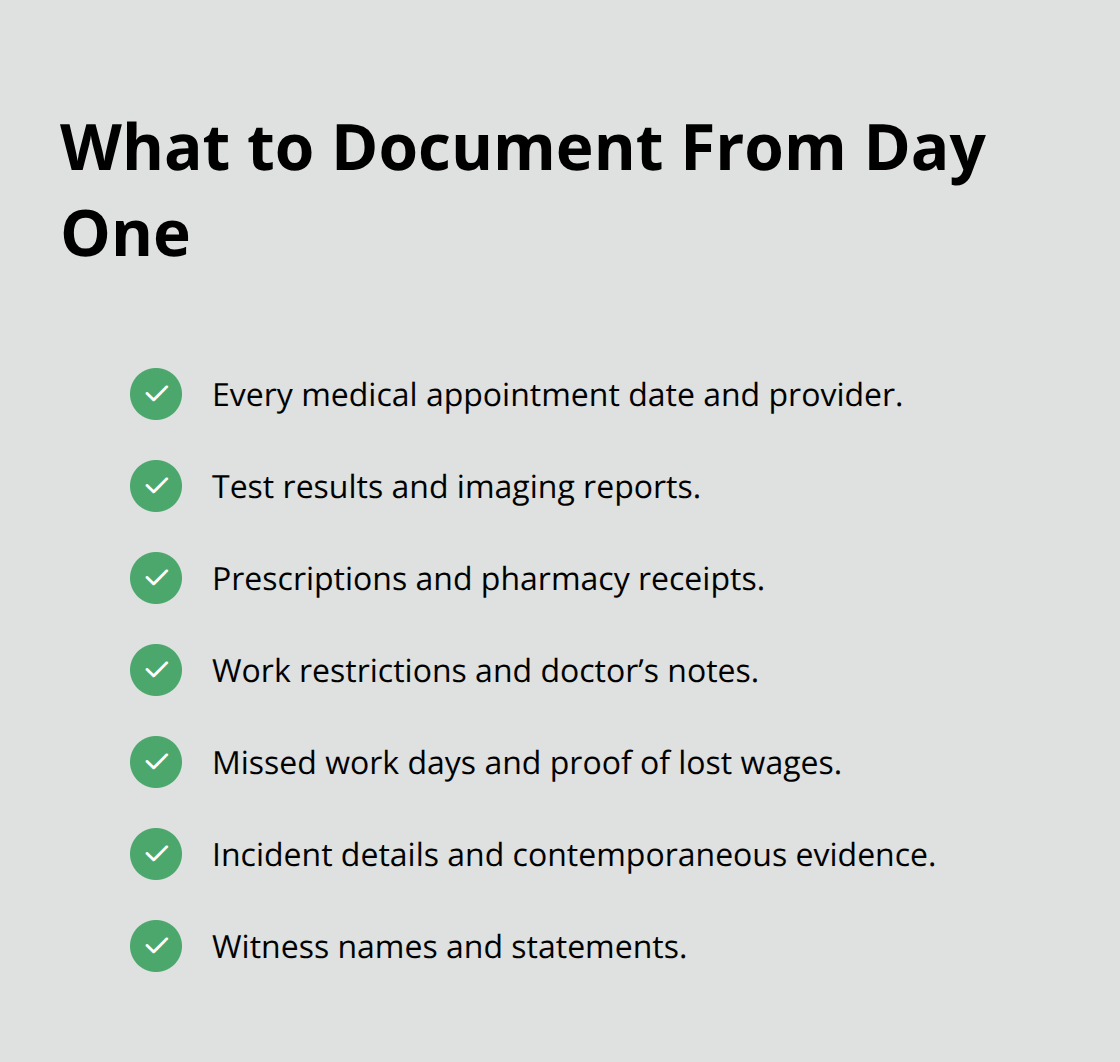
If you skip appointments or miss follow-up visits, the BWC may interpret that as a sign your injury is not serious enough to warrant ongoing treatment. Similarly, if you do not document lost wages through pay stubs, employer statements, or medical restrictions, you cannot prove you deserve wage replacement benefits. Many workers assume the BWC will gather this information automatically, but that burden falls on you.
Build a Complete Paper Trail
Create a dedicated folder for all injury-related documents: initial accident reports, medical records from every provider, prescriptions filled, correspondence with your employer, and records of time missed from work. When the BWC requests information, respond immediately and completely. Delays in providing documentation cause delays in benefit decisions, and in some cases, incomplete documentation leads to partial denials.
Workers in the Cleveland, Akron, and Canton areas who maintain meticulous records from day one experience fewer claim disputes and faster benefit approvals. This documentation becomes especially important if your claim faces denial or if you need to appeal a decision. The evidence you gather now protects your interests later.
Know When Legal Guidance Becomes Essential
The mistakes outlined above-delayed reporting, rushed settlements, and incomplete documentation-share a common thread: they all stem from not understanding the system’s requirements and deadlines. An experienced workers’ compensation attorney identifies these pitfalls before they cost you benefits and guides you through each decision point. Whether you’re filing your initial claim or facing a denial, the complexity of Ohio’s workers’ compensation process demands that you understand your actual rights and options before moving forward.
Why You Need an Attorney Fighting Your Claim
The BWC System Punishes Workers Without Legal Representation
The Ohio workers’ compensation system punishes workers who navigate it alone. You face a state agency with investigators, legal procedures, appeal deadlines, and benefit calculations designed by people who understand every loophole. The BWC denies or partially approves thousands of claims annually, and workers without legal representation accept these decisions far too often. An Ohio workers’ comp attorney levels the playing field by understanding the Industrial Commission’s decision patterns, knowing which medical evidence the BWC actually requires, and filing appeals within the exact 14-day window that determines whether you keep your rights.
Understanding Your 14-Day Appeal Window
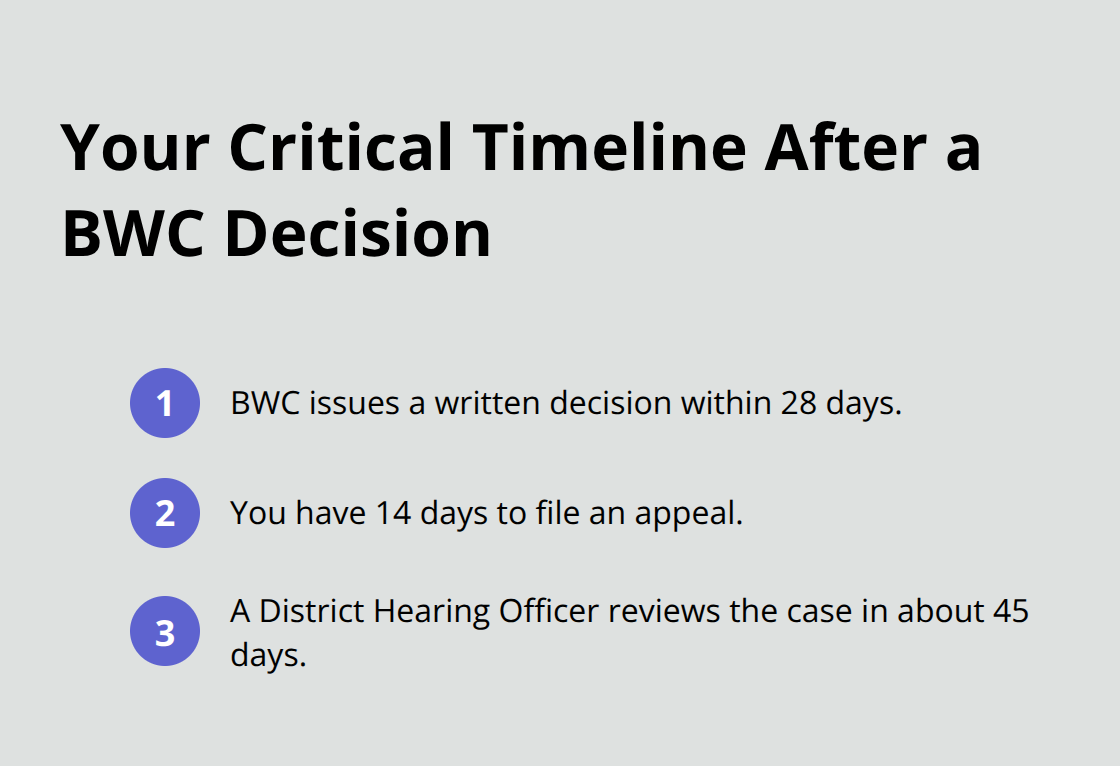
When the BWC issues a written decision within 28 days, most workers read it once and assume it’s final. That assumption costs them. You have a two-week window to appeal to the Industrial Commission, where a District Hearing Officer reviews your case within approximately 45 days. An attorney files your appeal with the specific evidence and legal arguments that persuade hearing officers, not generic objections.
The difference between a competent appeal and a rushed one determines whether you receive benefits for an injury that clearly occurred at work. Workers in Cleveland, Akron, and Canton who work with experienced legal counsel understand that appeal deadlines are absolute and that hearing officers require precise documentation and argumentation to overturn BWC denials.
Maximizing Your Actual Benefit Eligibility
An attorney maximizes your actual benefit eligibility by calculating what you truly deserve rather than accepting whatever the BWC initially offers. Permanent Partial Disability awards vary dramatically based on how medical impairment is documented and presented to the agency. If your medical provider fails to complete the correct impairment evaluation forms or if the medical evidence doesn’t clearly establish the severity of your condition, the BWC awards lower benefits. An attorney ensures your treating physicians understand what evidence the Industrial Commission requires and coordinates with those providers to document impairment properly. Temporary Total Disability benefits disappear the moment you return to any work, even part-time or light-duty work, so an attorney tracks your actual work capacity and ensures you receive wage replacement for every day you genuinely cannot work.
Protecting Yourself Against Employer Retaliation
Ohio law prohibits employers from firing, demoting, or discriminating against workers who file claims or pursue benefits. However, retaliation happens constantly and workers often don’t recognize it as illegal. When an employer suddenly terminates you after you file a workers’ comp claim, or when they reassign you to humiliating duties because of your injury, an attorney documents these actions and pursues separate legal claims beyond workers’ compensation. The BWC system alone cannot remedy retaliation, but an experienced attorney identifies these violations and holds employers accountable through additional legal channels that protect your employment rights alongside your claim benefits.
Final Thoughts
The Ohio workers’ compensation system operates on strict timelines, specific procedures, and legal requirements that punish workers who navigate it without guidance. You have 28 days for the BWC to issue a decision, 14 days to appeal that decision, and approximately 45 days for a hearing officer to review your case. Miss these windows and your rights disappear. Documentation determines whether you receive full benefits or partial approval, while settlement decisions lock you into permanent terms that cannot be reopened.
An Ohio workers’ comp attorney identifies the mistakes that cost workers thousands in lost benefits and guides you through each critical decision point. Your attorney calculates your true claim value, files appeals with the evidence and arguments that persuade hearing officers, and protects you against employer retaliation through additional legal channels. The cost of not having legal representation often exceeds the cost of hiring an experienced attorney from the start.
If your claim has been denied, if you received a settlement offer that seems too low, or if you simply want to understand your actual rights before filing, contact our firm for a direct conversation about your situation. We at Robin J Peterson Company, LLC represent injured workers throughout the Cleveland, Akron, and Canton areas who refuse to accept inadequate settlements or BWC denials. Our firm fights for the benefits and compensation you are entitled to under Ohio law.