
Workers’ compensation injury codes determine how your claim gets processed, what benefits you receive, and how disputes get resolved. These codes aren’t just administrative labels-they directly shape your entire claim experience.
At Robin J Peterson Company, LLC, we’ve seen firsthand how confusion about injury codes workers’ compensation systems costs workers time and money. Understanding what these codes mean puts you in control of your claim.
What Injury Codes Actually Control
Injury codes in workers’ compensation are standardized classification systems that document what happened to you, where on your body the injury occurred, and how it happened. The Ohio Bureau of Workers’ Compensation uses these codes to categorize every claim into Nature of Injury codes, Part of Body codes, and Cause of Injury codes. Each code is a specific number that tells the system exactly what type of injury occurred, which then triggers automatic decisions about medical treatment authorization, benefit calculations, and dispute handling.
The three code types that shape your claim
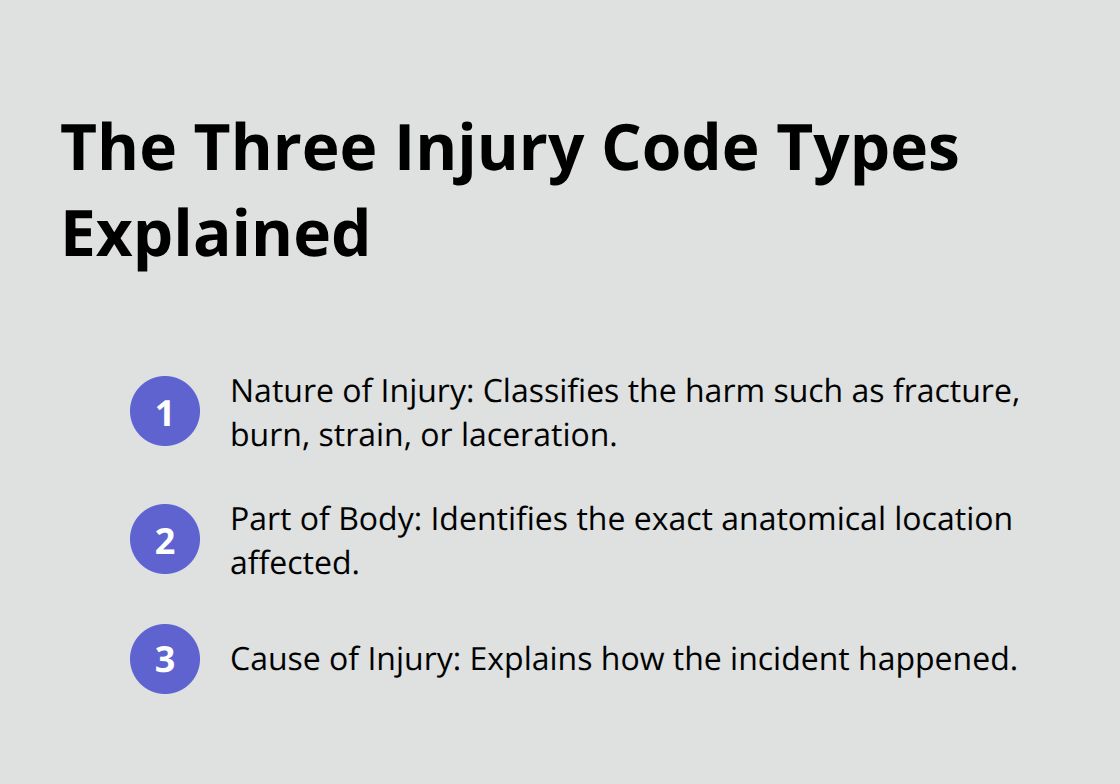
The Nature of Injury code identifies the type of harm-whether it’s a fracture, burn, strain, or laceration. The Part of Body code specifies the anatomical location, from your head down to your toes. The Cause of Injury code explains the mechanism-whether you fell, were struck by an object, or another event caused the damage.
Without these codes, the system cannot process your claim. The codes determine which medical providers can treat you, what treatments receive approval without additional review, and whether your claim moves forward smoothly or gets caught in dispute resolution.
Wrong codes block your medical care
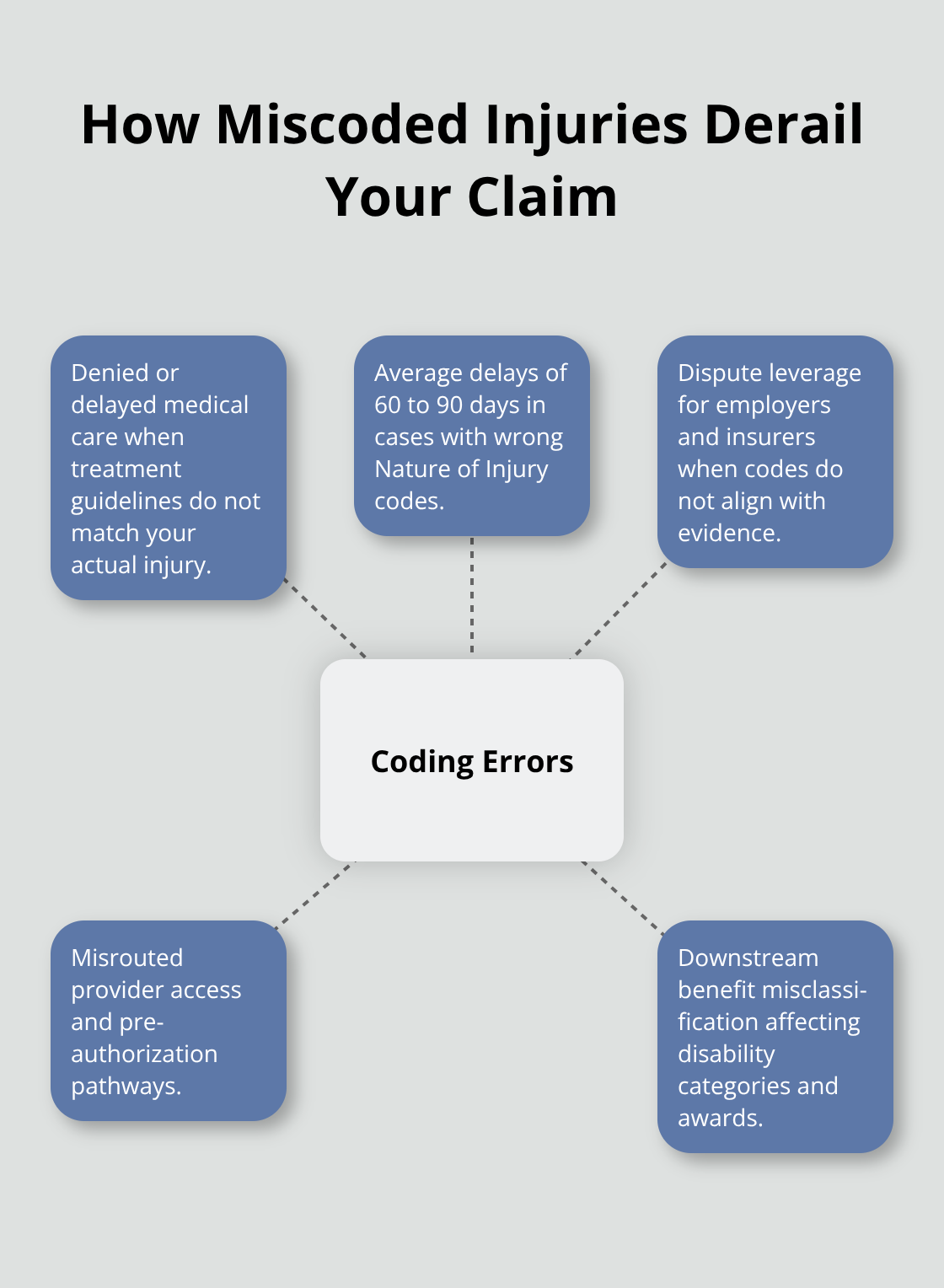
Miscoded injuries create immediate problems. If your Part of Body code is wrong, the system may deny medical care that’s actually appropriate for your actual injury. A worker with a shoulder injury miscoded as a neck injury might find that the orthopedic surgeon they need isn’t pre-authorized for their coded condition. The Ohio Bureau of Workers’ Compensation system ties Medical Treatment Guidelines directly to your injury codes, and treatment authorization follows those guidelines. Wrong codes mean wrong guidelines apply to your case, which blocks access to necessary care.
You need to verify your codes match your actual injury the moment you receive your claim notification. Request the specific Nature of Injury code, Part of Body code, and Cause of Injury code from the claims administrator and compare them against your medical records and incident report. This step prevents months of delays in accessing the treatment you need.
Codes become weapons in disputes
When injury claims move into dispute, the codes become the foundation for arguments about compensability. If your codes don’t align with the medical evidence in your file, the Industrial Commission of Ohio uses that mismatch as grounds to question whether your injury truly arose out of and in the course of employment. Insurance companies and employers challenge codes they believe don’t match the facts. The dispute resolution process examines whether the coding decision was supported by objective medical findings and the incident facts.
Accurate codes from the start prevent this leverage from being used against you later. The codes also influence how the system classifies your condition if it progresses-whether a temporary condition becomes permanent, whether you qualify for schedule loss of use awards, or whether your case moves into permanent disability categories. These downstream decisions all flow from the initial coding accuracy, which is why the next section examines how codes directly impact your eligibility for specific benefits.
The Codes That Shape Your Benefits
The Ohio Bureau of Workers’ Compensation assigns three distinct code categories to every claim, and understanding what each one does prevents you from accepting incorrect coding decisions. The Nature of Injury code classifies the type of harm itself-fracture, laceration, burn, contusion, strain-with codes ranging from 01 to 99. The Part of Body code identifies the exact anatomical location affected, using codes that distinguish between your right shoulder versus left shoulder, your dominant hand versus non-dominant hand. The Cause of Injury code explains the mechanism that produced the harm, such as fall from height, struck by object, or overexertion. These three codes work together to create a complete injury profile that the system uses to determine which medical providers can treat you, which treatments require prior authorization, and whether your claim qualifies for specific benefit categories.
How the System Assigns Your Codes
The codes are not subjective interpretations-they are standardized classifications that must match objective medical findings and the documented facts of your incident. When the Ohio Bureau of Workers’ Compensation receives your claim, the claims administrator reviews your incident report, your initial medical records, and any witness statements to assign codes. This initial coding decision shapes everything that follows, which is why inaccurate codes from day one create cascading problems throughout your entire claim.
The Real Cost of Miscoded Injuries
Misclassification creates concrete barriers to the benefits you earned. A worker with a lumbar strain miscoded as a cervical strain may be denied access to a spine surgeon who specializes in lower back conditions because the pre-approved provider network for cervical injuries does not include that surgeon. A worker whose Part of Body code omits a secondary injury site may find that medical treatment for the overlooked injury gets denied because the claim file shows no authorization for that body part. The Industrial Commission of Ohio has examined thousands of disputes where incorrect coding prevented legitimate medical care and delayed benefit payments. In one category of cases, workers who received wrong Nature of Injury codes experienced an average delay of 60 to 90 days before corrections were made and treatment authorization resumed.
Verify Your Codes Immediately
Within two weeks of receiving your claim notification, contact the claims administrator and request the exact three-digit codes assigned to your case. Cross-reference those codes against your medical records and the incident report you filed. If any code does not match the injury you actually sustained, file a written objection with the claims administrator and request a code correction. Submit copies of your medical records and incident details as supporting documentation. Do not assume the system coded your claim correctly-verification at this stage prevents months of treatment delays and protects your access to appropriate medical care.
What Happens When Codes Drive Disputes
Once your codes enter the system, they become the foundation for how the Industrial Commission of Ohio evaluates your claim if disputes arise. The commission examines whether your codes align with the medical evidence in your file and the incident facts. Insurance companies and employers challenge codes they believe do not match what actually happened. The dispute resolution process hinges on whether the coding decision was supported by objective medical findings. Accurate codes from the start prevent this leverage from being used against you later. The codes also influence how the system classifies your condition if it progresses-whether a temporary condition becomes permanent, whether you qualify for schedule loss of use awards, or whether your case moves into permanent disability categories. These downstream decisions all flow from the initial coding accuracy, which is why the next section examines how codes directly impact your eligibility for specific benefits and how medical providers use them to authorize treatment.
How Your Codes Determine What Benefits You Actually Get
Your injury codes function as the gatekeeping mechanism that determines which benefits the Ohio Bureau of Workers’ Compensation will authorize and which ones it will deny. The Nature of Injury code, Part of Body code, and Cause of Injury code together create a profile that the system matches against eligibility rules for indemnity benefits, medical care benefits, and permanent disability awards. If your codes do not accurately reflect your injury, the system denies benefits you actually qualify for based on what truly happened to you.
How Codes Control Your Benefit Eligibility
The Industrial Commission of Ohio enforces strict eligibility rules tied to specific code combinations. A worker with a fracture code qualifies for different benefit pathways than a worker with a strain code, even if both injuries occurred in the same workplace incident. The codes determine whether your claim moves into schedule loss of use territory, whether you qualify for permanent partial disability awards, or whether your case remains classified as temporary total disability. This is not theoretical-it directly controls the benefits flowing into your account.
Medical Treatment Authorization Follows Your Codes
Medical treatment authorization hinges entirely on your codes. The Ohio Bureau of Workers’ Compensation ties Medical Treatment Guidelines directly to your injury classification, and pre-authorization decisions follow those guidelines without deviation. A worker coded with a shoulder injury receives pre-approved access to orthopedic surgeons and physical therapists specializing in shoulder conditions. That same worker miscoded as having a knee injury loses access to the shoulder specialists because the system shows no authorization for shoulder treatment.
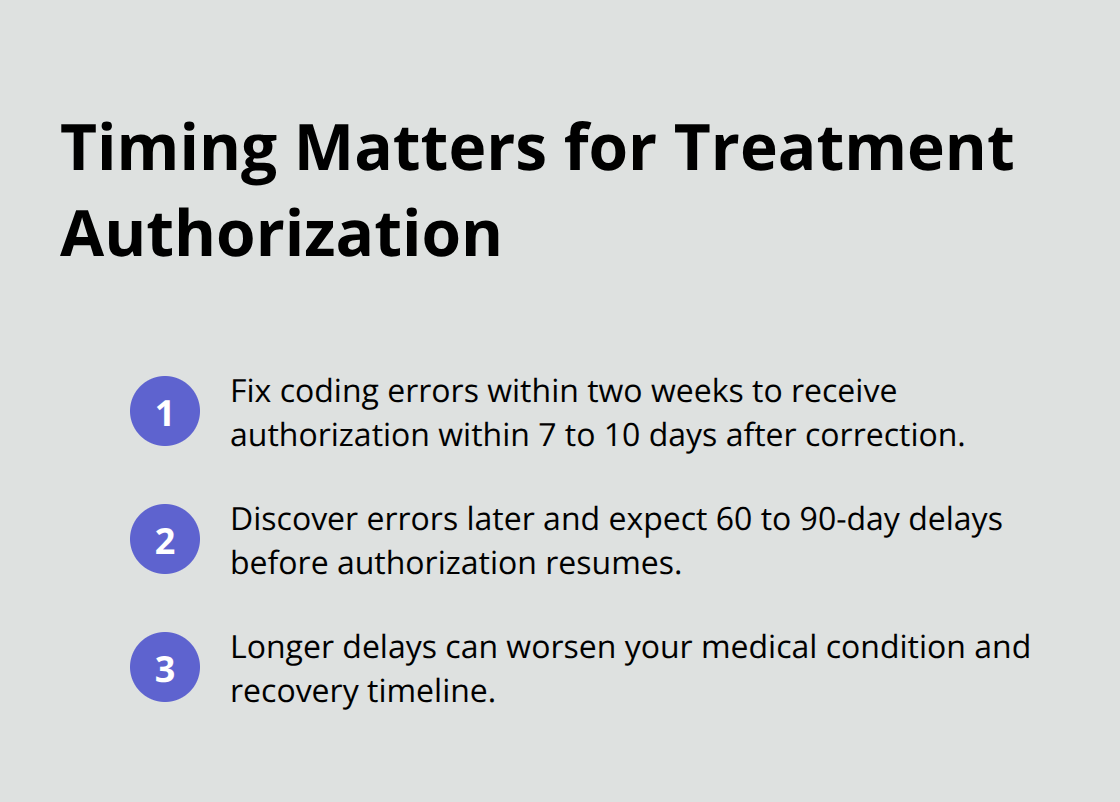
Claims administrators cannot override the guidelines-they must follow the code-based pathway. This means wrong codes create immediate access barriers that delay treatment by weeks or months while corrections work through the system. Workers who catch coding errors within the first two weeks experience treatment authorization within 7 to 10 days after correction, while those who discover errors later face 60 to 90-day delays. The distinction matters because treatment delays directly impact recovery timelines and can worsen your medical condition.
Disputes Center on Code Accuracy
When insurance companies and employers contest your claim’s compensability, they attack the codes as unsupported by medical evidence or incident facts. The Industrial Commission of Ohio examines whether your Nature of Injury code, Part of Body code, and Cause of Injury code align with objective findings in your medical records and the documented incident details. If the codes appear inflated or inaccurate, the commission uses that mismatch as grounds to deny compensability entirely.
Employers argue that the codes do not match what their incident investigation revealed, while insurance companies cite medical records that seem inconsistent with the coding choice. Accurate codes from day one eliminate this dispute weapon. Your codes become your defense against compensability challenges because they rest on documented medical evidence and incident facts that support them. Incorrect codes, by contrast, hand the opposition legitimate grounds to question your entire claim.
Final Thoughts
Accurate injury codes workers’ compensation claims determine your access to medical care, your benefit eligibility, and your defense against compensability challenges. Within two weeks of receiving your claim notification, request your specific Nature of Injury code, Part of Body code, and Cause of Injury code from the claims administrator and verify them against your medical records and incident report. This single action catches miscoding errors before they cascade into months of treatment denials and benefit delays.
When the Industrial Commission of Ohio examines compensability challenges, accurate codes backed by objective medical findings and incident facts become your strongest defense against denial. Insurance companies and employers cannot use coding mismatches as grounds to deny your claim when your codes align perfectly with the evidence in your file. Workers who verify codes early experience treatment authorization within days, while those who discover errors later face 60 to 90-day delays that worsen their medical condition.
If you face treatment denials or uncertainty about your injury codes workers’ compensation file, contact Robin J Peterson Company, LLC to review your claim and ensure your codes are accurate and complete. The firm represents injured workers throughout Cleveland, Akron, and Canton, fighting to secure the benefits you earned.