
Wrist injuries at work happen fast, but the path to getting fair compensation shouldn’t be complicated. Many injured workers in Ohio miss out on benefits they’re legally entitled to simply because they don’t know what to ask for.
At Robin J Peterson Company, LLC, we’ve seen firsthand how the right information changes outcomes. This guide walks you through what compensation is available and the mistakes that cost workers thousands.
What Wrist Injuries Look Like at Work
Three Categories of Workplace Wrist Injuries
Wrist injuries fall into three distinct categories, and understanding which type you’re dealing with matters for your claim. Acute fractures happen instantly from falls, impacts, or equipment accidents and show up on initial X-rays, making them straightforward to document. Scaphoid fractures, the small bone on the thumb side of your wrist, present a real problem because standard X-rays often miss them in the first few days even though the injury is real. If you suspect a scaphoid fracture, push for advanced imaging like CT scans or MRI right away, because delayed diagnosis doesn’t prevent you from filing a claim once it’s confirmed.
Sprains and strains develop from sudden twisting motions or overuse, and while they may not show on imaging initially, they still qualify for coverage under Ohio workers’ compensation if you can link them directly to your job duties. The key is recording exactly when the injury occurred and what task triggered it. Carpal tunnel syndrome and other nerve compression injuries develop gradually from repetitive hand movements, and Cleveland Clinic data shows healthcare workers have experienced a 23% increase in these claims over the past three years.
Who Faces the Highest Risk
Cashiers scan items repeatedly, assembly line workers perform the same motion hundreds of times daily, and construction workers use vibrating tools-all face elevated risk. Nerve injuries require electromyography and nerve conduction studies to establish that your work caused the problem, not something outside the job. This is where many workers stumble, filing claims without the medical testing that proves causation.
Document Everything From Day One
The moment symptoms appear, record everything. Write down the exact date, the specific tasks you were performing, and how the injury affects your ability to work. Take photos of your workstation, the tools you use, and the equipment involved. Get your supervisor to acknowledge in writing what your job duties are and which tasks aggravate your wrist. These details transform a weak claim into one backed by evidence.
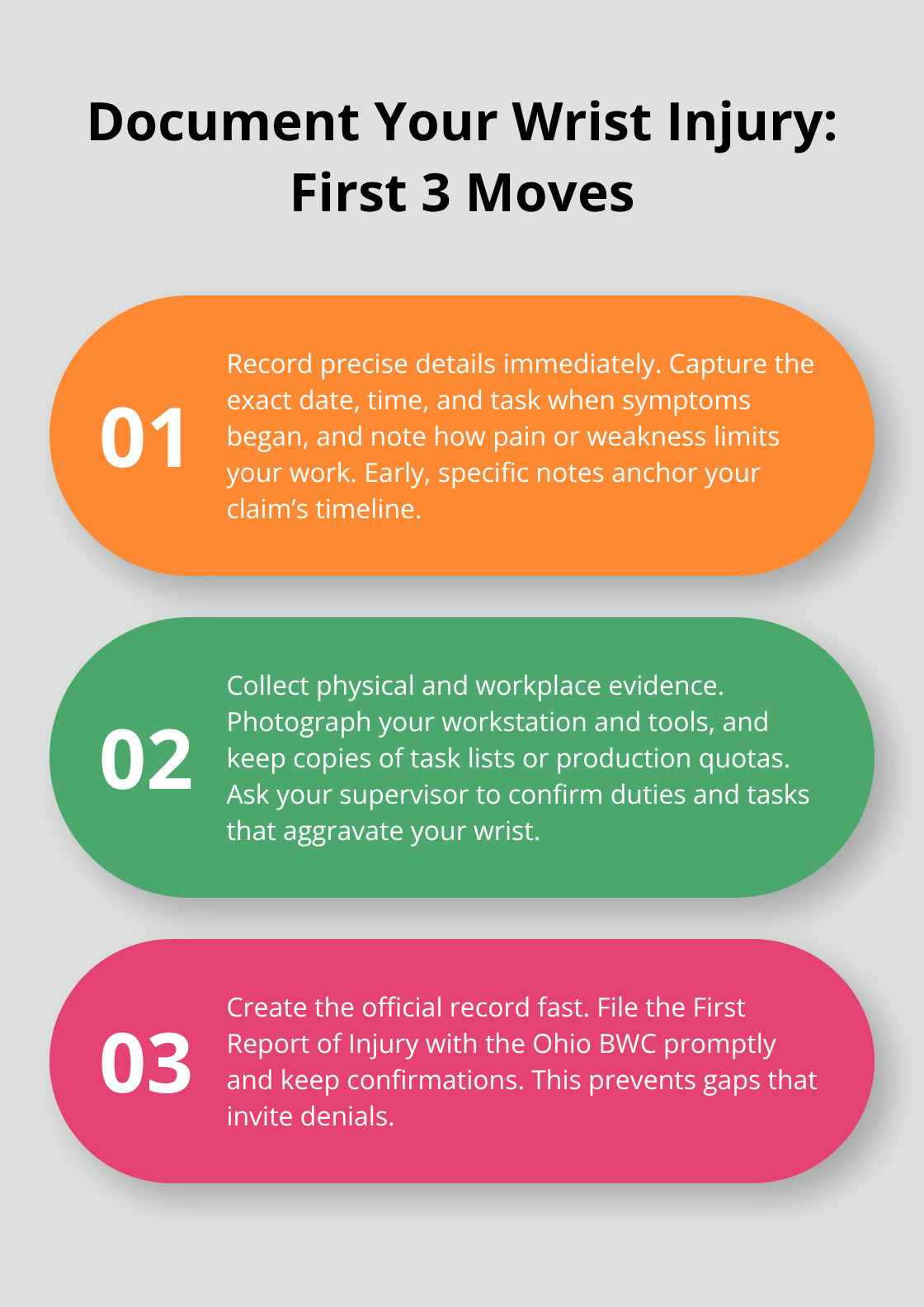
Workers who show up with detailed job analysis reports see approval rates jump by about 35% compared to those with basic medical documentation alone, according to Cleveland Clinic research. Don’t wait to see if it gets better on its own, and don’t assume your employer will handle the paperwork correctly. File the First Report of Injury directly with the Ohio Bureau of Workers’ Compensation promptly to create an official record.
What Happens Next With Your Claim
The medical evidence you gather now determines whether the BWC accepts or denies your claim. Your initial treating physician plays a critical role in your claim’s narrative, so select someone experienced with workers’ compensation documentation and causation. If you’re in the Cleveland, Akron, or Canton areas and uncertain whether your injury qualifies or how to document it properly, Robin J Peterson Company, LLC can review your situation and guide you through the next steps before mistakes cost you benefits.
What Ohio Workers’ Compensation Actually Covers for Wrist Injuries
Medical Treatment With No Out-of-Pocket Costs
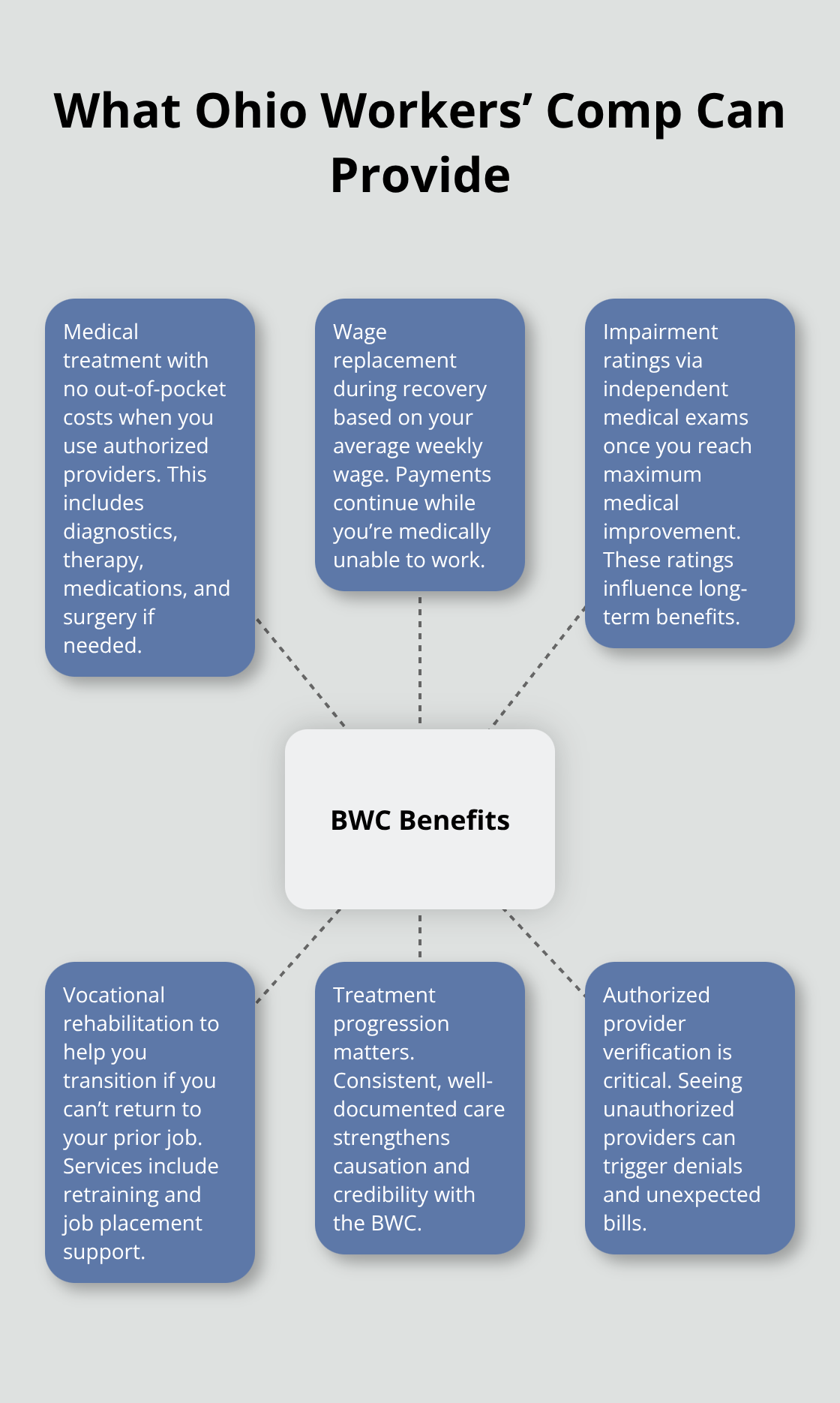
Once the Ohio Bureau of Workers’ Compensation accepts your claim, the coverage is comprehensive and immediate. The BWC pays for all medically necessary treatment when you use authorized providers-emergency room visits, diagnostic imaging, specialist consultations, electromyography and nerve conduction studies, physical and occupational therapy, corticosteroid injections, surgical procedures, medications, braces, and follow-up appointments. No waiting periods, no deductibles, and no co-pays apply to approved care. The critical mistake workers make is seeing an unauthorized provider thinking it won’t matter. It will. Unauthorized providers trigger claim denials, leaving you responsible for the full cost of treatment that should have been covered. Before scheduling any appointment, verify the provider is on the BWC authorized list.
Selecting the Right Initial Treating Physician
Your initial treating physician shapes your entire claim because this doctor establishes the medical narrative linking your wrist injury to work duties. Select someone experienced with workers’ compensation documentation, not just someone convenient. This choice directly affects how the BWC evaluates your case from the start. The physician you pick will document your symptoms, perform initial tests, and create the foundation for all future treatment decisions.
Treatment Progression From Conservative to Surgical Options
If conservative treatment like splinting or bracing fails after consistent use, doctors typically move to corticosteroid injections administered over several months. If that doesn’t produce relief and you have documented months of unsuccessful conservative care, carpal tunnel release surgery becomes the next consideration. The timeline matters because the BWC tracks treatment progression, and gaps in care can be used against you later. Each step in your treatment plan creates a record that either strengthens or weakens your claim.
Wage Replacement and Impairment Ratings
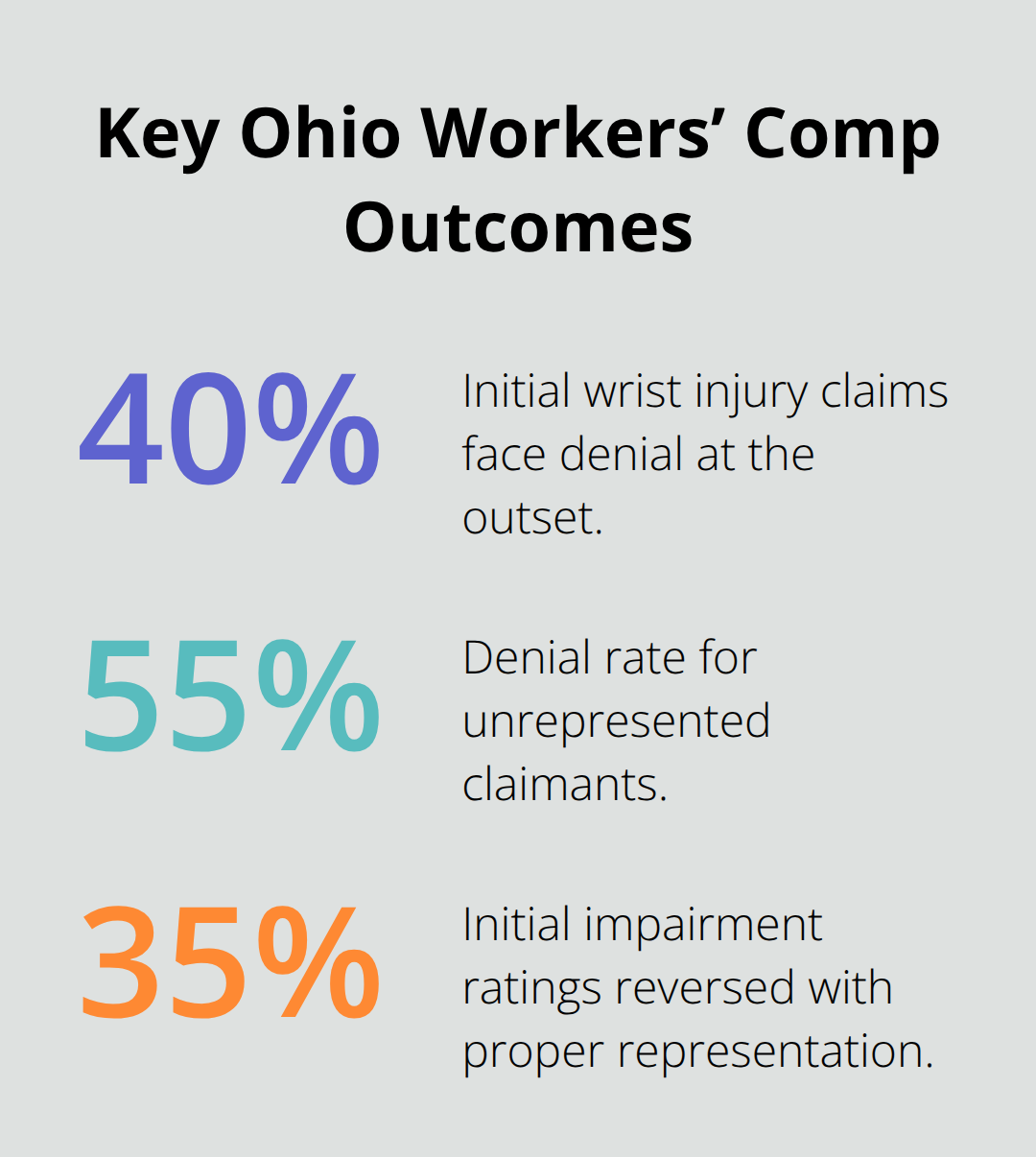
Beyond medical coverage, you receive wage replacement during recovery. Temporary total disability pays a percentage of your average weekly wage from the 12 months before injury, calculated based on current state wage data with annual adjustments. When you reach maximum medical improvement, the BWC or Industrial Commission determines an impairment rating through independent medical examination, typically lasting 15 to 20 minutes. These exams often occur months after your injury, so prepare thoroughly with complete medical records and detailed job descriptions. Workers with proper representation see initial impairment ratings reversed roughly 35% of the time when medical documentation is thorough and complete.
Vocational Rehabilitation and Return to Work Support
Vocational rehabilitation services help workers unable to return to their previous job by providing retraining, job placement assistance, and ongoing support to transition into suitable work. The scope of available benefits changes based on your specific injury type and recovery trajectory. Understanding which benefits apply to your situation requires careful attention to your medical records and claim status, which is why many injured workers benefit from experienced legal guidance before critical deadlines pass.
Mistakes That Destroy Your Claim Before It Starts
The Ohio Bureau of Workers’ Compensation processes thousands of wrist injury claims annually, and initial claim denials occur in roughly 40% of cases. What separates workers who recover full benefits from those who lose everything often comes down to three critical decisions made in the first few days after injury.
Report Your Injury Without Delay
Failing to report your injury promptly creates an official record gap that the BWC uses to question whether the injury actually happened at work. Ohio law requires you to notify your employer and file the First Report of Injury with the BWC without unnecessary delay, and workers who wait weeks or months before filing face significantly higher denial rates. The statute of limitations under House Bill 27 creates urgent deadlines, and unrepresented workers frequently miss filing windows that cannot be extended. The moment symptoms appear, contact your employer and the BWC to establish an official timeline.
Seek Medical Attention Immediately
Not seeking immediate medical attention compounds this problem because the BWC connects the timing of your medical visit directly to when you claim the injury occurred. If you wait two weeks before seeing a doctor, the BWC questions whether something else caused the problem in the interim. Your initial treating physician becomes the foundation of your entire claim narrative, so this appointment must happen quickly and with someone experienced in workers’ compensation documentation. The physician you select shapes how the BWC evaluates your case from the start.
Reject Early Settlement Offers
Accepting initial settlement offers without legal representation represents the most costly mistake workers make. Insurance companies and employers offer early settlements knowing injured workers often lack knowledge about their full entitlements, and unrepresented claimants face denial rates around 55% compared to approval rates exceeding 70% when experienced legal representation handles the case. These early offers rarely reflect the actual value of your claim when medical costs, wage replacement, and impairment ratings are properly calculated. Workers with skilled representation see initial impairment ratings reversed roughly 35% of the time, meaning the first settlement offer typically undervalues what you actually deserve.
Develop Your Case Fully Before Negotiating
The strength of your claim depends on complete medical records, detailed job analysis documentation, and proper evaluation of all available benefits. Insurance companies count on injured workers accepting quick settlements before understanding their full entitlements. Reject early settlement discussions until your case is fully developed with evidence that connects your wrist injury directly to your job duties. This approach protects your rights and ensures you receive what you actually deserve rather than what an insurer offers in the first conversation.
Final Thoughts
Wrist injury Ohio compensation covers far more than most injured workers realize. Medical treatment, wage replacement during recovery, and vocational rehabilitation services form a comprehensive safety net designed to protect you while you heal. The BWC accepts claims for fractures, sprains, and nerve injuries when you document the connection between your job duties and your symptoms.
Thousands of workers in Cleveland, Akron, and Canton leave benefits on the table because they don’t understand what they’re entitled to or they make critical mistakes in the first days after injury. Your rights under Ohio workers’ compensation are substantial, but claiming them requires immediate action. Report your injury to the BWC promptly, select an initial treating physician experienced with workers’ compensation documentation, and build your case with detailed evidence before any settlement discussions begin.
If you’re uncertain about your next steps or worried you’ve already made mistakes, Robin J Peterson Company, LLC can review your situation and guide you through the process. The firm represents injured workers throughout Ohio and fights to secure the benefits you deserve.