
Suffering a workplace injury in Ohio puts you in a vulnerable position. You need to know exactly what return to work rights you have under state law.
At Robin J Peterson Company, LLC, we’ve helped countless injured workers navigate these protections. This guide breaks down your entitlements, the obstacles you might face, and when to seek legal help.
What Ohio Requires for Your Return to Work
The Three-Way Dynamic That Controls Your Recovery
Suffering a workplace injury in Ohio puts you in a vulnerable position. The Ohio Bureau of Workers’ Compensation sets clear expectations for how return to work unfolds, and understanding these requirements protects you from being pushed back too fast or offered unsuitable positions. The BWC doesn’t mandate a specific timeline-instead, it ties your return to what your treating physician determines you can safely do. Your doctor controls the medical restrictions, your employer identifies available positions that fit those restrictions, and you decide whether to accept. This three-way dynamic matters because each party has distinct responsibilities.
What the BWC Covers and What You Receive
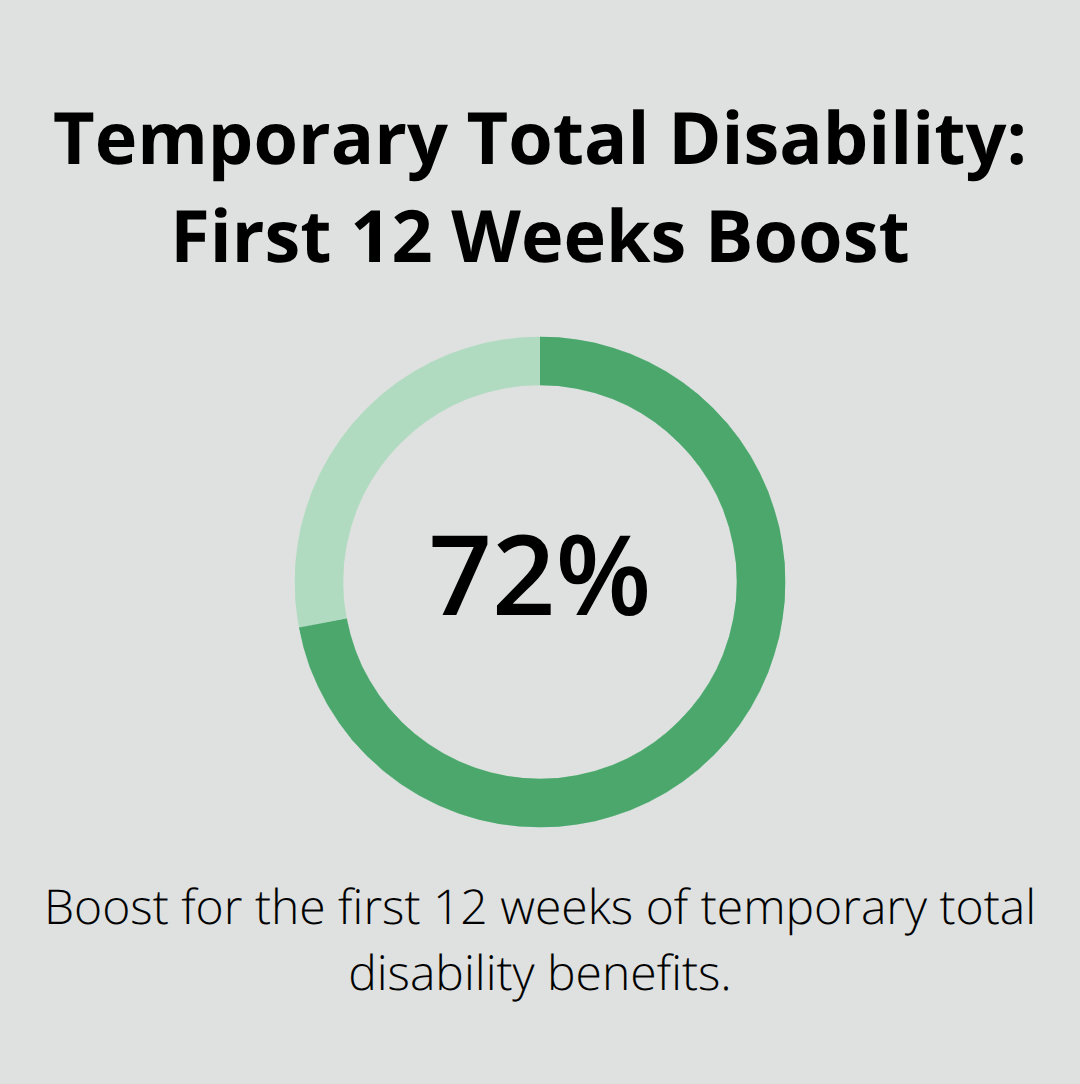
The BWC covers all reasonable and necessary medical treatment at no cost to you, and your treating physician-not your employer-decides what care you need and what work restrictions apply. If you cannot work while recovering, you receive temporary total disability benefits at two-thirds of your average weekly wage, boosted to 72 percent for the first 12 weeks. Once suitable light-duty work exists and your doctor approves it, the calculation shifts: you then receive two-thirds of the difference between your pre-injury earnings and current earnings.
The Legal Standard for Light-Duty Work
The key word is suitable. Under Ohio law, light-duty work must align with your medical restrictions, be located within reasonable proximity to your home, and be offered in good faith. The Ohio Supreme Court ruled in 2019 that meaningless work-such as watching training videos all day or sorting papers with no real purpose-fails the good-faith standard and cannot be forced on you. More recently, an Ohio appellate decision held that refusing a valid light-duty offer for reasons unrelated to your injury can jeopardize your benefits, so verification matters enormously.
How to Protect Yourself Before Accepting Any Offer
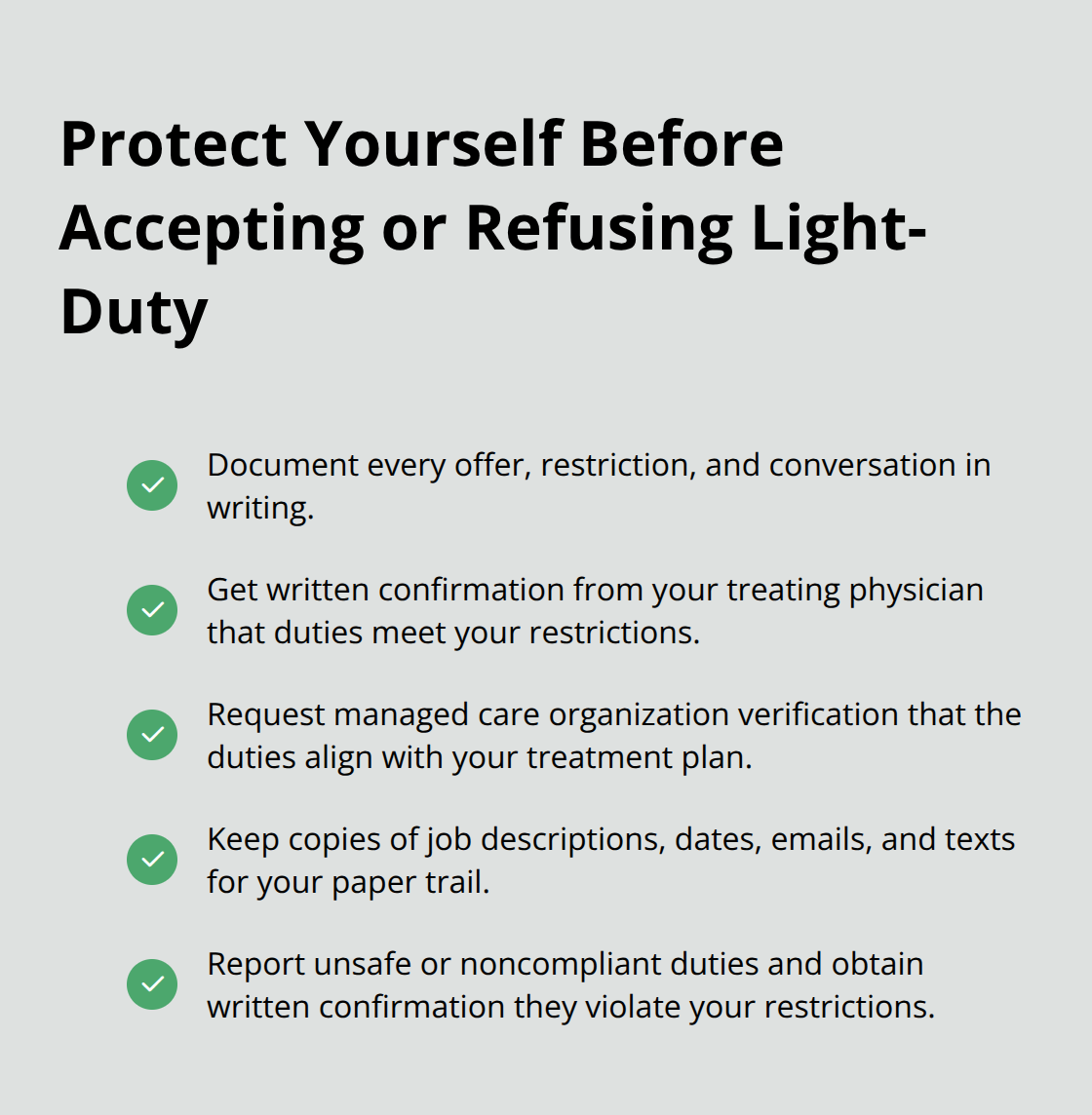
Before you accept or reject any light-duty offer, obtain written confirmation from your treating physician that the proposed duties meet your restrictions. Request a written job description from your employer and, if available, have your managed care organization verify alignment with your treatment plan. You must document everything in writing-emails, texts, job descriptions, dates, and restrictions-because this paper trail resolves disputes. If proposed work violates your restrictions, report it to your MCO and request written confirmation that the work doesn’t comply.
When Medical Support Falls Short and Disputes Arise
When medical support feels inadequate, you can seek a second opinion or change treating physicians. The Industrial Commission of Ohio handles disputes, and the Ohio Industrial Commission Ombuds Office provides free assistance without requiring formal legal action. If you face employer resistance to rehiring after recovery, gather pre-injury performance records and communications, as this can reveal unlawful retaliation or discrimination. Timing and documentation are critical here. The state insurance fund covers hospital services, medications, surgical procedures, and ongoing treatment related to your work injury, so your medical needs don’t disappear once light-duty begins. Understanding this framework-that your doctor sets restrictions, your employer proposes positions, and you make informed decisions-puts you in control of your recovery. What happens next depends on how you navigate the obstacles that commonly arise during this process.
What Protects You as an Injured Worker
Retaliation Is Illegal-And It Leaves Evidence
Ohio law treats retaliation against injured workers as illegal, period. The Ohio Bureau of Workers’ Compensation explicitly prohibits employers from punishing you for filing a workers’ compensation claim or exercising your rights during recovery. This protection extends beyond simple revenge-it covers subtle actions like demoting you, cutting your hours, reassigning you to worse conditions, or excluding you from rehiring after you heal. If your employer retaliates, the BWC enforces these violations, and you can pursue remedies through the Industrial Commission of Ohio.
The practical reality is that retaliation happens, but it leaves a trail. When you document every interaction (emails about your claim, conversations about return-to-work timelines, decisions about rehiring), you create evidence that either proves retaliation or protects you if your employer denies wrongdoing. Discrimination based on disability is also prohibited under federal law through the Americans with Disabilities Act, meaning your employer cannot treat you differently because of your injury or medical restrictions.
Your Right to Refuse Unsuitable or Unsafe Work
You have the right to refuse work that violates your medical restrictions or poses safety risks. If your employer offers light-duty work that your doctor says you cannot perform, you can reject it without automatically losing benefits-but only if you have written proof from your treating physician that the work exceeds your restrictions. This is where documentation becomes your shield.
Before you refuse any offer, contact your managed care organization and request written confirmation that the proposed duties don’t align with your restrictions. The MCO can be reached at 1-800-644-6292 to verify whether work fits your medical limits. Refusing unsafe work is protected under OSHA regulations, meaning you cannot face retaliation for reporting unsafe conditions either.
Compensation Continues Regardless of Work Status
During your recovery, you receive compensation regardless of whether you work light-duty or remain unable to work. If you work light-duty, you receive two-thirds of the wage difference between your pre-injury earnings and current earnings. The state insurance fund covers all medical care-hospital services, medications, surgeries, and ongoing treatment-at no cost to you, and your treating physician decides what care you need, not your employer or the insurance company.
These protections form your foundation, but obstacles still emerge when employers resist compliance or medical restrictions create gaps between what you can do and what positions exist. Understanding how to navigate these disputes determines whether you protect your benefits or lose ground.
Common Obstacles to Returning to Work
Employer Resistance and Unsuitable Offers
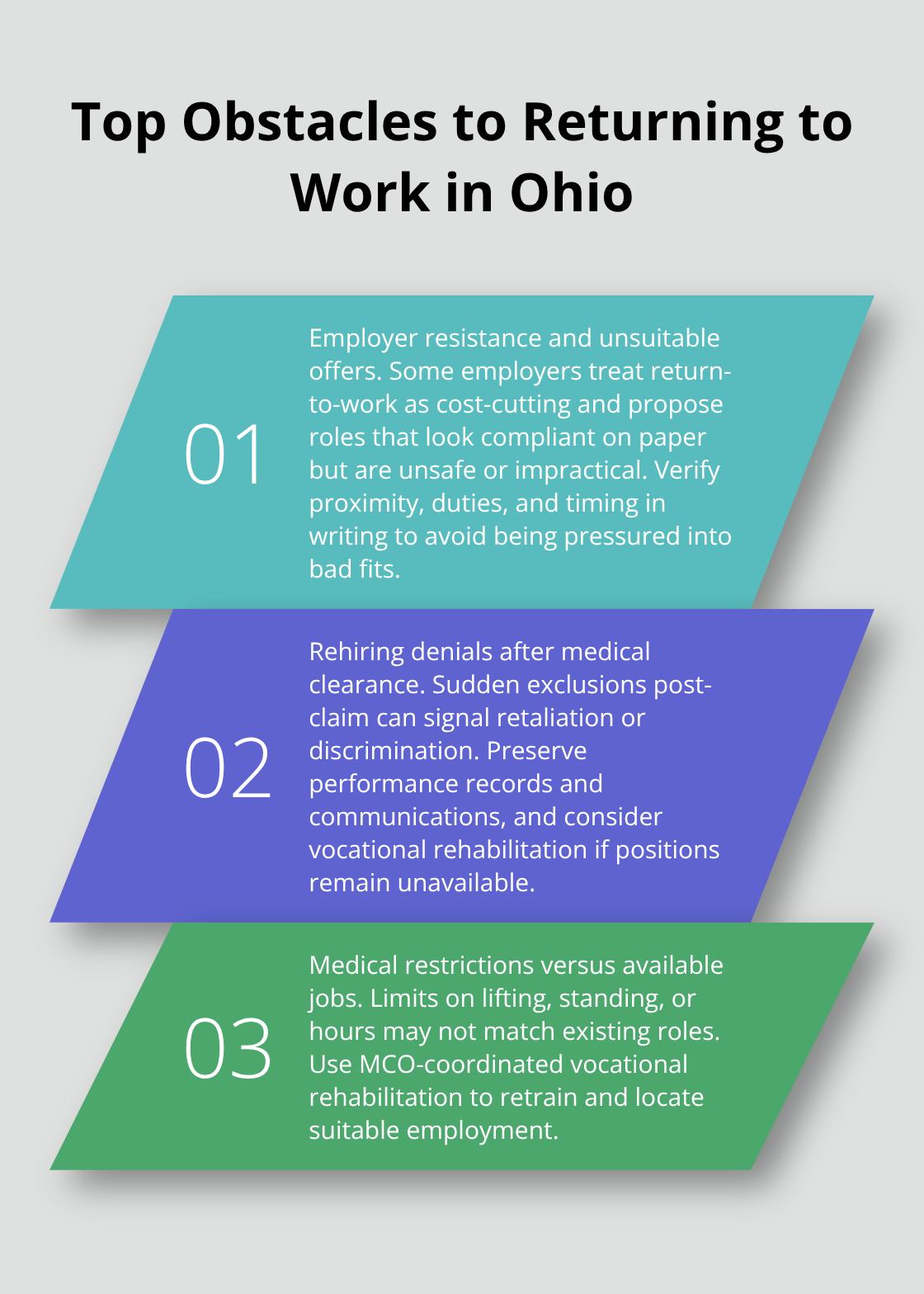
Employer resistance emerges as the most common obstacle injured workers face in Ohio. Some employers view return-to-work as a cost-cutting exercise rather than a recovery process, and they exploit gaps in the system. An employer might offer light-duty work that technically fits your restrictions on paper but proves impossible to perform safely, or they might locate the position far from your home, making the commute unreasonable. The Ohio Administrative Code does not precisely define what reasonable proximity means, so disputes arise frequently. Your employer might also delay suitable work offers, hoping you’ll accept unsuitable positions out of desperation.
Document every communication: emails about job offers, text messages about timing, written job descriptions, and your responses. The Ohio Industrial Commission Ombuds Office provides free assistance to evaluate whether an offer meets legal standards, and you can call them without hiring an attorney.
Rehiring Denials After Medical Clearance
If your employer refuses to rehire you after you’ve medically cleared return to work, gather your pre-injury performance records and any communications suggesting discrimination or retaliation. Timing matters enormously-if your employer suddenly excludes you from rehiring shortly after your claim was filed, the connection becomes harder to deny. Vocational rehabilitation services can help you retrain for different work and locate suitable employment if your employer’s positions remain unavailable.
Medical Restrictions and Job Availability Gaps
Medical restrictions create real obstacles because suitable positions may not exist within your employer’s operation. Your doctor might restrict you from standing for more than four hours daily or lifting over ten pounds, but your employer’s available roles all require eight-hour shifts or heavier work. In these cases, vocational rehabilitation services help you retrain for different work and locate suitable employment. The MCO coordinates these services and can be reached at 1-800-644-6292.
Challenging Inaccurate Medical Restrictions
If disputes arise about whether your medical restrictions are accurate or overly broad, seek a second opinion from another physician-you have the right to change treating physicians if you believe your current doctor isn’t supporting your recovery properly. When disputes with the Industrial Commission of Ohio occur, the Ombuds Office intervention is free and often resolves conflicts before formal legal proceedings become necessary. Workers who document every step, verify job offers in writing, and obtain MCO confirmation of medical alignment rarely lose their benefits. Those who accept unsuitable work or fail to verify restrictions often face disputes that could have been prevented.
Final Thoughts
Your return to work rights in Ohio protect you only when you understand them and act on them. The three-way dynamic between your doctor, your employer, and yourself determines whether your recovery stays on track or derails-your treating physician sets medical restrictions, your employer proposes positions that fit those restrictions, and you make informed decisions about what work you can safely perform. Document everything in writing from day one: job offers, medical restrictions, communications about timing, and your responses.
The obstacles are real, and employers sometimes offer unsuitable work, delay suitable positions, or resist rehiring after you’ve medically cleared return to work. Verify every job offer in writing with your treating physician and your managed care organization before accepting or rejecting it, because refusal of unsuitable work is protected only if you have written proof that the work violates your restrictions. When these conflicts emerge, the Ohio Industrial Commission Ombuds Office provides free assistance without requiring you to hire an attorney immediately.
Retaliation and discrimination are illegal under Ohio law and federal law, and they leave evidence that protects you. If your situation becomes complex or your employer resists compliance, contact our firm to discuss your return to work rights and protect your benefits during recovery.