
Filing a workers’ compensation claim in Ohio can feel overwhelming, especially when you’re dealing with an injury. The good news is that understanding the Ohio BWC claim filing process makes it manageable.
We at Robin J Peterson Company, LLC have helped countless injured workers navigate this system successfully. This guide walks you through each step, from reporting your injury to submitting your claim and avoiding costly mistakes along the way.
What You Need to Know About Ohio BWC Before Filing
The Ohio Bureau of Workers’ Compensation is a state agency that administers workers’ compensation insurance in Ohio. Unlike private insurance companies, the BWC operates as a public fund that covers medical expenses and wage replacement for workers injured on the job. This distinction matters because the BWC has specific rules, deadlines, and processes that differ significantly from standard insurance claims. You work with a government agency that has strict protocols, not a private insurer you can negotiate with.
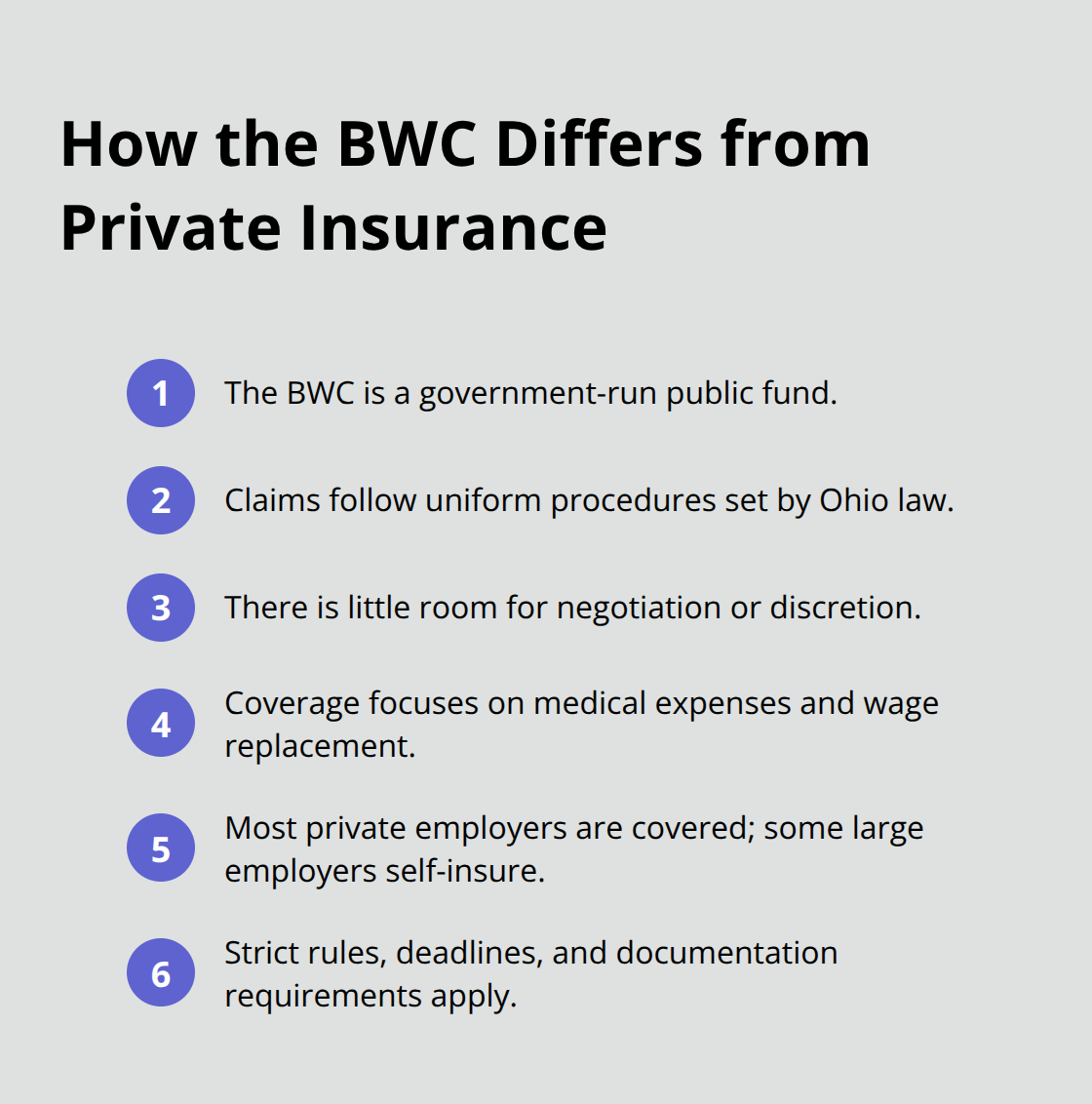
The BWC covers most private employers in Ohio, though some large employers opt for self-insurance.
How the BWC Differs From Private Insurance
The BWC’s structure affects how your claim moves through the system. A government agency investigates your claim according to state law, not company policy. The BWC follows the same procedures for every claim, which means consistency but also inflexibility. You cannot appeal to a manager’s discretion or negotiate terms the way you might with a private insurer. Understanding this structure helps you navigate the system correctly from day one and sets realistic expectations for timelines and outcomes.
What Types of Injuries Qualify for Claims
The BWC covers acute injuries that occur at work, meaning sudden incidents like falls, equipment accidents, or trauma. If you get hurt during your job duties or while performing work-related tasks, you likely have a claim. The injury must have a clear connection to your employment and happen during work hours or work-related activities. The critical factor is establishing that the injury arose out of and in the course of employment, which the BWC investigates thoroughly. You cannot file a claim for injuries that happen outside work or for conditions that develop gradually over time without a specific incident.
The One-Year Deadline You Cannot Miss
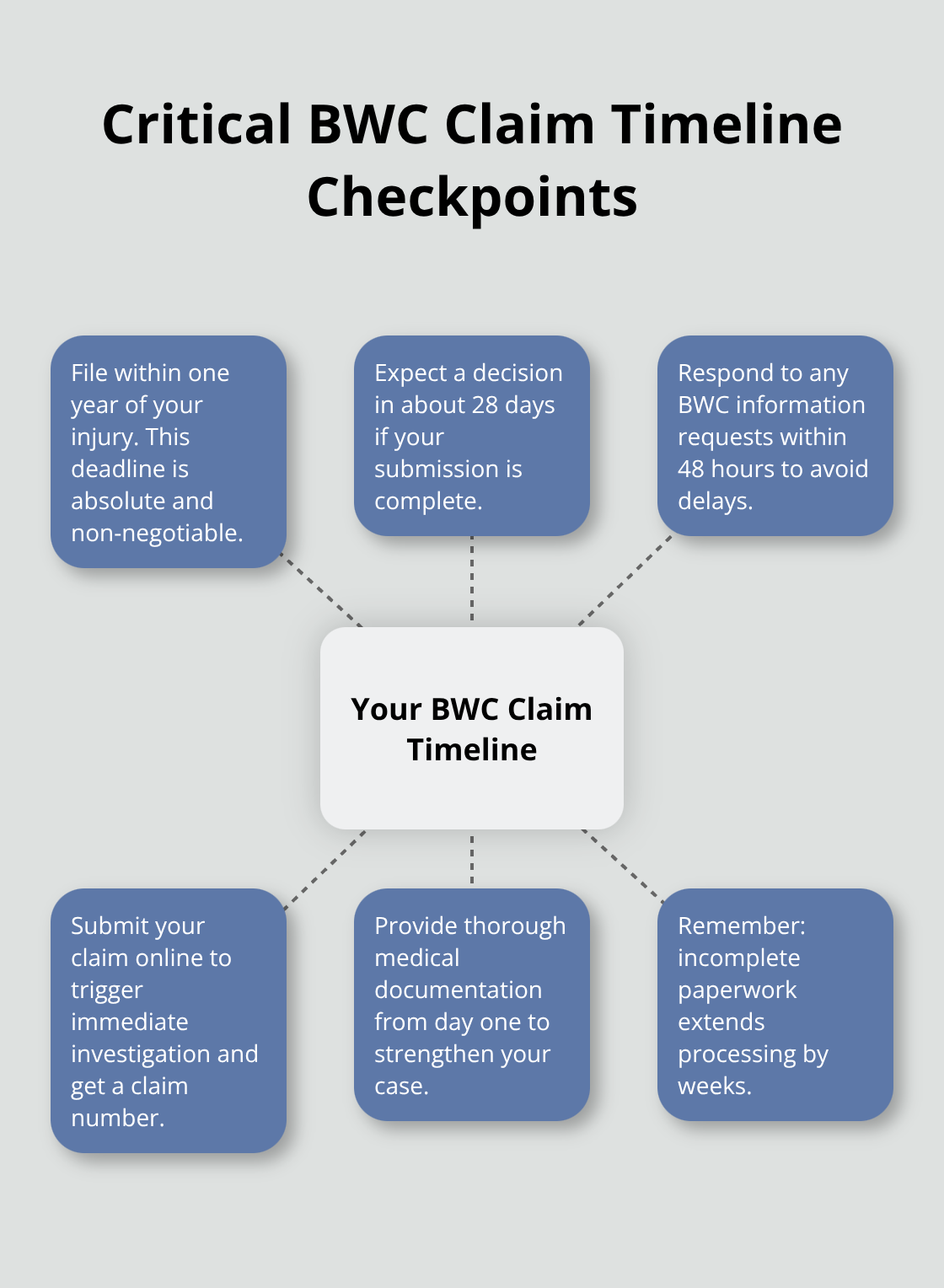
You have exactly one year from the date of your injury to file a claim with the BWC. This deadline is absolute and non-negotiable. If you miss it, you lose all benefits and cannot recover them later. The BWC takes this deadline seriously because it prevents fraud and maintains the integrity of the system. Many injured workers make the mistake of waiting too long, thinking their employer will handle the paperwork or assuming they have more time. File immediately after your injury occurs. Even if you’re unsure whether your injury qualifies or if you need to involve an attorney, filing the First Report of Injury with the BWC protects your rights and starts the clock on your benefits.
What Happens Next After You File
Once you submit your claim, the BWC launches an investigation into the work-relatedness of your injury. A service specialist reviews your medical records and employment history to verify that your injury qualifies for coverage. The BWC typically makes a decision within 28 days of receiving a complete submission (incomplete paperwork extends this timeline significantly). During this period, you should respond to any information requests from the BWC within 48 hours to avoid delays. The investigation process is thorough, so having solid documentation and medical evidence from the start strengthens your position considerably.
How to File Your Claim Step by Step
Report Your Injury Immediately to Your Employer
Report your injury to your employer on the same day it happens. This action creates an immediate paper trail that links the incident to your health condition and demonstrates that you took the injury seriously from the start. Provide your supervisor or HR department with exact details: the precise time, the specific location where the injury occurred, the machinery or equipment involved, and the exact task you were performing when injured. Request written confirmation that your employer received this report.
Many injured workers make the mistake of reporting injuries days or weeks later, which gives the BWC reason to question the severity or legitimacy of the claim. The BWC investigators scrutinize the timeline closely, and delays between the injury date and the report date raise red flags. Document everything in writing immediately, even if your employer seems dismissive or suggests you handle it informally. This written record becomes your foundation for the entire claim.
Gather Medical Documentation From Day One
Seek medical attention immediately and tell your healthcare provider that the injury is work-related. Your provider must document this connection in your medical records because the BWC uses physician notes to verify work-relatedness. Keep a daily symptom journal from the injury date forward, recording pain levels, limitations, treatments received, and how the injury affects your work capacity.
Collect supporting evidence such as coworker witness statements, photographs of the scene or the equipment involved, and any accident reports your employer completed. Store all materials in an organized folder with dates clearly marked on everything. This documentation strengthens your position considerably when the BWC investigates your claim.
Complete and Submit the First Report of Injury
The First Report of Injury form requires specific information: your pay rate, hours worked per week, the nature and extent of your injury, the date you first reported it, the machinery or equipment involved, the task you were performing, and the affected body parts. Incomplete or inaccurate information on this form resets the BWC’s 28-day decision window and extends processing by weeks.
Submit your claim online through the BWC portal for the fastest processing (online submissions trigger immediate investigation and generate a claim number to track progress). Provide complete medical documentation including your doctor’s diagnosis, treatment records, and test results. Ensure your provider signs the FROI and authorizes retrieval of your full medical records and 52 weeks of wage data.
Monitor Your Claim and Respond Promptly
After filing, monitor your claim status via the BWC portal and respond within 48 hours to any information requests from the BWC to avoid delays. The investigation process is thorough, so having solid documentation and medical evidence from the start positions your claim for success. The BWC typically makes a decision within 28 days of receiving a complete submission, but incomplete paperwork extends this timeline significantly.
If the BWC denies your claim or the investigation becomes complex, an experienced workers’ compensation attorney can significantly improve outcomes. We at Robin J Peterson Company, LLC represent injured workers throughout Ohio who face claim denials or complicated investigations, and our team knows how to navigate the BWC system effectively.
Mistakes That Derail Your Claim
The gap between filing a claim and receiving approval is where most injured workers stumble. The one-year deadline is absolute and permanent-miss it and you lose all benefits. Smaller errors cause equal damage by extending your wait time and frustrating the investigation process. The BWC processes thousands of claims annually, and incomplete submissions sit in queue while complete ones move forward.
Submitting Incomplete or Inaccurate Information
An incomplete First Report of Injury resets the entire 28-day decision window, meaning a missing document or inaccurate detail costs you weeks of waiting. The form requires your exact pay rate, hours worked per week, the precise machinery involved, and the specific body parts affected. If you write down your hourly wage incorrectly or fail to list all affected areas, the BWC returns the form for corrections rather than proceeding with investigation.
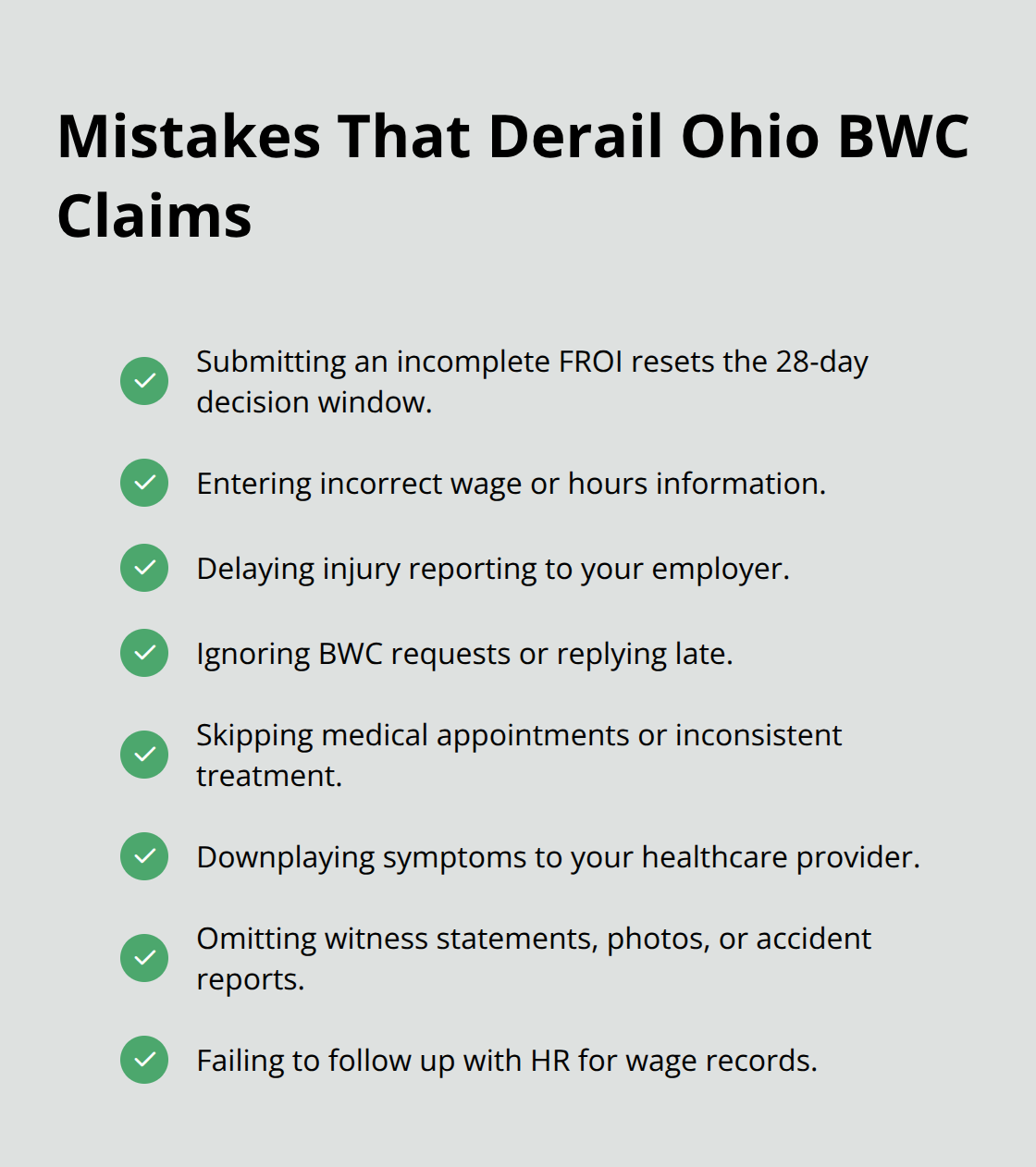
This happens frequently because injured workers rush through the FROI without reviewing it carefully or they guess at information they should verify with their employer first. Take time to gather accurate details before submitting. Your employer’s HR department has your exact pay rate and hours-request this information in writing and attach it to your submission.
Ignoring BWC Information Requests
The BWC sends requests for additional medical records, wage verification, or clarification on specific details. Workers who ignore these messages or respond days later watch their claims stall indefinitely. You must respond to BWC information requests within 48 hours to keep your claim moving forward.
Your employer’s HR department may drag their feet providing wage records, but that delay becomes your problem if you don’t follow up aggressively. The BWC holds you accountable for gathering this documentation, not your former employer. Check the BWC portal daily for messages and prioritize any requests that arrive.
Weak Medical Documentation and Inconsistent Treatment
Workers who skip medical appointments or downplay symptoms to their healthcare provider weaken their claims significantly. The BWC investigator reviews your medical records looking for consistency between your reported symptoms and your treatment pattern. If you tell your doctor you have minor pain but miss follow-up appointments, the investigator questions whether the injury was truly disabling.
Conversely, attending every recommended appointment and describing all symptoms honestly builds credibility. Your medical provider must document the work-related nature of your injury in the medical records (this connection matters enormously to the BWC investigation). Keep a daily symptom journal and share it with your healthcare provider at each visit to establish a clear pattern of your condition.
When to Seek Professional Help
If you face a complex investigation or the BWC denies your claim, an experienced workers’ compensation attorney can significantly improve outcomes. The Industrial Commission of Ohio handles appeals, and the process involves strict deadlines and procedural rules that require professional knowledge. We at Robin J Peterson Company, LLC represent injured workers throughout Ohio who face claim denials or complicated investigations, and our team knows how to navigate the BWC system effectively.
Final Thoughts
Filing an Ohio BWC claim filing requires attention to detail, speed, and persistence. The process rewards workers who report injuries immediately, gather documentation thoroughly, and respond promptly to every BWC request. Missing the one-year deadline costs you everything, so submit your First Report of Injury as soon as possible after your injury occurs.
Incomplete paperwork extends your wait time, so verify every detail before submitting (your employer’s HR department can provide exact pay rates and hours). Weak medical documentation undermines your credibility, so attend all appointments and describe your symptoms honestly to your healthcare provider. Many injured workers navigate this system alone and make preventable mistakes that delay or deny their benefits.
An experienced workers’ compensation attorney becomes essential when the BWC denies your claim, when your investigation becomes complex, or when you face pushback from your employer. If your claim has been denied or if you’re uncertain about your next steps, contact our firm for guidance on protecting your rights and maximizing your benefits.