
Knee injuries at work can derail your career and finances, leaving you uncertain about your rights and benefits. At Robin J Peterson Company, LLC, we help injured workers navigate Ohio’s workers’ compensation system with clarity and confidence.
This guide walks you through everything you need to know about knee injury compensation in Ohio, from filing your claim to understanding what affects your benefits.
What Knee Injuries Does Ohio Workers’ Compensation Actually Cover
The Ohio Bureau of Workers’ Compensation covers knee injuries that stem directly from your job duties or workplace conditions. ACL tears, meniscus tears, MCL and PCL sprains, fractures, and dislocations all qualify if they happen at work. Bursitis and tendonitis from work tasks are covered too. Construction workers, warehouse staff, healthcare workers, and delivery drivers face higher risk because their jobs demand kneeling, squatting, climbing, and prolonged standing. Manufacturing and transportation workers experience similar exposure. Approximately 1 in 8 workplace injuries in Ohio involve the knee, and workers typically miss about two weeks on average.
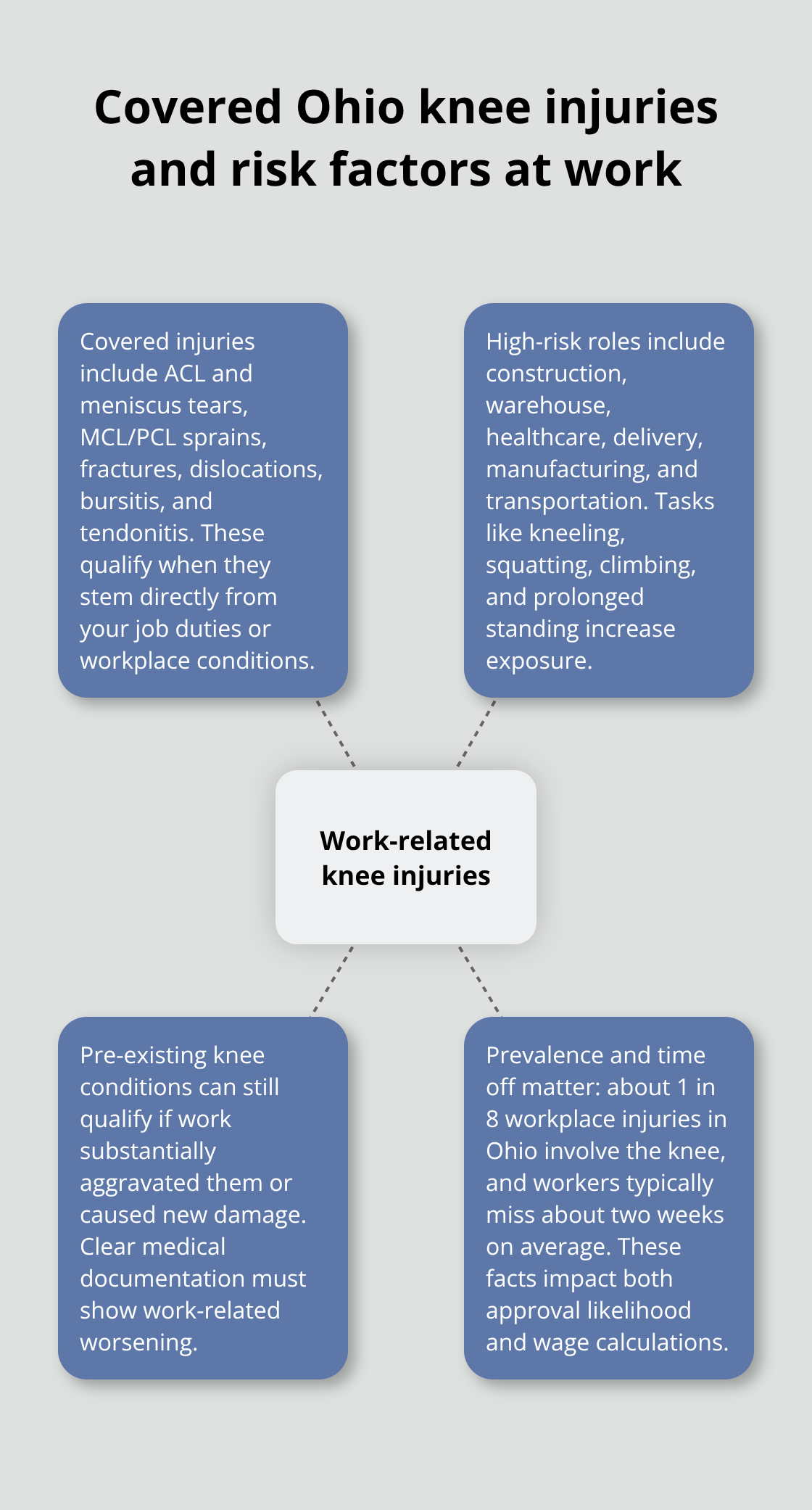
Pre-existing knee conditions can still qualify for benefits if your work substantially aggravated them or caused new damage, provided documentation shows work-related worsening.
How the BWC Evaluates Your Claim
The BWC evaluates claims using four main types of evidence: medical records, job description, incident reports, and witness statements. Imaging like X-rays and MRIs carries substantial weight in decisions because it provides objective proof of injury severity and work-relatedness. Operative notes from surgery do the same. The BWC processes about 200,000 claims annually and typically issues an initial decision within about 28 days for straightforward cases, though complex knee injuries can take 60 to 90 days.
Documentation Makes or Breaks Your Claim
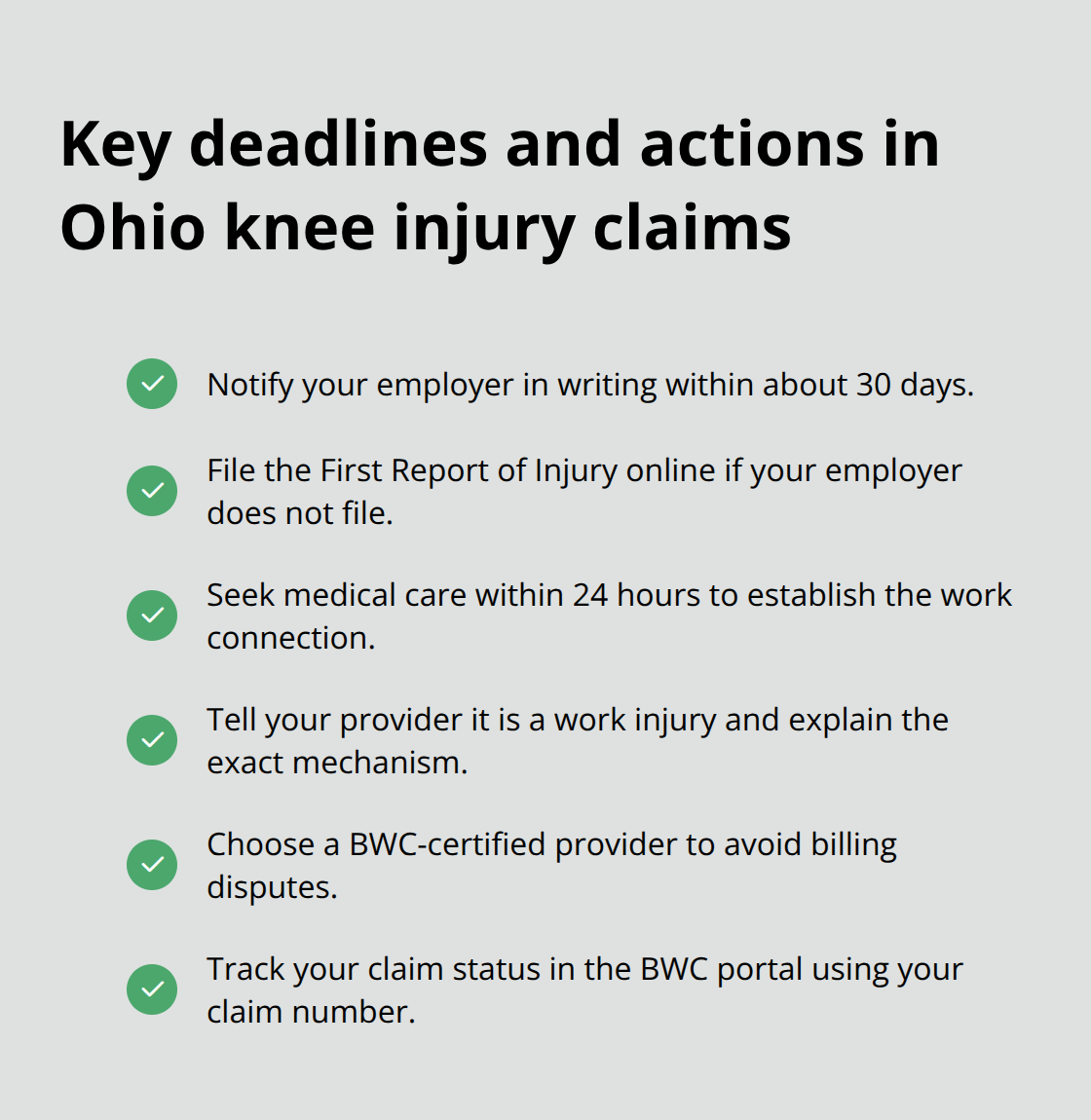
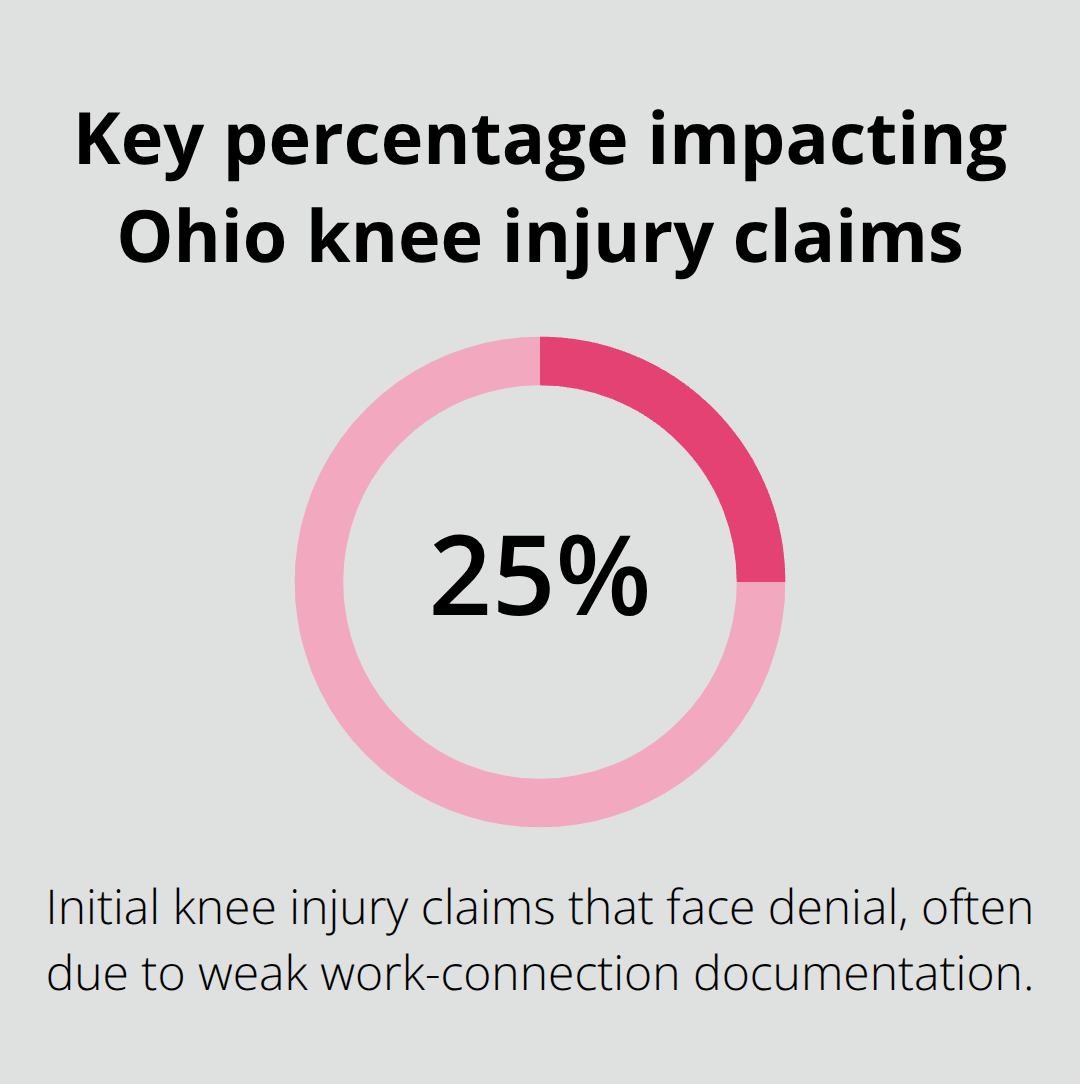
Roughly 25% of initial knee injury claims face denial, and weak documentation linking the injury to work is the leading reason. Vague medical notes stating only knee pain will not succeed. Your medical records must clearly describe the exact mechanism of your injury and the specific work task involved. Report the injury in writing to your employer within roughly 30 days, and seek medical care within 24 hours to establish the work connection immediately. Tell your provider this is a work injury and describe exactly how it happened. Photograph hazards and the scene if possible, collect witness names, and write a detailed personal account of the incident.
What Happens After Your Claim Gets Approved
Once your claim receives approval, the BWC covers doctor visits, imaging, physical therapy, medications, and necessary surgeries with no out-of-pocket costs for covered care. There are no annual caps on medical care for accepted claims, though the insurer may dispute medical necessity. If the insurer directs you to a preferred medical network but treatment is inappropriate, request a change of physician in writing and ask for a written denial if a treatment is refused. Understanding what happens next in the claims process helps you prepare for the investigation phase and any potential disputes that may arise.
The Claims Process for Knee Injuries in Ohio
File Your Claim Within the Critical Window
You must notify your employer in writing within roughly 30 days of the injury. If your employer fails to file with the Ohio Bureau of Workers’ Compensation, submit the First Report of Injury online directly to obtain a claim number immediately and bypass delays. Seek medical care within 24 hours-this establishes the work connection from the start. Tell your provider this is a work injury and describe the exact mechanism of injury and the specific work task involved. Choose a BWC-certified healthcare provider to avoid billing disputes and ensure your medical records meet state standards.
What the BWC Examines During Investigation
The BWC evaluates your case using four main types of evidence: medical records, job description, incident reports, and witness statements. This investigation phase typically takes about 28 days for straightforward cases, though complex knee injuries can extend to 60 to 90 days. You can track your claim progress online using your assigned claim number through the BWC portal, so you know exactly where your case stands at any point.
Imaging like X-rays and MRIs carries substantial weight because it provides objective proof of injury severity, while operative notes from surgery serve the same purpose. During investigation, the BWC also examines whether hazards or workplace conditions contributed to your injury, which strengthens claims tied to preventable workplace failures rather than isolated accidents.
Challenge a Denial With Strong Evidence
If the BWC denies your claim, you have 14 days to appeal-missing this deadline forfeits your right to challenge the decision. Denials typically stem from weak documentation linking the injury to work, so submit additional medical evidence showing clear work-relatedness and obtain current physician statements confirming the injury arose from job duties. Request written authorization from your doctor for any treatments the insurer refuses.
Request a hearing before the Industrial Commission of Ohio to challenge the denial. Most denials are reversed at hearings, and you have two years from the denial to preserve your right to appeal. Prepare for a hearing with organized medical records, physician testimony about functional limits, and evidence demonstrating how the knee injury prevents you from performing your job duties. If the hearing decision is unfavorable, you can appeal to the Industrial Commission appellate panel for further review.
What Comes Next in Your Compensation Journey
Once you understand the claims and appeals process, the next critical factor affecting your compensation becomes clear: the specific circumstances of your injury and how they influence your benefit amount.
What Determines Your Compensation Amount
Your compensation hinges on three interconnected factors that the BWC weighs carefully: how severely your injury limits your ability to work, what you earned before the injury, and how thoroughly you document the work connection. The Bureau of Labor Statistics reports that workers miss about 15 days on average after knee injuries, with longer absences for more severe cases or surgery. That timeframe matters because it directly affects your wage replacement calculation.
How Injury Severity Shapes Your Benefits
If you suffer a complete ACL tear that requires surgery, you’ll likely face total disability for several months, which triggers temporary total disability benefits calculated at roughly 66.67% of your pre-injury weekly earnings. A minor meniscus tear managed conservatively might keep you in light-duty work, reducing your benefit to a partial disability rate. The severity assessment isn’t subjective-it’s anchored to medical evidence. The BWC examines imaging reports, surgical records, and functional capacity evaluations to determine exactly what work limitations your injury creates. Maximum medical improvement typically occurs 12 to 24 months after injury, and once you reach that milestone, the BWC reassesses your case to determine permanent partial disability if lasting impairment remains.
Your Pre-Injury Wages Form the Foundation
Your pre-injury wages form the foundation of all benefit calculations, so accuracy here is non-negotiable. The BWC calculates your average weekly wage over the prior 52 weeks, and this figure directly multiplies against your disability percentage to determine payment amounts. Workers in construction, warehousing, healthcare, and delivery often earn variable wages with overtime, making documentation of your complete earnings history critical-bring pay stubs, tax returns, and employment records to substantiate your actual weekly average.
Documentation Failures Cost Workers Real Money
Documentation failures cost workers real money, and this is where most injured workers stumble. The National Safety Council estimates non-fatal knee injuries cost about $42,000 in medical and related expenses, underscoring why comprehensive medical records matter beyond just proving the injury happened. Every medical note must explicitly connect your treatment to the specific work task or incident that caused the knee injury. Vague documentation stating only knee pain fails; detailed notes describing mechanism of injury, functional limitations, and required interventions succeed.
Preserve Evidence From Day One
Photograph the scene, collect written witness statements immediately, and preserve incident reports-these documents become your strongest leverage if the BWC questions the work connection or if you need to dispute a denial later. Strong medical documentation linking a specific work task or incident to the knee injury is critical (vague notes like “knee pain” are unlikely to succeed). Pre-existing knee conditions can still qualify for benefits if the work substantially aggravated them or caused new damage, as long as documentation shows work-related worsening. The four main types of evidence the BWC evaluates-medical records, job description, incident reports, and witness statements-all work together to establish your claim’s strength.
Final Thoughts
Knee injury compensation in Ohio hinges on three pillars: solid documentation, timely action, and understanding how the BWC evaluates your specific situation. The system covers ACL tears, meniscus damage, fractures, and other work-related knee injuries when medical records clearly establish the work connection. Roughly 25% of initial claims face denial because workers fail to document the exact mechanism of injury or the specific work task involved, and your pre-injury wages, injury severity, and functional limitations all determine your benefit amount.
The 14-day appeal window after a denial is non-negotiable, and most denials reverse at hearings when you present organized medical evidence and physician testimony. The BWC processes 200,000 claims annually, and the system rewards workers who understand its rules and deadlines. An experienced workers’ compensation attorney identifies weaknesses in your claim before the BWC does, ensures your medical records meet state standards, and responds strategically to agency requests.
Contact Robin J Peterson Company, LLC to discuss your knee injury compensation Ohio claim with someone who understands Ohio workers’ compensation law. The sooner you act, the sooner you protect your rights and begin the path toward fair compensation and recovery.