
A work injury is already difficult to manage. When you have a pre-existing condition, the situation becomes even more complicated.
Ohio’s Second Injury Fund exists to help workers in exactly this situation. At Robin J Peterson Company, LLC, we’ve guided many injured workers through this process and seen how the fund can make a real difference in their cases.
How the Second Injury Fund Actually Works
Understanding the Fund’s Core Function
The Second Injury Fund operates as a separate safety net within Ohio’s workers’ compensation system, and understanding how it functions is essential if you have a pre-existing condition. When a new workplace injury combines with an existing permanent impairment to create greater disability than either condition alone, the fund steps in to cover the amplified costs. According to the Ohio Industrial Commission, the fund covers three specific expense categories: medical costs directly tied to the enhanced disability, lost wage benefits resulting from the interaction of both conditions, and vocational rehabilitation expenses. The critical point here is that the fund only reimburses the portion of disability attributable to how the two conditions interact, not the entire disability from either condition alone.
The Three Strict Eligibility Requirements
To qualify for Second Injury Fund benefits, you must meet three strict requirements. First, you need a documented permanent pre-existing condition rated at least 15% disability. Second, you must have suffered a new workplace injury. Third, your combined disability must total at least 50% permanent partial disability or permanent total disability.
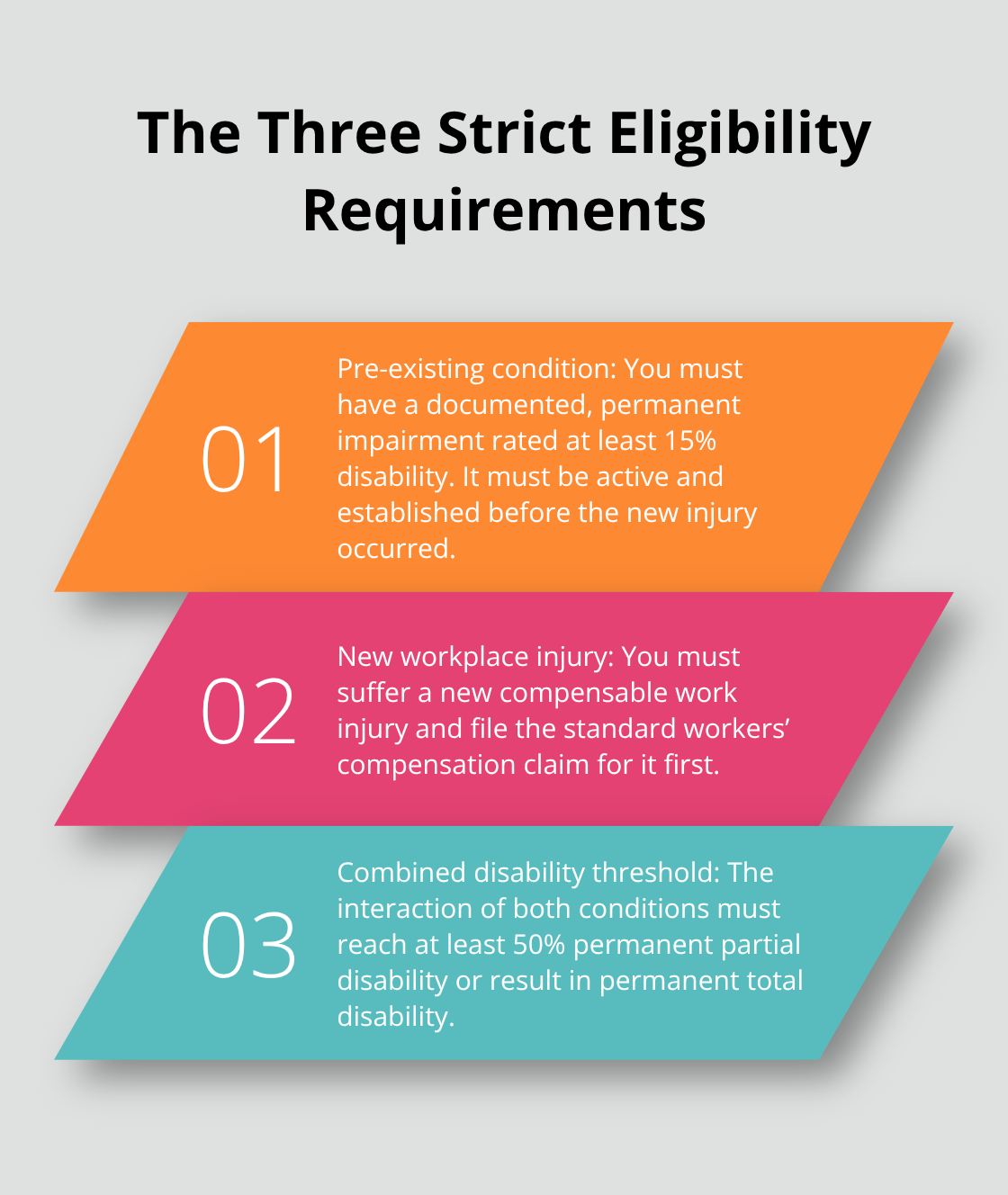
The Ohio Industrial Commission processes these claims through a two-step filing process. You file a standard workers’ compensation claim for the new injury first. Once that claim receives acceptance, you then file a distinct Second Injury Fund application with the Ohio Bureau of Workers’ Compensation, including comprehensive medical evidence that shows how the conditions interact.
Why Documentation Determines Your Outcome
Documentation proves to be the decisive factor in these claims. The Ohio Industrial Commission reports that over 60% of Second Injury Fund claims face rejection due to insufficient documentation linking the pre-existing condition to worsened outcomes. Pre-injury medical records form the foundation of a strong claim-baseline imaging, physician notes, disability ratings, and prior employment records establish what your condition looked like before the new injury occurred. Functional capacity evaluations conducted both before and after the injury carry significant weight because they demonstrate objective changes in your physical abilities.
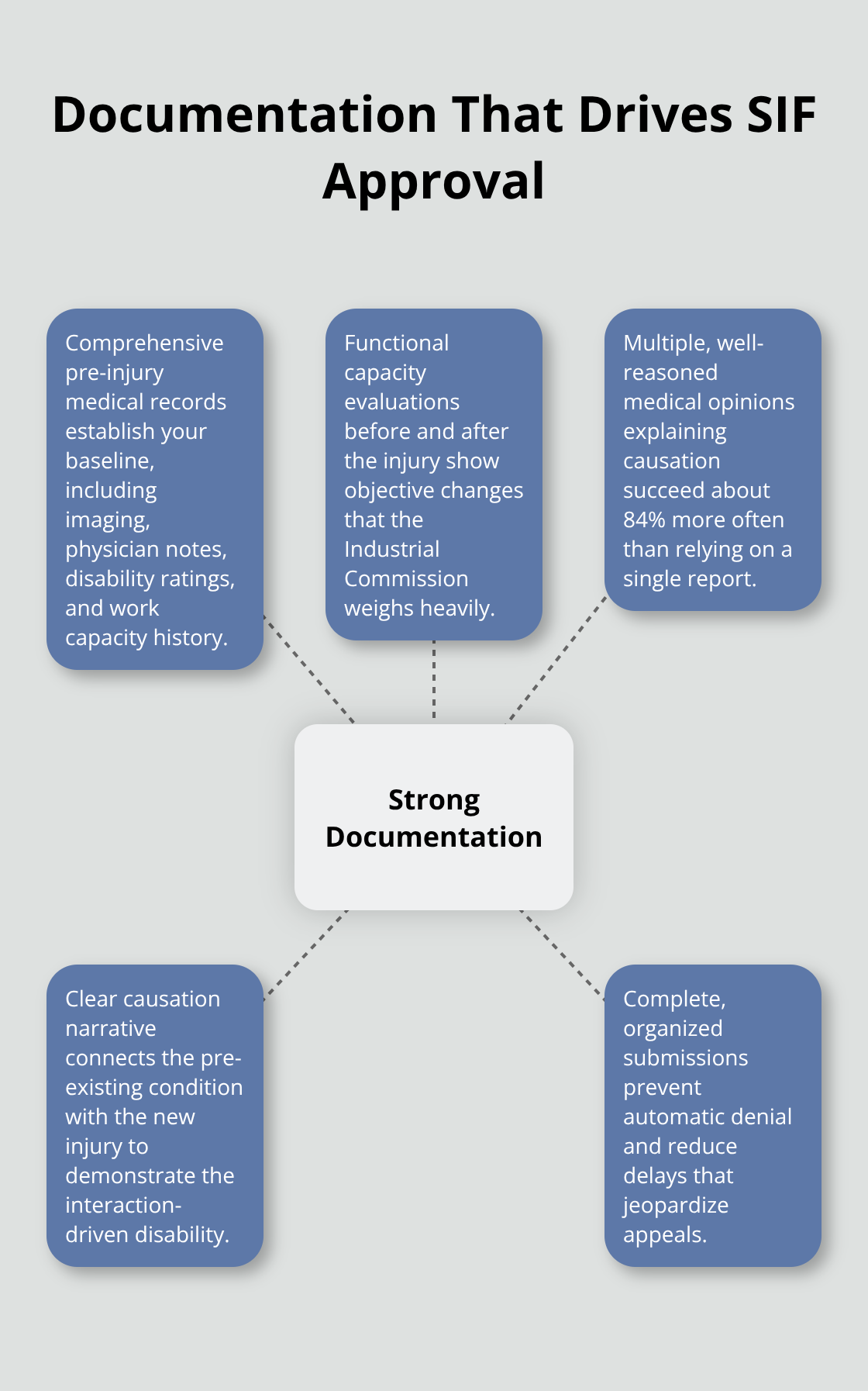
Multiple medical opinions explaining causation succeed approximately 84% more often than claims relying on a single physician report, according to Industrial Commission data.
Building Financial Liability Through Vocational Evidence
Vocational assessments that quantify your reduced earning capacity and work restrictions strengthen the fund’s determination of financial liability. The Ohio Department of Commerce has documented that the Second Injury Fund has contributed to roughly a 28% increase in employment opportunities for workers with disabilities since implementation, which reflects the fund’s core purpose: removing employer disincentives to hire workers with health histories. The 14-day appeal deadline is absolute if your claim faces initial denial, which occurs in about 67% of cases. Represented claimants win approximately 78% of Second Injury Fund cases compared to about 23% for self-represented claimants, highlighting how critical professional guidance becomes in navigating this complex process.
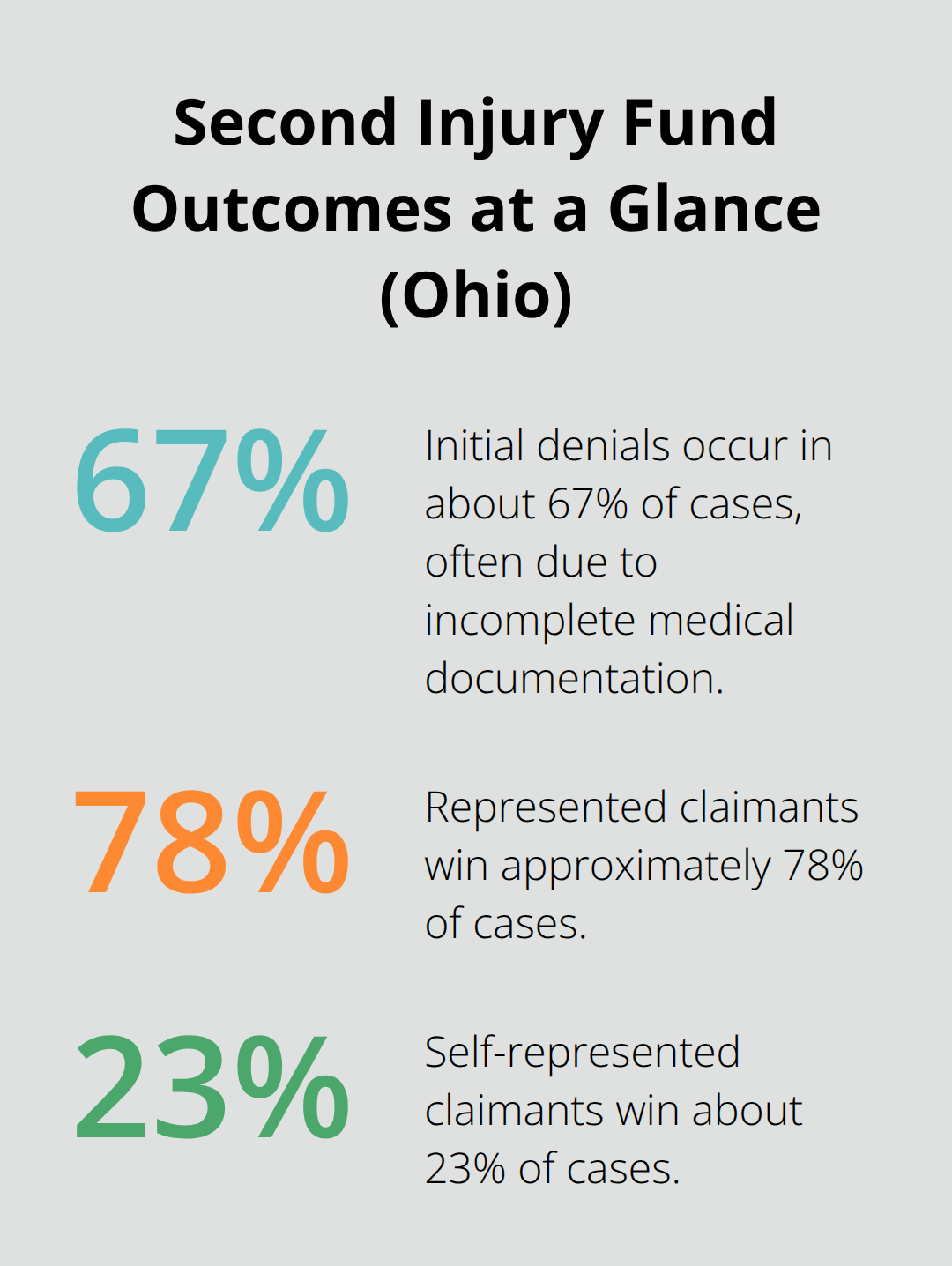
This disparity in outcomes points directly to the next critical phase of your claim.
When You Qualify for Second Injury Fund Benefits
The Three Requirements That Determine Eligibility
Qualifying for Second Injury Fund benefits hinges on three concrete requirements, and understanding each one prevents wasted effort on claims that won’t succeed. You need a documented permanent pre-existing condition rated at least 15% disability before the new injury occurred. This condition can stem from a prior work injury, a non-work illness, or even a congenital condition, as long as medical records prove it was permanent and active at the time of your workplace accident. Temporary conditions do not qualify-if your pre-existing impairment had resolved before the new injury, the fund won’t apply to your case.
The second requirement is straightforward: you must have suffered a new workplace injury. The third requirement is where precision matters most. Your combined disability from both conditions must reach at least 50% permanent partial disability or result in permanent total disability. This is not a rough estimate. The Ohio Industrial Commission applies specific disability rating calculations, and falling short of 50% combined disability means automatic ineligibility, regardless of how severe your individual conditions are.
The Critical Filing Timeline and Deadlines
The filing timeline matters far more than most injured workers realize, and delays can cost you thousands in benefits. After your initial workers’ compensation claim receives acceptance for the new injury, you have a separate filing process for the Second Injury Fund claim itself. You must submit your First Report of Injury to the Ohio Bureau of Workers’ Compensation within one year of the injury date. However, the critical deadline comes later: if your initial Second Injury Fund claim faces denial, you have exactly 14 days to file a formal appeal. The Ohio Industrial Commission statistics show that initial denials occur in about 67% of cases, primarily due to incomplete medical documentation. Missing this 14-day window eliminates your appeal rights entirely.
Building Your Medical Evidence Foundation
Start gathering pre-injury medical records immediately after your accident, including baseline imaging, physician notes, disability ratings, and any prior employment records that show your work capacity before the new injury. Functional capacity evaluations conducted before and after the injury demonstrate objective changes in your abilities and carry significant weight with the Industrial Commission. Claims supported by multiple medical opinions explaining how the new injury worsened your pre-existing condition succeed approximately 84% more often than those relying on a single physician report.
Incomplete applications face automatic denial from the BWC, and reconstruction after rejection becomes far more difficult. The evidence you assemble now determines whether the Industrial Commission recognizes the interaction between your conditions or rejects your claim outright. This distinction between strong documentation and weak documentation shapes everything that follows in your case.
Common Mistakes Workers Make with Second Injury Fund Claims
The gap between approved and denied Second Injury Fund claims often stems from preventable errors that injured workers make before they even file. The Ohio Industrial Commission data shows that 67% of initial applications face denial, and most of these rejections trace back to three specific mistakes that workers repeat constantly.
Hiding Pre-Existing Conditions Destroys Your Credibility
The first mistake is hiding or downplaying pre-existing conditions to simplify the claim narrative. Workers often believe that mentioning an old knee injury or prior back surgery will weaken their case, so they omit these details from initial conversations with their employer or insurer. This backfires immediately. When the Industrial Commission later uncovers the pre-existing condition through medical records, the claim loses credibility entirely. What matters is whether the condition actually existed before your current workplace injury and whether it genuinely interferes with your employment prospects.
If you wait until the BWC uncovers the pre-existing condition on its own, you’ve already damaged your case’s foundation. Start talking about your pre-existing condition the moment you report the new workplace injury. Include it in your written report to your employer. Tell your treating physician about it explicitly. This approach removes the appearance of deception and allows the medical evidence to show how the two conditions interact rather than creating suspicion about what you were hiding.
The 14-Day Appeal Deadline Has Zero Flexibility
The second costly mistake is missing the 14-day appeal deadline after an initial denial. The Ohio Industrial Commission imposes this deadline with zero flexibility, and workers who miss it lose all appeal rights permanently. Delays from incomplete submissions average around 147 days according to BWC processing data, which means your claim could sit in limbo for months before you even receive a denial notice.
Many injured workers assume they have more time to respond or believe they can resubmit materials later. This assumption costs them everything. The moment you receive a denial letter, your 14-day clock starts ticking. Mark this deadline on your calendar immediately and treat it as non-negotiable.
Self-Representation Creates a 55-Percentage-Point Disadvantage
The third mistake is attempting to navigate the process alone. Represented claimants win approximately 78% of Second Injury Fund cases compared to 23% for self-represented claimants according to Ohio Industrial Commission statistics. This 55-percentage-point gap reflects a hard reality: the Second Injury Fund process requires coordination across treating physicians, independent medical examiners, vocational experts, and the BWC itself.
An experienced workers’ compensation attorney handles this coordination, ensures medical evidence explicitly addresses causation between conditions, submits complete applications the first time, and manages appeals before deadlines expire. The attorney also knows which medical evidence the Industrial Commission actually requires and prevents you from submitting incomplete documentation that triggers automatic denial. At Robin J Peterson Company, LLC, we represent injured workers throughout Ohio who face Second Injury Fund claims, and we understand exactly how the Industrial Commission evaluates these cases.
Final Thoughts
The Second Injury Fund Ohio process demands precision, complete medical documentation, and strict adherence to deadlines. Your pre-existing condition does not disqualify you from workers’ compensation benefits; instead, it opens a pathway to additional compensation when a new workplace injury combines with that condition to create greater disability. Initial denials occur in roughly 67% of cases, but represented claimants win approximately 78% of their Second Injury Fund claims compared to 23% for those navigating the process alone.
This disparity exists because the Industrial Commission requires coordinated medical evidence, proper documentation of causation, and strategic appeal management. Missing the 14-day appeal deadline after denial eliminates your rights permanently, and submitting incomplete applications triggers automatic rejection. Hiding pre-existing conditions destroys your credibility when the BWC uncovers them through medical records.
If you have a pre-existing permanent impairment and suffered a new workplace injury, start gathering pre-injury medical records immediately and contact an experienced workers’ compensation attorney. We at Robin J Peterson Company, LLC represent injured workers throughout Ohio who face Second Injury Fund claims, and our team understands exactly how the Industrial Commission evaluates these cases. Contact us to discuss whether the Second Injury Fund applies to your situation and how we can strengthen your path to approval.