
Work injuries happen fast, but understanding workers’ comp benefits doesn’t have to be complicated. At Robin J Peterson Company, LLC, we’ve helped countless injured workers navigate their claims and get the support they deserve.
This guide walks you through what benefits you’re entitled to, how to file in Ohio, and the mistakes that could cost you. You’ll have the practical knowledge to protect your rights from day one.
What Workers’ Comp Actually Covers
Medical Benefits for Work-Related Injuries
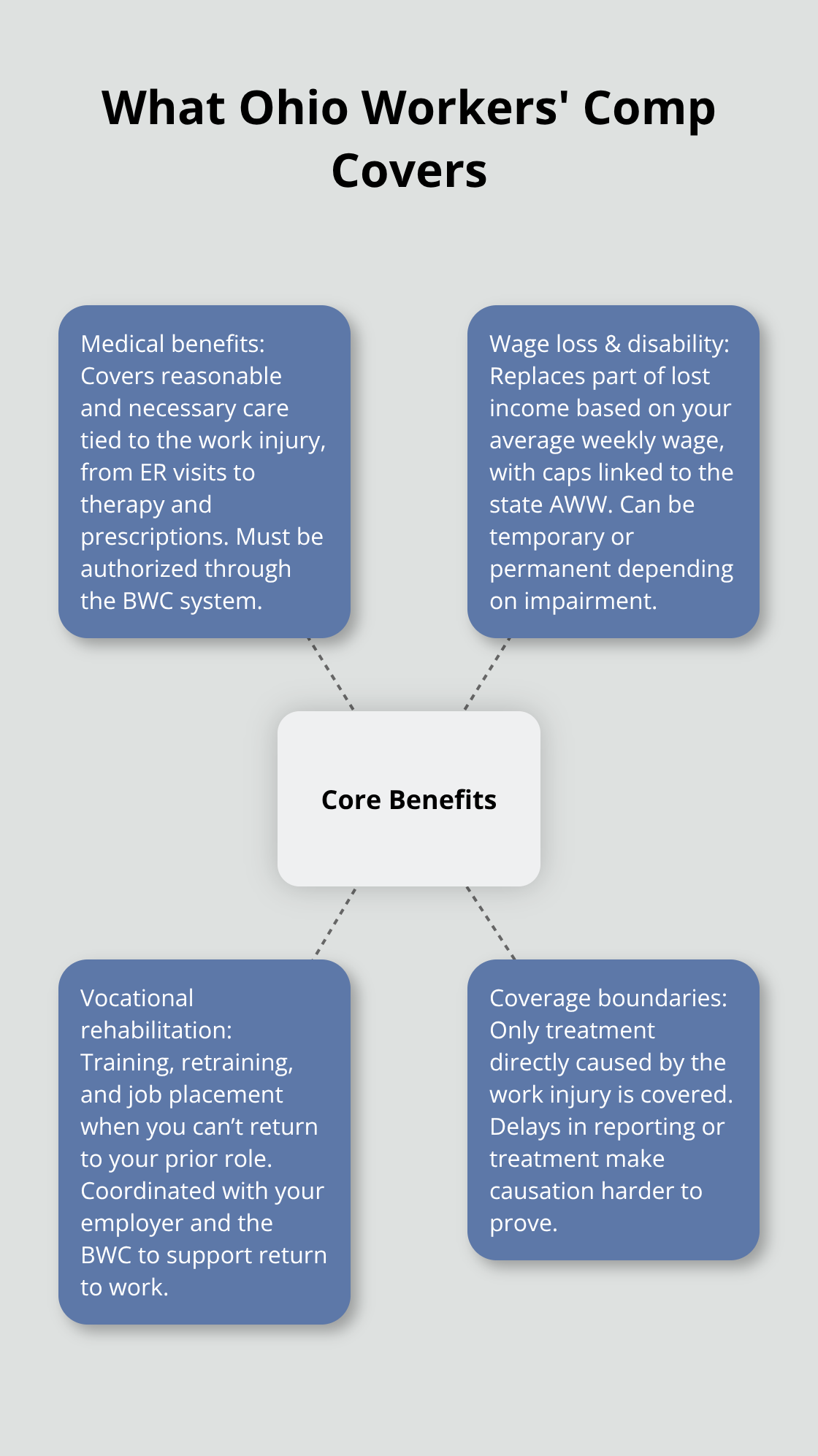
Workers’ compensation in Ohio provides three distinct types of support when you suffer a work-related injury or illness. Medical benefits cover all reasonable and necessary treatment tied directly to your injury, from emergency room visits to ongoing physical therapy and medications. The Ohio Bureau of Workers’ Compensation handles these claims, and treatment must be authorized through their system to ensure coverage. Medical coverage under Ohio’s system is broader than many workers realize, but it only applies to treatment directly caused by your work injury. If you delay reporting your injury or wait too long to seek medical attention, documentation becomes harder to establish the connection between your job and your condition.
Wage Loss Benefits and Disability Payments
Wage loss benefits replace a portion of the income you lose while unable to work due to your injury. The Ohio Bureau of Workers’ Compensation calculates these benefits based on your average weekly wage before the injury occurred, and Ohio caps weekly payments at a percentage of the state average weekly wage. Wage replacement benefits in Ohio operate on a temporary or permanent disability basis, depending on whether your injury will heal or causes lasting impairment. The state average weekly wage is recalculated annually, which affects your maximum benefit amount. This means your benefit eligibility can shift from year to year based on statewide wage data.
Vocational Rehabilitation and Return-to-Work Support
Vocational rehabilitation services help workers return to employment when they cannot perform their previous job due to permanent injury effects. This support includes job training, retraining programs, and assistance finding new work that matches your remaining abilities. Vocational rehabilitation is not automatic, and you must work with your employer and the BWC to access these services. The Ohio Bureau of Workers’ Compensation coordinates these programs to help you transition back into the workforce in a role suited to your post-injury capabilities.
Understanding what you are entitled to is the first step toward actually receiving it. The biggest mistake we see is workers accepting inadequate benefit amounts without realizing they qualify for more or that their injury classification may be incorrect. Filing a claim in Ohio requires specific steps and timing-and that’s where the process becomes critical to your outcome.
Filing Your Claim in Ohio
Report Your Injury Within the Legal Window
The moment you get injured at work, the clock starts ticking. Ohio law gives you specific windows to report your injury and file your claim, and missing these deadlines eliminates your eligibility for benefits entirely. You must report your injury to your employer as soon as possible, and absolutely no later than 30 days after the incident occurs. The Ohio Bureau of Workers’ Compensation will deny claims reported after this window closes, regardless of the circumstances. Report the injury in writing if possible, not just verbally, because written documentation creates an undeniable record that protects you if your employer later claims they never heard about it.
Include the date, time, location, and description of exactly what happened when you submit your written report. If your employer asks you to sign anything about the incident, do not sign without understanding what the document says. Many injured workers sign statements that minimize their injuries or accept blame, which later undermines their claim.
Gather Medical Documentation Immediately
Once you’ve reported the injury, gather every piece of medical documentation related to your condition. This includes emergency room records, doctor’s notes, test results, imaging scans, prescriptions, and any follow-up appointment summaries. The Ohio Bureau of Workers’ Compensation requires medical evidence that directly links your injury to your job duties, and gaps in your medical record create opportunities for the system to question whether your injury is actually work-related.
Start this documentation process immediately after seeking treatment, not months later when memories fade and records become harder to obtain. When you submit your claim to the Ohio Bureau of Workers’ Compensation, use their official forms and submit everything at once rather than trickling documents in over time. The BWC processes claims faster when all required information arrives together.
Submit Your Claim Through the Proper Channels
You can file online through the BWC’s system, by mail, or in person at a regional office, but online filing typically moves through the system more quickly. After submission, the BWC has 30 days to accept or deny your claim. If accepted, benefits begin.
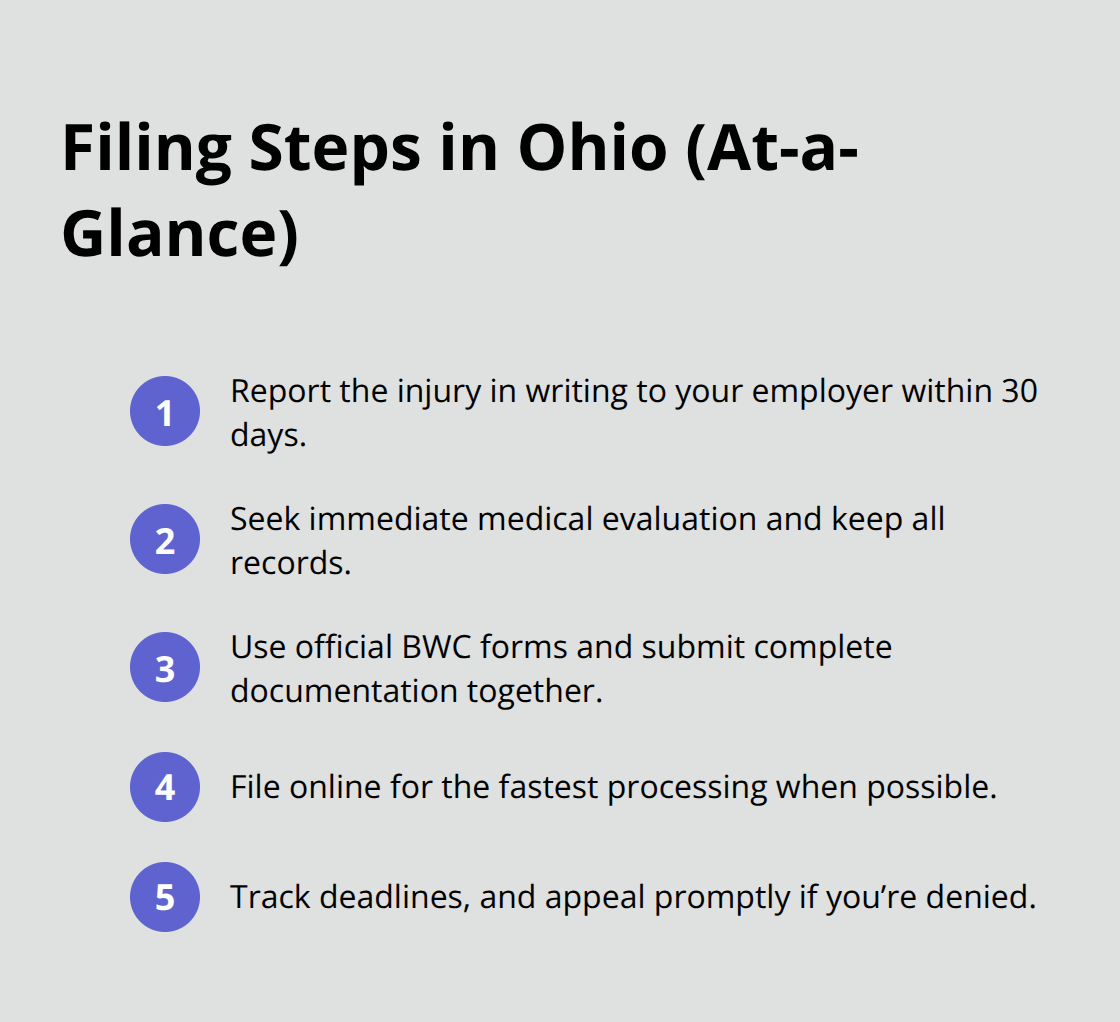
If denied, you have the right to request a hearing before the Industrial Commission of Ohio to challenge the decision.
The appeals process has strict procedural rules that most injured workers don’t know, and a single procedural mistake can result in losing your case. This is where experienced representation becomes invaluable-someone who understands Ohio’s system can navigate these requirements and protect your interests. At Robin J Peterson Company, LLC, we represent injured workers throughout the Cleveland, Akron, and Canton areas, fighting to secure the benefits you’re entitled to. The mistakes workers make during the filing process often stem from misunderstanding what the BWC actually requires, which is exactly what we address in the next section.
Common Mistakes Workers Make When Filing Claims
The Ohio Bureau of Workers’ Compensation denies or delays thousands of claims every year, and most denials stem from preventable mistakes workers make during the filing process. Waiting too long to report your injury is the most common fatal error. Ohio gives you 30 days to notify your employer, but this window closes fast, and the BWC will reject your claim outright if you miss it. Workers often delay because they think the injury will heal on its own, or they fear retaliation from their employer, but both reasons cost you your entire claim.
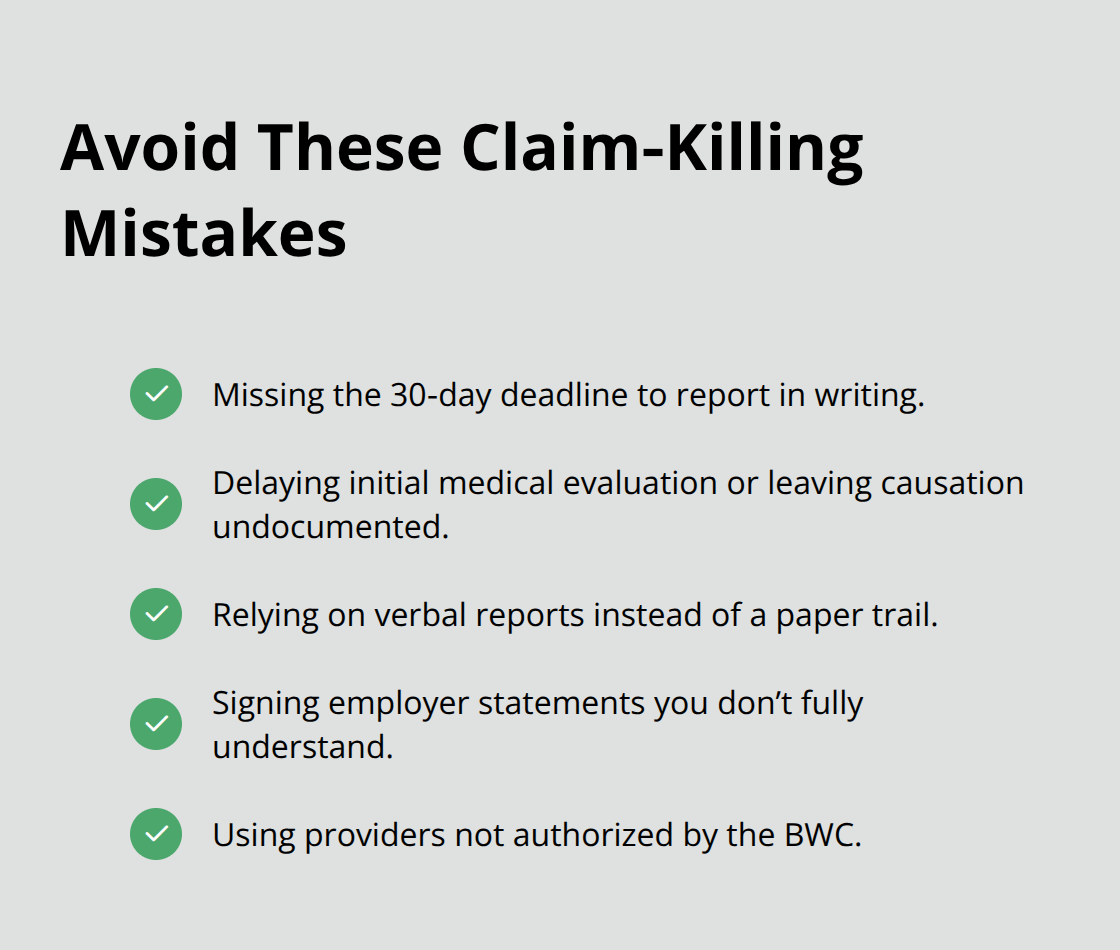
The moment you know your injury is work-related, report it in writing the same day if possible. Verbal reports disappear into thin air when disputes arise, and your employer’s memory conveniently fades when a claim threatens their insurance rates. Written documentation creates an undeniable record that protects you legally.
Report Your Injury Before the 30-Day Window Closes
The 30-day reporting deadline is absolute. The BWC will not accept late claims, and no exception exists for workers who didn’t realize the deadline applied to them. Submit your written report to your employer and keep a copy for your records. Include the date, time, location, and exact description of what happened. If your employer asks you to sign anything about the incident, do not sign without understanding what the document says. Many injured workers sign statements that minimize their injuries or accept blame, which later undermines their claim when the BWC reviews your file.
Establish Medical Evidence Immediately After Injury
Many injured workers skip immediate medical evaluation because they want to avoid looking weak or because they think they can manage the pain themselves. This decision destroys your claim’s foundation. The BWC requires medical evidence that directly links your condition to your job, and if weeks or months pass between your injury and your first doctor visit, the system assumes your condition is unrelated to work. Medical records from the date of injury or within days afterward carry far more weight than records created months later when you finally decide treatment is necessary. Seek evaluation immediately, even if your injury seems minor. Document everything the medical provider tells you about causation, and make sure your doctor explicitly notes that your condition is work-related in their report. If your doctor doesn’t mention the work connection, the BWC will question whether your injury actually happened at work.
Understand Coverage Limitations and Authorized Providers
Workers’ compensation in Ohio covers medical treatment and wage replacement for work-related injuries, but it does not cover everything an injured worker needs. Many workers believe they can receive benefits for any medical condition, but the BWC limits coverage to treatment directly caused by the documented workplace injury. If you suffered a back injury at work and later develop knee pain unrelated to that injury, workers’ comp won’t pay for knee treatment. Additionally, the BWC has specific networks of authorized providers, and if you seek treatment from an unauthorized provider, the system may deny coverage for those expenses. Before starting any medical treatment, confirm that your provider is authorized by the BWC. The system also excludes injuries that result from violating safety rules or being under the influence of alcohol or drugs at the time of injury. Workers often fail to disclose these details to their attorney, which later destroys their credibility and their claim when the truth emerges during investigation. At Robin J Peterson Company, LLC, we represent injured workers throughout the Cleveland, Akron, and Canton areas and help clients navigate these coverage rules to protect their eligibility for benefits.
Final Thoughts
Understanding workers’ comp benefits in Ohio requires you to act fast and document everything. Report your injury within 30 days, gather medical evidence immediately, and file through proper channels-missing any of these steps eliminates your eligibility entirely. The Ohio Bureau of Workers’ Compensation enforces strict timelines without exception, and workers who navigate this system alone often accept inadequate benefit amounts or face unexpected denials.
The mistakes covered in this guide represent the difference between receiving full benefits and losing your claim. Delayed injury reports cost you everything, while failure to establish early medical evidence undermines your credibility with the BWC. Not understanding coverage limitations leaves you vulnerable to denials that the system enforces without mercy. An attorney experienced in Ohio workers’ compensation law knows how the Industrial Commission of Ohio evaluates appeals, understands how the BWC assesses medical evidence, and can challenge denials effectively.
If you’ve been injured at work, report it immediately in writing and seek medical evaluation the same day. Then contact Robin J Peterson Company, LLC to discuss your claim and protect your rights. The sooner you take action, the stronger your position becomes.