
A work injury can disrupt your income when you need stability most. At Robin J Peterson Company, LLC, we help injured workers understand their rights to wage loss Ohio benefits and the compensation available to them.
Ohio’s workers’ compensation system provides multiple ways to replace lost wages during recovery. This guide walks you through what benefits exist, who qualifies, and how to file a claim.
What Wage Loss Actually Means in Ohio
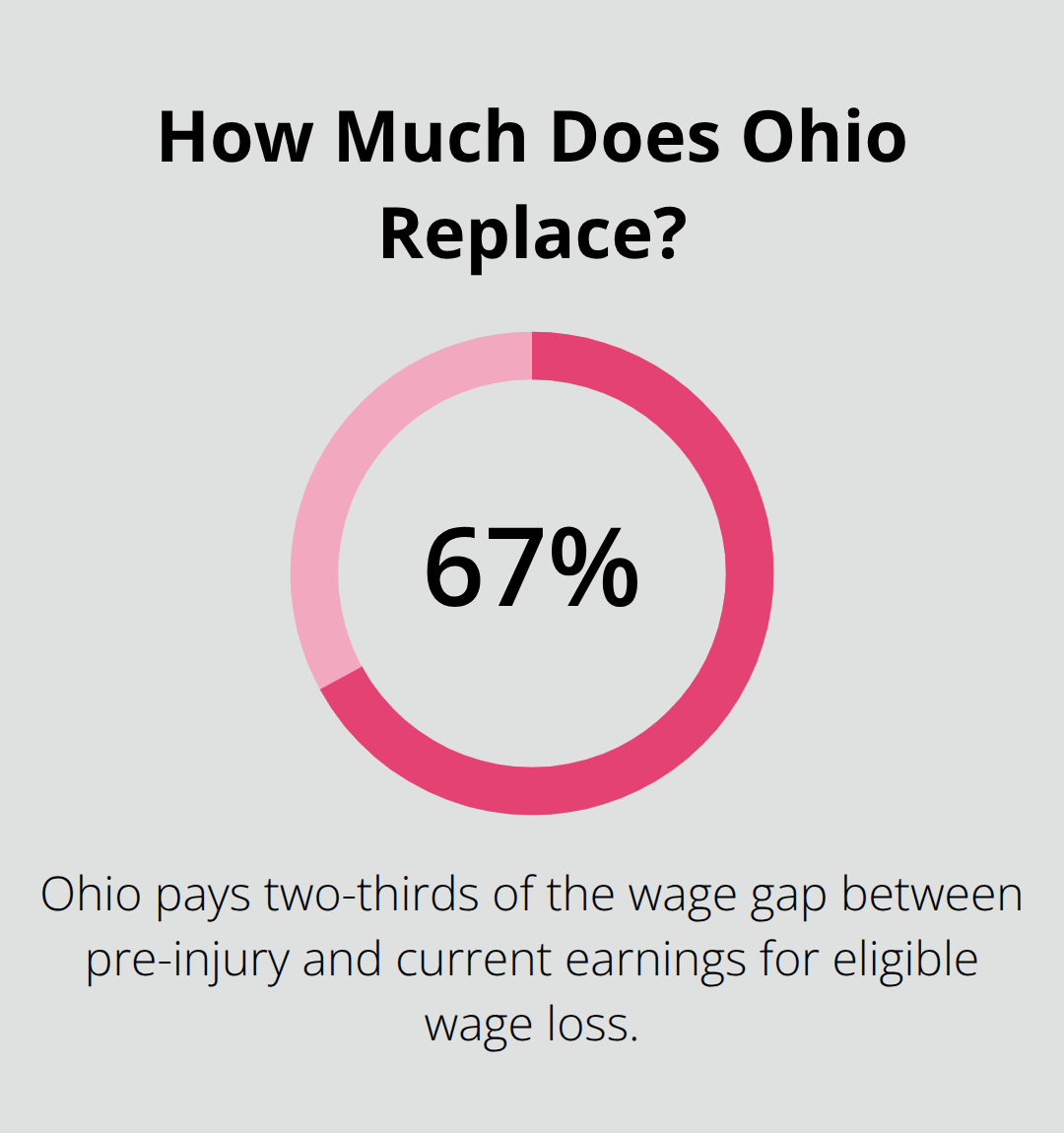
A work injury disrupts your income when you need stability most. Ohio’s system recognizes this gap and replaces a portion of your wages while you recover. Unlike some states that offer full wage replacement, Ohio pays two-thirds of the difference between what you earned before the injury and what you earn now. This 66.7 percent calculation affects your monthly payment amount directly.
How Ohio Calculates Your Average Weekly Wage
The Ohio Bureau of Workers’ Compensation calculates your average weekly wage by taking your total earnings from the year before your injury and dividing by 52 weeks. If you worked multiple jobs, all earnings combine into this calculation. Accuracy matters here because underreporting even one job reduces your wage loss payments significantly. Your payroll records and timely reporting to the Bureau determine whether you receive the correct amount.
Medical Documentation Requirements
Eligibility hinges on two concrete requirements: medical necessity and a genuine job search effort. Your doctor must document specific physical or emotional restrictions that prevent you from returning to your previous job, and this documentation must come from a qualified provider. The Ohio Bureau of Workers’ Compensation reviews your medical records to verify these restrictions are real and work-related. Supplemental medical reports must be submitted periodically-temporary restrictions require a report at least every 90 days, while permanent restrictions may be requested once every 180 days.
What Counts as a Good Faith Job Search
You must prove you searched for suitable employment with the same intensity as a full-time job search. This means contacting your former employer, applying for comparable positions, registering with the Ohio Department of Job and Family Services job search program, and documenting every contact. The state adjudicator weighs factors like your skills, the number and quality of employer contacts you made, your transportation options, and participation in rehabilitation programs. Job search statements must accompany your wage loss application and subsequent requests.
When You Lose Eligibility
You do not qualify if you can earn wages equal to your pre-injury pay, even if that work differs from your former position. If you refuse a written offer for suitable employment that matches your previous pay, wage loss payments stop. The distinction matters: suitable employment must fall within your medical restrictions and match your average weekly wage. Understanding these boundaries helps you navigate what happens next when you file your claim.
Ohio’s Three Wage Loss Benefit Types
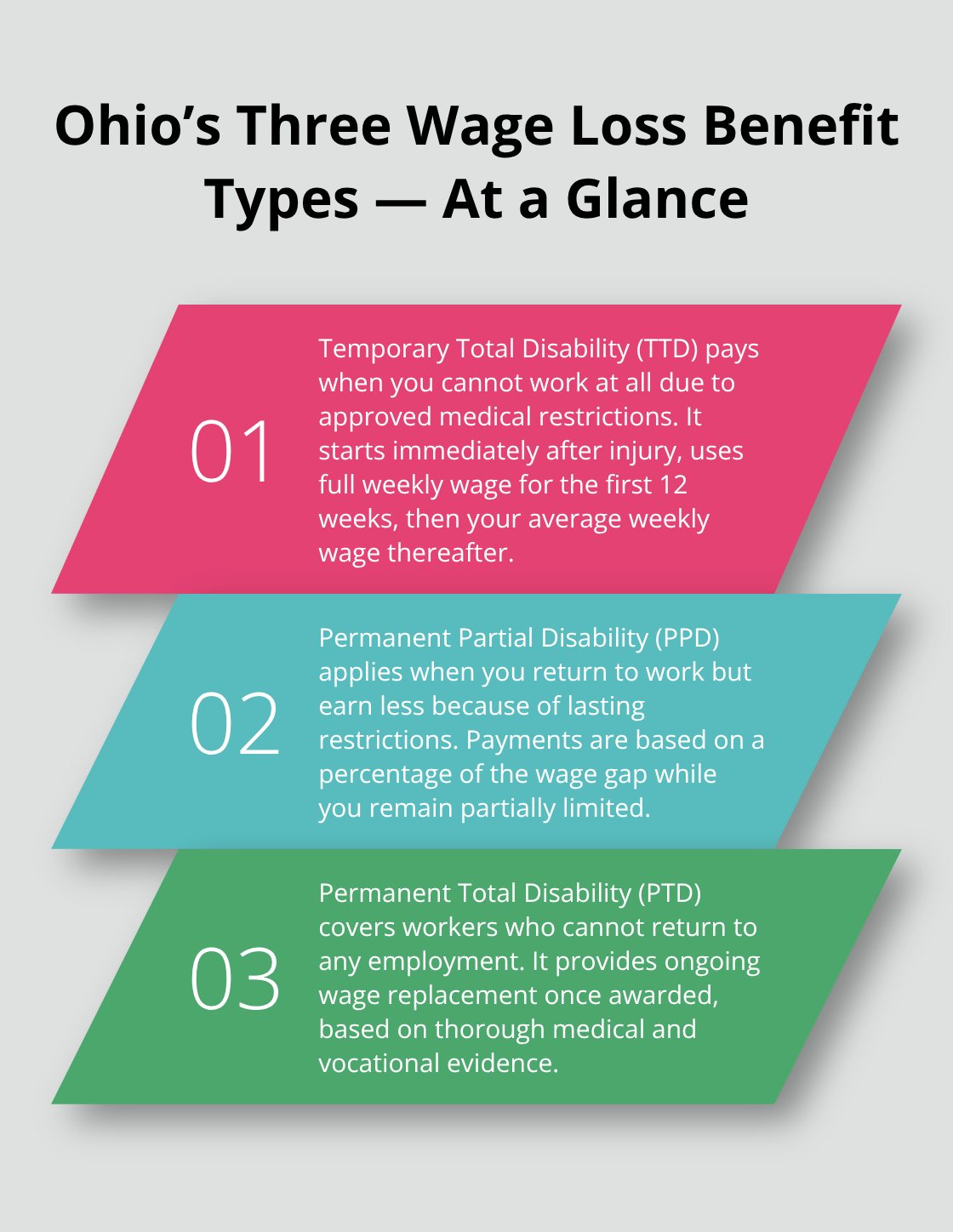
Ohio’s workers’ compensation system offers three distinct wage loss benefits, each designed for different stages of recovery and injury severity. The type you receive depends on your medical status and ability to work. Understanding which benefit applies to your situation matters because payment durations and amounts differ significantly.
Temporary Total Disability: When You Cannot Work
Temporary total disability payments begin immediately after your injury and continue while you cannot work. For the first 12 weeks, the Ohio Bureau calculates these payments using your full weekly wage from immediately before the injury. After 12 weeks, payments shift to your average weekly wage (your total prior-year earnings divided by 52). This recalculation often reduces your payment amount, so understanding this timing helps you plan your finances.
These payments continue only as long as your medical restrictions prevent you from working any job. Once your doctor releases you for work with restrictions, you typically transition to working wage loss or lose benefits entirely if you find comparable employment. The state requires supplemental medical reports every 90 days to verify your continued inability to work, so you must maintain consistent communication with your healthcare provider.
Permanent Partial Disability: Reduced Earning Capacity
Permanent partial disability applies when you return to work but cannot perform your former job due to lasting physical or emotional limitations from your injury. Your employer may offer you a different position, or you find new employment on your own. The key requirement is that your new position pays less than your pre-injury wages.
The state pays you 66.7 percent of the difference between what you earned before and what you earn now. This benefit can continue for up to 200 weeks, providing long-term support while you adjust to reduced earning capacity. Unlike temporary total disability, which stops when you work at all, permanent partial disability acknowledges that your injury has permanently changed your earning potential.
The Ohio Bureau calculates this benefit based on actual wages you earn in your new position, so your payment amount adjusts if your new employer changes your hours or pay rate.
Permanent Total Disability: When Work Becomes Impossible
Permanent total disability protects workers whose injuries prevent them from ever returning to any form of employment. This classification represents the most severe outcome and requires substantial medical evidence that no suitable work exists within your physical and emotional restrictions. The Ohio Bureau of Workers’ Compensation determines your classification based on medical evidence and your actual work capacity, not assumptions about what you might theoretically do.
This benefit provides the longest protection available under Ohio’s system. Once the state awards permanent total disability status, you receive ongoing wage replacement for as long as you remain unable to work. The determination process involves thorough review of your medical records, work history, and any rehabilitation attempts. Your next step involves understanding how to file a claim that properly documents your situation and positions you for the benefit category that matches your injury’s actual impact on your ability to earn.
Filing Your Wage Loss Claim
Gather the Documentation the Ohio Bureau Requires
The Ohio Bureau of Workers’ Compensation requires specific documentation before your wage loss claim moves forward, and missing even one element delays payment significantly. You need medical records from a qualified provider that detail your specific physical or emotional restrictions, your employment history describing each position you previously held, and payroll records showing your total earnings from the year before your injury. The Bureau uses this payroll information to calculate your average weekly wage, which determines your payment amount. Underreporting earnings from any job reduces your wage loss payments, so collect W-2 forms, pay stubs, and tax returns covering the full 12 months before your injury date. If you were self-employed, document your gross income minus business expenses for that same period.
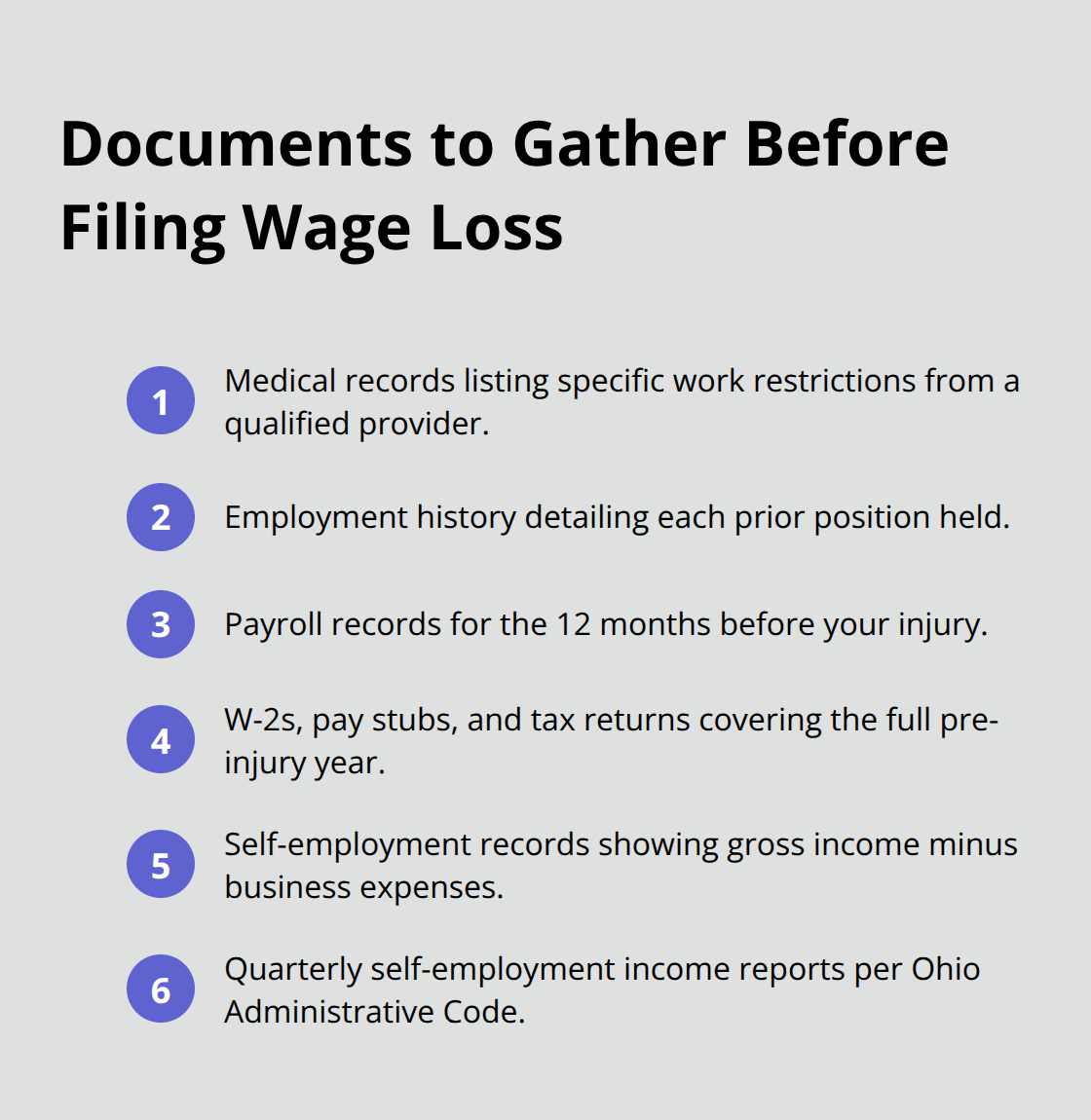
The Ohio Administrative Code requires that self-employment income reports occur quarterly, so establish this documentation habit immediately.
Submit Your C-140 Application Form
File your Application for Wage Loss Compensation, known as the C-140 form, directly with the Ohio Bureau of Workers’ Compensation at 30 W. Spring St., Columbus, OH 43215-2256, or submit it online through their website. The form requires your employment history, medical documentation, and for non-working wage loss claims, job search statements that detail every contact you made seeking employment. These statements must accompany your initial application and then every week you claim non-working wage loss. For working wage loss, submit job search statements at minimum every four weeks unless excused by the Bureau.
Maintain Medical Documentation Throughout Your Claim
Your medical provider must submit supplemental reports every 90 days for temporary restrictions, confirming your continued inability to work. Without these periodic updates, the Bureau suspends payments while waiting for verification. Permanent restrictions may require reports once every 180 days, with examinations and reports due within 90 days of a request. This ongoing documentation proves that your injury continues to prevent you from returning to your former position or earning comparable wages.
Understand How Adjudicators Evaluate Your Job Search
State adjudicators evaluate whether your search demonstrates the same effort as a full-time job, examining factors like the number and quality of employer contacts, your transportation options, participation in rehabilitation programs, and openness to accepting assistance from job search entities. The Ohio Industrial Commission typically processes claims within 30 days of receipt, though self-insured employers must adjudicate within 30 days of your wage loss request.
Know Your Appeal Rights and Deadlines
If the Bureau denies your claim, you have 14 days to file an appeal with the Ohio Industrial Commission. Missing this deadline makes the denial permanent, so mark your calendar immediately upon receiving a denial notice. The appeals process proceeds through a district hearing officer, then a staff hearing officer, requiring certified medical records, witness statements, and detailed legal arguments. Workers’ compensation attorneys handle these appeals regularly and understand how the Industrial Commission evaluates evidence. Filing within the one-year deadline from your injury date is non-negotiable; Ohio law bars all benefits if you miss this window, so initiate your claim immediately even if you are still uncertain about your recovery timeline.
Final Thoughts
Wage loss Ohio benefits exist to bridge the income gap your injury created, but the system demands accuracy and persistence from you. Your average weekly wage calculation, supplemental medical reports, and job search documentation must align with what the Ohio Bureau of Workers’ Compensation expects, and missing a single element delays payments significantly. The three benefit types-temporary total disability, permanent partial disability, and permanent total disability-each serve different recovery stages, and knowing which applies to your situation shapes your financial planning during recovery.
An attorney who regularly handles wage loss claims understands how the Bureau interprets medical restrictions, what job search documentation carries weight, and how to structure your appeal if the initial decision goes against you. The Ohio Industrial Commission processes claims within 30 days, but adjudicators evaluate evidence using specific criteria that favor workers who present their cases strategically. If you face a denial or need guidance on your specific situation, contact us to discuss how we can help you pursue maximum compensation.
Gather your medical records, employment history, and payroll documentation, then file your C-140 application immediately without waiting for perfect recovery or complete certainty about your restrictions. The one-year filing deadline from your injury date is final, and delaying costs you benefits. We at Robin J Peterson Company, LLC represent injured workers throughout Cleveland, Akron, and Canton, fighting to secure the wage loss benefits you deserve while navigating the complexities of the BWC and Industrial Commission.