
Workplace injuries happen fast, but your response doesn’t have to be complicated. At Robin J Peterson Company, LLC, we’ve helped countless injured workers understand their rights and navigate the system that’s supposed to protect them.
When you’re hurt on the job in Ohio, you have legal protections that matter. This guide walks you through what those protections actually mean and how to claim them.
What You Can Claim Right After a Workplace Injury
The first hours after a workplace injury determine what happens next. Seek medical care immediately, whether you think the injury is serious or not. In Ohio, your employer’s workers’ compensation insurance covers all medical treatment for work-related injuries, and you don’t pay anything out of pocket. Go to an emergency room, urgent care, or your doctor and tell them the injury happened at work. This creates a medical record that ties your injury directly to your job, which matters for your claim. If you wait days or weeks to seek treatment, insurers will question whether the injury actually occurred at work or happened somewhere else. The sooner you have documentation, the stronger your position. Your employer cannot block your access to medical care-you have the right to treatment regardless of what they say.
Report the injury fast and in writing
Tell your employer about the injury as soon as possible, ideally within 24 hours. This isn’t just a courtesy; it’s your legal obligation in Ohio. Many workers skip this step because they fear retaliation, but Ohio law explicitly protects you from punishment for reporting a workplace injury or filing a workers’ compensation claim. Your employer cannot fire you, cut your hours, reduce your pay, or treat you unfairly because you reported an injury. If retaliation happens, you have grounds for a separate legal claim. Put your report in writing through email if possible, so you have proof you reported it. Include the date, time, location, what you were doing, how the injury happened, and which body parts were affected. Keep a copy for yourself.
Know what benefits you can receive
Ohio’s workers’ compensation system provides three main types of benefits for injured workers. Medical benefits cover all treatment related to your injury, including doctor visits, surgery, physical therapy, and medications-for as long as you need treatment. Wage replacement benefits provide a portion of your lost income while you cannot work, typically calculated at two-thirds of your average weekly wage before the injury. Permanent disability benefits apply if your injury leaves you with lasting limitations that prevent you from returning to your previous job. Understanding these categories helps you recognize when you’re not receiving everything you’re entitled to. Many injured workers accept the first settlement offer without realizing they qualify for more.
What happens when you file your claim
The Ohio Bureau of Workers’ Compensation (BWC) processes your claim after your employer reports the injury. You must file your claim within a specific timeframe to protect your rights, so don’t delay this step. The BWC reviews medical evidence, wage records, and employer information to determine whether your injury qualifies for benefits. This process takes time, and delays are common (especially with complex cases). If the BWC denies your claim or offers benefits you believe are insufficient, you have the right to appeal and request a hearing before the Industrial Commission of Ohio. At this stage, many injured workers benefit from legal representation to navigate the appeals process and fight for the full benefits they deserve.
How Ohio’s Workers’ Compensation System Actually Works
The BWC Reviews Your Claim
The Ohio Bureau of Workers’ Compensation receives your employer’s injury report and becomes the decision-maker for your entire claim. The BWC doesn’t work at lightning speed, and understanding their timeline prevents you from sitting in the dark wondering what’s happening. When your employer submits the report, the BWC assigns a claims adjuster to your case. That adjuster reviews your medical records, wage documentation, and employment history to determine whether your injury qualifies under Ohio law. This initial review typically takes two to four weeks, though complex cases extend longer. The BWC will contact you during this period requesting additional information, so respond promptly to every request they send. Delays happen when workers miss deadlines for submitting documents or when medical evidence is incomplete.
What Benefits You Can Receive
You’re entitled to three types of benefits under Ohio law. Medical coverage includes all treatment expenses for your work injury, and this benefit continues for as long as your condition requires treatment, making it the most open-ended protection the system offers.
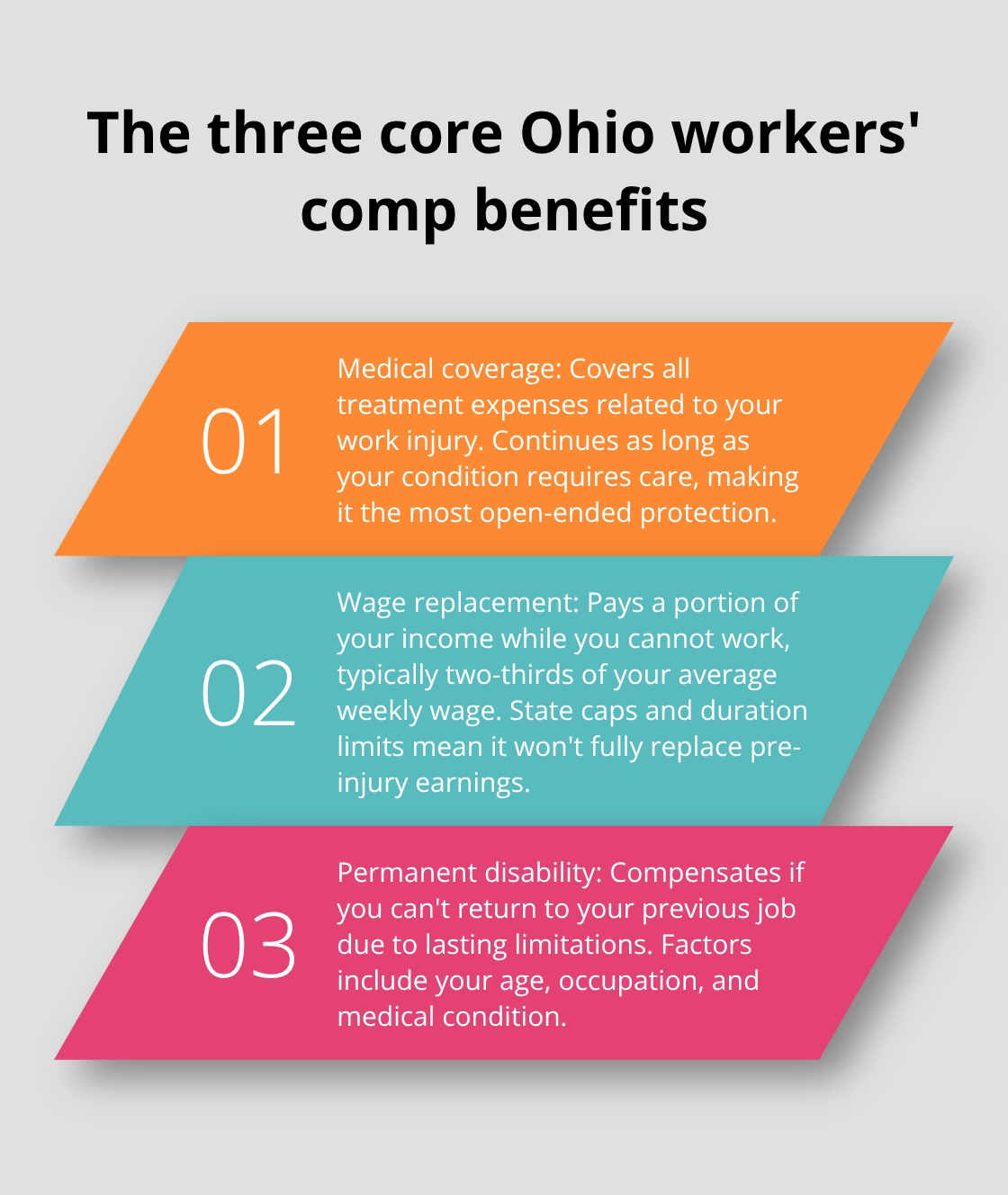
Wage replacement benefits are calculated at two-thirds of your average weekly wage while you’re unable to work, though the state sets weekly maximums and duration limits, so they don’t replace your full pre-injury income. If your injury prevents you from returning to your previous job, permanent disability benefits compensate for that lost earning capacity based on your age, occupation, and medical condition.
The Initial Determination Timeline
The BWC issues an initial determination within 28 days of receiving a complete claim in most cases, though this deadline stretches for complicated injuries or missing information. Many injured workers receive approval quickly and begin receiving benefits without problems. Others face denials or reduced benefit amounts that don’t reflect the severity of their injury. If the BWC denies your claim or you disagree with their decision, you have the right to request a hearing before the Industrial Commission of Ohio.
What Happens If You Disagree With the Decision
This appeal process takes months and requires you to present medical evidence and testimony to support your position. The hearing process involves specific rules, evidence standards, and legal arguments that injured workers typically handle poorly without guidance. Representation matters significantly at this stage because the Industrial Commission of Ohio applies strict procedural requirements. The timeline from injury to final resolution ranges from several months for straightforward approvals to over a year for contested cases that require appeals and hearings. When denials or disputes arise, many injured workers find that navigating the appeals process alone leaves them at a disadvantage against the system designed to evaluate their claims.
Common Obstacles Workers Face When Filing Claims
The BWC denies or delays benefits for specific reasons, and understanding these reasons lets you fight back before a denial becomes final. The most common reason for delayed payments is incomplete medical documentation. When your doctor’s report lacks detail about how the injury occurred, what symptoms you experience, or whether the injury prevents you from working, the BWC requests additional information from your physician. This administrative back-and-forth adds weeks to your claim. You control this timeline by ensuring your doctor completes the injury report thoroughly on the first submission. Provide your medical provider with a detailed written description of your injury, the date it happened, and how it affects your work capacity.
Wage Records and Employer Documentation Problems
The BWC also delays benefits when wage records are missing or incorrect. Your employer must submit documentation showing your average weekly wage before the injury, and if payroll records are incomplete or lost, the BWC cannot calculate your wage replacement benefit. Request copies of your last 52 weeks of pay stubs from your employer immediately after filing your claim and submit these directly to the BWC yourself if your employer drags their feet. This step protects you from administrative delays that originate with your employer’s negligence rather than any problem with your claim.
Employer Disputes and Contested Claims
Employer disputes create another category of obstacles that extends timelines significantly. Some employers contest whether your injury actually occurred at work or argue that you caused the injury through negligence or violation of company safety rules. These disputes trigger formal hearings before the Industrial Commission of Ohio, transforming what should be a straightforward claim into a contested legal matter. The BWC also scrutinizes injuries that occur during the first few weeks of employment or injuries reported weeks after they happened. Workers who delay reporting face skepticism from the system, and this skepticism often results in denials or reduced benefits.
Paperwork Requirements and Procedural Mistakes
Navigating the paperwork requirements creates frustration because the forms themselves are technical and the consequences of errors are severe. Missing a deadline to submit a document or filing paperwork in the wrong format gives the BWC grounds to dismiss your claim. Many injured workers lose benefits not because their injury doesn’t qualify, but because they failed to respond to a BWC request within the specified timeframe. The Industrial Commission of Ohio applies strict procedural rules during appeals, meaning that even minor mistakes in how you present evidence can result in losing your case.
When Legal Representation Becomes Necessary
At this stage, representation becomes practical and necessary rather than optional. An attorney who handles Ohio workers’ compensation cases knows the specific requirements the Industrial Commission expects, understands which medical evidence carries weight in hearings, and can present your case in language the commission recognizes and respects. Robin J Peterson Company, LLC represents injured workers throughout the Cleveland, Akron, and Canton areas at every stage of the claims process, from initial filing through appeals and hearings before the Industrial Commission.
Final Thoughts
Ohio’s worker protections after injury exist to support you when you need them most, but claiming those protections requires action and persistence. You have the right to medical care, wage replacement, and disability benefits when you’re hurt on the job, and you’re protected from retaliation for reporting your injury or filing a claim. The Ohio Bureau of Workers’ Compensation processes your claim, and if you disagree with their decision, you can appeal to the Industrial Commission of Ohio.
Many injured workers navigate this system alone and accept less than they deserve because denied claims, delayed payments, and employer disputes happen regularly. Procedural mistakes can cost you benefits you’ve earned, and the appeals process requires specific legal knowledge and evidence standards that injured workers typically don’t possess. We at Robin J Peterson Company, LLC work with injured workers throughout Cleveland, Akron, and Canton who face obstacles claiming their benefits.
If you’ve been injured at work and face denials, disputes, or uncertainty about your benefits, contact Robin J Peterson Company, LLC to discuss your situation. Our experience with the Ohio Bureau of Workers’ Compensation and the Industrial Commission means we know which medical evidence carries weight and what procedural requirements the commission expects. Don’t accept reduced benefits without understanding your options.