
Getting injured at work in Ohio can feel overwhelming, especially when you’re unsure about your compensation rights after injury. We at Robin J Peterson Company, LLC understand the confusion workers face when navigating the system.
This guide walks you through exactly what you need to know about Ohio workers’ compensation, from filing your claim to protecting yourself if problems arise.
How Ohio’s Workers’ Compensation System Actually Works
The Ohio Bureau of Workers’ Compensation operates as a state-run insurance system that handles workplace injury claims across the state. Unlike private insurance, the BWC functions as a public agency under Ohio law, which means injured workers deal directly with a government entity rather than a commercial insurer. When you suffer an injury at work in Ohio, your employer reports the incident to the BWC, and the agency then manages your case from investigation through benefit approval. The BWC has up to 28 days to approve or deny your claim after you file, so timing matters significantly. Understanding this process upfront helps you avoid delays and protects your eligibility.
What Benefits Cover and Who Qualifies
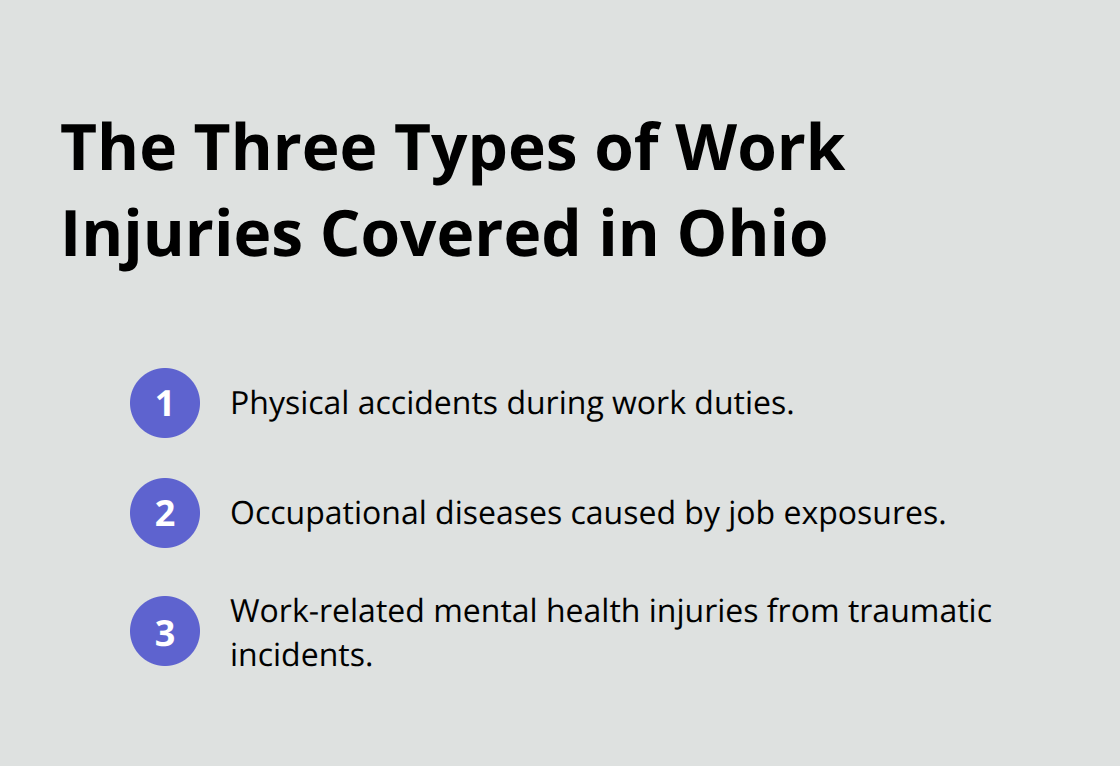
Ohio workers’ compensation covers three distinct categories of workplace injuries: physical accidents that happen during work duties, occupational diseases caused by your specific job, and work-related mental health injuries triggered by traumatic incidents on the job. Physical injuries are the most straightforward to claim because they occur suddenly and are easy to document at the moment of injury. Occupational diseases require stronger proof that your job caused the condition, not simply that your industry involved exposure to a hazard.
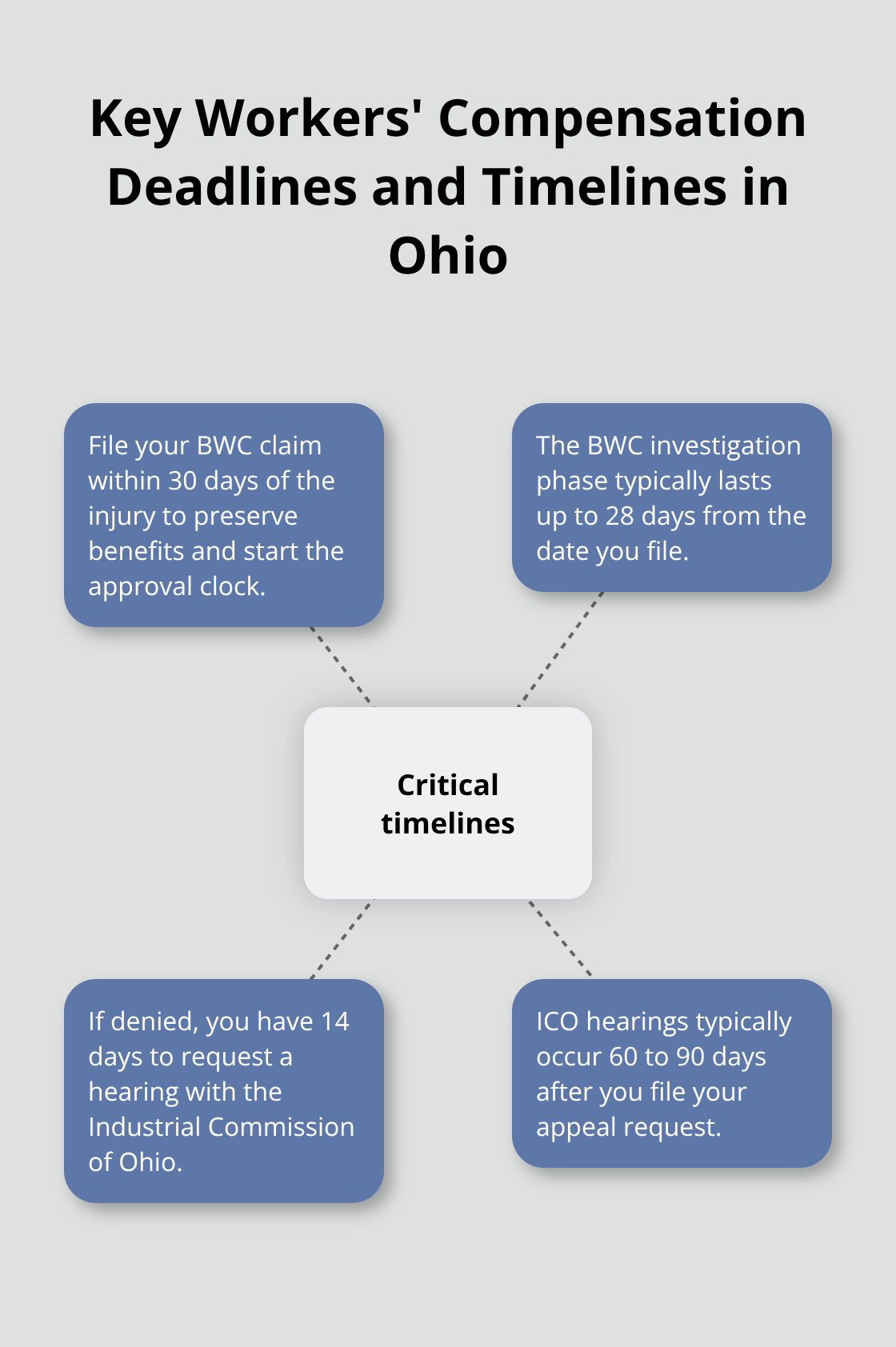
Mental health injuries have strict limits and typically need evidence of a specific traumatic work event rather than general job stress. Wage replacement benefits in Ohio equal two-thirds of your average weekly wage, calculated from your earnings during the 52 weeks before your injury, so pay stubs and tax returns before filing strengthen your claim significantly. You become eligible for workers’ compensation benefits the moment you suffer a work-related injury, but filing your claim within 30 days is critical because it preserves your full benefits and improves your position with the BWC.
Taking Action Immediately After Injury
You should seek medical treatment right away after a workplace injury because you don’t need BWC permission to see any licensed Ohio healthcare provider, and medical documentation directly links your injury to the accident. File your claim with the BWC within 30 days to lock in your eligibility and start the approval clock. Report the injury to your employer promptly, but avoid giving detailed statements or admissions before consulting with a legal professional who can protect your rights. You must collect and preserve evidence from the start: photos of the accident scene, witness contact information, your job duties description, and workplace conditions documentation.

Strong medical records and clear evidence of how your job caused the injury form the foundation of a successful claim.
What Happens Next in the Process
Once you file your claim, the BWC launches an investigation to verify that your injury meets the legal requirements for coverage. The agency reviews your medical records, your employer’s report, and any witness statements to establish whether your injury arose out of and occurred in the course of your employment. During this investigation period (which typically lasts up to 28 days), the BWC may request additional information from you or your healthcare provider. If the BWC approves your claim, you begin receiving wage replacement benefits and coverage for medical treatment related to your injury. If the agency denies your claim, you have the right to appeal the decision, which is where understanding your next steps becomes essential for protecting your compensation rights.
Filing Your Claim and What Happens Next
Report Your Injury to Your Employer Immediately
You must notify your employer as soon as possible after the accident occurs. Ohio law does not specify an exact deadline for employer notification, but delays weaken your position because they create doubt about whether the injury actually happened at work. Tell your supervisor or manager verbally first, then follow up with written documentation through email or a formal incident report if your workplace uses one.
Avoid detailed explanations about what caused the injury or admissions of fault at this stage. Your employer is legally required to report the injury to the BWC, but you should not wait passively for them to do it-take action yourself to protect your claim.
File Your Claim Within the 30-Day Window
You must file your own claim with the BWC within 30 days of the injury because this deadline is firm and missing it can cost you benefits. The BWC accepts claims online through its website, by mail, or in person at a BWC office. Gather your medical records, pay stubs from the past year, and a written description of exactly what happened before you file.
Prepare documentation that clearly establishes the connection between your job duties and your injury. The BWC will assign your claim a number once received, and this number becomes your reference for all future communications with the agency.
Understand the 28-Day Investigation Phase
The BWC’s investigation phase typically runs 28 days from the date you file. During this time, the agency reviews whether your injury meets the legal definition of a work-related claim and verifies that you meet eligibility requirements. The BWC contacts your healthcare provider for medical records and may request additional information from you directly.
Respond to any BWC requests immediately because delays can extend the investigation timeline. Your healthcare provider’s detailed statements about causation-specifically how your job duties caused the injury-significantly improve your outcome.
Know What Happens After the BWC Decision
If the BWC approves your claim, you receive written notification and benefit payments begin within a few days. If denied, the agency sends a formal denial letter explaining the specific reason, and you then have 14 days to request a hearing with the Industrial Commission of Ohio to appeal.
This appeal deadline is strict and missing it eliminates your right to challenge the denial in most cases. The ICO Ombuds Office provides free assistance to workers navigating appeals and can answer questions about what evidence strengthens your specific injury type. When denials occur or disputes arise with the BWC, understanding your appeal options becomes the next critical step in protecting your compensation rights.
When the BWC Says No
Understanding Why Claims Get Denied
Claim denials happen frequently in Ohio workers’ compensation cases, and the reasons vary widely. The BWC denies claims when it determines the injury did not arise out of employment, when medical evidence fails to establish a clear work connection, or when the injury occurred outside the course of your job duties. Occupational disease denials are particularly common because the BWC applies strict causality standards that require proof your specific job caused the condition, not merely that your industry involved exposure to a hazard. If your claim is denied, you have exactly 14 days to request a hearing with the Industrial Commission of Ohio, and missing this deadline eliminates your appeal rights in most situations.
The 14-Day Appeal Deadline
This deadline is hard with no exceptions, so mark your calendar the moment you receive a denial letter. When you request your hearing, the ICO Ombuds Office provides free assistance to help you understand what evidence matters for your injury type and how to strengthen your case. The typical hearing occurs 60 to 90 days after you file your appeal request, which gives you time to gather additional medical documentation or witness statements that address the specific reason for denial.
Building Your Evidence for the Hearing
The most effective strategy after a denial is obtaining updated medical statements from your healthcare provider that directly respond to the BWC’s stated reason for rejection. If the denial cited insufficient evidence linking your job to the injury, ask your doctor to provide a detailed statement explaining the medical basis for that connection. If the BWC questioned whether the injury occurred during work, gather coworker witness statements and documentation of your exact job duties and workplace conditions on the day of injury.
Presenting Your Case at the ICO Hearing
At the ICO hearing, present focused evidence rather than overwhelming the hearing officer with documents. Strong cases include accident reports, updated medical records with causality statements, coworker testimony, detailed job duty descriptions, and documentation of workplace conditions (all organized clearly for the hearing officer). Many workers win their appeals at the ICO level when they present clear medical evidence and credible witness testimony that the denial reason was incorrect.
What Happens After the ICO Decision
If the ICO decision remains unfavorable, further appeals exist within the ICO system, though subsequent appeals are more limited in scope and focus on whether the hearing officer applied the law correctly rather than reconsidering the facts. Legal representation can strengthen these appeals, especially for occupational disease claims that require complex medical causality arguments.
Final Thoughts
The path forward after a workplace injury in Ohio depends on how well you document your case and when you act. Collect medical records, pay stubs, witness statements, and photos of the accident scene immediately because these materials form the backbone of your claim. Maintain organized files so you can quickly locate evidence if your claim faces denial or dispute, and respond promptly to any BWC requests.
Working with a legal professional becomes especially valuable when claims are denied, when disputes arise with your employer, or when occupational disease claims require complex medical causality arguments. We at Robin J Peterson Company, LLC represent injured workers throughout Ohio’s Cleveland, Akron, and Canton areas, and we fight for the benefits and compensation you deserve. Our team understands how the BWC evaluates claims and knows what evidence carries the most weight in appeals and hearings.
Free resources support you at every stage of protecting your compensation rights after injury. The ICO Ombuds Office provides free assistance navigating appeals, and the BWC Help Center answers questions about claim status and benefit calculations. A free initial consultation with an experienced Ohio workers’ compensation attorney can outline your options and help you understand whether your case warrants legal representation.