
Getting a workers’ compensation claim denied in Ohio feels like a setback, but it’s not the end of the road. The Ohio Bureau of Workers’ Compensation (BWC) denies thousands of claims each year, often for reasons that can be challenged.
At Robin J Peterson Company, LLC, we’ve helped workers understand their options after denied compensation claims in Ohio. This guide walks you through the appeal process, what evidence matters most, and exactly how to fight back.
Why the BWC Denies Workers’ Compensation Claims
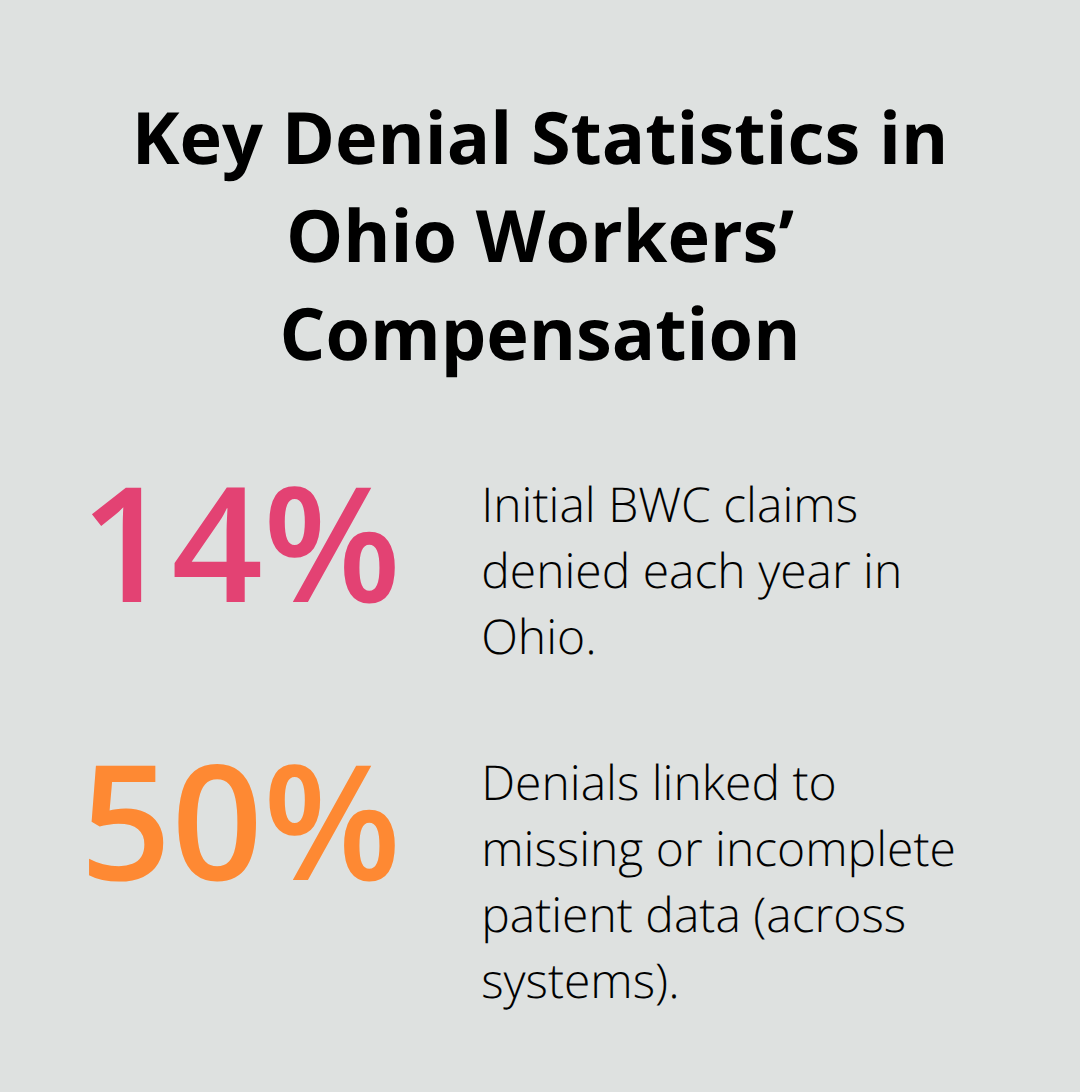
The Ohio Bureau of Workers’ Compensation denies roughly 14% of initial claims each year, but most denials stem from preventable mistakes rather than the actual merit of your injury. Understanding the specific reason behind your denial is the first step toward overturning it. The BWC provides a Notice of Denial that explains the grounds for rejection, and this document is your roadmap for building a stronger appeal.
Read it word-for-word and compare it against what you originally submitted to spot gaps or misstatements.
Missing or Incomplete Medical Data
According to Experian Health’s State of Claims 2025 report, 50% of denials across workers’ compensation systems result from missing or incomplete patient data. In Ohio, this typically means medical records that fail to explicitly state the injury is work-related or that job duties aggravated a pre-existing condition. If your treating physician’s notes are vague about causation, the BWC will likely reject the claim. Insufficient objective medical evidence is another major culprit. A physician’s statement alone often isn’t enough; imaging studies like MRI scans, X-rays, or nerve conduction tests that directly support your injury narrative carry far more weight.
Work-Relatedness Disputes
The most common denial reason involves disputes over whether the injury genuinely arose from work. The BWC scrutinizes claims where the accident occurred off-site, outside normal work hours, or when you performed tasks unrelated to your job duties. Coworker witness statements become invaluable here because they corroborate your account and establish that the injury happened exactly when and where you say it did. If you were injured during a commute, personal errand, or in a situation the employer claims violated company policy, you must tie the incident directly to job responsibilities through documentation.
Pre-Existing Conditions
Pre-existing conditions frequently trigger denials, but they do not automatically disqualify you. You must prove the work incident worsened or aggravated the condition. Medical records that show symptom changes after the workplace event, combined with your physician’s assessment that job duties accelerated the problem, can overcome this denial reason. The key is demonstrating a clear link between the work activity and the worsening of your condition.
Procedural and Administrative Failures
Filing deadlines in Ohio are unforgiving. The First Report of Injury must be filed within one year of the injury or occupational disease diagnosis, and delays invite extra scrutiny from both the BWC and insurers. Employer disputes about work-relatedness also stall claims; some employers actively contest whether the injury occurred at work. Reporting the injury to your supervisor promptly strengthens your position and creates a contemporaneous record. Administrative errors on forms (typos in your birth date, mismatched employer names, incorrect contact information, or missing signatures) can derail otherwise solid claims. These mistakes cause processing delays and provide the BWC with justification to deny without fully evaluating the medical evidence. Before submitting any appeal, review all paperwork meticulously and correct any discrepancies in a follow-up submission. Using a non-BWC-certified medical provider undermines your case because treatment from certified providers is typically required for eligibility. Verify that your treating physician holds BWC certification before investing time in their evaluation.
Now that you understand why the BWC denies claims, the next step is recognizing your legal rights and the formal appeal process available to you.
Your Rights When the BWC Says No
After the BWC denies your claim, you enter the formal appeal system governed by the Industrial Commission of Ohio. This is not a suggestion or a courtesy process; it is your statutory right, and the Industrial Commission operates under strict rules designed to give you a fair hearing. The appeal window is tight: you have exactly 14 days from the date on the denial letter to file, and missing this deadline means losing your right to challenge the decision permanently.
The 14-Day Filing Deadline
Count from the mailed date on the letter itself, not when you received it. If day 14 falls on a weekend or holiday, file on the next business day, but do not assume extensions exist because they do not under Ohio law. File your appeal either by mail (certified with return receipt requested) or through the Industrial Commission Online Network (I.C.O.N); online filing timestamps your submission instantly and eliminates postal delay risks. If you mail your appeal, submit at least five days before the deadline to account for delivery time.
The Three-Tier Appeal Structure
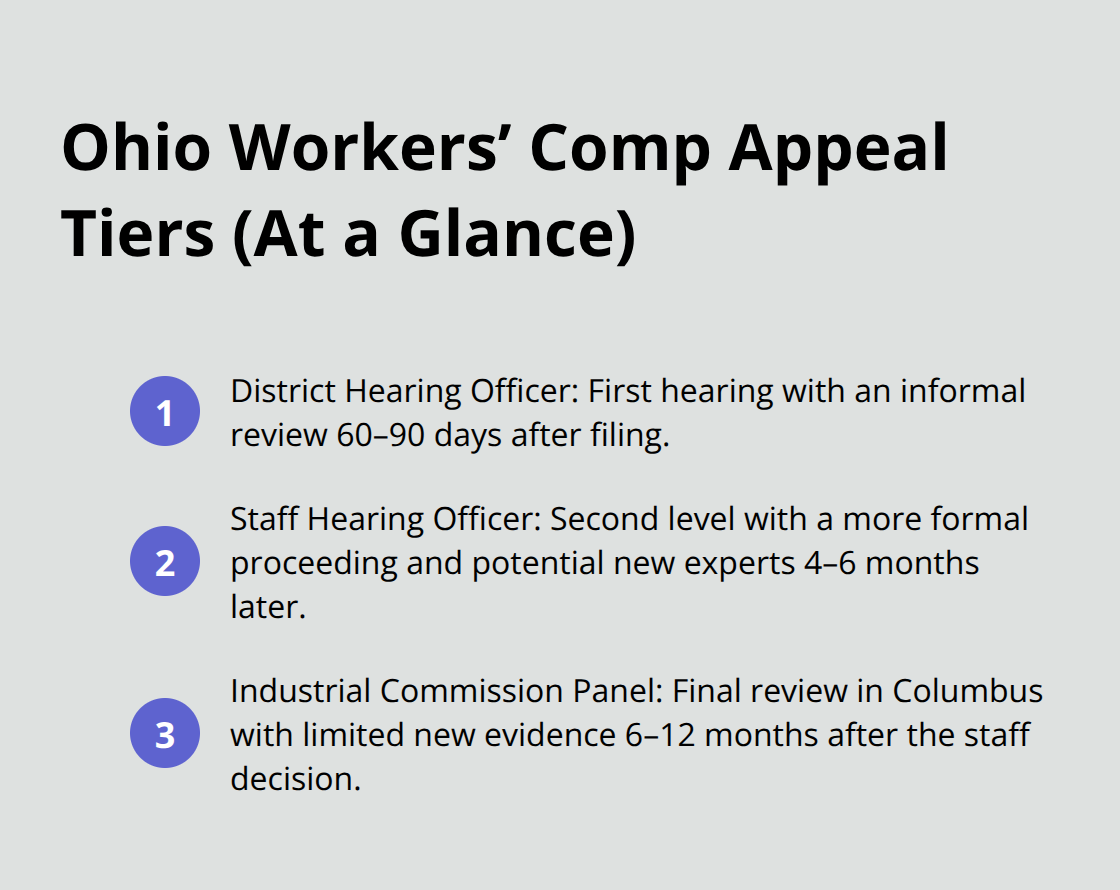
Your appeal begins with a District Hearing Officer who conducts an informal hearing, typically scheduled 60 to 90 days after you file. This officer reviews the medical evidence, witness statements, accident reports, and your written explanation of why the BWC’s denial was wrong. If the District Hearing Officer rules against you, the case advances to a Staff Hearing Officer for more formal proceedings, usually occurring four to six months later, where you can introduce new medical experts and additional evidence. The final tier is the Industrial Commission Panel, a three-member panel in Columbus that typically convenes six to twelve months after the staff decision; at this level, new evidence is limited, so your case must be thoroughly developed earlier.
Evidence That Persuades Hearing Officers
Medical records form the foundation, but vague physician statements fail; your doctor’s notes must explicitly connect your symptoms and functional limitations to specific job duties you performed. If the denial cited missing medical evidence, include those records with a cover letter explaining what each document proves about work-relatedness. Objective testing matters enormously: MRI findings, X-ray results, nerve conduction studies, and blood work carry far more weight than subjective complaints alone.
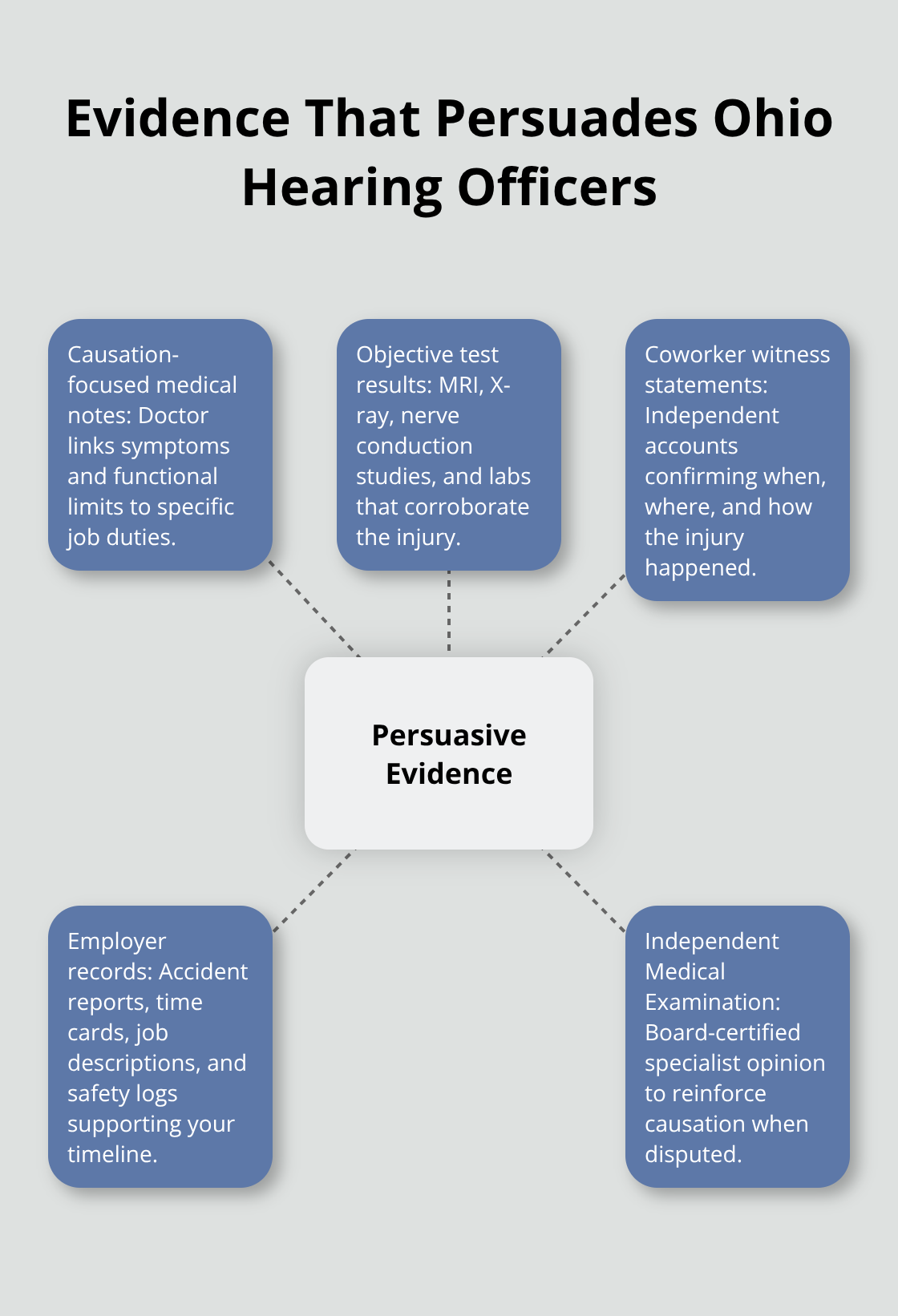
Witness statements from coworkers who observed the injury or your work environment are powerful because they corroborate your account independently. Accident reports filed with your employer, time cards showing you were working when injured, job descriptions detailing your duties, and safety logs all build credibility. If your treating physician’s causation finding is weak or disputed, consider obtaining an Independent Medical Examination from a board-certified specialist in the relevant field to reinforce your position.
Organizing Your Appeal Materials
Organize all materials chronologically in a tabbed exhibit folder with numbered documents so the hearing officer can follow your timeline without searching. Label each exhibit clearly and reference it in your written statement explaining how it addresses the specific denial reason. Administrative errors in the original denial require corrected submissions with a one-page letter highlighting what the BWC got wrong and providing the accurate information. Vocational assessments demonstrating your inability to return to pre-injury work strengthen claims for permanent partial disability by quantifying lost earning capacity.
When Legal Representation Matters
Many workers attempt appeals alone and miss critical evidentiary standards or procedural requirements that hearing officers enforce strictly. An attorney experienced in Industrial Commission proceedings knows which evidence persuades officers, how to counter insurer arguments, and how to navigate the three-tier appeal system effectively. Most workers’ compensation attorneys in Ohio work on contingency, meaning you pay nothing upfront and only if you win or settle, so the financial risk falls entirely on your legal representative’s assessment of your case strength. With the appeal deadline looming and the hearing process demanding precise documentation, your next step is understanding exactly what materials you must gather and how to present them.
Building Your Appeal Case
The 14-day window after your denial letter arrives is your only chance to file, so the immediate priority is gathering every document that proves the BWC made a mistake. Start by requesting a detailed written explanation from the Ohio Bureau of Workers’ Compensation if the denial letter lacks specifics about which evidence failed or which policy section they applied. Once you understand exactly why they denied you, your evidence collection becomes targeted rather than scattered.
Medical Records That Prove Work-Relatedness
Medical records form the backbone of any successful appeal, but not all medical records carry equal weight. Your treating physician’s notes must explicitly state that the injury is work-related or that your job duties aggravated a pre-existing condition; vague statements about pain or dysfunction without causation language give hearing officers nothing to work with. If your doctor’s records lack this connection, schedule a follow-up appointment and ask your physician to write a statement explaining how your specific work duties caused or worsened your condition. Request copies of all imaging studies, lab results, and diagnostic tests because objective findings like MRI scans or X-rays persuade hearing officers far more than subjective complaints alone.
Witness Statements and Workplace Documentation
Coworker witness statements carry tremendous power because they corroborate your account independently and establish that you were actually performing the duties you claim caused injury. Contact coworkers who saw the incident or observed your work environment and ask them to write a brief statement describing what they witnessed, when it happened, and how it relates to your injury. Ask them to sign and date the statement and include their job title and contact information. Accident reports filed with your employer at the time of injury, time cards showing your work schedule when injured, and job descriptions detailing your actual duties all build an ironclad timeline that hearing officers respect.
Organizing and Filing Your Appeal
Organize every document chronologically in a labeled folder with numbered exhibits so the hearing officer can follow your case without confusion. Include a cover letter with your appeal that references each exhibit and explains how it directly addresses the specific denial reason the BWC cited. If administrative errors caused the denial, include corrected documentation and a one-page letter highlighting exactly what was wrong and what the correct information should be. File your appeal either by certified mail with return receipt requested at least five days before the 14-day deadline, or submit it through the Industrial Commission Online Network at I.C.O.N, which timestamps your filing instantly and eliminates postal delays.
Preparing for Your Hearing
Within 60 to 90 days, you will receive notice of your District Hearing Officer assignment and the hearing date. Once you have your hearing date, contact your treating physician and ask whether they will attend the hearing or provide a detailed written statement addressing the specific injury causation and your work limitations. If the denial involved disputed work-relatedness, prepare your own written statement that walks the hearing officer through exactly what happened, when it happened, and which job duties caused the injury, then match each claim to the supporting documents in your exhibit folder. Consider requesting a vocational assessment from a professional if your injury prevents returning to your pre-injury job, because these assessments quantify your lost earning capacity and strengthen permanent partial disability claims substantially.
Final Thoughts
Denied compensation claims in Ohio represent a temporary setback, not a permanent loss of your rights. The BWC denies thousands of workers annually, yet many of those denials reverse when workers present organized evidence and file their appeals within the 14-day window. Your medical records, witness statements, and accident reports directly determine whether a hearing officer rules in your favor at the District, Staff, or Industrial Commission level.
Fighting a denial matters because accepting it means forfeiting lost wages, unpaid medical treatment, and permanent disability compensation. Workers who appeal successfully recover not only current benefits but often retroactive payments dating back to their injury date. The evidence you gather now-medical records that explicitly link your injury to work duties, statements from coworkers who witnessed the incident, and objective diagnostic findings-shapes the outcome months from now.
We at Robin J Peterson Company, LLC represent injured workers throughout the Cleveland, Akron, and Canton areas, fighting against the BWC and employers to secure the benefits you deserve. Contact Robin J Peterson Company, LLC for a free initial review of your denied compensation claims Ohio case, and we assess whether your denial is reversible and ensure your appeal reaches the Industrial Commission before the deadline passes.