
Filing a workers’ compensation claim in Ohio can feel overwhelming when you don’t know what to expect. The BWC claim processing Ohio system has specific timelines, required documents, and procedures that injured workers need to understand.
At Robin J Peterson Company, LLC, we’ve helped many workers navigate this process successfully. This guide breaks down each stage so you can move forward with confidence.
What You Need to Know Before Filing Your BWC Claim
The One-Year Reporting Deadline
When you suffer a work injury in Ohio, the clock starts immediately. You have one year from the injury date to report it to your employer and file with the Ohio Bureau of Workers’ Compensation-miss this deadline and you lose your right to benefits entirely. Many workers delay reporting because they assume the injury will heal without intervention, but this creates a documentation gap that the BWC uses to deny claims. Notify your employer right away, not days or weeks later. Your employer then files a First Report of Injury form with the BWC, which officially launches your claim.
Gathering Your Documentation
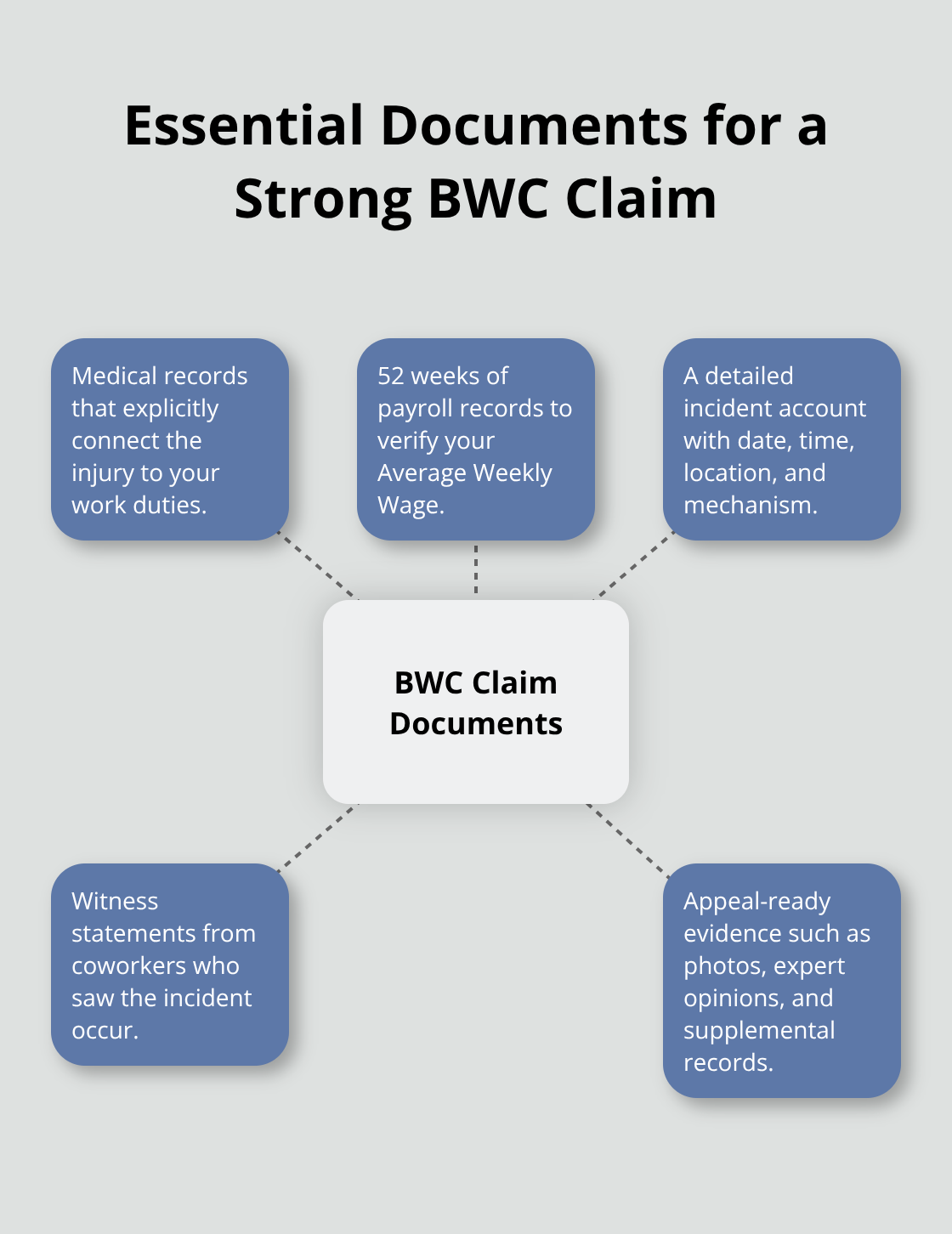
You need specific paperwork before or immediately after filing. Collect detailed medical records from your doctor that connect your injury to your diagnosis, wage information from the past 52 weeks, a written account of how the injury happened, and witness statements if others saw the incident. According to the BWC, the agency has 28 days to approve or deny your claim after it receives your complete filing. If your paperwork is incomplete, that clock stops until you submit missing documents-which is why many claims take longer than expected. Do not sign any release of medical records without understanding what you’re authorizing, as this can affect your claim’s strength and admissibility.
Understanding the BWC and Key Players
The Ohio Bureau of Workers’ Compensation administers the entire system for private-sector workers in Ohio, while self-insured employers handle their own claims under BWC oversight. Your claim goes through the BWC’s Claims Service Specialists, who review your medical evidence and wage documentation to determine eligibility. If they deny your claim, you can appeal to the Industrial Commission of Ohio within 14 days. The most common denial reasons are insufficient medical documentation, failure to prove the injury is work-related, or delayed reporting that creates evidence problems.
Who Files Claims Most Often
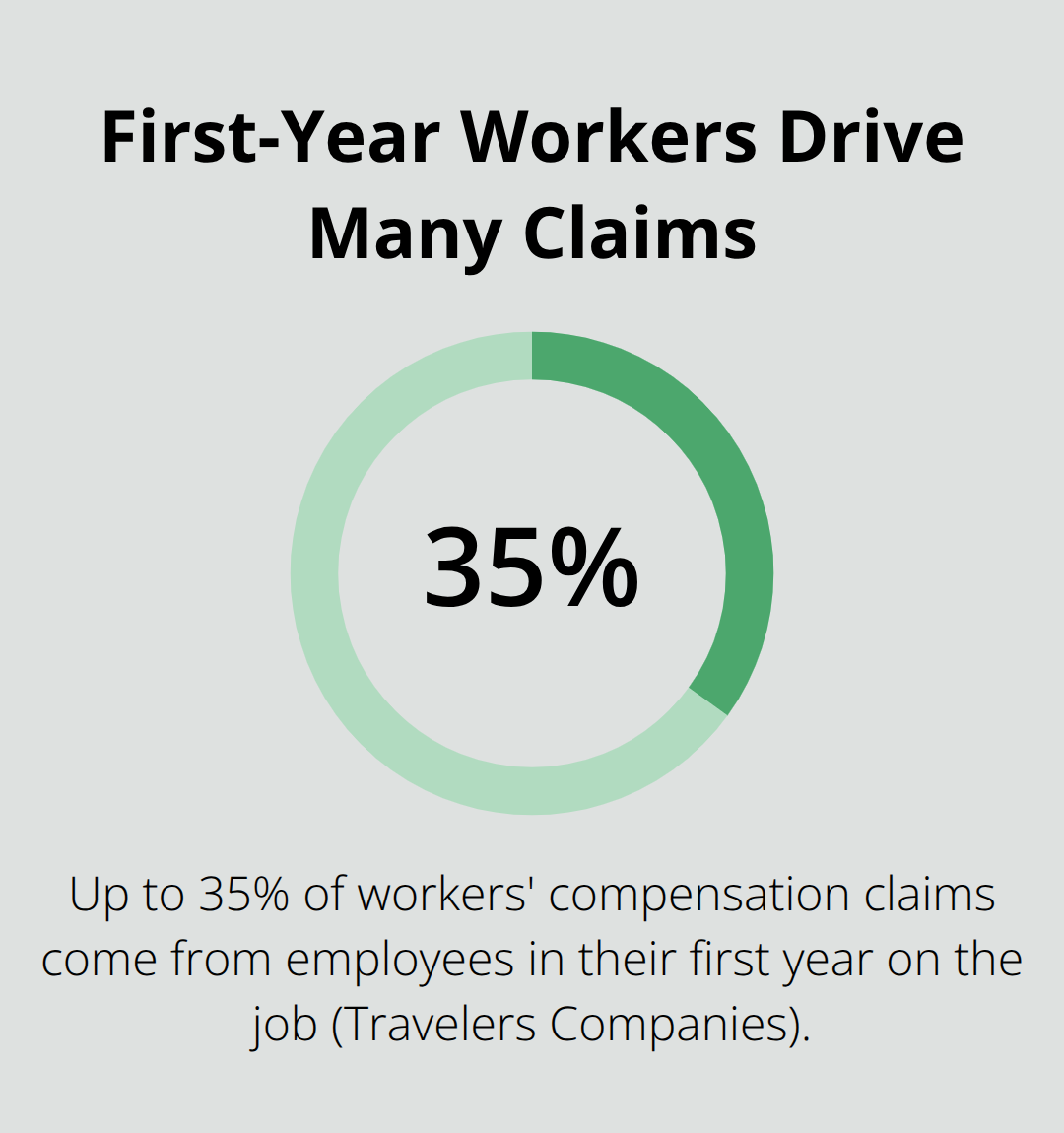
Education and health services have the highest injury rates in Ohio at 3.4 injuries per 100 workers according to the Bureau of Labor Statistics, followed by manufacturing at 2.7 per 100 workers. The Travelers Companies reports that up to 35% of workers’ compensation claims come from workers in their first year on the job. This means your employer likely has procedures in place for handling injuries-ask your supervisor or HR department for the injury reporting process specific to your workplace.
Understanding these requirements and the players involved prevents costly mistakes early in your claim and positions you to move forward with the actual filing process.
How Long Does a BWC Claim Actually Take
The 28-Day Decision Window Explained
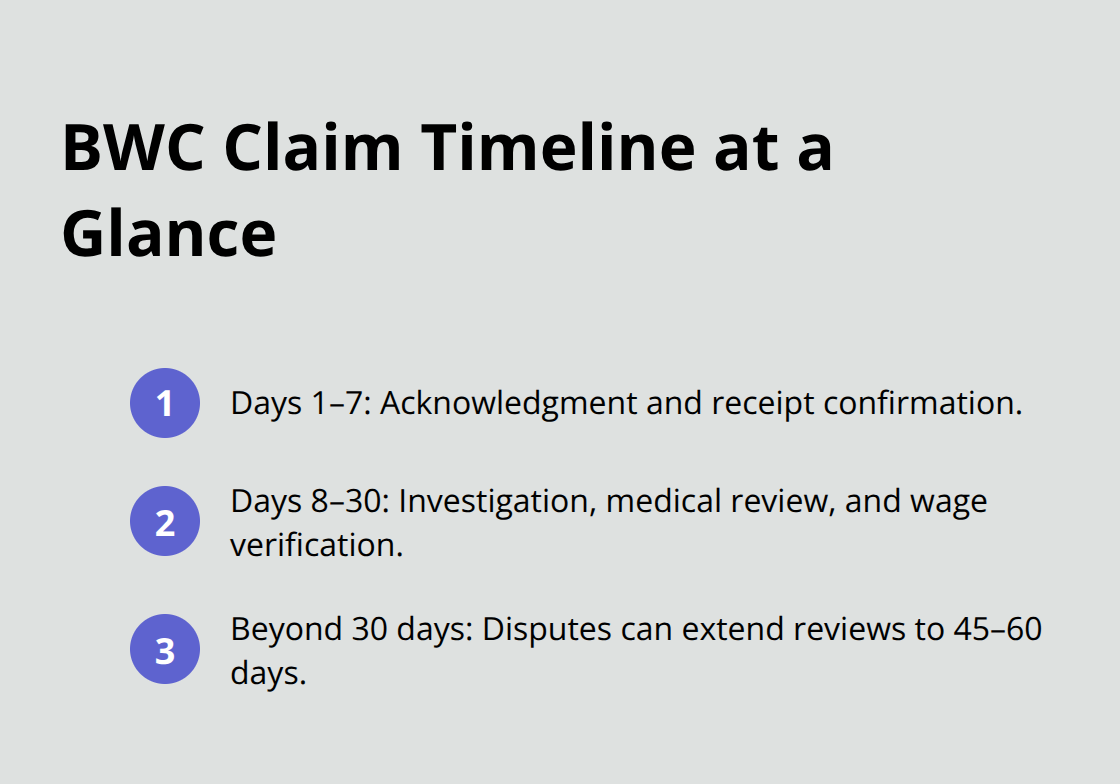
The 28-day decision window that the Ohio Bureau of Workers’ Compensation publishes sounds straightforward until you file a claim and realize it rarely works that way in practice. That 28-day clock only starts when the BWC receives your complete application, which means any missing medical records, wage statements, or incident documentation pauses the timer entirely. In the first week after you file, your claim enters acknowledgment phase where the BWC assigns a Claims Service Specialist to your case and sends you written confirmation of receipt. This is not passive time-contact your employer’s HR department or the third-party administrator handling the claim to confirm they actually submitted everything.
Many claims stall here because the FROI form lacks critical details like your job duties or the exact mechanism of injury, forcing the BWC to request clarification before the investigation even begins.
Days 8 Through 30: Investigation and Determination
Days 8 through 30 represent the investigation and determination phase, which is where most delays originate. Your Claims Service Specialist reviews your medical evidence to establish whether your injury is work-related and whether your treatment was reasonable and necessary. The BWC also verifies your Average Weekly Wage using payroll records from your employer-wage disputes alone can extend this phase beyond 30 days. If your doctor’s initial report lacks specificity about work causation or if you’ve had gaps in treatment, the specialist requests supplemental medical records, and that 28-day window resets. According to the Industrial Commission of Ohio, simple medical-only claims with complete documentation receive approval within this timeframe, but claims involving wage loss disputes or contested work-relatedness regularly stretch to 45 or 60 days.
The Appeal Timeline and Hearing Process
If the BWC denies your claim, you have 14 days to file an appeal with the Industrial Commission of Ohio, launching a second timeline where hearings occur generally within 45 days. Beyond 90 days total, your case enters the hearing phase and potential settlement negotiations if your claim was approved. During this period, you may already receive medical benefits and temporary disability payments, but the process slows significantly because it now involves multiple approval layers-Claims Service Specialists for smaller amounts, appointed BWC attorneys for larger amounts, and potentially a Special Committee for substantial settlements. File your appeal immediately after a denial rather than waiting, as delays compound when you navigate the Industrial Commission process without legal representation.
What Happens Next in Your Claim
The settlement phase involves evaluating your claim value by considering injury severity, future medical needs, and potential future lost wages. The OIC has 30 days to review and either approve or object to any settlement agreement; if no objections are raised, the settlement is automatically approved. Medicare Set-Asides (MSAs) may be required if Medicare will cover future medical expenses, which adds another layer of review and extends timelines further. Typical settlement timeframes vary significantly-minor injuries may settle in 4–6 months from evaluation to final approval, while cases with ongoing medical needs or disputes usually take 6–12 months, and complex cases with MSAs or extensive negotiations can stretch 12–18 months or longer.
What Documents You Actually Need to Submit
Medical Records That Prove Work Connection
The difference between a claim approved in 28 days and one delayed for months comes down to documentation completeness. Most workers submit incomplete applications without realizing it, forcing the BWC to request missing pieces and restart the timeline. Your medical records must include a physician’s statement that explicitly connects your injury to your work activities and job duties, not just a diagnosis. A generic note stating you have a back strain means nothing to the BWC; your doctor needs to document how the workplace incident caused the strain and why treatment is necessary. Obtain records from every healthcare provider who has treated you since the injury, including initial emergency room visits, follow-up appointments, physical therapy sessions, and any specialist consultations.
Wage Documentation and Payroll Records
The BWC verifies your Average Weekly Wage using the past 52 weeks of payroll records, so provide complete wage documentation showing hours worked and compensation for that full period. Wage disputes represent one of the largest sources of claim delays because employers sometimes provide incomplete payroll data or workers have gaps in employment history that require clarification. Your employer’s First Report of Injury form must include specific details about the incident: exact date and time, precise location within the workplace, description of what you were doing when injured, the mechanism of injury, any witnesses present, and how the injury occurred. Vague descriptions like “fell down the stairs” or “hurt my back” invite additional questions that pause your 28-day window.
Incident Details and Witness Statements
Incident documentation strengthens your claim substantially when disputes arise. Write a detailed account of the injury as soon as possible after it happens, including environmental conditions, what equipment you were using, whether you reported pain or symptoms immediately, and any first aid treatment you received at work. If coworkers witnessed the incident, obtain written statements from them describing what they saw, not secondhand accounts from your supervisor. The distinction matters because the BWC weighs direct witness observations more heavily than reconstructed narratives.
Evidence for Appeals and Contested Claims
When you appeal a denial, you face a different documentation standard at the Industrial Commission of Ohio because a hearing officer may request supplemental medical evidence, additional wage records, or expert testimony about your job duties and injury causation. Many workers lose appeals because they submitted insufficient evidence the first time and do not gather additional documentation before the hearing. Photograph any hazardous conditions that contributed to your injury if they still exist at your workplace, as visual evidence demonstrates work-relatedness more convincingly than written description alone (this applies especially when workplace conditions change or equipment is removed).
Organizing and Protecting Your Records
Keep copies of every form, letter, or communication from the BWC, your employer, or the third-party administrator in a single organized file because you will need to reference this material if your claim is denied or contested. Do not sign medical release forms without understanding what records are being requested, as overly broad releases can expose unrelated medical information that might prejudice your claim. An experienced workers’ compensation attorney can review your documentation strategy and identify gaps before you submit your application to the BWC.
Final Thoughts
The BWC claim processing Ohio system rewards workers who act decisively and submit complete documentation from the start. Report your injury to your employer immediately, gather comprehensive medical records that explicitly connect your injury to work, and organize all paperwork before submitting your claim. The 28-day decision window only works in your favor when the BWC receives everything at once, so avoid submitting documents piecemeal and expecting timely approval.
Common mistakes cost workers months of delays and sometimes result in denials that could have been prevented. Waiting days or weeks to report your injury creates documentation gaps that the BWC interprets as evidence you were not seriously hurt. Submitting vague medical records without work-causation statements forces the BWC to request clarification, pausing your timeline repeatedly. Failing to provide complete wage documentation from the past 52 weeks triggers wage disputes that extend your claim beyond 90 days.
If your claim was denied or you face a contested determination, contact Robin J Peterson Company, LLC to review your case and identify whether additional evidence or legal representation strengthens your position. The firm represents injured workers throughout Ohio and understands how to navigate BWC denials and Industrial Commission appeals. An experienced workers’ compensation attorney protects your rights and accelerates resolution.