
A workplace injury settlement in Ohio involves complex decisions that affect your financial security and health coverage. We at Robin J Peterson Company, LLC know that injured workers often feel overwhelmed by settlement options and negotiation tactics.
This guide walks you through the settlement process, from understanding agreement types to avoiding costly mistakes. You’ll learn what influences settlement amounts and how to protect your long-term interests.
Understanding Settlement Validity and Structure in Ohio
What Makes a Settlement Valid in Ohio
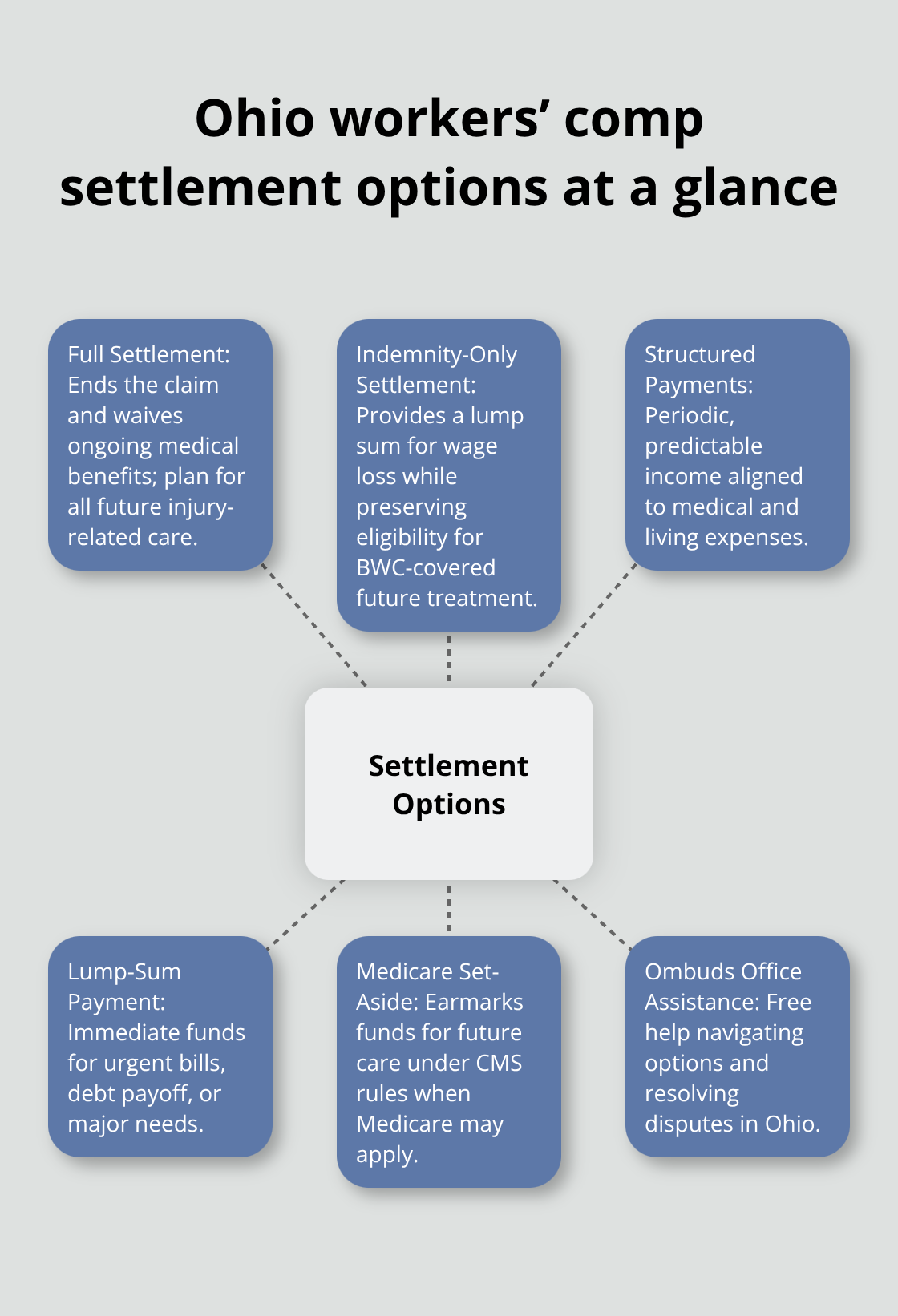
A valid settlement agreement in Ohio must meet specific legal requirements set by the Ohio Bureau of Workers’ Compensation. The agreement must clearly identify the claim, the parties involved, and the terms of compensation. The BWC or the Industrial Commission of Ohio must approve the agreement before it becomes binding-you cannot simply shake hands with an employer and call it settled. The BWC has a 28-day window to decide whether to approve or deny a claim after it’s filed, and this timeline affects when settlement discussions can even begin. A valid settlement also specifies whether you accept a Full Settlement, which ends your claim and relinquishes ongoing medical benefits, or an Indemnity-Only Settlement, which provides a lump-sum for lost wages while preserving your right to future medical benefits. The difference is substantial: Full Settlement requires careful planning for all anticipated future medical needs, while Indemnity-Only keeps that safety net open. If Medicare eligibility applies, a Medicare Set-Aside allocation may be established, designating part of the settlement to cover future medical costs under CMS guidelines. Every detail must appear in writing, reviewed, and officially submitted to avoid disputes later.
Structured Payments Versus Lump-Sum Settlements
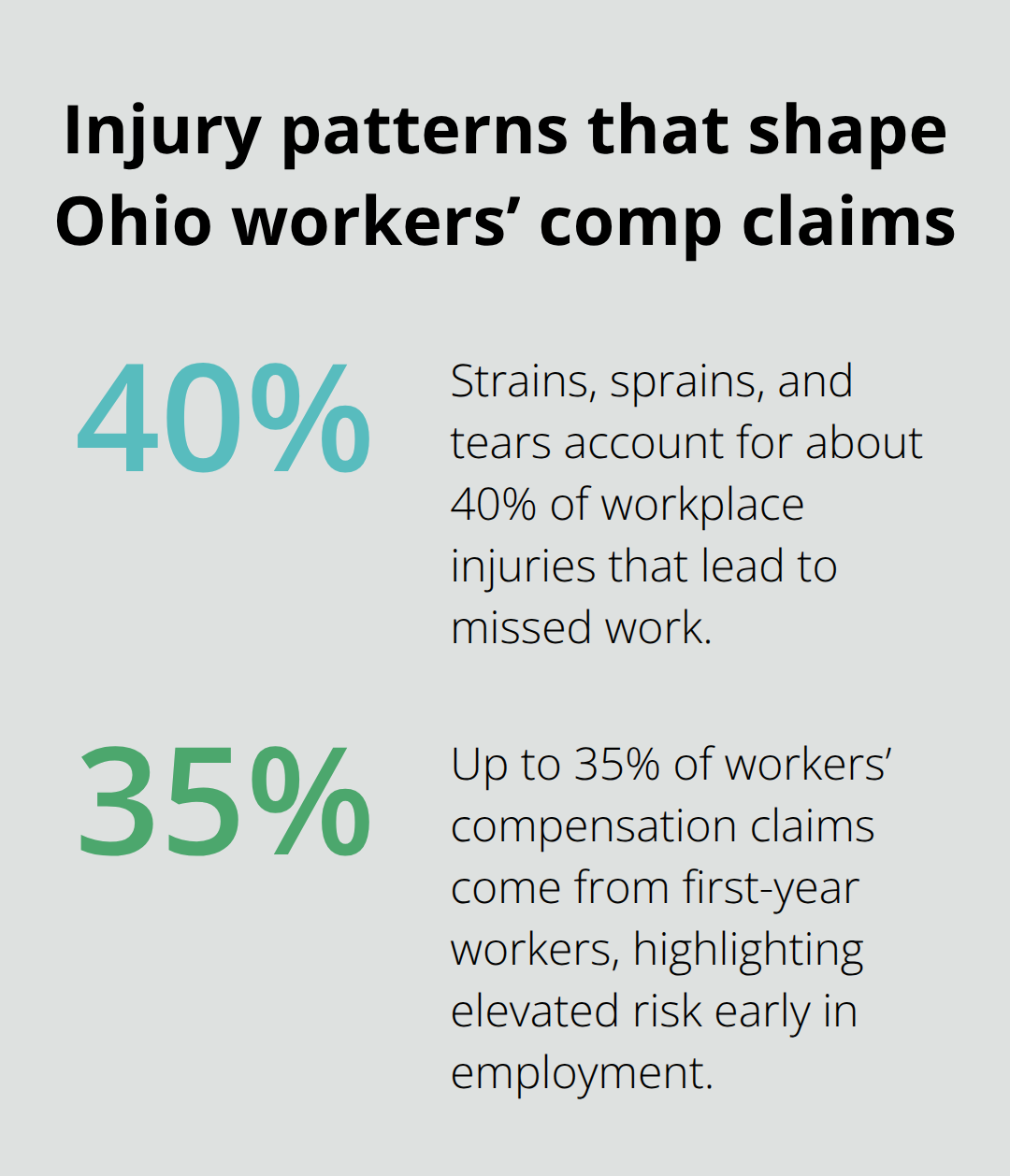
Structured settlements involve regular, periodic payments often backed by federal insurance, allowing you to tailor payments to cover anticipated future medical costs and living expenses. This approach works well if you prefer steady income over time and want predictability. Lump-sum settlements give you immediate access to all funds in one payment, which suits workers who have significant medical bills to pay immediately, debts to clear, or major life changes to fund. The choice depends entirely on your situation-there’s no universal right answer. The Ohio Industrial Commission Ombuds Office offers free assistance to workers navigating settlement options and disputes, and this resource exists specifically because settlement choices carry long-term consequences. Strains, sprains, and tears account for about 40 percent of workplace injuries that cause employees to miss days on the job, and these injuries often require ongoing treatment, making the choice between structured and lump-sum settlements particularly important for managing future care.
How the BWC Evaluates Your Settlement
The Ohio Bureau of Workers’ Compensation reviews settlements by examining injury severity, long-term disability status, and impact on earning capacity. The BWC does not apply a predefined formula-each case receives individual evaluation. Injury severity carries substantial weight: more severe or permanent injuries generate higher settlements because they create greater long-term costs. Age and occupation matter significantly as well; younger workers and those in physically demanding jobs typically receive higher settlements due to longer or greater impacts on earning potential. A 2024 Travelers study found that up to 35 percent of workers’ compensation claims come from first-year workers, with healthcare and warehousing sectors in Cleveland commonly seeing injuries among new or temporary employees. This data tells you that the BWC considers your work history and position when reviewing settlement value.
Past and future medical expenses are central to how the BWC calculates settlement amounts, including ongoing treatments, surgeries, and rehabilitation. Wage loss and your ability to work influence settlement size substantially; longer or permanent loss of earning capacity increases the settlement considerably. The BWC’s Help Center provides guidance on how settlement negotiations and entitlements work under Ohio law, and consulting this resource before accepting any offer gives you clearer insight into what the BWC considers fair. Understanding these evaluation criteria positions you to negotiate more effectively with employers and insurers.
Negotiating Your Settlement with Employers and Insurers
What Shapes Your Negotiating Position
Settlement negotiations in Ohio hinge on understanding what the BWC values most: injury severity, long-term medical costs, and lost earning capacity. The injury’s permanence shapes everything. A temporary strain that heals within weeks generates far less negotiating leverage than a permanent shoulder injury that prevents you from returning to your trade. Employers and insurers know this, which is why they anchor their initial offers low-they test whether you understand your claim’s true value. In 2023, Ohio’s education and health services sector recorded the highest injury rate at 3.4 injuries per 100 workers, revealing that certain industries face predictable injury patterns and corresponding settlement benchmarks.
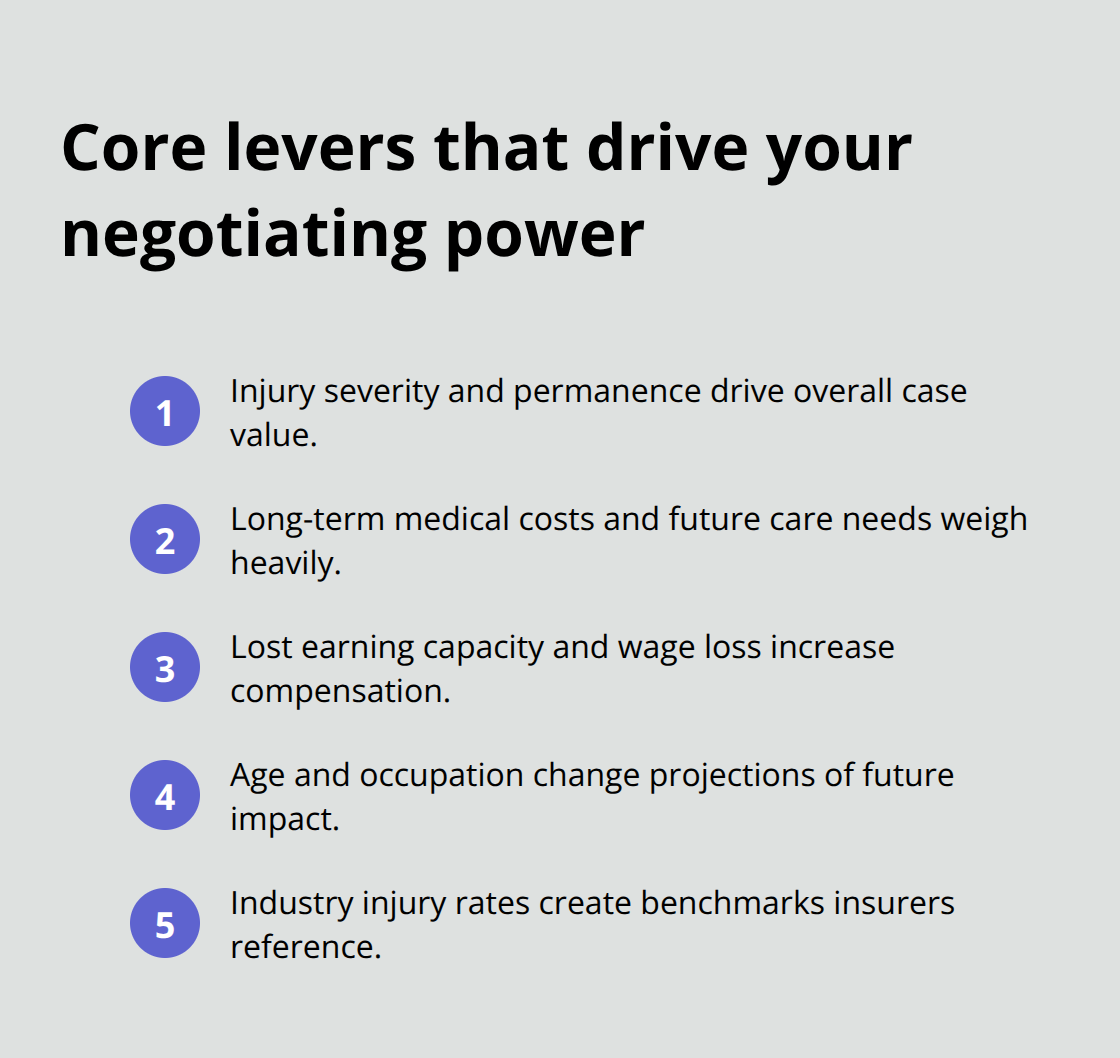
Age matters significantly in these negotiations. Younger workers typically command higher settlements because the BWC projects decades of lost earning potential ahead, while older workers closer to retirement may see lower offers despite equally serious injuries. Your occupation also influences what insurers believe they can offer. A construction worker with a permanent back injury has stronger negotiating power than a temporary warehouse worker with the same injury, simply because the construction worker’s lost earning capacity extends further into the future.
Building Your Evidence Foundation
Insurers count on workers accepting offers without solid documentation. Gather your medical records, treatment timelines, and any documentation showing how the injury affects your ability to work. Bring concrete evidence to negotiations: medical expert opinions on permanence, vocational assessments showing reduced earning capacity, and detailed records of past and anticipated future medical expenses. The Ohio Industrial Commission Ombuds Office provides free assistance navigating settlement disputes, and consulting this resource before responding to any offer gives you independent validation of whether an insurer’s proposal aligns with what similar cases typically receive.
Strategic Timing and Rejection Tactics
Never accept the first offer, even if it seems reasonable. Insurers structure initial proposals to be low enough that accepting them saves the company money while still appearing generous to an exhausted injured worker. Reject it clearly and in writing, then request a detailed explanation of how the insurer calculated their figure. Force them to justify their math using the BWC’s own evaluation criteria: injury severity, medical costs, and wage loss impact. If their reasoning is flawed, you have grounds to counter with a higher demand backed by evidence.
The 30-day waiting period after a settlement order is published gives you time to reconsider if the terms feel rushed or incomplete. Use that window strategically-do not waive it. Timing your responses and counteroposals matters more than speed; insurers expect pressure, so deliberate, evidence-backed responses carry more weight than quick acceptances.
The Impact of Legal Representation
Having legal representation shifts the entire dynamic. Insurers negotiate differently with attorneys than with unrepresented workers, because lawyers understand Ohio workers’ compensation statutes and can credibly threaten appeal or litigation if settlement terms are unfair. An experienced attorney can identify whether a Full Settlement or Indemnity-Only Settlement better protects your future, a distinction most injured workers miss until it’s too late.
Know your walk-away point before negotiations start. If the insurer’s offer doesn’t adequately cover your documented medical expenses plus reasonable wage loss compensation, reject it and prepare for further proceedings. Accepting inadequate compensation out of desperation or fatigue is the most costly mistake injured Ohio workers make. Understanding your rights after a workplace injury before you face settlement negotiations ensures you avoid common pitfalls and make informed decisions about your case.
Common Mistakes That Undermine Your Settlement
The most damaging error injured workers make is treating settlement negotiations as a single event rather than a process. Workers accept the first offer from an insurer because they’re exhausted, in pain, and desperate for the process to end. Insurers count on this desperation and submit deliberately low initial proposals, knowing most unrepresented workers will accept without comparison or analysis. Common mistakes workers make when filing claims often occur during this critical phase, where many injured workers undermine their own cases before settlement discussions even begin.
Full Settlements Lock You Into Permanent Decisions
If you accept a Full Settlement without thoroughly evaluating your long-term medical needs, you lose all rights to ongoing medical benefits from the BWC, even if your condition worsens years later. A worker with a shoulder injury might accept a lump-sum offer covering immediate medical costs, only to discover five years later that the injury requires surgery the settlement never accounted for. That worker then bears the full cost alone because the settlement was final. This irreversible choice makes Full Settlements particularly risky without professional guidance.
Medical Costs Compound Over Time
Future medical expenses represent the largest component of settlement value, yet workers routinely underestimate them. Strains, sprains, and tears account for about 40 percent of workplace injuries causing missed work days, and these injuries frequently require ongoing treatment far beyond initial recovery. Request a detailed medical prognosis from your treating physician before any settlement discussion begins. Ask specifically about anticipated surgeries, physical therapy duration, imaging studies, specialist consultations, and medication costs projected over the next 10 to 20 years. An insurer’s settlement offer that ignores these documented future costs is fundamentally inadequate.
If you choose an Indemnity-Only Settlement, you preserve the right to pursue medical benefits through the BWC for future treatment, which provides protection the lump-sum alone cannot. If you select a Full Settlement, that settlement amount must cover every anticipated medical expense for the rest of your life related to the injury.
Permanence Changes Everything
Settlement offers differ dramatically based on whether your injury is temporary or permanent. A temporary ankle sprain that heals within months has vastly different settlement value than a permanent knee injury preventing return to physical work. Many workers fail to obtain formal permanence ratings from medical professionals before accepting settlement terms. The BWC evaluates permanence as a central factor when calculating settlement value, yet injured workers often negotiate without clarity on whether their injury qualifies as permanent.
Request a permanence determination from your physician. This document significantly strengthens your negotiating position because it provides objective medical evidence the BWC itself uses in evaluation. Younger workers with permanent injuries have stronger settlement claims than older workers with identical injuries, because younger workers face decades of reduced earning capacity ahead. An insurer betting you won’t understand this age-related calculation may anchor their offer far below what the case actually warrants.
Inadequate Documentation Weakens Your Position
Insurers exploit workers who lack solid medical records and treatment documentation. Without comprehensive evidence, you cannot credibly challenge low settlement offers or justify higher demands. Collect your medical records, treatment timelines, and any documentation showing how the injury affects your ability to work. Bring concrete evidence to negotiations: medical expert opinions on permanence, vocational assessments showing reduced earning capacity, and detailed records of past and anticipated future medical expenses.
Essential tools, deadlines, and common pitfalls that affect your claim are available through the Ohio Industrial Commission Ombuds Office, which provides free assistance navigating settlement disputes. Consulting this resource before responding to any offer gives you independent validation of whether an insurer’s proposal aligns with what similar cases typically receive. Strong documentation transforms settlement negotiations from guesswork into evidence-based discussions where you control the narrative.
Final Thoughts
Settlement negotiations in Ohio workers’ compensation cases demand clarity, documentation, and strategic thinking. Your workplace injury settlement in Ohio must account for injury severity, long-term medical expenses, and lost earning capacity. Accepting the first offer without evaluation, failing to project future medical costs, and misunderstanding permanence are the mistakes that cost injured workers the most.
Start by gathering comprehensive medical documentation and obtaining a permanence determination from your treating physician. Contact the Ohio Industrial Commission Ombuds Office for free assistance understanding your settlement options and validating whether an insurer’s proposal aligns with similar cases. Request detailed explanations of how insurers calculated their offers, then reject inadequate proposals in writing with evidence-backed counteroffers.
We at Robin J Peterson Company, LLC help injured workers across Ohio navigate settlement decisions and avoid costly mistakes. Our team understands how settlement choices affect your long-term health coverage and financial stability, and we can meet you at convenient locations to discuss your specific situation. Contact us to learn how we secure fair settlements that protect your future.