
A workplace injury can turn your life upside down fast. Medical bills pile up, paychecks stop coming, and you’re left wondering what happens next.
Understanding workers compensation benefits is your first step toward getting the support you’re entitled to. At Robin J Peterson Company, LLC, we help injured workers navigate this system and avoid costly mistakes that could hurt their claims.
What Workers Compensation Actually Covers
Three Forms of Support for Injured Workers
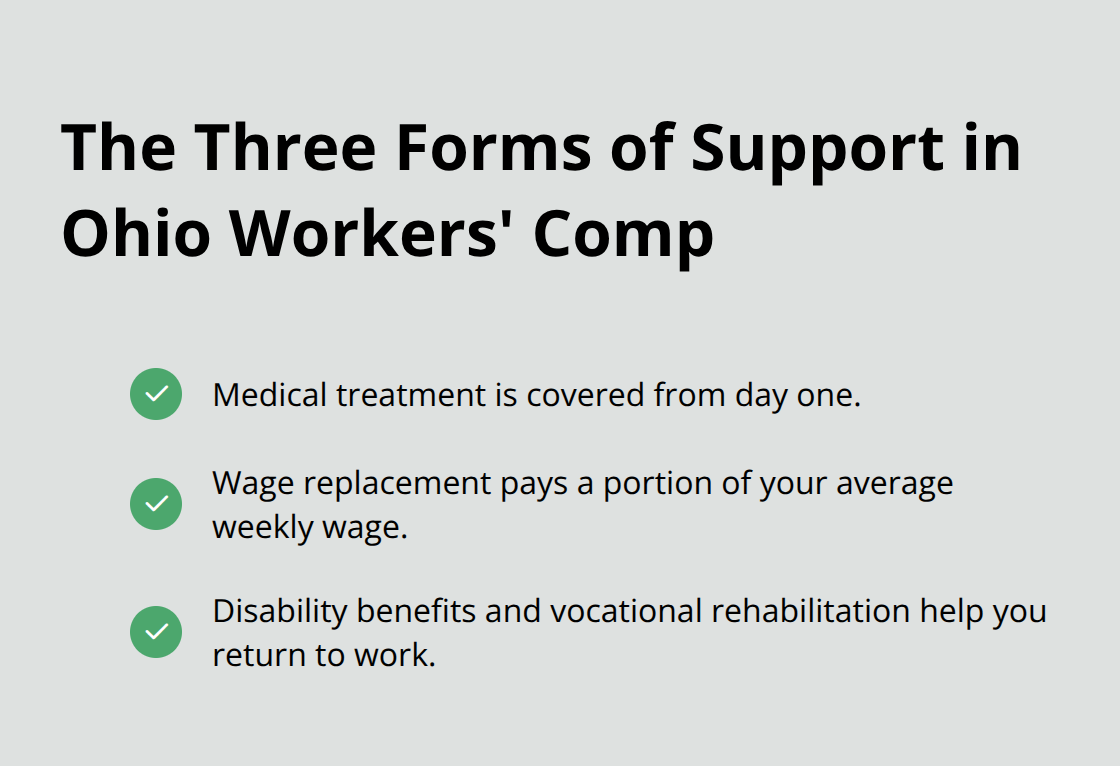
Workers compensation in Ohio provides three distinct forms of support when you suffer a work-related injury or illness. Medical treatment is covered from day one, meaning all necessary care related to your injury flows through the system without you paying out of pocket. This includes doctor visits, hospital stays, surgery, physical therapy, prescription medications, and medical devices like braces or prosthetics. The Ohio Bureau of Workers’ Compensation determines which providers you can see, so you’re not free to choose any doctor-but the system ensures you get appropriate care without fighting insurance companies for approvals.
Lost wage benefits replace a portion of your income while you’re unable to work, calculated based on your average weekly wage before the injury. Ohio typically pays 66.67 percent of your average weekly wage, with maximum and minimum amounts that adjust annually. If you’re out of work for a short period, you’ll receive temporary benefits; if the injury causes permanent damage, you may qualify for permanent partial or permanent total disability benefits that continue longer.
Disability benefits and vocational rehabilitation services help you transition back to work if your injury prevents you from returning to your previous job. The system recognizes that not every injured worker can do the same work they did before, so Ohio offers rehabilitation services including job retraining, work conditioning programs, and job placement assistance. These services aim to get you earning income again rather than leaving you permanently dependent on disability checks.
Strict Timelines That Protect Your Claim
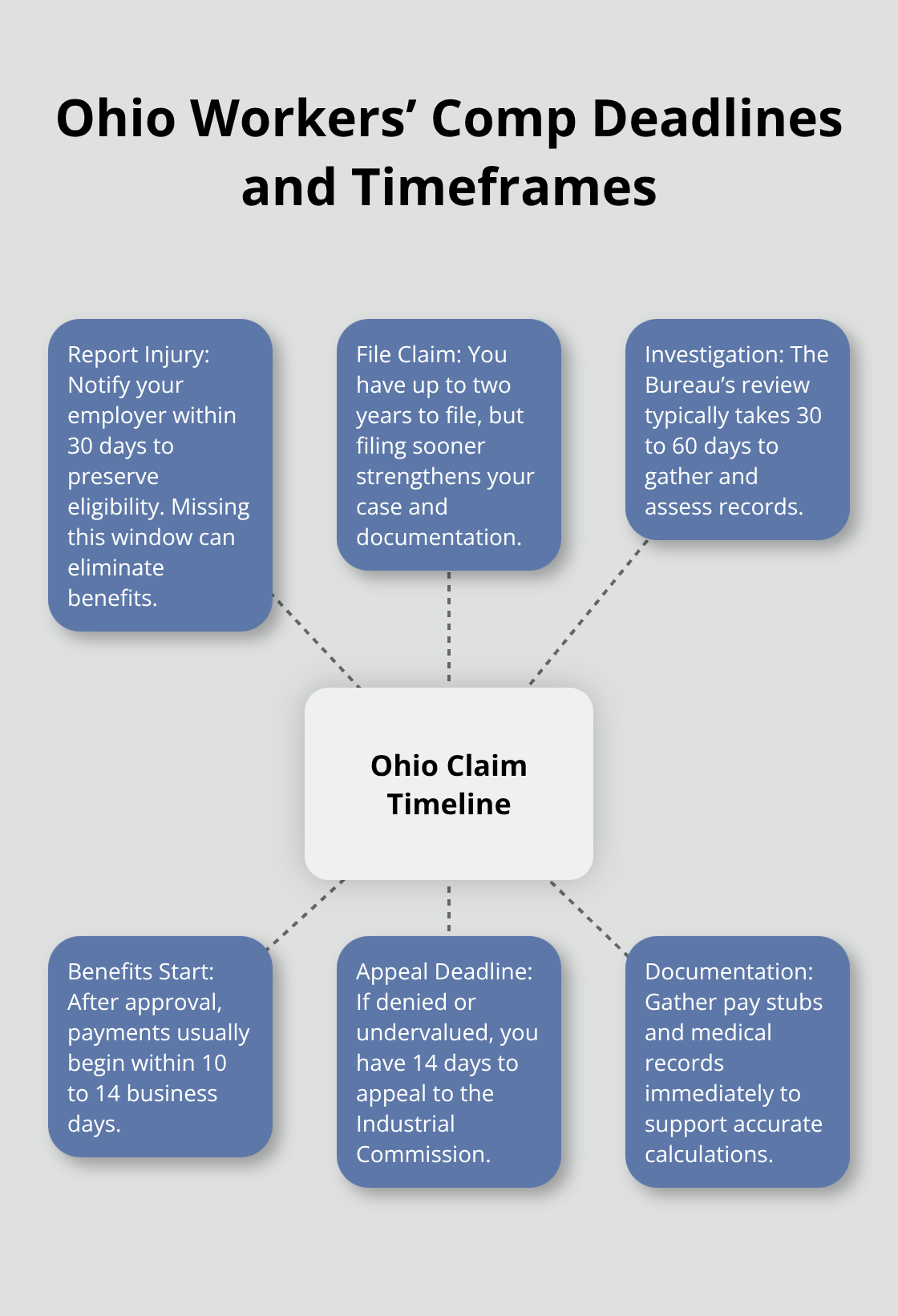
The critical part many workers miss is that these benefits have strict timelines and reporting requirements. You must report your injury to your employer within 30 days or risk losing benefits entirely-this deadline is absolute in Ohio. After reporting, you have two years to file a claim with the Ohio Bureau of Workers’ Compensation, though waiting longer weakens your position and complicates medical documentation.
Medical treatment expenses are only covered if the injury is documented and reported through proper channels; paying for treatment yourself and hoping to get reimbursed later is a losing strategy. Delaying reports or trying to handle initial treatment informally damages your claims significantly. The wage replacement calculations depend on accurate documentation of your earnings before the injury, so gathering your pay stubs immediately after an incident protects your future benefits.
How Disability Classifications Affect Your Recovery
Disability classifications determine how much you receive and for how long, and Ohio’s system uses specific impairment ratings tied to body parts and functional limitations. Understanding whether you qualify for permanent partial disability versus temporary benefits fundamentally changes your financial recovery, and getting this determination right requires proper medical evidence and sometimes legal guidance. The Ohio Bureau of Workers’ Compensation will assign your classification based on medical reports and your functional capacity, but you have the right to challenge these determinations if you believe they’re inaccurate. Proper documentation from your treating physicians strengthens your position when classifications are assigned, and having experienced representation helps you navigate the appeals process if the initial determination undervalues your injury’s impact on your ability to work.
How to File and Navigate Your Claim in Ohio
Submit Your Claim Within the Legal Window
Filing a claim with the Ohio Bureau of Workers’ Compensation requires precision and speed. You must submit your claim within two years of your injury or the date you discovered your work-related illness, but waiting that long is a mistake-the longer you delay, the harder it becomes to gather medical evidence and reconstruct your wage history. The Ohio Bureau of Workers’ Compensation uses a standardized claim form that documents your injury, the date it occurred, your employer’s information, and your medical treatment. Submit this form electronically through the Bureau’s online portal rather than mailing a paper copy; electronic submission reduces processing delays and creates a timestamped record that protects you if questions arise later.
Gather Your Wage Documentation Before Investigation Begins
After you submit your claim, the Bureau assigns an adjuster who investigates whether your injury qualifies as work-related and whether you meet all eligibility requirements. This investigation typically takes 30 to 60 days, during which the adjuster requests medical records, employer statements, and wage documentation. You should proactively gather your pay stubs from the 52 weeks before your injury to establish your average weekly wage-this figure directly determines your benefit amount, and incomplete wage documentation often results in lower payments than you deserve.
Understand What the Bureau’s Investigation Examines
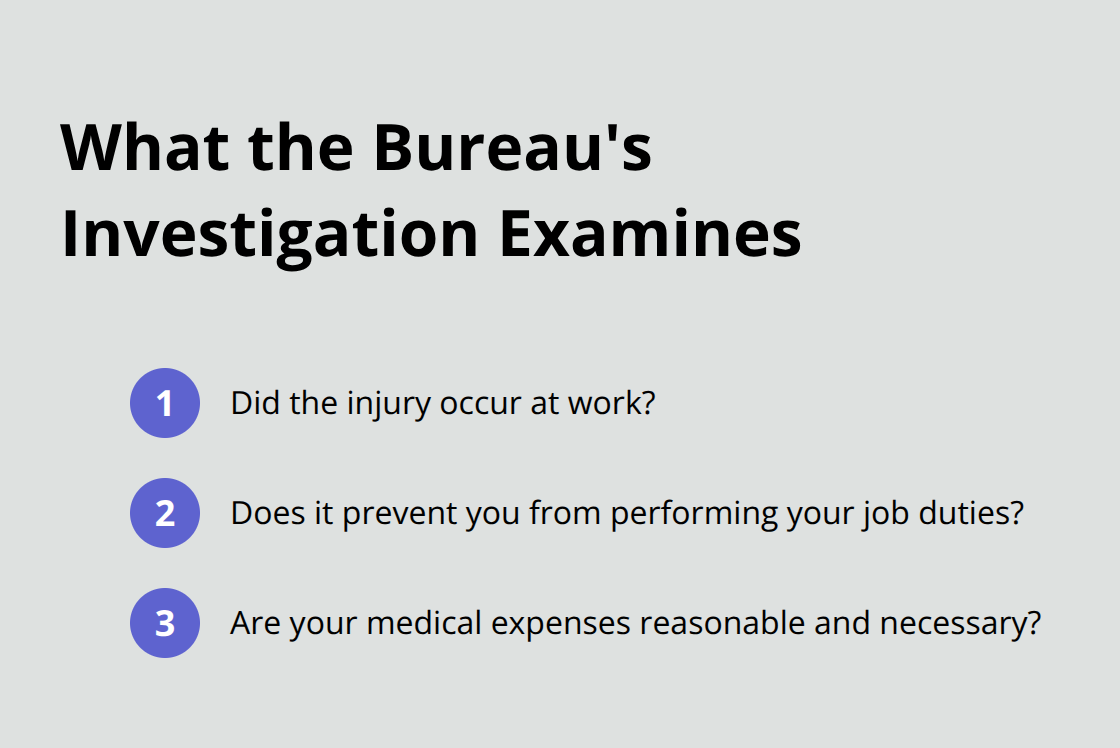
The Bureau’s investigation process focuses on three critical questions: Did the injury occur at work, does it prevent you from performing your job duties, and are your medical expenses reasonable and necessary? If the Bureau approves your claim, benefits begin within 10 to 14 business days. If the Bureau denies your claim or assigns a disability classification lower than what your medical evidence supports, you have the right to appeal through the Industrial Commission of Ohio.
Navigate the Appeals Process With Proper Representation
Appeals must be filed within 14 days of the Bureau’s decision, and missing this deadline eliminates your appeal rights permanently. During the appeals process, you present your case to a hearing officer who reviews medical reports, wage documents, and testimony from you, your employer, and medical experts. The hearing officer’s decision can be appealed further to the Industrial Commission if you disagree with the outcome. At this stage, having experienced legal representation becomes essential-the Industrial Commission reviews complex medical evidence and impairment calculations that require someone familiar with Ohio’s specific standards and precedents. The firm of Robin J Peterson Company, LLC represents injured workers throughout this process, ensuring your documentation is complete and your position is properly presented to decision-makers.
When the Industrial Commission makes its determination, you may face additional complications if your employer contests the findings or if the wage calculations require adjustment. Understanding what happens next-and how to respond to the Bureau’s or Commission’s decisions-shapes whether you receive the full benefits your injury warrants.
Common Mistakes Workers Make When Filing Claims
The gap between filing a claim and receiving benefits is where most injured workers undermine their own cases. The Ohio Bureau of Workers’ Compensation receives thousands of claims annually, and the ones that stall or get denied share common patterns of avoidable mistakes.
Report Your Injury Within the Legal Deadline
The 30-day reporting window exists for a reason, and the Bureau treats delays as evidence that your injury may not have been work-related. Workers who wait more than a few days to report their injury to their employer often claim they wanted to see if the injury would heal on its own or avoid trouble with their employer, but this reasoning backfires every time. The Bureau’s adjuster will question why you didn’t report immediately if the injury was serious enough to prevent work, and your explanation won’t matter once the deadline passes.
Collect Medical Records From Your First Treatment
Failing to gather medical documentation from your first treatment creates gaps that the Bureau interprets as weakness in your claim. If you seek treatment at an urgent care clinic, emergency room, or your doctor’s office, request copies of those records immediately and submit them with your claim form-don’t assume the medical provider will automatically send records to the Bureau. The adjuster reviewing your claim needs to see clear documentation that your injury occurred at work and required medical intervention, and missing early medical records forces you to reconstruct evidence months later when memories fade and records become harder to obtain.
Understand What Settlement Offers Actually Cost You
Settlement offers present the third major pitfall, and injured workers frequently accept them without understanding what they’re giving up. The Ohio Bureau of Workers’ Compensation or your employer’s insurance carrier may propose a lump-sum settlement to close your claim and eliminate their future liability, but accepting this offer means you forfeit any right to additional medical treatment, rehabilitation services, or wage benefits related to that injury going forward. Many workers accept these offers because they need immediate money or they’re exhausted from the claims process, but settling prematurely locks in a fixed amount while your true long-term needs remain unknown.
An injury that seems minor initially can develop complications months or years later-chronic pain, arthritis, or functional limitations that require ongoing treatment. If you’ve already accepted a settlement, the Bureau won’t reopen your claim to cover those later expenses. Workers who settled too quickly now face medical costs they must pay themselves because their claim is closed.
Get Legal Review Before Accepting Any Settlement
Before accepting any settlement offer, have an experienced workers’ compensation attorney review the terms and calculate whether the amount reflects your actual injury, your lost earning capacity, and your lifetime medical needs. The settlement negotiation process is where legal representation delivers concrete value-attorneys know what comparable injuries have settled for in Ohio and can identify whether an offer is fair or whether pushing back will yield better terms. An attorney familiar with Ohio’s workers’ compensation system can protect you from accepting inadequate settlements that leave you vulnerable to future medical expenses.
Final Thoughts
Understanding workers’ compensation benefits in Ohio protects you from accepting inadequate settlements and missing critical deadlines that cost you benefits permanently. The three forms of support-medical treatment, wage replacement, and disability benefits-stabilize your life after a work-related injury, yet thousands of workers fail to access the full benefits they deserve because they miss the 30-day reporting requirement, the two-year filing window, or the 14-day appeal deadline. These timelines are absolute boundaries that the Ohio Bureau of Workers’ Compensation enforces without exception, and missing any of them eliminates your rights permanently.
Settlement negotiations, disability classifications, and appeals to the Industrial Commission involve complex calculations and precedents that require someone familiar with Ohio’s specific standards and how the Bureau evaluates claims. An attorney who understands the Industrial Commission’s review process can identify weaknesses in the Bureau’s initial determination and push back against inadequate offers that undervalue your injury. The decision to navigate this process alone or with experienced legal representation fundamentally shapes whether you receive the full benefits your injury warrants.
If you’ve suffered a work-related injury, contact Robin J Peterson Company, LLC to discuss your claim and understand what your injury is worth under Ohio law. The consultation protects your rights and ensures you’re not leaving benefits on the table.