
Workplace injuries happen fast, and knowing your rights matters even faster. At Robin J Peterson Company, LLC, we’ve helped countless Ohio workers understand what protections actually apply to them.
This guide walks you through the real steps you need to take-from filing your claim to handling denials and appeals. You’ll learn exactly what Ohio law covers and how to protect yourself.
What Ohio’s Workers’ Compensation Law Actually Covers
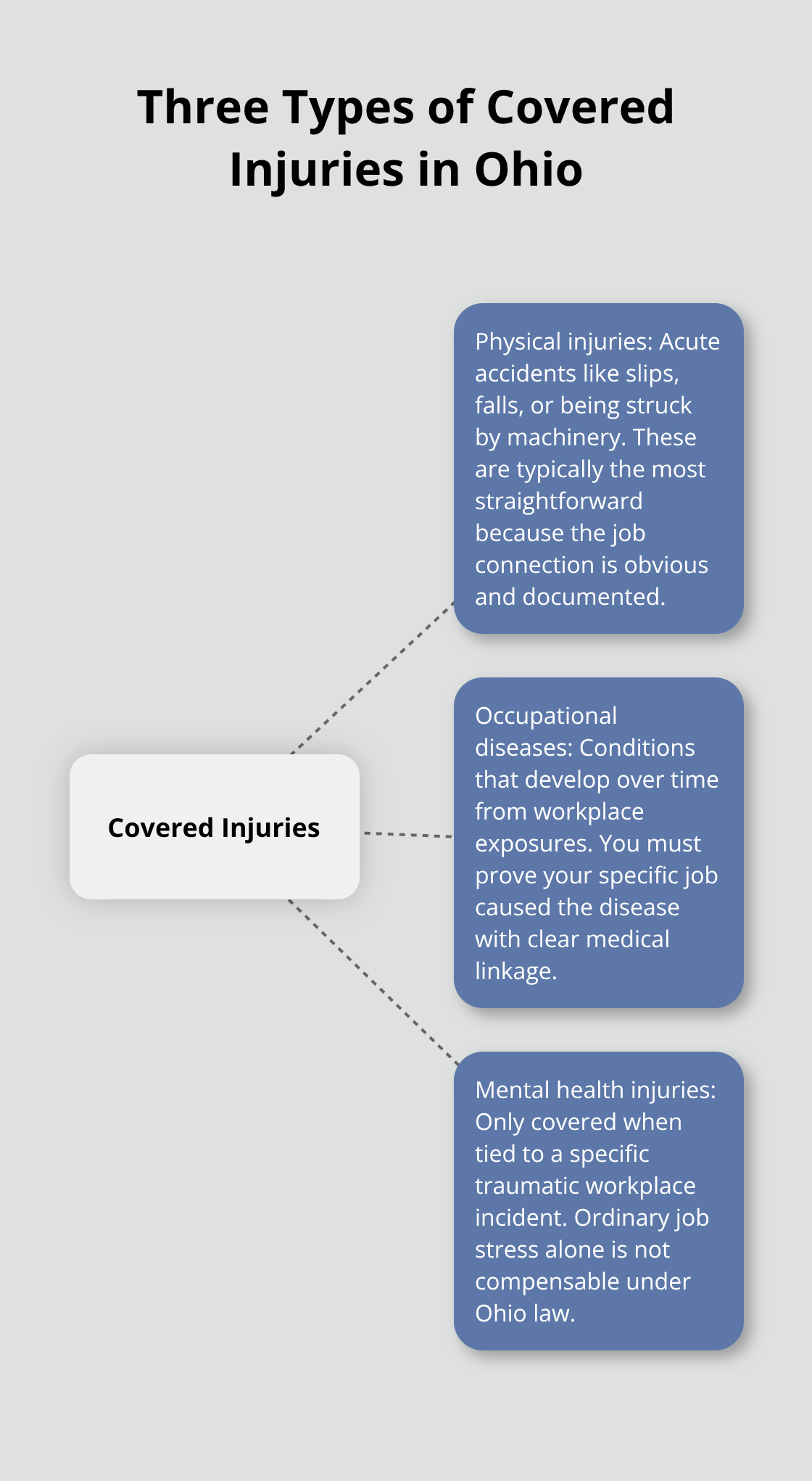
Ohio’s workers’ compensation system covers three distinct categories of workplace injuries, and understanding which one applies to your situation determines what benefits you can access. Physical injuries from accidents represent the most straightforward claims. If you slip on a wet floor, get struck by machinery, or suffer a fall at work, Ohio’s Bureau of Workers’ Compensation recognizes these as compensable injuries. The critical detail here is that the injury must arise out of and in the course of your employment, meaning it happened while you performed job duties or were on the employer’s premises during work time.
Most workplace accident claims succeed because the connection between the job and the injury is obvious and documented.
Occupational Diseases Present a Harder Fight
Occupational diseases challenge you more than accidents because they develop over time rather than occur suddenly. Conditions like asbestos exposure, chemical poisoning, or hearing loss from prolonged noise exposure fall into this category. Ohio law requires you to prove that your specific job caused the disease, not that you simply worked in an industry where the disease exists. This distinction matters enormously. If you worked in construction and developed a respiratory condition, you must show that your particular employer’s work practices or site conditions caused it. The Ohio Industrial Commission evaluates occupational disease claims using strict causality standards, which means documentation from your doctor linking your condition directly to workplace exposure strengthens your claim significantly. Many occupational disease claims receive denials initially because workers lack medical evidence connecting their job duties to their illness.
Mental Health Injuries Require Specific Circumstances
Mental health conditions from work-related incidents represent the smallest and most restricted category of covered injuries under Ohio law. You cannot claim depression or anxiety simply because your job is stressful. However, if you suffer a traumatic workplace event-such as witnessing a coworker’s serious injury or being assaulted at work-Ohio may recognize resulting mental health conditions as compensable. The law requires that the mental health injury stem from a specific, identifiable work incident rather than gradual workplace stress. This limitation frustrates many workers, but it reflects Ohio’s position that workplace mental health claims must connect to an extraordinary event, not ordinary job pressures. If you experienced trauma at work, immediate medical documentation of your mental health condition and a clear statement from your healthcare provider linking it to the specific incident strengthen your claim substantially.
Understanding Your Coverage Determines Your Next Steps
Now that you know what Ohio covers, the real work begins. You must file your claim correctly and understand exactly what entitlements you can access. The Ohio Bureau of Workers’ Compensation and the Industrial Commission of Ohio have specific procedures you must follow, and missing deadlines or submitting incomplete documentation can cost you benefits you’ve earned.
What You’re Actually Entitled to After a Workplace Injury
File Your Claim Within 30 Days
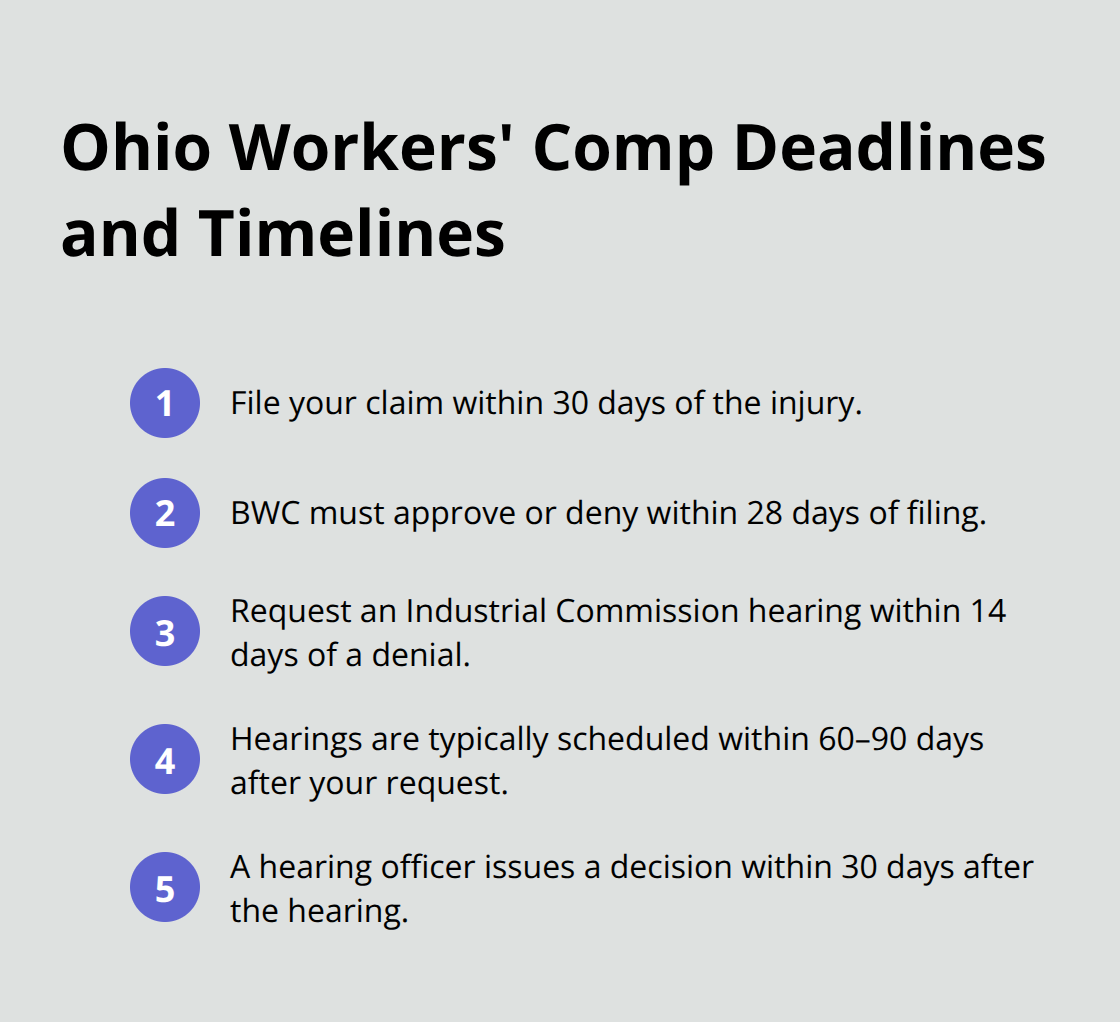
Filing a claim with the Ohio Bureau of Workers’ Compensation is not optional if you want benefits, and the sooner you report your injury, the better your position becomes. You have 30 days from the date of injury to file, though waiting longer weakens your case significantly because memory fades and documentation becomes harder to obtain. Contact your employer immediately after the injury occurs and request the claim form, or go directly to the BWC Help Center to start the process yourself.
The form requires specific information about how the injury happened, what body part was affected, and the date and time of the incident. Incomplete or inaccurate forms get rejected, which delays your benefits and forces you to resubmit. Once you file, the BWC has 28 days to approve or deny your claim.
Access Medical Treatment Immediately
During the waiting period for claim approval, seek medical treatment immediately because you cannot afford to delay care while waiting for approval. Ohio law covers all reasonable and necessary medical treatment related to your workplace injury, including doctor visits, surgery, medications, physical therapy, and diagnostic tests. You do not need BWC permission before seeking treatment from any licensed Ohio healthcare provider, so do not wait for approval to see a doctor.
Your healthcare provider’s documentation of the injury and treatment plan strengthens your claim and creates an official record of your condition. This medical evidence becomes critical if the BWC denies your claim or if you later need to appeal a decision.
Understand Your Wage Replacement Benefits
If your injury prevents you from working, wage benefits replace two-thirds of your average weekly wage, paid while you recover or retrain for different work. The BWC calculates your wage rate based on your earnings in the 52 weeks before your injury, so having accurate pay records matters tremendously. Gather your pay stubs and tax returns before filing to ensure the BWC has correct information about your earnings.
These wage benefits continue throughout your recovery period, whether that takes weeks or months. The amount you receive depends entirely on your pre-injury earnings, making accurate documentation essential to receiving the full benefits you deserve.
Know Your Protection Against Retaliation
Your employer cannot retaliate against you for filing a workers’ compensation claim, period. Ohio law explicitly prohibits firing, demoting, reducing hours, or treating you differently because you reported an injury or filed a claim. If your employer takes adverse action against you within one year of filing, the law presumes retaliation occurred unless your employer proves otherwise.
This protection exists because workers need to report injuries without fear, and many injured workers lose their jobs anyway because employers find other excuses. Document every negative action your employer takes after you file, including termination letters, performance reviews, or schedule changes, and report retaliation to the Ohio Industrial Commission Ombuds Office, which investigates these complaints for free.
What Happens When the BWC Makes Its Decision
The BWC approval or denial letter marks a critical moment in your claim. An approval means you can move forward with treatment and wage benefits without further obstacles. A denial, however, requires you to understand your appeal options and act quickly to protect your rights.
How to Move Forward When the BWC Denies Your Claim
The BWC denial letter feels like a dead end, but it is not. You have concrete appeal rights, and the Ohio Industrial Commission exists specifically to overturn wrongful denials. Many injured workers give up after a denial because they do not understand that the denial is not final. The truth is that the BWC denies legitimate claims regularly, and the Industrial Commission reverses these denials when workers present proper evidence and follow the appeal process correctly.
Act Within 14 Days to Preserve Your Appeal Rights
Your first action after receiving a denial must be to request a hearing with the Industrial Commission within 14 days of the denial date. Missing this deadline eliminates your right to appeal, so treat it as non-negotiable. File your appeal request with the Industrial Commission of Ohio, not the BWC. The Industrial Commission will schedule a hearing where you present your case before a hearing officer who has authority to overturn the BWC’s decision.
Present Evidence That Supports Your Injury Claim
This hearing is your opportunity to provide medical evidence, testimony from your healthcare provider, witness statements from coworkers, and any documentation showing that your injury qualifies for benefits under Ohio law. The Ohio Industrial Commission Ombuds Office provides free assistance navigating this process and can answer questions about what evidence matters most for your specific injury type.
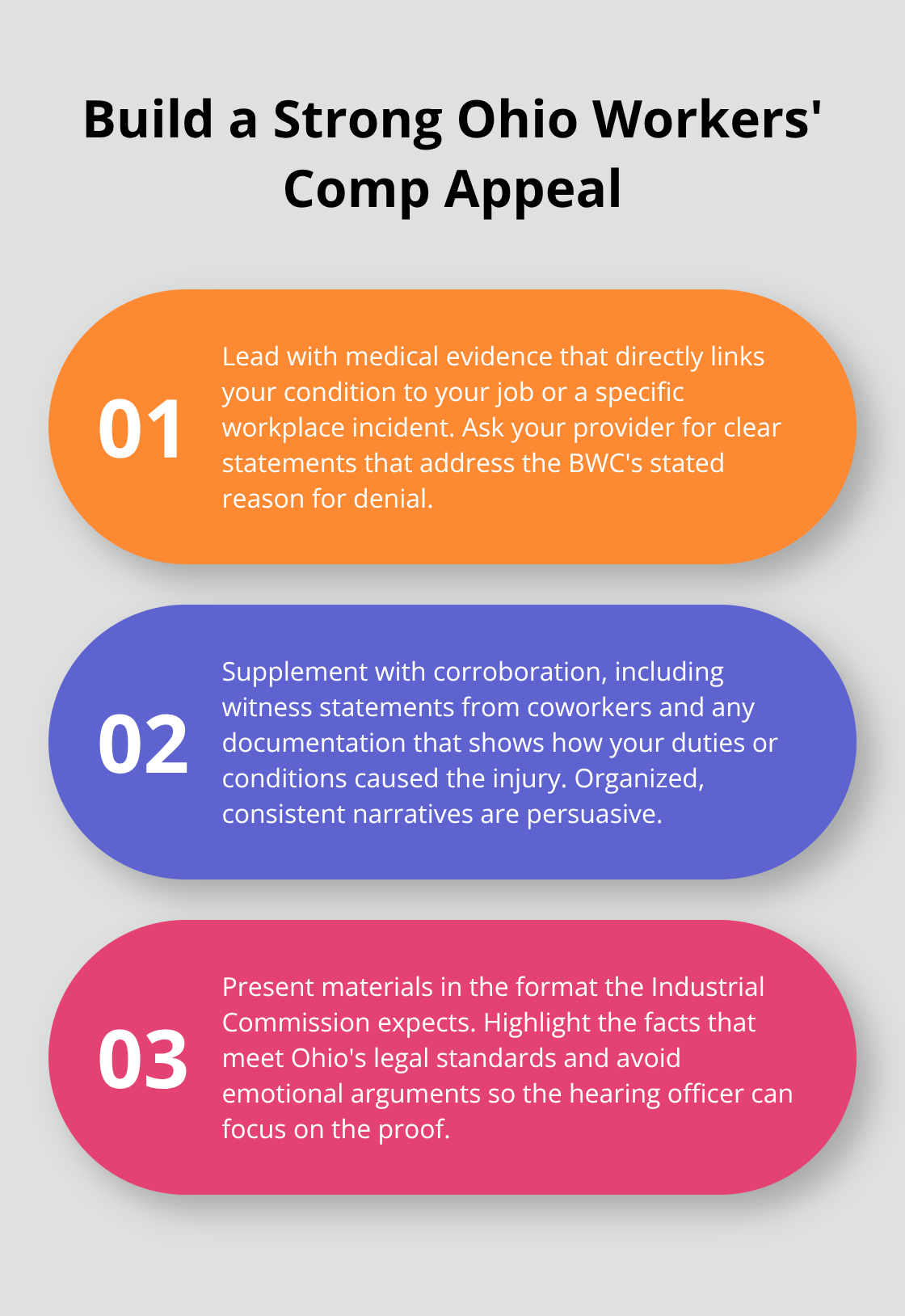
Do not assume that the evidence you submitted to the BWC will be reviewed again automatically. Organize your appeal materials strategically, starting with your medical records because these documents carry the most weight in appeal decisions. If your claim was denied because the BWC questioned whether your injury arose from your job, gather written statements from coworkers who witnessed the incident or who can confirm that your job duties created the risk that caused your injury.
Understand When Legal Representation Strengthens Your Appeal
Many injured workers benefit from legal representation during appeals because the Industrial Commission process involves rules of evidence and procedural requirements that trip up unrepresented workers. An attorney knows which evidence the hearing officer will find persuasive and how to present your case in the format the Industrial Commission expects. If your claim was denied for occupational disease, legal representation becomes even more important because these claims require complex medical causality arguments that demand expert presentation.
Prepare Strategically for Your Hearing
The hearing itself typically occurs within 60 to 90 days after you file your appeal request, though this timeline varies. Prepare for the hearing by reviewing the BWC’s denial letter carefully and identifying exactly why they rejected your claim. If they claimed insufficient medical evidence, obtain an updated medical statement from your doctor that directly addresses the denial reason. If they questioned whether your job caused the injury, gather documentation showing your specific job duties and workplace conditions.
Your presentation at the hearing should be organized and factual, avoiding emotional appeals and focusing instead on how the evidence proves your injury meets Ohio’s legal requirements. The hearing officer will issue a decision within 30 days after the hearing concludes, and this decision can be appealed further to the Industrial Commission itself if the hearing officer rules against you (though this second appeal is more limited in scope).
Final Thoughts
Ohio’s workplace injury rights protect you at every stage of your claim, from the moment you report an injury through the appeal process if the BWC denies your claim. The three categories of covered injuries, your access to medical care and wage benefits, and your protection against retaliation form a comprehensive framework that supports workers when accidents happen. These protections exist because Ohio recognizes that injured workers need both immediate support and a fair process to challenge wrongful denials.
The Ohio Bureau of Workers’ Compensation Help Center and the Ohio Industrial Commission Ombuds Office provide free resources that answer your questions and guide you through disputes. Legal representation matters most when your claim faces denial or when your injury involves occupational disease, since the appeal process requires strategic evidence presentation and knowledge of procedural deadlines. An attorney experienced in workplace injury rights Ohio cases knows how to organize your medical evidence, identify weaknesses in the BWC’s denial, and present your case in the format the Industrial Commission expects.
We at Robin J Peterson Company, LLC represent injured workers throughout the Cleveland, Akron, and Canton areas, fighting to overturn wrongful denials and secure the benefits you earned. If your claim was denied or you need guidance navigating the system, contact our firm to discuss your options. You do not have to handle this alone, and experienced representation often makes the difference between a denied claim and the benefits you deserve.