
Work injuries in Ohio come with questions about benefits, deadlines, and your rights. We at Robin J Peterson Company, LLC created this Ohio workers compensation guide to walk you through the entire process step by step.
Whether you’re filing your first claim or appealing a denial, you’ll find practical answers here. This roadmap covers what you need to know to protect your interests.
How Ohio Workers’ Compensation Actually Works
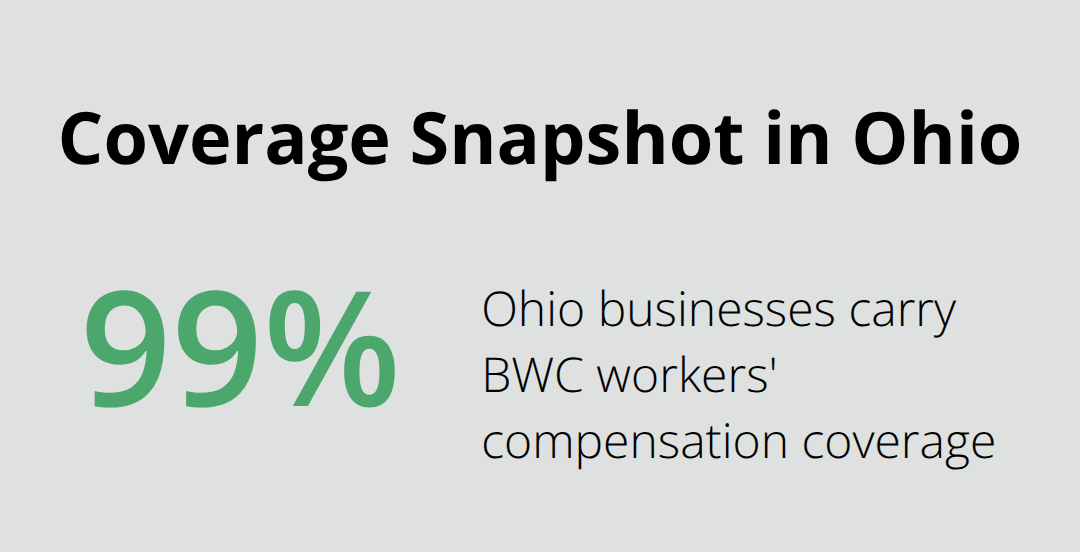
Workers’ compensation in Ohio operates as a no-fault insurance system, so injured workers receive benefits regardless of who caused the accident. About two-thirds of Ohio workers and 99% of Ohio businesses carry coverage through the Ohio Bureau of Workers’ Compensation, according to the BWC itself. The system provides three main protections: medical coverage for all reasonable and necessary treatment tied to your injury with no time limit, wage loss compensation calculated as a percentage of your pre-injury average weekly wage, and permanent disability benefits for lasting impairment. Your injury must arise out of and occur during the course of employment-this includes side gigs, cash work, and even unpaid volunteer tasks, not just traditional 9-to-5 jobs.
Federal employees, railroad workers under federal law, and certain self-employed individuals fall outside this coverage.
The Two Authorities You’ll Encounter
The Ohio Bureau of Workers’ Compensation administers the system and processes claims, while the Ohio Industrial Commission handles appeals when disputes arise. If your claim faces denial or benefit reduction, the Industrial Commission is where you contest that decision through a formal hearing process. The timeline matters significantly: you must file your claim within two years from the date of injury, and if you appeal a denial, strict deadlines apply to the appeals process itself-missing a deadline can bar your review entirely. The Industrial Commission typically conducts a preconference hearing first, followed by a merit hearing if no settlement is reached. This two-authority structure exists because workers’ compensation is both an administrative process and a legal one, and understanding which agency handles what stage prevents costly mistakes.
Who Qualifies and What Disqualifies You
To qualify, your injury must connect directly to work. The BWC requires medical evidence that clearly links your treatment to the workplace injury; missing this connection ranks among the top reasons claims face denial. You also cannot have coverage gaps: if you go 40 combined days without BWC coverage in the last 12 months, you lose eligibility for certain programs. Filing early protects your rights and creates a documented record of the injury at the time it occurred, which matters when disputes arise later. Some workers assume they don’t qualify because they work part-time or have multiple jobs, but coverage depends on whether your employer carries BWC insurance, not your employment status. The system is straightforward in theory but demands accuracy in practice.
Why Medical Documentation Matters Most
Medical evidence forms the backbone of your claim. The BWC will reject claims that lack clear documentation linking your treatment to the workplace injury. Proactively communicate with your healthcare provider that the injury is work-related so the occupational origin appears in your medical records from the start. When you file, include a detailed description of how the injury happened, medical records connecting treatment to the injury, wage information, and any witness statements. This documentation prevents delays and reduces the risk of denial before your claim even reaches the review stage.
What Happens When You File
Once you submit your claim, the BWC begins its review process. The managed care organization hired by your employer may manage medical approvals and costs, which means decisions about your care can involve multiple parties. If the BWC denies your claim or reduces your benefits, you have the right to challenge that decision through the Industrial Commission. Understanding your next steps after filing-and knowing when to seek legal representation-separates workers who protect their interests from those who miss critical deadlines and opportunities.
How to File Your Claim and Navigate Denials
Start Your Claim With Complete Documentation
File your initial claim with the Ohio Bureau of Workers’ Compensation online through the portal or visit the office at 30 W. Spring St., Columbus, OH 43215-2256 for in-person assistance. Precision matters because errors and omissions directly delay or derail your benefits. Include a detailed description of exactly how the injury happened, medical records that connect your treatment to the workplace injury, your wage information, and any witness statements. The BWC pulls this documentation immediately to assess coverage and benefit eligibility, so incomplete filings create bottlenecks that cost you weeks of waiting.
File Immediately to Protect Your Timeline
You have only two years from the date of injury to submit your claim, and filing early documents the injury at the moment it happened-critical evidence if disputes arise later. The two-year deadline is strict and unforgiving. Many injured workers underestimate how thoroughly the BWC scrutinizes the work-injury connection, so proactively tell your healthcare provider the injury is work-related and confirm it appears in your medical records from your first visit onward.
Understand What Happens After You File
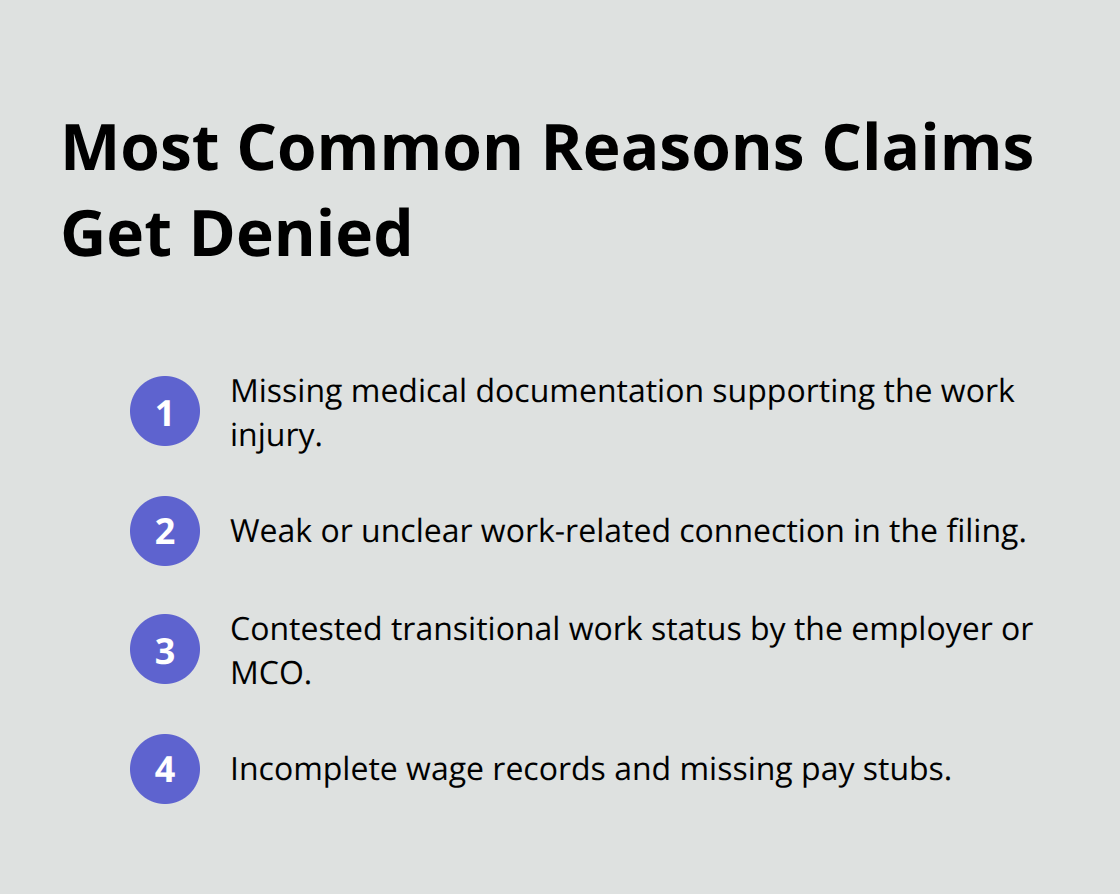
The managed care organization hired by your employer begins managing medical approvals and costs, meaning your care decisions involve multiple parties beyond just your doctor and the BWC. The BWC typically communicates decisions within weeks, but denials happen frequently. Missing medical documentation ranks among the top denial reasons, followed by lack of a clear work-related connection and contested transitional work status. Wage loss disputes also arise from missing pay stubs or incomplete wage information.
Recognize Why Claims Face Denial
The BWC denies claims when medical documentation fails to clearly link treatment to the workplace injury, when the work-injury connection appears weak in the initial filing, or when you cannot provide adequate wage records. According to the BWC itself, these three factors account for most denials. If the BWC denies your claim or reduces your benefits, you can request a hearing before the Ohio Industrial Commission, where a District Hearing Officer reviews your medical evidence, vocational information, and other documentation.
Navigate the Appeal Process With Strategic Support
The Industrial Commission conducts a preconference hearing first, then proceeds to a merit hearing if no settlement occurs, but strict deadlines apply-missing a deadline bars your appeal entirely. Legal representation at this stage becomes invaluable because attorneys understand which evidence carries weight with hearing officers and how to present your case within Ohio’s procedural requirements. When managed care organizations challenge medical decisions or the BWC contests your wage calculations, an experienced workers’ compensation attorney helps you counter those arguments effectively. This is where the complexity of Ohio’s system demands professional guidance to protect your interests and maximize your recovery.
What Benefits Can You Actually Claim
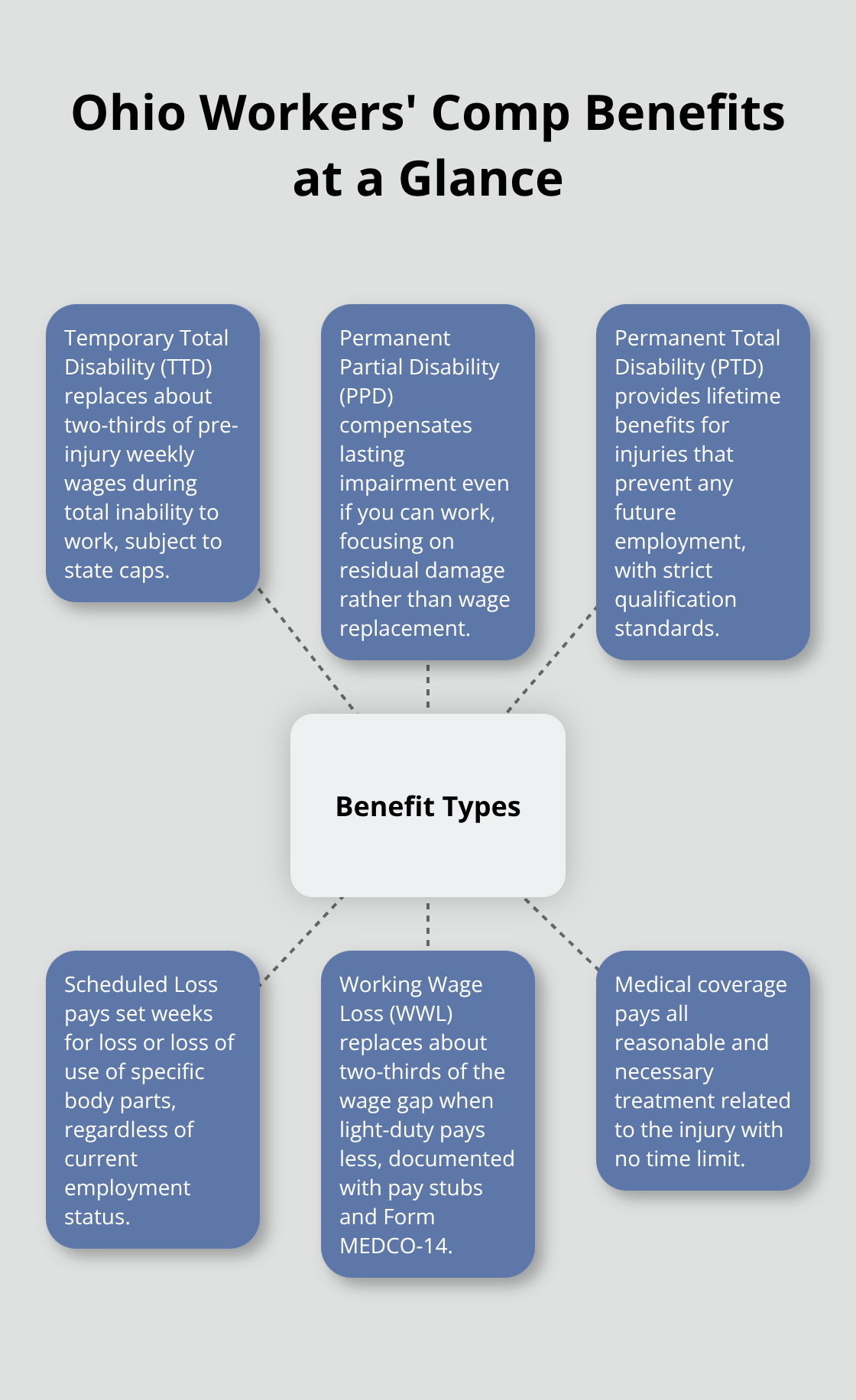
Ohio’s workers’ compensation system provides four distinct benefit types, and understanding which ones apply to your situation determines how much you recover. Temporary Total Disability (TTD) covers lost wages when you cannot work at all during recovery, replacing about two-thirds of your pre-injury weekly wage according to state caps set by the BWC. Permanent Partial Disability (PPD) compensates you for lasting bodily impairment, and this benefit works differently than TTD-you can work full-time and still receive PPD because it addresses the remaining physical damage rather than wage replacement. Permanent Total Disability (PTD) applies only to catastrophic injuries that prevent you from ever working again, and it provides lifetime benefits, making it the most valuable award but also the hardest to qualify for. Scheduled Loss payments compensate for loss of or loss of use of specific body parts like fingers, hands, or eyes, and these awards follow a fixed number of weeks outlined in the Ohio Revised Code regardless of whether you’re currently employed. Working Wage Loss (WWL) covers part of your wage gap when you return to light-duty work that pays less than your pre-injury job, typically replacing about two-thirds of the difference up to state caps, and you’ll need pay stubs plus the Form MEDCO-14 to document this benefit. Medical coverage pays all reasonable and necessary treatment connected to your injury with no time limit, which means ongoing therapy, medications, and specialist visits remain covered as long as they relate to your workplace injury.
How the Industrial Commission Reviews Your Case
The Industrial Commission of Ohio conducts hearings when the BWC denies benefits or reduces them, and this is where your claim either gets restored or gets rejected permanently. A District Hearing Officer reviews your medical evidence, wage records, vocational information, and testimony to determine what benefits you deserve, and the decision carries legal weight that determines your recovery going forward. Most workers lose at the hearing stage because they present incomplete medical documentation or fail to counter the managed care organization’s arguments about medical necessity and work-relatedness.
Why Legal Representation Matters at Your Hearing
Legal representation matters significantly here because attorneys know which evidence persuades hearing officers and how to challenge MCO decisions effectively. When an insurer’s medical advisor contradicts your treating physician, an experienced workers’ compensation attorney presents the case in ways that emphasize your doctor’s firsthand knowledge versus the insurer’s financial incentive to deny claims. You should seek representation before your hearing, not after a loss, because the appeal window closes quickly and missing deadlines bars your case entirely. An attorney familiar with Ohio’s system understands how hearing officers evaluate cases and which arguments carry weight in your specific situation.
Final Thoughts
Ohio’s workers’ compensation system protects injured workers through medical coverage, wage replacement, and disability benefits, but only when you act decisively within strict deadlines. The BWC administers claims while the Industrial Commission handles disputes, and both agencies enforce rules that determine whether you recover your benefits or lose them permanently. Filing within two years, documenting the work-injury connection clearly, and gathering complete medical records separate successful claims from denied ones.
The appeals process demands precision because missing a deadline bars your case entirely. District Hearing Officers review medical evidence, wage records, and vocational information to determine your recovery, and most workers lose at this stage without professional guidance. Managed care organizations hired by employers influence medical approvals, creating adversarial dynamics that require strategic counterarguments to protect your interests.
If you haven’t filed yet, gather your medical records, wage information, and witness statements immediately, then submit your claim through the BWC portal or in person at their Columbus office. If your claim faced denial, request a hearing before the Industrial Commission without delay. Contact an experienced workers’ compensation attorney who understands Ohio’s procedural requirements and can evaluate your situation at no cost.