
Workplace injuries happen fast, but understanding your legal rights after injury takes time. At Robin J Peterson Company, LLC, we know that Ohio workers need clear answers about what protections actually apply to them.
This guide walks you through your workers’ compensation rights, how to file a claim, and what to do when obstacles appear.
What Ohio Workers’ Compensation Actually Covers
Ohio’s workers’ compensation system protects most employees who suffer job-related injuries, but understanding what actually qualifies for coverage matters more than assuming you’re protected. The Ohio Bureau of Workers’ Compensation administers this system, and eligibility hinges on one core fact: your injury must arise out of and occur during your employment. A back injury from lifting boxes at work qualifies, but a pre-existing condition that worsens slightly during your shift often does not. Most employees in Ohio receive automatic coverage through their employer’s workers’ compensation policy, though independent contractors and sole proprietors typically fall outside this protection. If your employer claims you’re not eligible, that claim warrants immediate scrutiny because misclassification happens more often than workers realize.
Benefits You Can Actually Receive
The BWC offers several distinct benefit types, and knowing which ones apply to your situation prevents you from leaving money on the table. Medical expense coverage pays for treatment related to your workplace injury, including doctor visits, hospitalizations, medications, and therapies. This benefit has no time limit as long as the treatment connects to your original injury. Temporary Total Disability benefits replace your wages when you cannot work during recovery, calculated using your average earnings from the six weeks before your injury. If you must accept lower-paying work due to permanent limitations, Wage Loss benefits compensate the difference between your prior income and your new salary. Permanent Partial Disability applies when you retain some ability to work but suffer lasting impairment, while Permanent Total Disability provides ongoing support if you become unable to work at all. Death benefits protect your family if a workplace injury proves fatal.
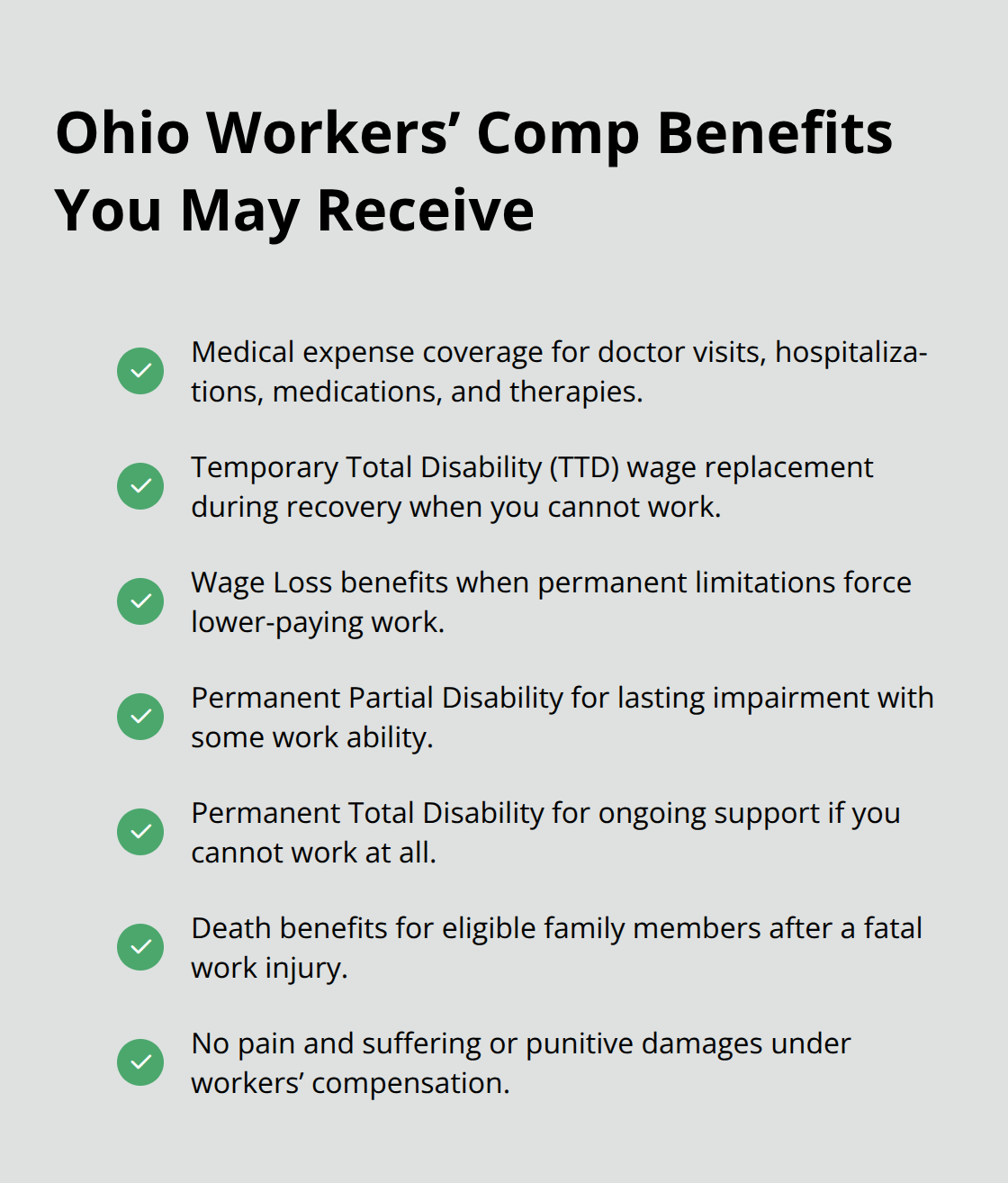
The system does not cover pain and suffering or punitive damages, which is why workers sometimes pursue separate legal claims against negligent third parties involved in their injuries.
How the BWC Processes Your Claim
The BWC receives injury reports from employers and medical providers, then assigns your case to a managed care organization that coordinates medical treatment and benefit payments. This process typically unfolds over weeks, not days, so patience combined with persistent documentation strengthens your position. You can file your claim online through the BWC’s digital system, which creates a timestamped record that protects you far better than verbal reports alone. The managed care organization reviews medical evidence to determine whether your injury qualifies for benefits and what type of benefit applies. If the BWC or your employer’s insurance carrier denies your claim, you have the right to request a hearing before the Industrial Commission of Ohio, where you can present evidence and testimony. Many workers face delays because they fail to report injuries in writing or because medical providers submit incomplete documentation, so submit detailed written reports immediately after injury to prevent unnecessary administrative friction. The entire process moves faster when you document everything from day one and respond promptly to any BWC requests for additional information.
What Happens When Claims Face Obstacles
Claim denials, employer disputes, and administrative delays create real obstacles that workers must navigate strategically. The next section walks you through these common obstacles and explains exactly how to respond when they appear.
How to File Your Claim the Right Way
Report Your Injury in Writing Immediately
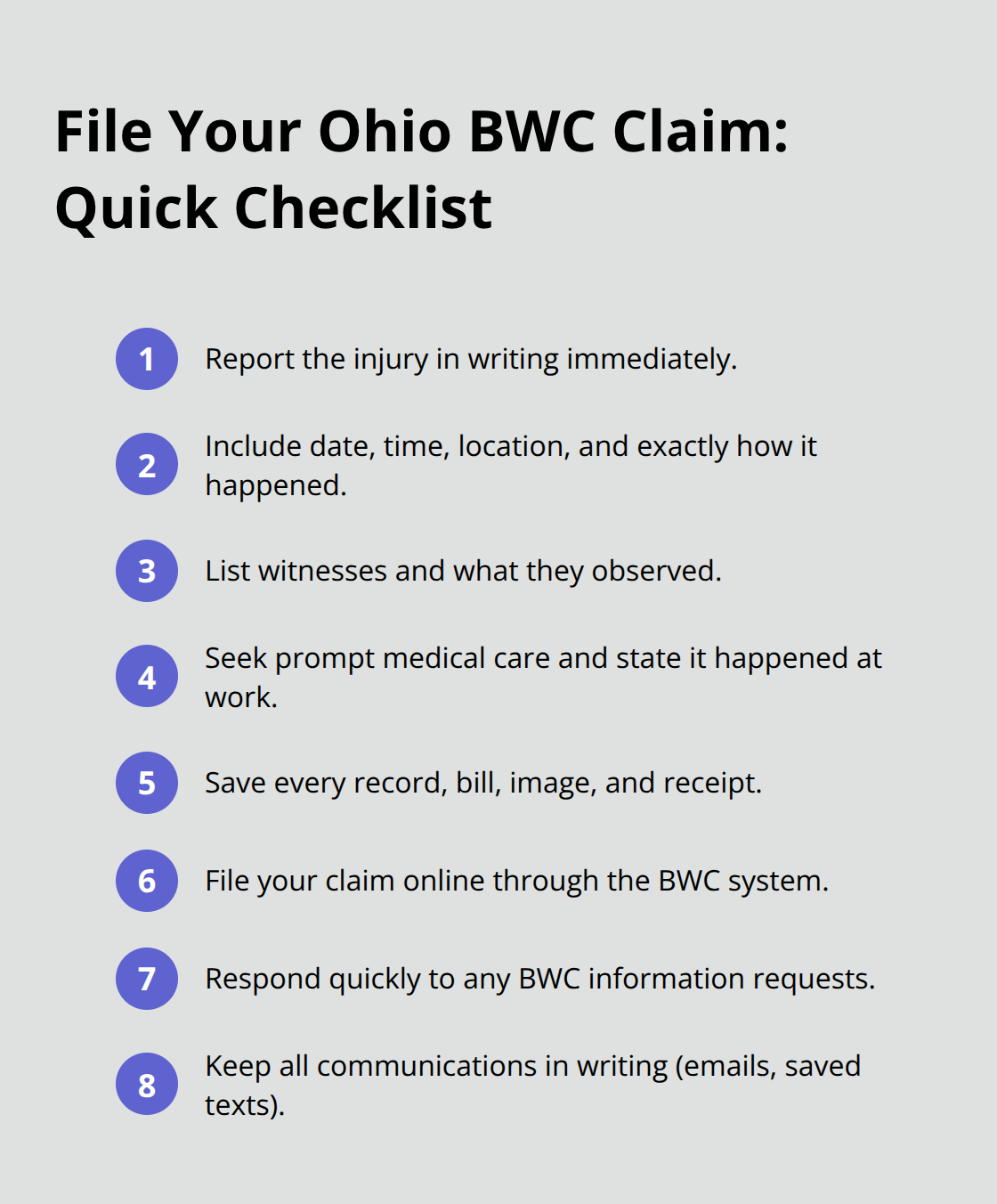
Report your injury to your employer immediately, and do this in writing as well as in person whenever possible. Most workers make the mistake of mentioning an injury casually to a supervisor and assuming that verbal report protects them legally-it does not. The Ohio Bureau of Workers’ Compensation requires employers to report injuries, but your written report creates a timestamped record that proves you notified your employer on a specific date and time. Include the exact date, time, location, and detailed description of how the injury occurred. If witnesses saw the injury happen, write down their names and what they observed. Take photographs of the scene if it is safe to do so, and photograph any visible injuries or hazardous conditions that caused the incident. Submit this written report to your employer’s safety department or human resources, and keep a copy for yourself.
Many employers deliberately delay reporting injuries to the BWC because delays can weaken your claim. Your written documentation forces transparency and creates evidence that protects your legal position.
Gather Medical Evidence Right Away
Seek medical treatment right away and tell the doctor exactly when and how the injury occurred during work. Vague descriptions or delayed treatment create doubt about whether your injury actually arose from your job. Keep every medical record, bill, and receipt, including initial emergency room visits, follow-up appointments, imaging results, and prescription receipts. The quality of your documentation directly determines whether the BWC approves your claim.
Contact your medical provider and ask them to submit records to the BWC directly rather than waiting for the insurance company to request them. This step accelerates the claims process and prevents administrative delays that work against your interests.
Document All Communications in Writing
Document all communications with your employer, insurance carrier, or medical provider through email when possible, because written records are far stronger than verbal conversations when disputes arise later. Take screenshots of text messages and save emails in a separate folder specifically for your claim. If your employer or their insurance carrier contacts you, respond in writing and avoid phone calls that leave no record. Written documentation protects you when claim disputes emerge, and it provides clear evidence of what was said and when it was said.
File Your Claim Online With the BWC
File your claim online through the BWC’s digital system at your earliest opportunity because the filing date matters for benefit calculations and legal deadlines. The BWC processes claims faster when medical documentation is complete and submitted early. The online filing system creates an official record that the BWC timestamps, which strengthens your position if disputes arise later about when you filed.
When you file your claim promptly and submit complete medical documentation, you eliminate unnecessary delays that can affect your benefits. The next section explains what obstacles commonly appear during the claims process and how to respond when they do.
What Stops Workers From Getting Their Benefits
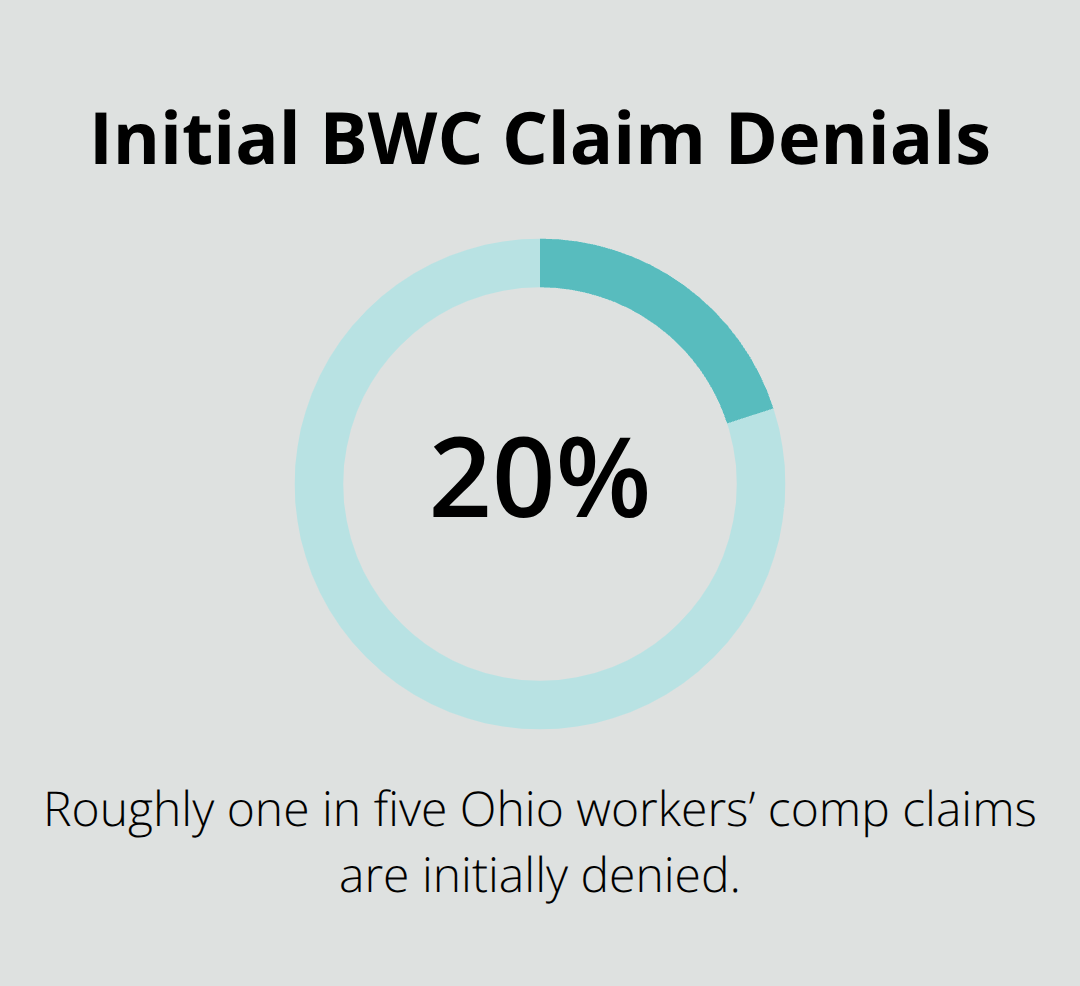
The BWC denies roughly one in five claims initially, and many of those denials stem from preventable documentation gaps rather than legitimate ineligibility. The most common reason for denial is insufficient evidence linking your injury to work duties, which happens when workers fail to provide detailed written reports or when medical providers submit incomplete treatment records.
How to Respond to Claim Denials
If the BWC denies your claim, you have the right to request a hearing before the Industrial Commission of Ohio, where you can present evidence and testimony to challenge the denial. This hearing is not automatic-you must request it in writing, and the deadline matters because Ohio gives you only a limited window to appeal. Contact the Industrial Commission of Ohio’s Ombuds Office immediately after a denial to clarify your appeal rights and deadlines. The Ombuds Office provides free assistance navigating disputes, and this service exists specifically because workers often face obstacles they cannot overcome alone.
When you request a hearing, prepare written statements explaining exactly why your injury arose from your job. Gather medical records showing treatment dates and diagnoses, and document any communications with your employer about the injury. This evidence transforms a weak denial into a winnable case.
Handling Disputes With Employers and Insurance Carriers
When your employer or their insurance carrier disputes your claim, they typically claim either that the injury did not occur at work or that you failed to report it timely. Fight this dispute with your written injury report, witness statements, and medical records linking treatment to your work duties. These three elements form an almost unbeatable foundation for your position.
Disputes with insurance carriers often center on which medical providers you can see or what treatments qualify for coverage. The managed care organization assigned to your case controls these decisions, but you can challenge decisions you believe are wrong by requesting a separate medical opinion or filing a dispute with the BWC. Do not accept carrier restrictions without question-challenge them when they prevent you from accessing necessary care.
Overcoming Timeline Delays and Administrative Inaction
Timeline delays frequently occur because the BWC, your employer, or medical providers move slowly responding to requests, and passivity on your part guarantees longer delays. Contact the BWC’s Help Center at 1-800-644-6292 if your claim has not progressed in two weeks, because persistent follow-up forces action where silence permits indefinite waiting.
Request written confirmation of every step in your claims process-confirmation that your claim was filed, confirmation that medical records were received, confirmation of benefit approval or denial. This written trail prevents the common situation where workers assume their claim is progressing when actually nothing has happened. If delays persist beyond reasonable timeframes, contact a workers’ compensation attorney in Ohio who can pressure the system to move faster and identify whether deliberate delay is occurring.
When to Seek Legal Representation
Workers’ compensation attorneys understand the system’s mechanics and know exactly which pressure points force action. An attorney can identify whether your case warrants appeal, whether disputes with carriers are winnable, and whether timeline delays violate Ohio law. At Robin J Peterson Company, LLC, we represent injured workers throughout Ohio who face exactly these obstacles, and our experience shows that workers who document thoroughly overcome most barriers that initially appear insurmountable.
Final Thoughts
Your legal rights after injury in Ohio protect you when you act strategically from the moment harm occurs. The Ohio Bureau of Workers’ Compensation provides medical benefits, wage replacement, and disability support that stabilize your finances during recovery, but only workers who document everything immediately and report injuries in writing maximize these protections. Obstacles will appear-denials happen, disputes with employers and insurance carriers emerge, and administrative delays frustrate workers who expect faster action-yet these barriers yield when you understand your rights and challenge decisions that harm your interests.
The Industrial Commission of Ohio’s Ombuds Office exists specifically to help workers navigate denials and delays at no cost, and this free resource deserves your attention if your claim faces obstacles. Workers’ compensation attorneys understand the system’s pressure points and know exactly which arguments persuade the BWC and Industrial Commission to reverse unfavorable decisions. Workers who combine thorough documentation with skilled legal advocacy recover far more than those who navigate the system alone.
Contact Robin J Peterson Company, LLC if your claim faces obstacles or if you need guidance understanding your options. We represent injured workers throughout Ohio who face these exact challenges, and we fight to secure the benefits you earned through your work injury.