
Getting injured at work in Ohio can feel overwhelming, especially when you’re unsure about your rights and next steps. We at Robin J Peterson Company, LLC understand that navigating Ohio workers compensation resources requires clear guidance and reliable information.
This guide walks you through the system, from understanding how the Ohio Bureau of Workers’ Compensation operates to knowing when you need legal representation. You’ll find practical steps to file your claim, appeal if necessary, and access the support available to you.
How Ohio’s Workers Compensation System Actually Works
The Ohio Bureau of Workers’ Compensation administers all workplace injury claims in the state, operating as a state-run insurance system rather than relying on private insurers. When you’re injured at work, your employer files the claim with the BWC, not the other way around-this is a critical distinction because many injured workers waste time trying to initiate claims independently. The BWC processed over 200,000 claims annually in recent years according to their public data, making it one of the largest workers’ compensation systems in the nation. Your employer is legally required to report your injury immediately, and the BWC then assigns your claim a number and designates a managed care organization to coordinate your medical treatment.
Filing Your Claim Correctly
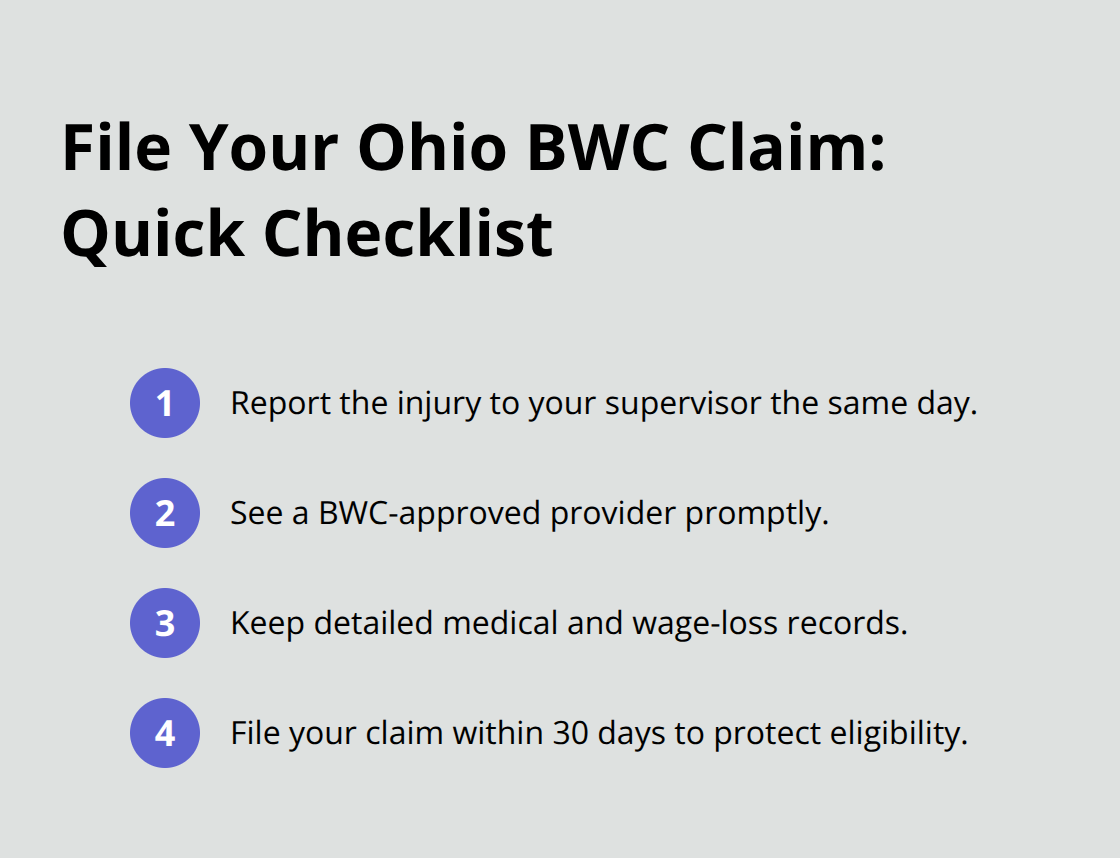
The system moves faster than most people expect if you follow the proper steps. Report your injury to your supervisor the same day it happens, obtain medical attention from a BWC-approved provider, and maintain detailed records of all medical appointments and wage loss. Many injured workers file claims incorrectly by contacting the wrong agency or missing the BWC’s deadlines, which results in delayed benefits or denied claims entirely. File your claim within 30 days of your injury to protect your eligibility for all available benefits.
What Benefits You Actually Receive
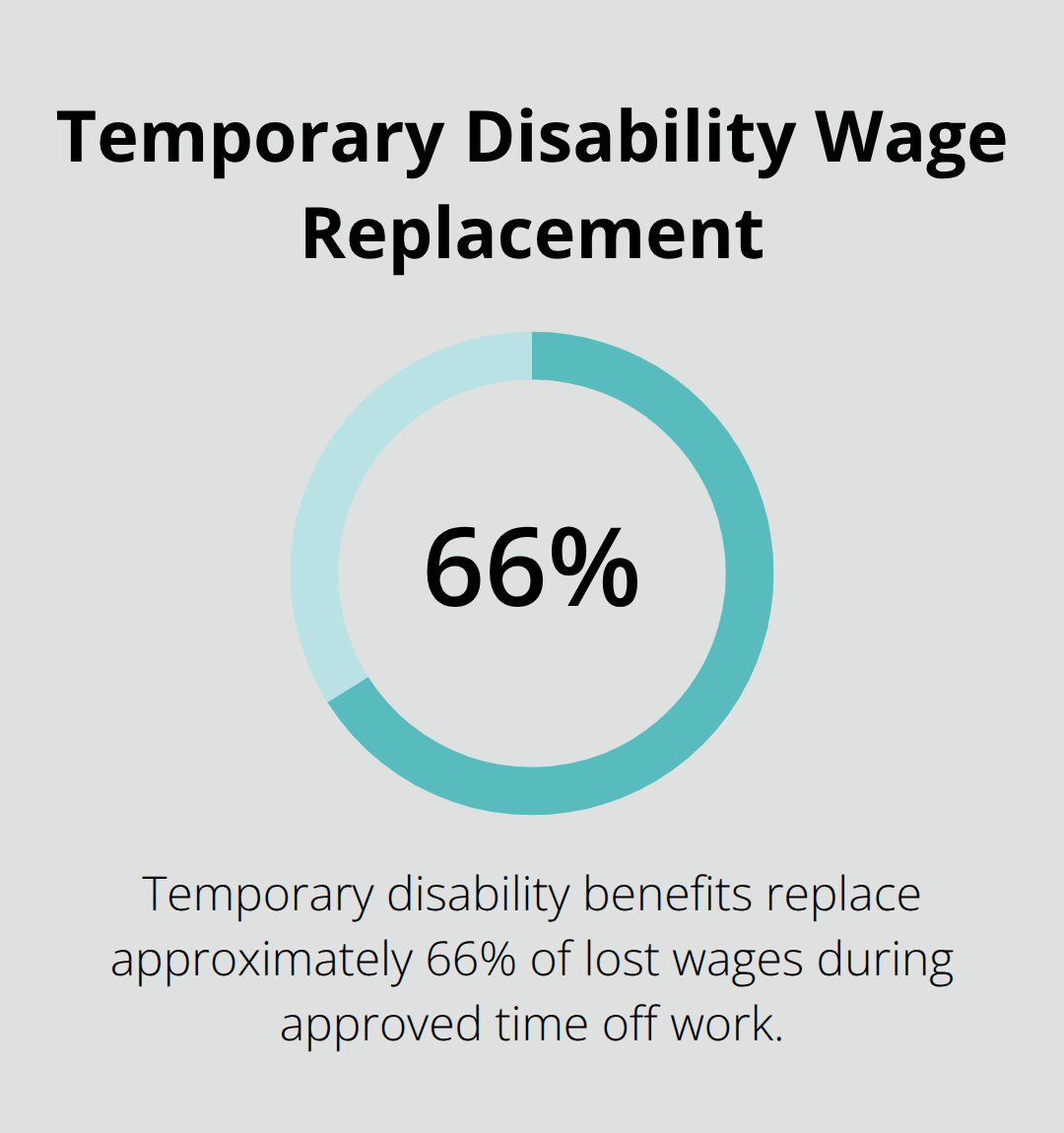
Ohio provides three primary benefit categories to injured workers, and understanding which ones apply to your situation determines your financial stability during recovery. Temporary disability benefits replace approximately 66% of your lost wages while you’re unable to work, though a waiting period of seven days passes before payments begin-if your injury keeps you out of work for more than two weeks, the BWC backdates payment to include that first week. Permanent disability benefits apply if medical evidence shows your injury caused lasting impairment, calculated through a combination of medical assessment and vocational evaluation that considers your age, education, and ability to return to your previous job. Medical benefits cover all reasonable treatment from approved providers, including doctor visits, physical therapy, medications, and surgical procedures related to your work injury.
Using the Provider Search Tool
The key action here is this: use the BWC’s provider search tool to locate approved medical professionals before seeking treatment, because treatment from non-approved providers can complicate your claim or reduce your benefits. Many injured workers delay filing, thinking minor injuries will resolve on their own, then discover they’ve missed critical deadlines that affect their eligibility for wage replacement benefits. The provider search supports location-based queries (city, state, ZIP, county) to help you locate nearby resources and providers in your area.
Once you understand how benefits work and file your claim correctly, the next challenge emerges: knowing what happens if the BWC denies your claim or disputes your benefits.
What Happens When the BWC Denies Your Claim
The Industrial Commission of Ohio exists for one reason: to resolve disputes between injured workers and the BWC when claims get denied or benefits are challenged. This independent agency handles appeals, conducts hearings, and makes binding decisions on workers’ compensation matters across the state. If the BWC rejects your claim or reduces your benefits, you have the right to request a hearing before the Industrial Commission-and this is where many injured workers discover that denied claims aren’t final. The Industrial Commission processed thousands of appeals annually, with a significant percentage resulting in overturned denials or increased benefit awards, which means fighting a rejection is worth your effort. The agency operates separately from the BWC itself, giving you an impartial review of your case by administrative judges who specialize in workers’ compensation law.
Why Claims Get Denied in the First Place
The BWC denies claims for specific, identifiable reasons, and understanding these reasons before filing strengthens your position if you need to appeal. The most common denial involves failure to report your injury within the required timeframe-Ohio law requires you to notify your employer immediately, and waiting weeks or months significantly weakens your claim. Non-work-related injuries represent another frequent reason for denial; the BWC scrutinizes injuries that occurred during lunch breaks, commutes, or activities unrelated to your actual job duties, and you’ll need medical evidence showing a direct connection between your work and your injury.
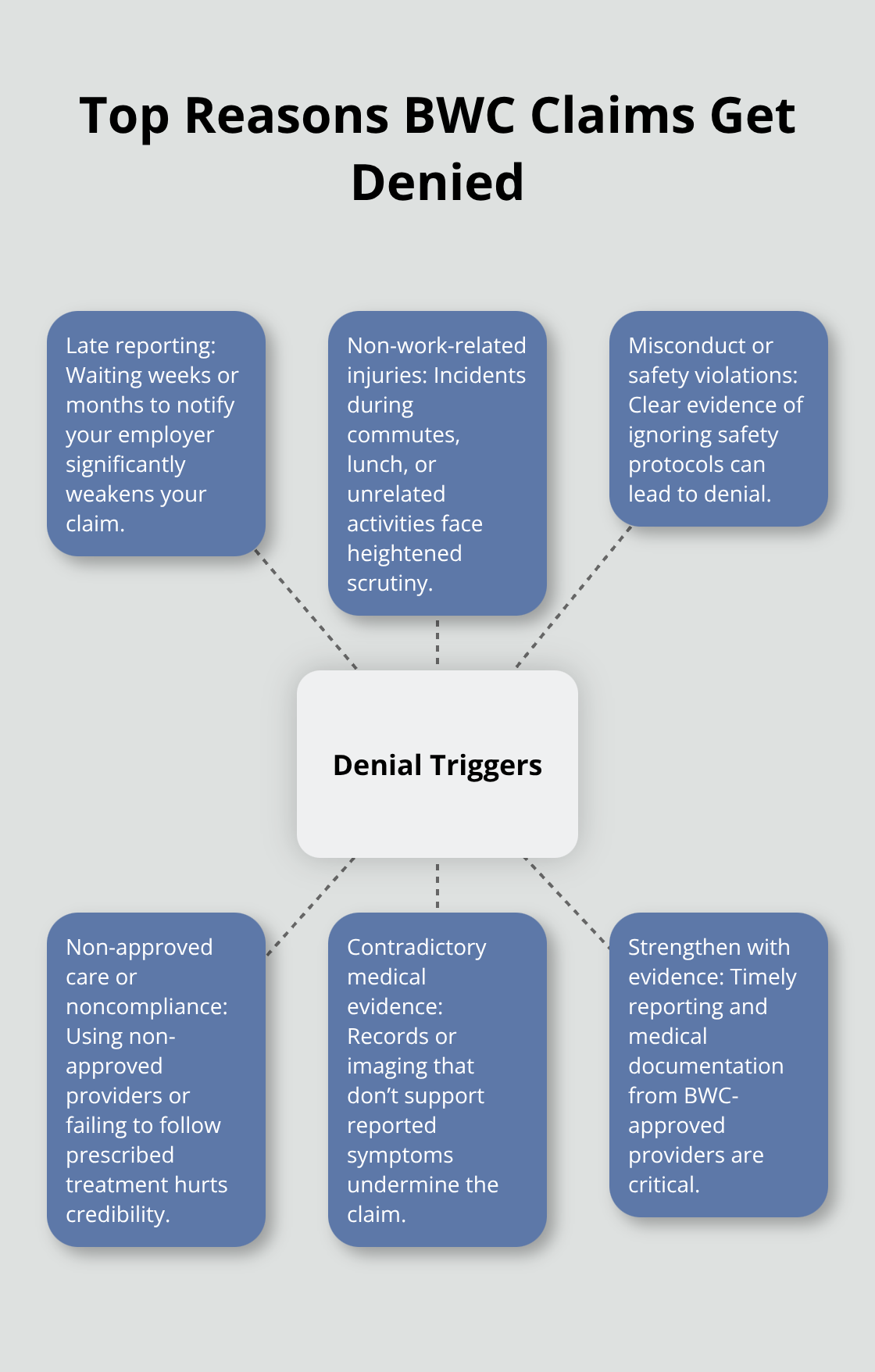
Injuries that result from your own misconduct or violation of safety rules face denial, though the BWC applies this standard strictly and requires clear evidence that you deliberately ignored safety protocols. Some claims get denied because injured workers seek treatment from non-approved providers or fail to follow prescribed medical care, which signals to the BWC that your injury may not be as serious as claimed. Medical evidence that contradicts your injury claim-such as imaging studies showing no structural damage when you’ve reported severe pain-creates grounds for denial, and this is where a second medical opinion from a BWC-approved provider becomes critical before your initial claim review concludes.
Filing Your Appeal and What to Expect
You must request your hearing within one year of the BWC’s denial decision, because missing this deadline eliminates your right to appeal entirely. The Industrial Commission requires you to file a written request for hearing, and you can do this directly without legal representation, though an experienced workers’ compensation attorney significantly increases your chances of success. Prepare detailed documentation before your hearing: gather all medical records from BWC-approved providers, wage statements showing your lost income, photographs of your workplace if relevant, and written statements from coworkers who witnessed your injury. The hearing itself involves presenting your case to an administrative judge who reviews evidence, hears testimony from you and potentially your employer, and examines medical records to determine whether the BWC’s denial was justified. The Industrial Commission typically issues decisions within weeks of your hearing, and if you disagree with that decision, you have the right to appeal to the Commission’s full board. Many injured workers underestimate the importance of documentation during the appeal process; the judge cannot consider evidence you don’t present, so incomplete records or missing medical evaluations work against your case regardless of the actual merits of your injury.
When Legal Representation Becomes Essential
You can navigate the appeal process alone, but the complexity of workers’ compensation law and the stakes involved make professional representation a practical advantage. An attorney who specializes in workers’ compensation law (particularly one with experience in Ohio’s system) knows how to present evidence effectively, challenge the BWC’s medical findings, and argue your case before the Industrial Commission. The Cleveland, Akron, and Canton areas have qualified legal professionals who focus on workers’ compensation claims and can guide you through each step of the appeal. Your attorney can also identify weaknesses in the BWC’s denial decision and build a stronger case than you could alone, which directly affects whether the Industrial Commission overturns the denial or upholds it.
Understanding why claims get denied and how to appeal positions you to fight back against the BWC’s initial decision. However, even after you win your appeal or secure your initial claim approval, new challenges emerge when you attempt to return to work or face complications with your medical care and ongoing benefits.
Where to Find Help and Who to Contact
Starting with the BWC Help Center
The Ohio Bureau of Workers’ Compensation operates the Help Center as your first stop for questions about filing deadlines, medical providers, and benefit calculations. The Help Center answers frequently asked questions and guides you through specific services, saving you hours of research or phone calls to figure out basic procedures. The BWC’s online account system lets you track claim status in real time, upload documents directly, and communicate with claims staff without visiting a service office. Many injured workers overlook the online account feature and instead call repeatedly asking for status updates that they could check themselves within seconds.
Accessing In-Person Support
If you need in-person assistance, the BWC maintains service offices across Ohio, including locations near major population centers where staff can review your claim details and answer questions about your specific situation. The Ombuds Office within the Industrial Commission of Ohio provides independent guidance if you feel the BWC has mishandled your claim or if you’re unsure whether an appeal makes sense in your situation. This office operates separately from the BWC itself, meaning staff can offer impartial advice without bias toward the agency that administers claims. Contact information for service offices and the Ombuds Office appears on the BWC website, and response times for inquiries typically fall within five business days.
Why Legal Representation Matters
Legal representation transforms your appeal from a solo effort into a strategic fight backed by someone who knows Ohio workers’ compensation law inside and out. An attorney specializing in workers’ compensation identifies weaknesses in the BWC’s denial that you’d likely miss, challenges medical findings that contradict your actual injury, and presents evidence in the format that administrative judges actually respond to during hearings. Many law firms offer free initial consultations, which means you can discuss your case without financial obligation before deciding whether representation makes sense for your situation.
Finding the Right Attorney
The Ohio State Bar Association provides referrals to qualified workers’ compensation attorneys if you want options beyond a single firm, and you can also ask the Industrial Commission Ombuds Office for recommendations based on your specific circumstances. Organizations like the Ohio Legal Help website connect low-income injured workers with legal assistance programs that may cover representation costs if you cannot afford private counsel. Robin J. Peterson Company, LLC focuses specifically on Ohio workers’ compensation claims and represents injured workers across the Cleveland, Akron, and Canton areas, with experience fighting denials and securing benefit increases through the Industrial Commission.
Making Your Decision About Representation
The decision to hire an attorney depends on claim complexity, whether the BWC has already denied your claim, and your comfort level presenting evidence and testimony before an administrative judge. Statistics consistently show that represented workers win appeals at significantly higher rates than those navigating the process alone (a fact that reflects the complexity of workers’ compensation law and the advantage of professional expertise in presenting cases to administrative judges).
Final Thoughts
Ohio’s workers compensation system protects injured workers through clear pathways to benefits, but you must report injuries immediately and file correctly to access those protections. The Ohio Bureau of Workers’ Compensation processes claims efficiently when you follow proper procedures, while the Industrial Commission of Ohio stands ready to overturn denials that lack solid evidence. If the BWC has denied your claim, understand that denial isn’t final-the Industrial Commission overturns denials regularly when presented with proper legal arguments and documentation.
Your situation determines your next action. If you’re injured now, report it to your employer today and seek treatment from a BWC-approved provider within days. If the BWC has already denied your claim or reduced your benefits, contact Robin J. Peterson Company, LLC to discuss whether representation strengthens your position in an appeal. The firm offers free initial consultations and represents injured workers across Cleveland, Akron, and Canton with experience fighting denials and securing the benefits you’ve earned.
Professional guidance matters because Ohio workers compensation resources and technical requirements trip up unrepresented workers constantly. An attorney who specializes in workers’ compensation law knows how to present evidence effectively, challenge medical findings, and argue your case before administrative judges. Don’t navigate this system alone when experienced professionals stand ready to help you fight for what you deserve.