
A BWC claim hearing in Ohio can feel overwhelming if you don’t know what to expect. The process involves specific procedures, documentation requirements, and arguments that require careful preparation.
We at Robin J Peterson Company, LLC help injured workers navigate these hearings successfully. This guide walks you through each stage so you can present your case effectively.
How BWC Hearings Actually Work in Ohio
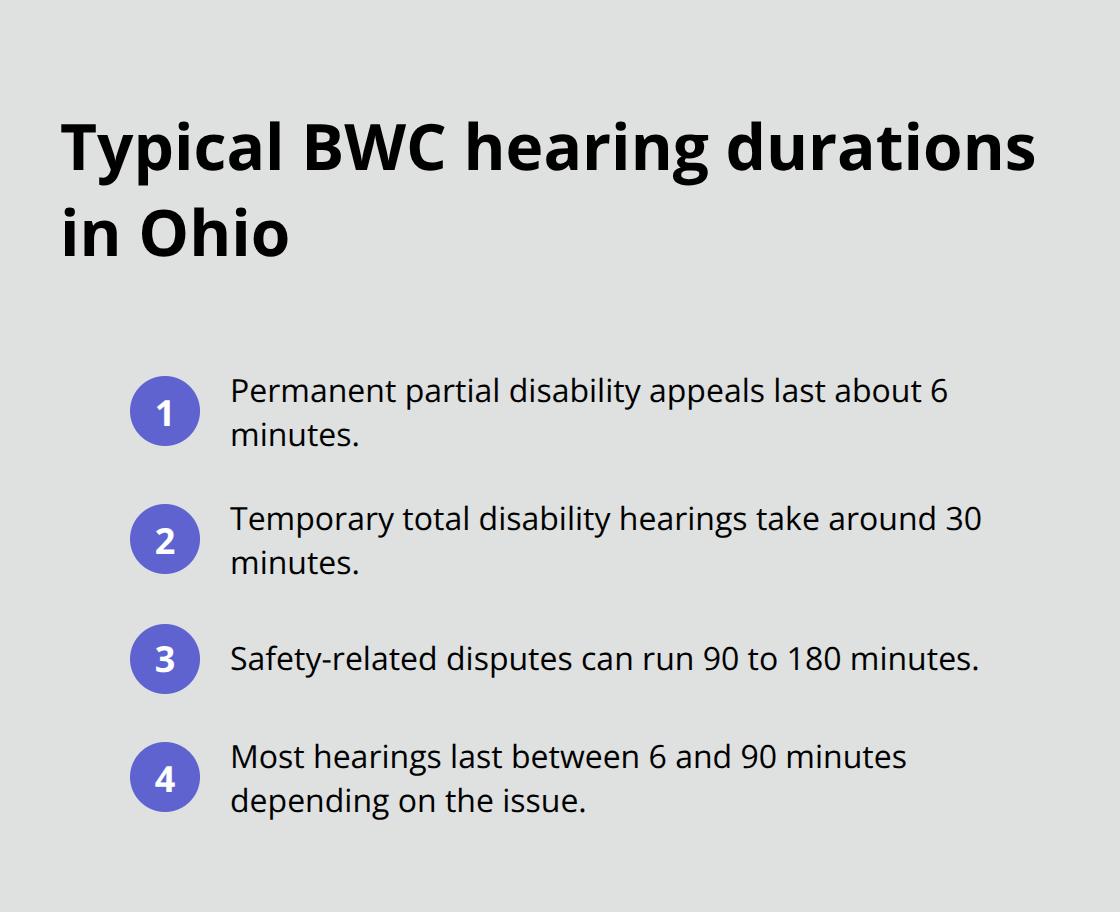
The Ohio Industrial Commission conducts nearly 100,000 hearings annually, and most of them move quickly. Your hearing will last between 6 minutes and 90 minutes depending on the issue being disputed. If you’re appealing a permanent partial disability decision, expect roughly 6 minutes total-about 3 minutes for your side to present. If you’re fighting for temporary total disability, plan for around 30 minutes. Safety-related disputes are the exception; those hearings can stretch 90 to 180 minutes and may involve a court reporter.
The Hearing Officer’s Role and Style
The hearing officer is an attorney hired and trained by the Industrial Commission, not a judge. Their job is to evaluate medical records, listen to testimony, and decide the disputed issue based on evidence. Hearing officers vary significantly in their approach. Some invite you to speak first; others let the employer present their position before you get your turn. Some ask numerous clarifying questions throughout; others ask very few. This inconsistency matters because it affects how you’ll need to adapt during your hearing.
The physical setup in most hearings has the employer and their representative on one side, the injured worker with their attorney on the other, and potentially a BWC staff attorney present. Since COVID, many hearings happen by telephone or video, which means you call into a queue where the hearing officer conducts multiple cases back-to-back. When your name is called, you join the hearing.
The entire process is less adversarial than courtroom drama suggests. Decorum is expected, and shouting matches don’t happen. If you feel attacked, take a breath and respond firmly but politely-maintaining composure is viewed favorably by hearing officers. The hearing officer will not announce a decision on the spot. Instead, a written order arrives by mail within seven days after the hearing closes, detailing the outcome and explaining which evidence the officer relied on to reach that decision.
What the Hearing Officer Focuses On
The hearing officer’s attention depends entirely on the issue listed in your hearing notice. If you’re fighting for initial claim allowance, the officer wants to know exactly how the injury happened, what job you were performing, how long you’d worked in that role, and whether you had prior injuries. You’ll answer questions about when you reported the injury, who you told first, and how you sought medical treatment. The officer will probe your medical history because prior injuries can affect credibility, though they don’t automatically disqualify a new claim.
For medical treatment disputes, the hearing officer evaluates whether the proposed treatment is related to your injury, whether it’s necessary, whether it’s cost-effective, and whether it’s likely to help your recovery. You should be ready to explain your doctor’s reasoning for recommending the treatment and describe what other treatments you’ve already tried. Permanent partial disability hearings focus narrowly on the impairment percentage derived from medical reports, making medical documentation the centerpiece. Temporary total disability hearings require you to discuss your work history, all treatments received, rehabilitation efforts, retirement status, and whether you’ve applied for or received Social Security benefits or pensions. The officer wants a clear picture of your typical day and your functional limitations.
Preparing for Hearing Day
Dress appropriately-clean clothes without a ball cap are standard, though you don’t need a suit. Avoid appearing disheveled. Make eye contact with the hearing officer when answering questions or presenting your case. If your hearing is by telephone, call a few minutes early with your claim number and hearing ID ready. Choose a quiet location with reliable phone service, test your connection beforehand, and have a backup phone, charger, pen, and paper available.
Keep your phone muted when not speaking to eliminate background noise. Speak clearly and slowly, take notes during the hearing, and wait for others to finish before responding. Most telephone hearings last about 20 minutes total, meaning each party typically gets roughly 10 minutes. If you have an attorney, they’ll present your case and may ask you to testify on specific issues. Focus your testimony on the exact issue listed in the hearing notice-the hearing officer has limited time and won’t appreciate tangential information.
The next section covers what specific disputes typically arise at these hearings and how to position your evidence to address them directly.
Getting Your Evidence Ready Before the Hearing
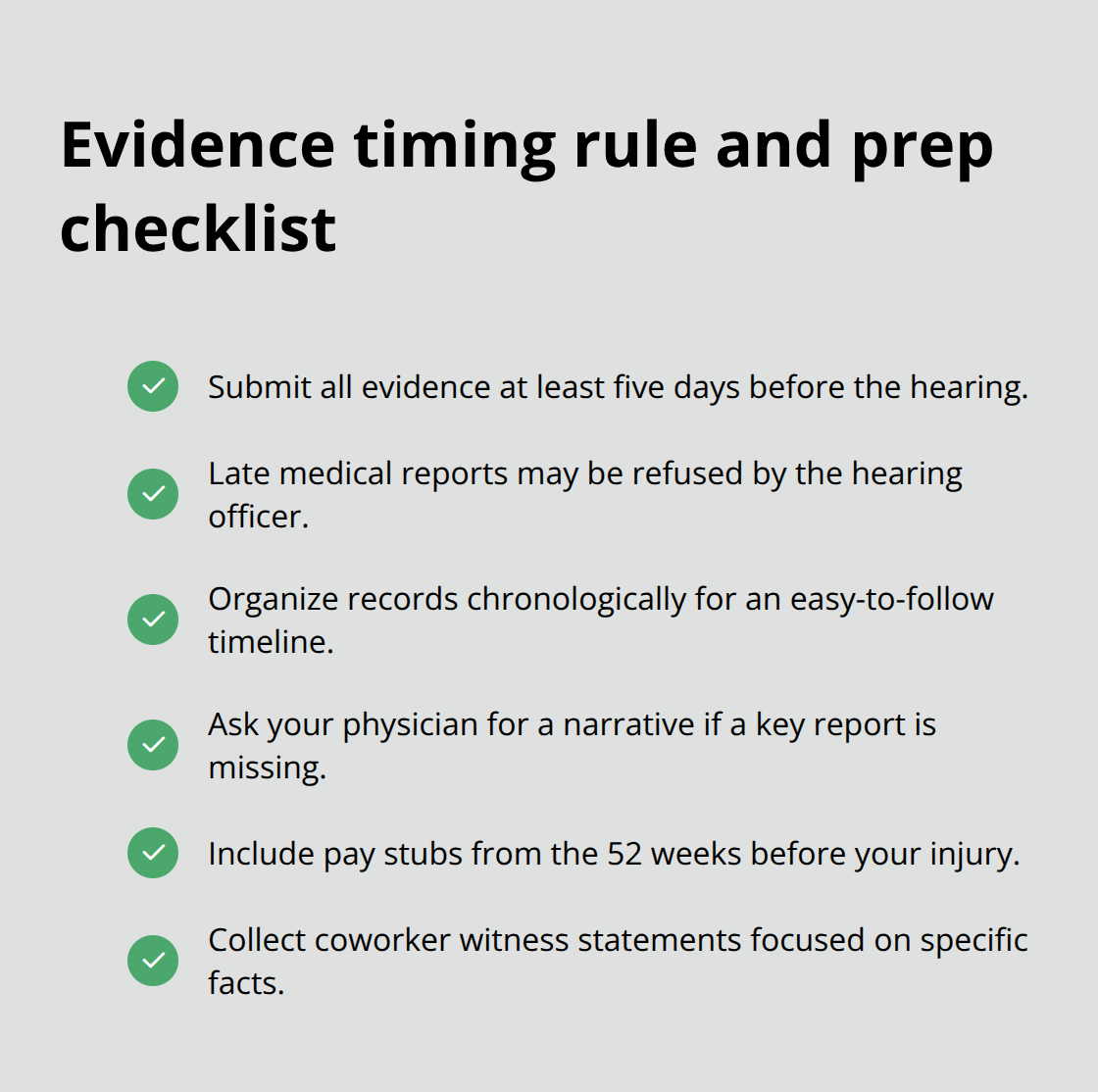
Winning at a BWC hearing depends almost entirely on preparation, and the most common mistake injured workers make is waiting until the last minute to gather documents. The Industrial Commission expects you to submit all evidence at least five days before your hearing, and if you miss that window, the hearing officer may refuse to consider new medical reports or test results.
Collect Medical Documents That Support Your Case
Start by pulling together every medical document connected to your injury: initial injury reports, emergency room records, treatment notes from all providers, work restrictions issued by doctors, and any independent medical examination reports. These documents form the backbone of the hearing officer’s decision. If a medical report doesn’t exist yet but would strengthen your case, contact your physician now and ask them to write a narrative describing the mechanism of injury and how it relates to your current symptoms.
Hearing officers rely heavily on medical evidence because it’s objective; your testimony alone carries less weight than medical documentation. Organize these records chronologically so the hearing officer can follow the timeline of your injury and treatment. This structure helps the officer see the progression of your condition and treatment decisions.
Gather Employment and Witness Documentation
Pull together employment documents: pay stubs from the 52 weeks before your injury (the IC uses this wage history to calculate benefits), records of missed workdays, any employer correspondence about the injury, and written statements from coworkers who witnessed what happened. If your hearing involves a safety dispute, the employer will likely have extensive documentation about machinery, training records, and safety protocols, so you need equally detailed evidence showing what actually occurred and what safety measures were or weren’t in place.
Coworkers who witnessed the injury can provide powerful testimony, but brief them beforehand on what to expect so they don’t ramble or contradict you. Their statements should focus on specific facts rather than opinions about fault or blame.
Anticipate Questions and Prepare Your Response
Review your hearing notice carefully and identify the exact issue being decided. If it says claim allowance, the officer will focus on how the injury happened and whether your job duties caused it, so prepare a clear, factual account with specific dates and details rather than vague generalizations. If the hearing concerns medical treatment, write down your doctor’s exact reasons for recommending the treatment and document what other treatments you’ve already attempted.
For temporary total disability hearings, list your medications, describe your typical day (including what tasks you can and cannot perform), and clarify your retirement and Social Security status because the IC considers these factors. Practice your testimony by speaking aloud about the key facts, not reading from notes. During the actual hearing, you’ll have roughly 10 minutes to present your side, so every word counts.
Address Prior Injuries and Build Credibility
Anticipate tough questions: the hearing officer will likely ask about prior injuries, so be direct and honest rather than evasive, because credibility determines whether the officer believes your medical evidence. Prior injuries don’t automatically disqualify a new claim, but inconsistency or evasion will damage your case significantly.
If your hearing is by telephone, test your phone line and internet connection the day before, ensure you have all documents within arm’s reach, and eliminate distractions so you can focus completely on the hearing officer’s questions. If you have an attorney, they will guide you through this preparation and handle evidence exchange with the employer’s representative, but you still need to provide them with complete information about your injury, treatment, and work history.
The specific disputes that arise at these hearings-and how to position your evidence to address them-require understanding what hearing officers actually focus on during each type of case.
What Disputes Actually Come Up in BWC Hearings
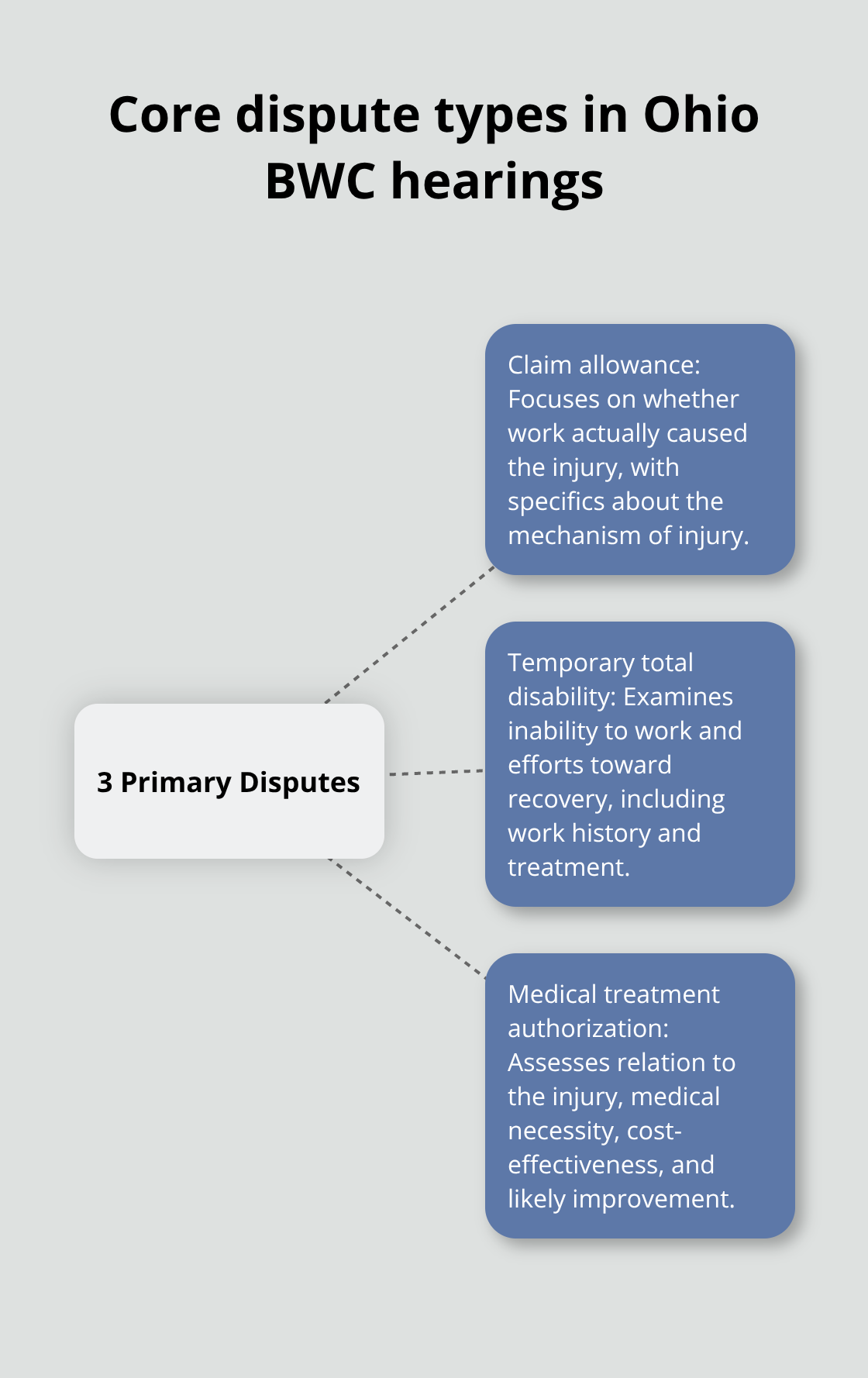
The three types of disputes that dominate BWC hearings in Ohio are claim allowance, temporary total disability, and medical treatment authorization. Each one requires a different evidentiary approach because hearing officers evaluate them through different lenses.
Claim Allowance: Proving Your Injury Was Work-Related
Claim allowance hearings focus on causation: did your job actually cause the injury you reported? The Industrial Commission conducts these hearings when the employer or BWC denies that the injury is work-related. You’ll face questions about the exact mechanism of injury, what you were doing when it happened, and whether your job duties directly caused the condition. The hearing officer wants specificity, not vague descriptions.
Instead of saying you hurt your back while lifting, explain that you lifted a 40-pound box from waist height to a shelf, felt a sharp pain in your lower left side, and immediately reported it to your supervisor. Dates matter tremendously. If you can’t remember the precise date, say so rather than guessing, because inconsistency destroys credibility. Employers often argue that pre-existing conditions or non-work activities caused the injury, so medical evidence showing the injury mechanism is essential. Ask your physician to document in writing how your job duties caused the specific injury you sustained.
Temporary Total Disability: Demonstrating Your Inability to Work
Temporary total disability disputes are lengthier hearings lasting around 30 minutes because the hearing officer evaluates whether you truly cannot work and whether you make reasonable efforts toward recovery. The officer will question your work history, all medical treatment you received, and any rehabilitation attempts you made.
Come prepared to describe your typical day in concrete terms: what time you wake up, which tasks cause pain or limitation, what medications you take and their side effects, and whether you applied for or received Social Security retirement or disability benefits. The IC considers retirement status because workers who retired may have less incentive to return to work. Similarly, if you applied for Social Security disability, the hearing officer views that as inconsistent with a temporary disability claim, so be direct about your status.
Medical Treatment: Establishing Medical Necessity
Medical treatment disputes center on whether the proposed treatment relates to your work injury, is medically necessary, is cost-effective, and will improve your condition enough to return you to work. The hearing officer rarely cares about your personal preference for a particular treatment; they care whether the treatment advances recovery.
Your physician’s written explanation of why this specific treatment is necessary and what alternatives failed is far more persuasive than your testimony alone. If you already tried physical therapy, injections, or medication without improvement, document that clearly because it strengthens the case for more advanced treatment. The hearing officer will scrutinize treatment requests that seem expensive or experimental, so your medical evidence must demonstrate medical necessity, not just potential benefit.
Final Thoughts
A successful BWC claim hearing Ohio depends on three factors: understanding what the hearing officer will focus on, preparing your evidence thoroughly, and presenting yourself clearly under pressure. The hearing officer does not expect you to be a legal expert-they expect you to know your injury, your treatment, and the facts surrounding what happened. Inconsistency or evasion will damage your credibility far more than admitting you don’t remember a specific detail.
After your hearing closes, a written order arrives within seven days. If the decision favors you, the BWC or your employer’s claims administrator will implement approved benefits within roughly two weeks, though authorized medical treatment can start sooner. If the decision is unfavorable or only partially favorable, you have 14 days to file an appeal through the Industrial Commission Online Network using the IC-12 Notice of Appeal form.
Working with an experienced Ohio workers’ compensation attorney improves your chances significantly because they develop stronger medical evidence, anticipate the hearing officer’s questions, and navigate the multi-level appeal process if needed. Attorney fees operate on a contingency basis and are capped by law, meaning you pay nothing unless you win. Contact Robin J Peterson Company, LLC for a free consultation to discuss your specific situation and next steps.