
A workplace injury in Ohio can feel overwhelming, especially when you’re unsure about your next move. At Robin J Peterson Company, LLC, we’ve helped countless workers navigate the workers’ comp claim guide process and understand their rights.
This roadmap walks you through each step, from reporting your injury to receiving benefits. We’ll show you what mistakes to avoid and when professional guidance makes the difference.
What Happens Right After Your Injury
Act Immediately at the Job Site
The first moments after a workplace injury in Ohio determine how smoothly your claim will proceed. Your immediate actions at the job site set the foundation for everything that follows. You must document the exact conditions when the injury occurred-note the time, weather, lighting, equipment involved, and any hazards present. Take photographs of the area if possible, and write down names and contact information for anyone who witnessed the incident. This documentation becomes invaluable later because memory fades, witnesses move on, and details blur together within weeks.
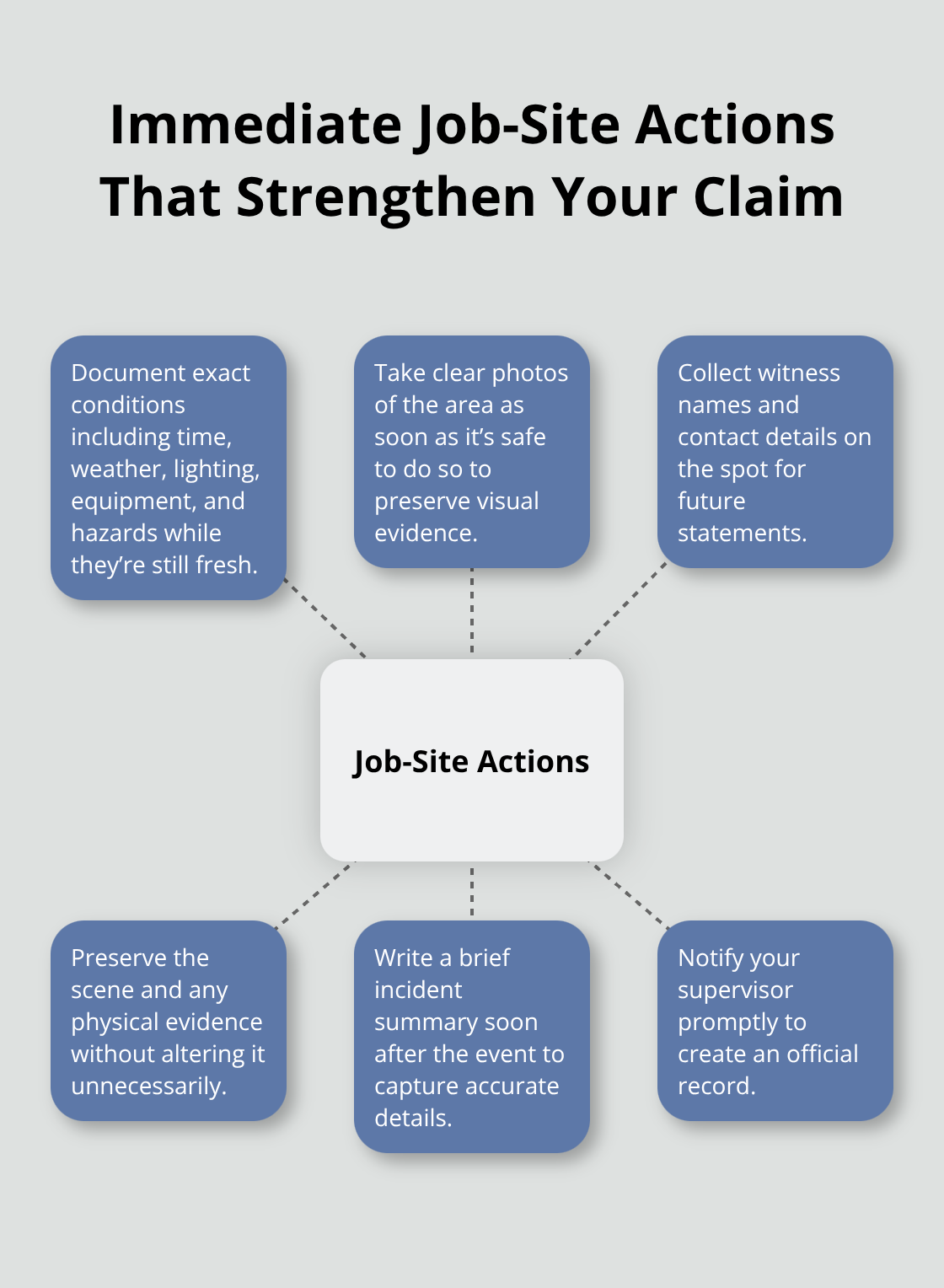
The Ohio Bureau of Workers’ Compensation investigates claims based on evidence, so the more concrete information you gather immediately, the stronger your position becomes.
Report Your Injury Without Delay
You must notify your employer without delay. Ohio law requires you to report the injury within one year of the incident, but waiting is a mistake we see workers make repeatedly. Report the injury to your supervisor or manager on the same day it occurs, and follow up in writing within 24 hours if possible. Your employer has a legal obligation to report the injury to the BWC, and this action triggers the official claims process. Many employers have specific incident report forms-fill them out completely and keep a copy for your records.
File Your Claim with Complete Documentation
When you file your claim directly with the BWC, you must include all medical records from your initial treatment, your incident report, witness statements, and photographs. The BWC processes claims through an investigation phase where they verify the injury occurred at work and was job-related. You reduce delays and prevent the BWC from requesting additional information later when you provide comprehensive documentation upfront. If you disagree with a claim decision, you have the right to appeal through the Ohio Industrial Commission, but that process takes months. Getting everything correct the first time avoids months of waiting and uncertainty, which is why the next section covers the specific rights and benefits you can expect throughout this journey.
What You’re Actually Entitled to Receive
Ohio’s No-Fault System Works in Your Favor
Ohio’s workers’ compensation system operates on a no-fault basis, meaning you receive benefits regardless of who caused the injury. This distinction matters because it removes the burden of proving negligence and speeds up the approval process compared to traditional lawsuits. The no-fault design helps streamline the claims process and reduces litigation and administrative complexities that plague other states’ systems.
Three Primary Benefit Categories Cover Your Needs
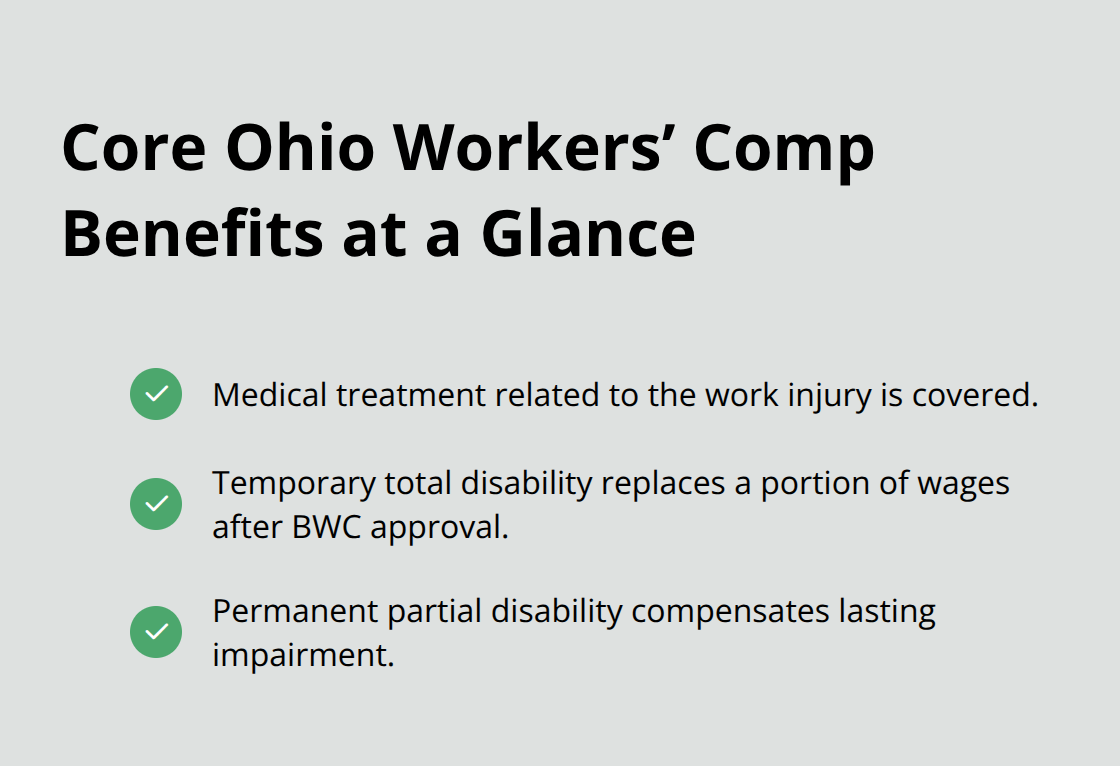
The Ohio Bureau of Workers’ Compensation covers three primary benefit categories: medical expenses for all treatment related to your work injury, temporary total disability payments that replace your wages while you’re unable to work, and permanent partial disability payments if you sustain a lasting impairment. Medical coverage includes doctor visits, hospital stays, surgical procedures, physical therapy, and prescription medications. According to the Bureau of Labor Statistics, approximately 2.8 million nonfatal workplace injuries occur annually across the United States, and Ohio’s no-fault system ensures injured workers don’t wait years for compensation to begin. Temporary total disability payments start immediately once the BWC approves your claim, replacing a portion of your lost wages during recovery.
The Investigation Phase Determines Your Eligibility
The investigation phase typically takes 20 to 30 days from the date you file, though complex cases may extend beyond this timeframe. During investigation, the BWC verifies that your injury occurred at work, that it’s job-related, and that you reported it within the required one-year window. The BWC examines your medical records, employer incident reports, witness statements, and your initial treatment to determine compensability. Documentation becomes critical at this stage because the BWC bases approval decisions on concrete evidence, not assumptions.
Denials Happen-But You Have Recourse
If the BWC approves your claim, you’ll receive a notice outlining your benefits and payment schedule. If they deny your claim, you have the right to appeal through the Ohio Industrial Commission. Many workers make the mistake of accepting the BWC’s initial decision without consulting an attorney, only to discover later that they qualified for additional benefits or that the denial was incorrect. This is precisely when professional representation from a workers’ compensation attorney becomes invaluable. An experienced attorney can identify errors in the BWC’s investigation, challenge denials based on insufficient evidence, and present your case effectively before the Industrial Commission.
Getting Legal Help Early Protects Your Interests
Consulting with an attorney early in the process-especially if your claim is denied or if you’re unsure whether your injury qualifies for benefits under Ohio law-can mean the difference between receiving full compensation and accepting an inadequate settlement. Attorneys who focus on workers’ compensation understand the specific requirements the BWC uses to approve claims and know how to present your case in the strongest possible light. The next section covers the common mistakes that workers make throughout this process, mistakes that often result in delayed payments or denied claims altogether.
What Mistakes Kill Your Claim
Report Your Injury Immediately
Timing determines everything in an Ohio workers’ compensation claim. The moment you delay reporting your injury, you lose leverage with the BWC. Ohio law gives you one year to report, but waiting even a few weeks creates problems that compound over time.
Witnesses forget details, medical records become harder to obtain, and the connection between your injury and the workplace becomes murkier in everyone’s mind. The BWC investigates based on evidence collected while facts remain fresh, so a delay of 30 days can mean the difference between approval and denial.
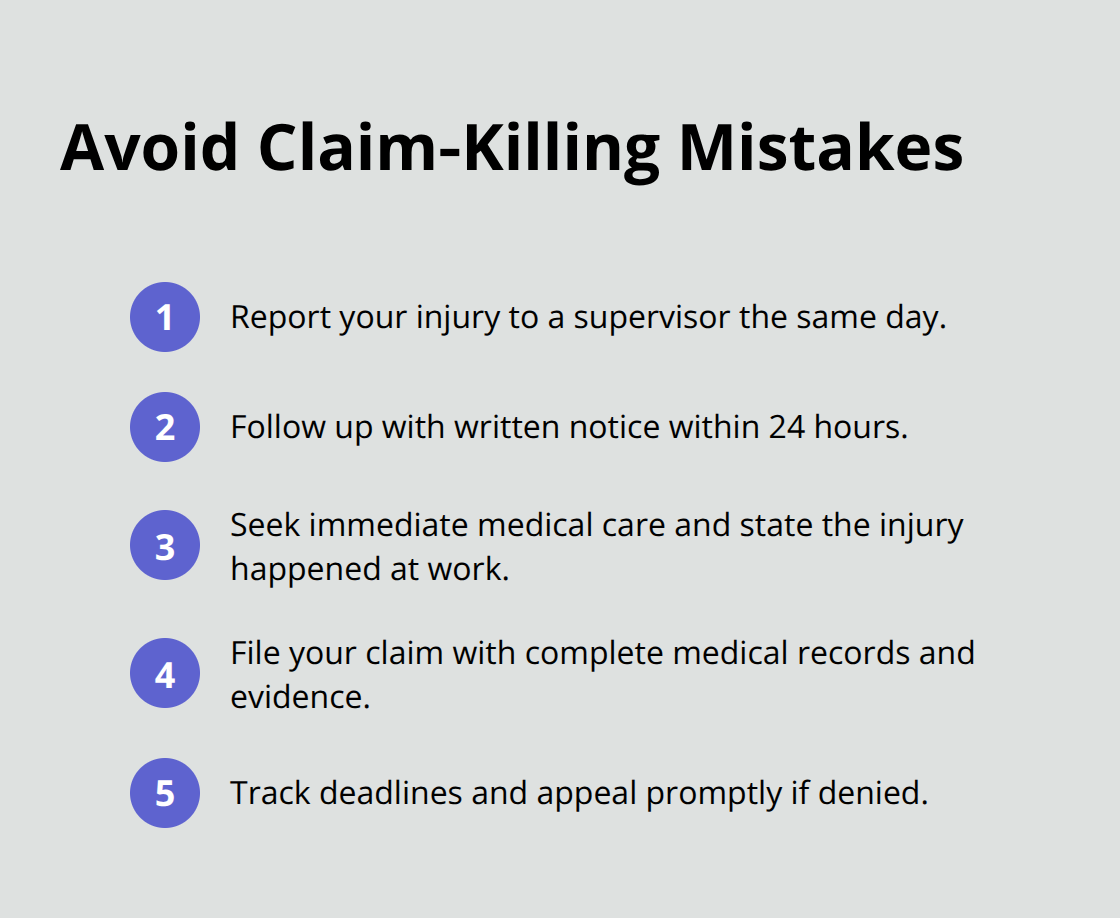
Report your injury to your supervisor on the same day it happens, then follow up with written documentation within 24 hours. This creates an official record that the BWC can verify and prevents your employer from claiming they never knew about the incident. Many workers think they can report later when they have time or when the injury seems serious enough, but that hesitation costs them benefits.
Document Your Injury Thoroughly in Medical Records
Medical documentation determines whether the BWC approves your claim or denies it outright. You must seek medical attention immediately after your injury, even if you think it’s minor, because the medical record establishes the injury date and work connection. When you visit a doctor, explicitly state that your injury occurred at work and describe exactly how it happened. Vague medical records that omit the work connection force the BWC to investigate further and often result in delays or denials.
Your medical provider needs to document the mechanism of injury, the symptoms you experienced at the time, and the specific body parts affected. You should request copies of all medical records and include them when you file your claim with the BWC. Incomplete or missing documentation creates gaps that the BWC interprets against you, not in your favor.
Avoid Settling Without Legal Review
Accepting settlement offers without legal review becomes dangerous for injured workers. You often settle claims for inadequate amounts because you don’t understand what your injury entitles you to under Ohio law. Permanent partial disability payments, ongoing medical coverage, and wage replacement benefits have specific values based on the nature and severity of your injury.
An attorney can evaluate whether a settlement offer covers your actual losses and future medical needs, protecting you from accepting less than you deserve. Workers’ compensation attorneys in Ohio (including those at Robin J Peterson Company, LLC) understand the specific requirements the BWC uses to approve claims and know how to present your case in the strongest possible light. This professional review prevents costly mistakes that affect your financial security for years after your injury.
Final Thoughts
Your workers’ comp claim guide journey demands immediate action at every stage. Report your injury on the same day it occurs, seek medical attention with explicit documentation of the work connection, and file complete paperwork with the BWC. Most straightforward claims proceed without legal representation, but denials, severe injuries, or uncertainty about your benefits warrant professional guidance from an attorney who understands the Industrial Commission appeal process.
At Robin J Peterson Company, LLC, we represent injured workers throughout Ohio who face denials, disputes, or questions about their benefits. Our firm focuses specifically on workers’ compensation law and knows how to challenge BWC decisions and present your case effectively before the Industrial Commission. Contact our firm today to discuss your situation and explore your options for moving forward.