
Workplace injuries happen fast, but your response doesn’t have to be confused. When you suffer an Ohio workplace injury claim situation, knowing your rights and benefits can make the difference between financial stability and hardship.
We at Robin J Peterson Company, LLC help injured workers navigate this process every day. This guide walks you through your protections, available benefits, and the exact steps to file your claim.
What Protections Do You Actually Have as an Injured Worker in Ohio
Ohio’s workers’ compensation system gives you real protections that go beyond what many injured workers realize. The state operates a government-controlled system through the Ohio Bureau of Workers’ Compensation, which means you have statutory rights that apply regardless of your employer’s size or financial status. You cannot be fired for filing a claim, and your employer cannot retaliate against you for reporting a workplace injury. This protection is absolute under Ohio law, and it applies whether you work in construction, healthcare, manufacturing, or any other industry. The Ohio Industrial Commission oversees the system and includes an Ombuds Office that provides independent assistance if disputes arise during your claims process.
Medical Care Without Barriers
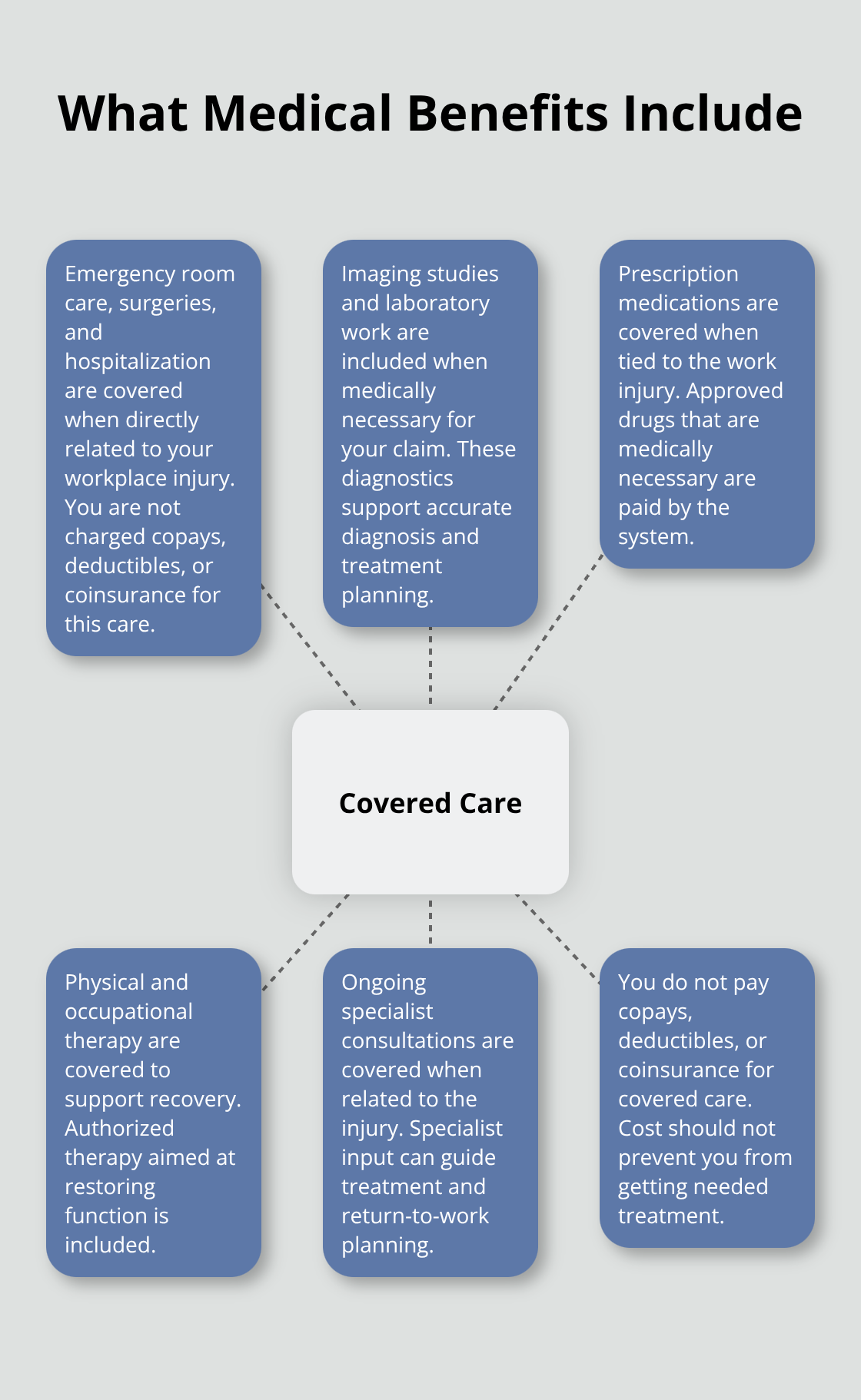
When you suffer a workplace injury in Ohio, you have the right to receive necessary medical treatment at no cost to you. Your employer or their insurance carrier must pay for all medically necessary care related to your injury, including physician visits, emergency treatment, hospitalization, surgery, physical therapy, and prescription medications. You can typically choose your own physician, though some employers designate a physician of record, which affects how your medical evidence gets presented in the claims process. Chiropractic care may also be covered in certain situations, so verify coverage with the Ohio BWC to avoid gaps in your treatment plan. The key here is that cost should never prevent you from getting the care you need after an injury.
Income Protection When You Cannot Work
Temporary total disability benefits replace a portion of your lost wages while you recover and cannot work. These benefits typically cover two-thirds of your average weekly wage, subject to state maximum and minimum limits that adjust annually.
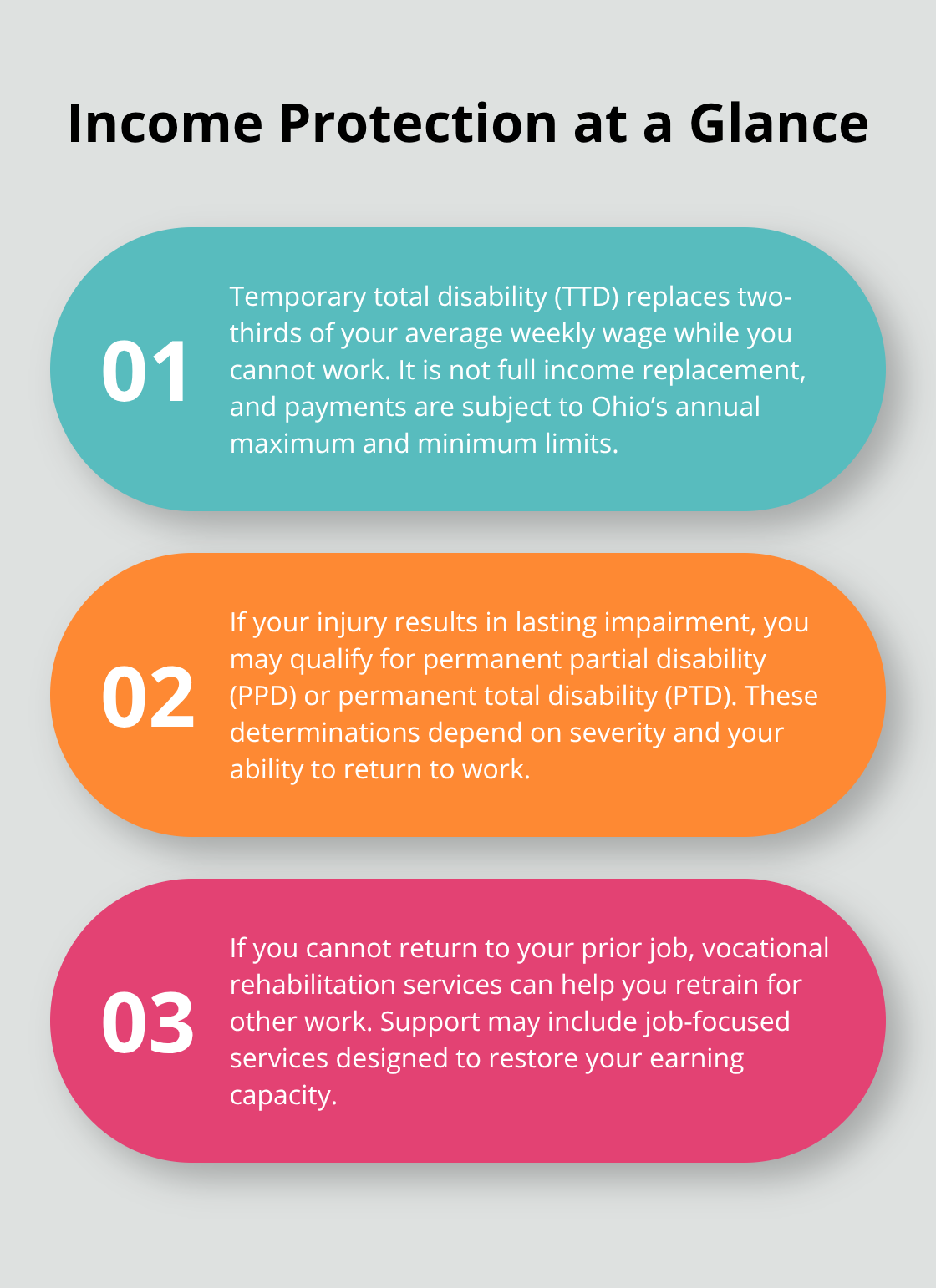
If your injury results in permanent disability, you may qualify for permanent partial disability benefits or permanent total disability benefits depending on the severity and your ability to return to work. Vocational rehabilitation services are also available if you cannot return to your previous job, helping you retrain for other work. The Ohio BWC paid out over 520 million dollars in workers’ compensation in 2018 alone, demonstrating the real financial support the system provides to injured workers across the state.
What Happens Next
Understanding your protections and benefits sets the foundation for your claim, but the real work begins when you take action. The steps you take immediately after your injury-from reporting to your employer to seeking medical attention-determine whether you receive the full benefits you deserve.
What Your Benefits Actually Cover
Medical Coverage for Work-Related Injuries
The Ohio Bureau of Workers’ Compensation pays for all treatment directly related to your workplace injury, including emergency room care, surgeries, hospitalization, imaging studies, laboratory work, prescription medications, physical therapy, occupational therapy, and ongoing specialist consultations. You do not pay copays, deductibles, or coinsurance for any of this care. The critical detail most injured workers miss is that your choice of physician matters significantly.
If your employer designates a physician of record, that doctor’s opinions carry substantial weight in determining your benefits and return-to-work timeline. You can request a second opinion from another provider in the Ohio BWC network if you disagree with this physician’s assessment. Many injured workers waste months following treatment plans they do not trust simply because they did not know they could challenge the physician of record. Verify all coverage decisions with the Ohio BWC before starting treatment to avoid surprises, especially for specialized care like chiropractic treatment, which may have limitations depending on your specific injury circumstances.
Temporary Total Disability Benefits
Temporary total disability benefits replace two-thirds of your average weekly wage while you cannot work, though Ohio sets annual maximum and minimum amounts that change each year. This is not full income replacement, so budget accordingly if your household depends entirely on your wages. The timing of your claim filing affects when these benefits start, making immediate action after your injury essential to avoid gaps in income support.
Permanent Disability and Vocational Rehabilitation
Permanent disability benefits apply when your injury causes lasting impairment that prevents you from returning to your previous job. Ohio distinguishes between permanent partial disability (which covers specific body parts and functions you lose) and permanent total disability (which applies when you cannot work at any job regardless of training or experience). The Ohio Industrial Commission evaluates these claims carefully, and insurers frequently contest them to minimize payouts.
Vocational rehabilitation services help you retrain for different work if your injury prevents you from your former occupation, covering tuition, books, tools, and job placement assistance. Early legal guidance significantly improves the outcome of vocational rehabilitation approvals and permanent disability determinations. The decisions you make about medical treatment and claim documentation now directly influence whether you qualify for these benefits later.
How to File Your Ohio Workers’ Compensation Claim
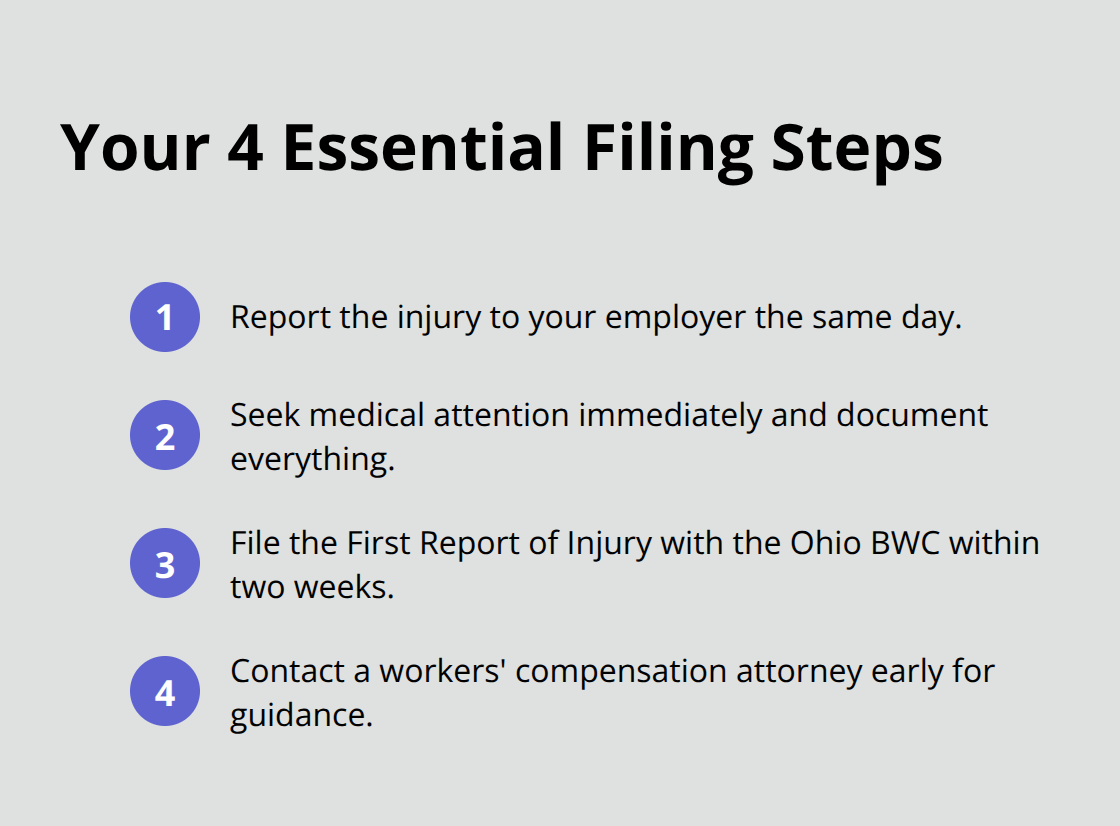
The moment you get injured at work, speed matters more than perfection. Your employer needs to know about the injury immediately, ideally on the same day it happens. Tell your supervisor, manager, or HR department exactly what occurred, when it happened, and which body part was affected.
Get the names and contact information of any coworkers who witnessed the injury. This conversation creates an official record and triggers your employer’s obligation to report the injury to their workers’ compensation carrier.
Report the Injury to Your Employer Without Delay
If your employer delays reporting or claims they never heard about the injury, that documentation of your immediate notification protects you later. Many injured workers wait days or weeks to report injuries, thinking minor pain will resolve on its own. That delay gives employers and insurers ammunition to deny claims or argue the injury was not work-related. Do not wait-notify your employer on the day the injury happens.
Seek Medical Attention and Document the Scene
Seek medical attention as soon as possible, even if the injury seems minor. The physician’s documentation of when the injury occurred and what caused it becomes central to your claim. Take photos of the accident scene, your injuries, and any unsafe conditions that contributed to what happened. Write down everything you remember about the incident while it is fresh in your mind-include the time, location, and exact circumstances.
File the First Report of Injury with the Ohio BWC
File the First Report of Injury with the Ohio Bureau of Workers’ Compensation. Your employer or your medical provider can file this form, but do not assume someone else will handle it. Contact the Ohio BWC directly at 30 W. Spring St., Columbus, OH 43215-2256 or through their website to confirm the FROI has been filed within two weeks of your injury. This form officially starts your claim and establishes the date your benefits should begin. Delays in filing cost you lost wages during the waiting period.
Get Legal Representation Early
Once you have reported the injury and filed the FROI, contact a workers’ compensation attorney. Employers and insurers contest claims regularly, especially when medical deductibles have quadrupled over the past twelve years, giving them financial incentives to minimize payouts. An attorney can review your case immediately, advise you on medical treatment decisions, and handle communications with the BWC and insurers. Early legal guidance prevents mistakes that later become expensive to fix. Many firms offer free consultations, so cost should not be a barrier to getting professional representation.
Final Thoughts
Your Ohio workplace injury claim provides real protections and financial support that exist specifically to help you recover without financial devastation. You have the right to medical care at no cost, wage replacement while you cannot work, and permanent disability benefits if your injury causes lasting harm. These are not privileges you need to negotiate for-they are statutory rights built into Ohio’s workers’ compensation system.
The speed of your response determines whether you receive full benefits or face unnecessary delays and denials. Reporting your injury immediately to your employer, seeking medical attention the same day, and filing your claim within two weeks creates a strong foundation for your case. Waiting weeks to report an injury or delaying medical treatment gives insurers reasons to question whether the injury was truly work-related or as severe as you claim.
Contact Robin J Peterson Company, LLC for a free consultation to discuss your specific situation. An attorney can review your case immediately, advise you on medical decisions, and handle all communications with the BWC and insurers. Early legal guidance prevents costly mistakes and significantly improves your chances of receiving full benefits.