
When you’re injured at work in Ohio, knowing your medical care rights is the difference between getting proper treatment and facing roadblocks. We at Robin J Peterson Company, LLC help injured workers understand exactly what the state’s workers’ compensation system covers and how to access the care you need.
This guide walks you through your medical care rights in Ohio, from filing claims with the Bureau of Workers’ Compensation to handling disputes over treatment approval.
What the Ohio Workers’ Compensation System Actually Covers
Ohio’s workers’ compensation system, administered by the Bureau of Workers’ Compensation, covers medical treatment for injuries that occur at work or occupational illnesses. This is not optional for employers-it’s mandatory state insurance. The system prioritizes treatment speed over fault determination. If your injury is work-related and meets the BWC’s criteria, you have the right to medical care without fear of employer retaliation for seeking treatment. Ohio law protects this right explicitly.
Medical care you can access
The BWC covers physician visits, hospital care, surgical procedures, prescription medications, physical therapy, diagnostic tests like X-rays and MRIs, and mental health treatment connected to your work injury. Ambulance services and emergency room visits are covered when the injury is work-related. One detail most injured workers overlook: you need authorization from the BWC before treatment starts in most cases.
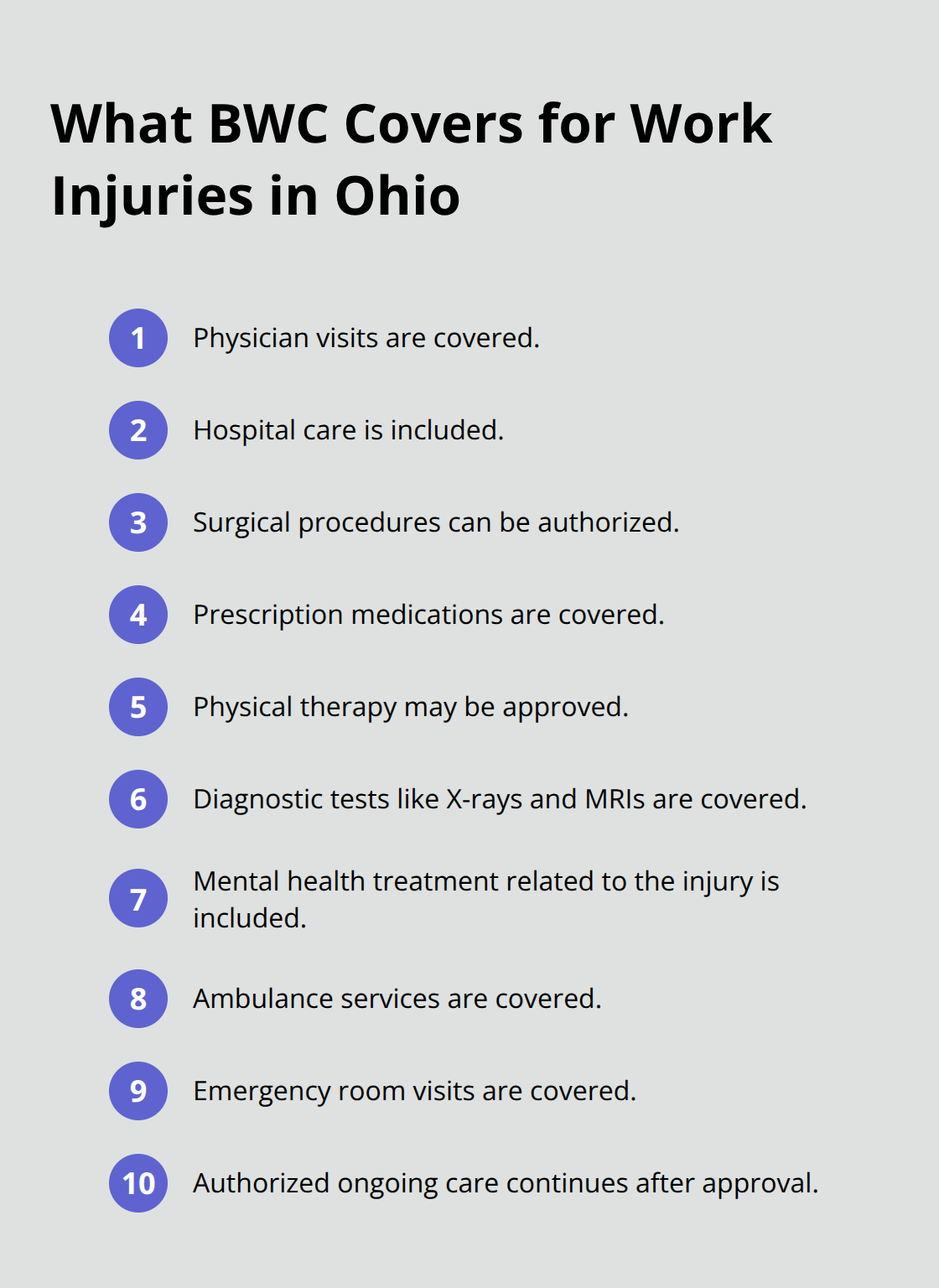
Treatment without authorization can result in claim denial or payment refusal. Your treating physician submits a treatment plan to the BWC, and the system typically responds within a specific timeframe. If you receive care before your claim is filed, notify the BWC immediately so they can authorize ongoing treatment retroactively. Education and health services had the highest injury rates in Ohio at about 3.4 injuries per 100 workers according to the Bureau of Labor Statistics, meaning workers in these fields should be especially proactive about understanding their coverage.
How access works through your employer
Your employer must report the injury to the BWC within 14 days. You should also file a claim yourself-do not rely solely on your employer to do this. The sooner you file the claim, the sooner the BWC can authorize medical care. Once filed, the BWC has 28 days to decide whether to approve or reject your claim. During this waiting period, if you need immediate medical attention, you can seek care and document it carefully. Provide your employer with a written treatment plan from your physician that includes the schedule of upcoming appointments. This removes guesswork from both sides and reduces conflicts. If your treatment requires ongoing appointments (such as physical therapy twice weekly), communicate this pattern upfront. Transparency about medical necessity prevents your employer from claiming surprise or inconvenience. You do not need to disclose your full diagnosis to your employer-only that you’re receiving treatment for a work-related injury and may need accommodations or time off.
Getting answers directly from the BWC
Contact the Ohio Bureau of Workers’ Compensation directly at 1-800-644-6292 if you have questions about what’s covered or need help accessing care. The BWC operates service offices throughout Ohio where you can receive in-person assistance. These direct channels exist specifically to answer your questions about medical coverage and your rights as an injured worker. When you contact the BWC, have your claim number ready and be specific about the type of treatment you need or the coverage question you have. The next section covers what happens when the BWC denies your medical claim or disputes whether your treatment is necessary.
Getting Your Medical Claims Approved by the BWC
The gap between filing a workers’ compensation claim and actually receiving authorized medical care trips up most injured workers in Ohio. Filing your claim with the Bureau of Workers’ Compensation is straightforward, but authorization for treatment requires a specific process that your employer and healthcare provider must follow correctly.
The 28-Day Approval Window
When you file a claim, the BWC has 28 days to approve or deny it. During those 28 days, if you need immediate medical attention for a work injury, seek care anyway and document everything. Keep receipts, appointment confirmations, and any communications with your healthcare provider.
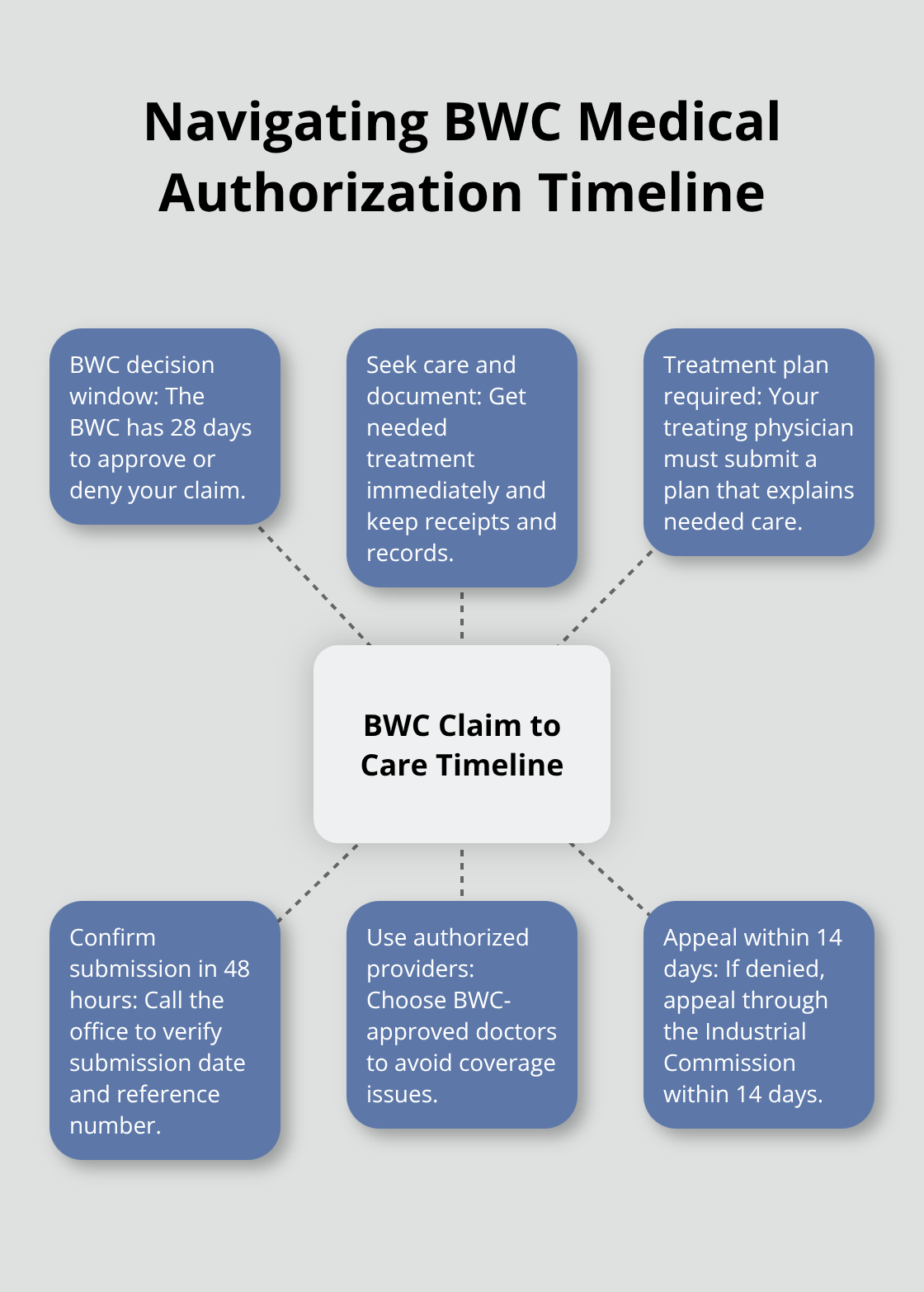
Once your claim receives approval, the real navigation begins. Your treating physician must submit a treatment plan to the BWC that outlines what care you need and why. This is not optional-the BWC will not pay for treatment that lacks a submitted treatment plan from an authorized provider.
Confirming Treatment Plan Submission
The physician’s office typically handles treatment plan submission, but you should follow up within 48 hours to confirm it was sent. Ask your doctor’s staff for the submission date and reference number. If the BWC approves the plan, you can proceed with treatment. If they request more information or deny it, your physician will receive notification, and you need to know about this immediately so you can address gaps in medical evidence.
Selecting Authorized Healthcare Providers
Working with authorized healthcare providers matters more than most injured workers realize. The BWC maintains a network of approved physicians and specialists. You cannot simply choose any doctor and expect the BWC to cover the treatment. Use the BWC’s Find a Provider tool to locate physicians in your area who treat workers’ compensation cases. When you call to schedule an appointment, confirm that the provider accepts workers’ compensation claims and understands the authorization requirements. Many providers have staff dedicated to handling BWC paperwork, which accelerates approval timelines.
Handling Denials and Resubmission
Your initial treating physician becomes your primary contact for all related care and can refer you to specialists within the approved network. If your employer or the BWC denies authorization for a specific treatment your physician recommends, ask your doctor to submit additional medical evidence or documentation that explains the clinical necessity. Common reasons for denial include insufficient medical evidence, unclear connection between the treatment and your work injury, or delayed treatment requests. A 2024 Travelers report noted that a substantial share of injuries occur to workers in their first year on the job, meaning newer employees should be especially vigilant about getting proper authorization early to prevent coverage gaps later. If authorization remains denied after resubmission, you have appeal rights through the Ohio Industrial Commission, but prevention through thorough documentation upfront saves time and stress. When disputes arise over whether the BWC should cover your treatment, the next section explains how to challenge those decisions.
When the BWC Says No
Denied claims happen more often than injured workers expect, and the reasons vary widely. The Ohio Bureau of Workers’ Compensation had a 14 percent denial rate on COVID-19 workers’ compensation claims in fiscal year 2022, with 177 claims rejected out of 1,254 filed.
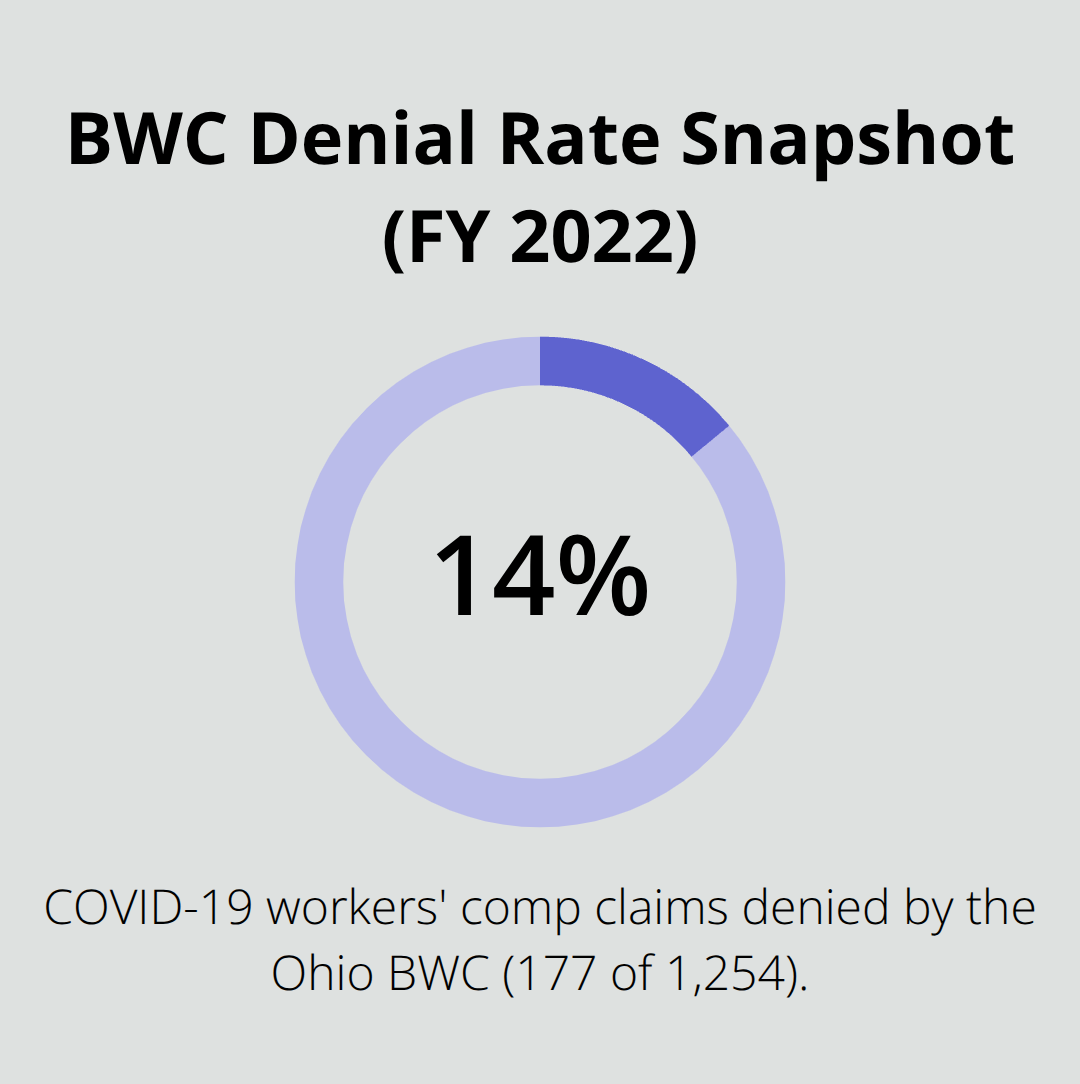
While COVID claims represent a specific category, this denial rate reflects a broader pattern: the BWC regularly rejects medical treatment requests and initial claims. Common denial reasons include insufficient medical evidence, followed by unclear connection between the treatment and your work injury, delayed treatment requests, and pre-existing condition arguments.
Why the BWC Denies Medical Claims
The reality is harsh: if your physician submits a treatment plan without detailed clinical justification, the BWC will deny it. If you wait weeks after your injury to seek treatment, the BWC questions whether the injury actually caused your condition. If your medical records lack objective findings like imaging or diagnostic test results, the BWC treats your claim with skepticism. You cannot simply tell the BWC your back hurts and expect authorization for six months of physical therapy. Your physician must document objective findings, explain why the specific treatment addresses those findings, and connect everything directly to your work injury.
Appealing a BWC Denial
When denial arrives, most injured workers assume the decision is final. It is not. You have the right to appeal any BWC denial through the Ohio Industrial Commission within 14 days of receiving the denial notice. This is where documentation becomes your strongest tool. Workers who maintained detailed records of medical appointments, test results, treatment responses, and employer communications win appeals far more consistently than those who did not.
Consult an experienced Ohio workers’ compensation attorney immediately after receiving a denial. Many attorneys offer free initial consultations and work on contingency, meaning you pay nothing upfront. An attorney knows exactly what additional medical evidence the Industrial Commission will accept and can guide your physician on resubmission strategy. Do not attempt to navigate a denial alone.
Handling Treatment Necessity Disputes
Disputes over whether your treatment is actually necessary occur separately from outright denials, and they require a different approach. The BWC may approve your claim but then question whether a specific treatment your physician recommends is medically necessary. This distinction matters because your claim approval does not guarantee payment for every recommended service. Your employer might also dispute whether you need time off for appointments or whether your medical restrictions justify light-duty work.
These disputes are not resolved by arguing your case to your employer. Contact the Ohio Industrial Commission’s Ombuds Office for independent assistance navigating treatment disputes. This office exists specifically to help injured workers resolve conflicts with the BWC without requiring immediate legal representation. Provide the Ombuds Office with your physician’s clinical reasoning, any objective medical findings supporting the treatment, and your medical history related to the injury.
Documenting Employer Resistance
If the dispute involves your employer’s refusal to accommodate medical restrictions, document every conversation with your supervisor or human resources department in writing. Email summaries of conversations to yourself immediately after they occur, creating a timestamped record. If your employer pressures you to work beyond your physician’s restrictions or denies reasonable accommodations, this violation of Ohio law gives you grounds for additional claims and potential attorney involvement. The Industrial Commission can order the BWC to authorize treatment or order your employer to provide accommodations, but only if you present clear evidence of medical necessity and employer resistance.
Final Thoughts
Your medical care rights in Ohio are legal protections backed by state law, not suggestions or guidelines. The Ohio Bureau of Workers’ Compensation administers these rights through a clear system: file your claim immediately, submit a treatment plan from your physician, work with authorized providers, and appeal any denials within 14 days through the Industrial Commission. Understanding how this system operates separates injured workers who receive proper care from those who face unnecessary delays.
Start by filing your claim right after a work injury and provide your employer with a written treatment plan that includes your appointment schedule. Confirm that your doctor submits the treatment plan to the BWC within 48 hours, use the Find a Provider tool to select authorized healthcare providers, and document everything (appointment dates, test results, communications with your employer, and any denials). If the BWC denies your claim or disputes treatment necessity, contact the Ohio Industrial Commission’s Ombuds Office for independent assistance.
We at Robin J Peterson Company, LLC represent injured workers throughout Ohio who face denials, disputes, or employer resistance to medical care rights in Ohio. Contact our firm to discuss your claim and your options. Your health and your benefits depend on taking action when obstacles arise.