
Returning to work after an injury in Ohio involves specific legal protections and obligations that both you and your employer must follow. At Robin J Peterson Company, LLC, we help workers understand these requirements so they can navigate the process with confidence.
This guide covers your rights, employer responsibilities, and how to handle common challenges that arise during return to work in Ohio.
What Makes a Return to Work Assignment Valid in Ohio
Alignment with Medical Restrictions
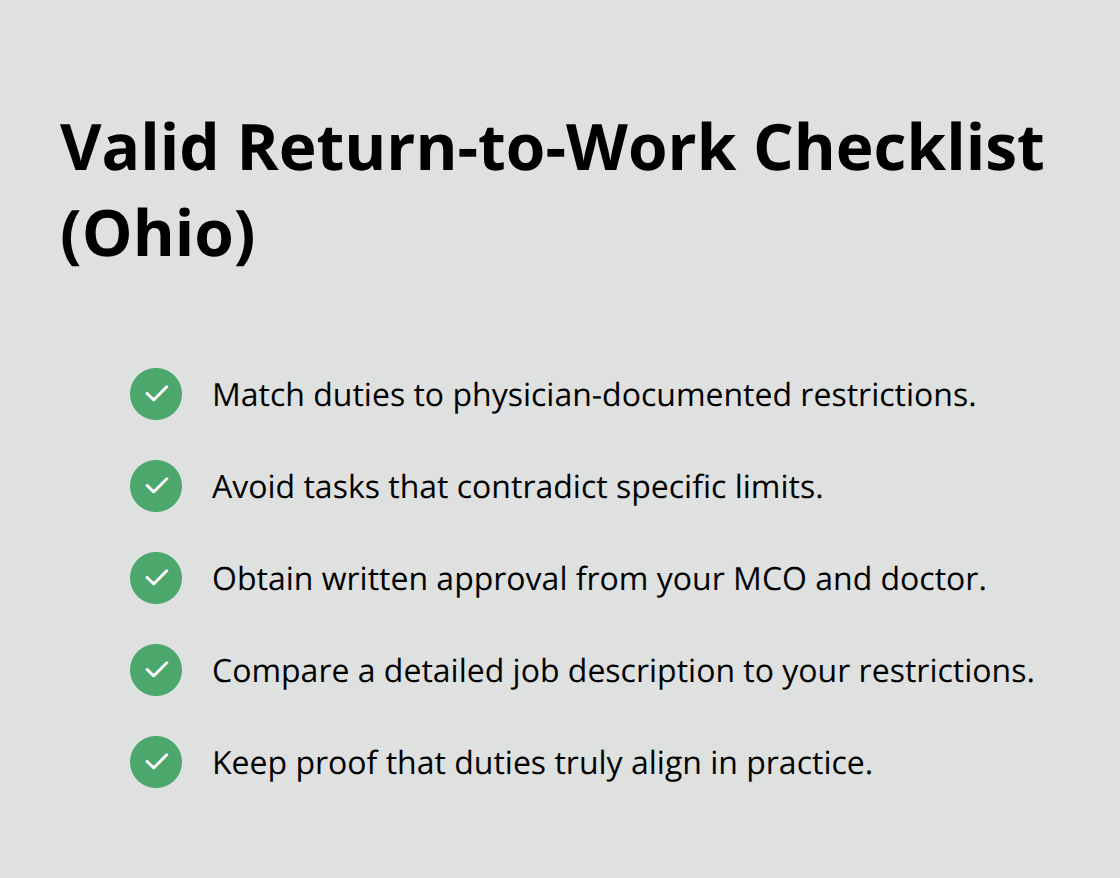
Ohio’s workers’ compensation system assumes that returning to work with medical restrictions is preferable to remaining off work entirely. However, not every job offer qualifies as valid under state law. A return to work assignment must align with your treating physician’s documented restrictions, and your employer cannot simply create work that technically fits your restrictions while actually violating them in practice.
The Ohio Bureau of Workers’ Compensation and your Managed Care Organization verify that proposed work complies with your medical limitations before you accept it. If your doctor states you cannot lift more than 20 pounds, stand for extended periods, or perform repetitive hand motions, any offered position must genuinely avoid these activities.
Written Verification Is Essential
Many disputes arise because employers present work that appears compliant on paper but requires you to violate restrictions in reality. Securing written confirmation from both your treating physician and your MCO that the specific job duties align with your restrictions is non-negotiable. You have the right to request a detailed job description and compare it directly against your medical limitations before accepting or rejecting the offer.
Employer Documentation and Communication
Your employer bears significant responsibility during this process. Ohio law prohibits retaliation against workers who file compensation claims or exercise their rights, and the BWC enforces this protection strictly. Your employer must document all return to work communications, including dates, times, people involved, and exact job duties discussed.
If you reject light-duty work based on legitimate medical grounds, you need written evidence that the work violated your restrictions to preserve your temporary total disability benefits. Many workers lose benefits unnecessarily because they lack this documentation.
Protecting Yourself Against Retaliation
If you believe your employer is retaliating against you for filing a claim, gather evidence of your pre-injury performance records and attendance, along with coworker testimonials if possible. Retaliation claims require proving your employer knew about your claim and took adverse action afterward, so precise timing and communication records are critical.
The Ohio Industrial Commission Ombuds Office provides free assistance if disputes arise, and you can contact them without filing a formal legal claim. Should you face discrimination or suspect retaliation, consulting with an experienced workers’ compensation attorney protects your rights and strengthens your position. Employers in the Cleveland, Akron, and Canton areas who resist rehiring injured workers may face legal challenges, making professional guidance invaluable as you move forward with understanding what happens when your employer fails to meet these obligations.
Common Return to Work Challenges in Ohio
When Job Offers Don’t Match Your Restrictions
Light-duty work sounds straightforward until you realize the job your employer offers doesn’t actually fit your restrictions. The Ohio Bureau of Workers’ Compensation prefers workers return to earning income rather than stay off work completely, but this preference creates pressure that often works against injured workers. When you earn less in modified duty than your regular wages, you qualify for partial wage replacement equal to two-thirds of the difference in pay, potentially for up to 200 weeks or longer depending on your situation. However, many workers don’t understand this benefit exists, so they either accept unsuitable work out of financial desperation or reject legitimate offers and lose temporary total disability benefits entirely.
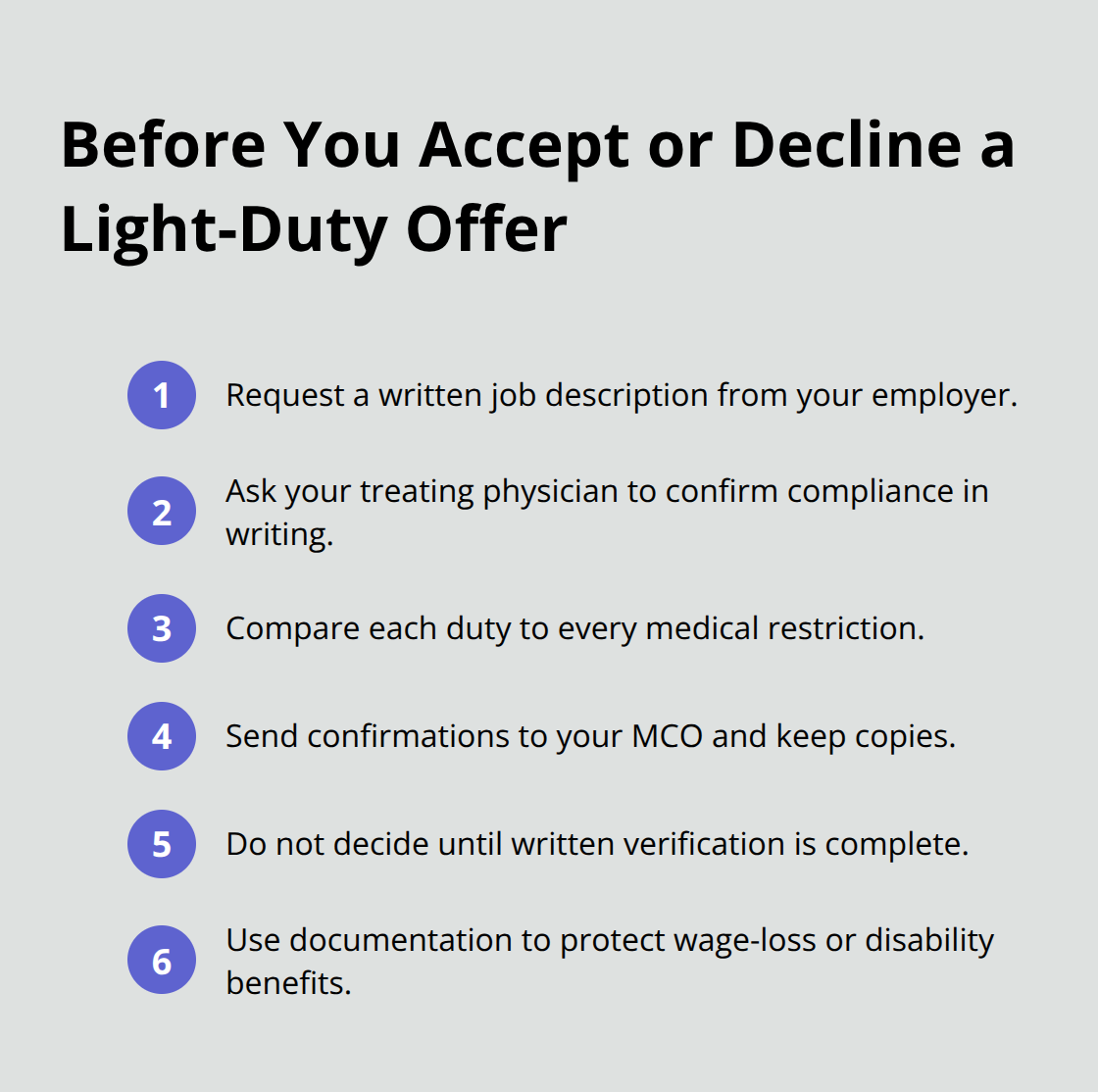
The critical mistake happens before you accept or decline any offer: you must secure written confirmation from your treating physician that the specific job duties comply with your restrictions, and you need a written job description to compare against those medical limits. Without this documentation, disputes become your word against your employer’s word, and the burden of proof falls on you to show the work violated your restrictions.
Handling Disputes Over Job Suitability
Disputes over job suitability escalate quickly because employers often present positions that appear compliant on paper while actually requiring restriction violations in practice. You should document every communication about the job offer including dates, times, names of people involved, and the exact restrictions and duties discussed. If the work violates your restrictions, report this immediately to your Managed Care Organization and request written confirmation that the work does not comply with your medical plan.
The MCO coordinates medical approvals and can verify whether proposed work aligns with your treatment plan; you can locate your MCO or call 1-800-644-6292 for assistance. This step protects your benefits and creates an official record that the employer’s offer failed to meet medical standards.
Protecting Yourself from Retaliation and Discrimination
Retaliation claims require specific evidence that your employer knew about your workers’ compensation claim and took adverse action afterward, so you must maintain detailed records of all interactions. If you face discrimination or suspect your employer is retaliating against you for filing a claim, gather your pre-injury performance records, attendance history, and coworker testimonials. The Ohio Industrial Commission Ombuds Office provides free guidance on these issues without requiring a formal legal claim.
When discrimination or retaliation becomes clear, consulting with an experienced workers’ compensation attorney protects your position and strengthens your ability to challenge unfair treatment. Employers in Ohio who resist rehiring injured workers or take adverse action after a claim may face legal challenges, making professional representation essential as you move forward. Understanding how the Ohio Bureau of Workers’ Compensation evaluates your readiness to return to work helps you prepare the documentation and medical evidence needed to support your case.
Navigating the Ohio Bureau of Workers’ Compensation During Return to Work
How the BWC Evaluates Your Return to Work Readiness
The Ohio Bureau of Workers’ Compensation does not simply rubber-stamp return to work decisions based on what your employer wants. The BWC requires your Managed Care Organization to evaluate whether you can actually perform the job your employer offers without compromising your recovery. This evaluation occurs before you accept or reject the position, and understanding how it works gives you concrete leverage.
Your MCO will request a detailed job description from your employer, compare it against your medical restrictions, and determine whether the work aligns with your treatment plan. If gaps exist between what the job requires and what your body can handle, the MCO should flag this in writing. Many injured workers never request this formal evaluation, which means they accept or reject jobs without official documentation of medical compliance.
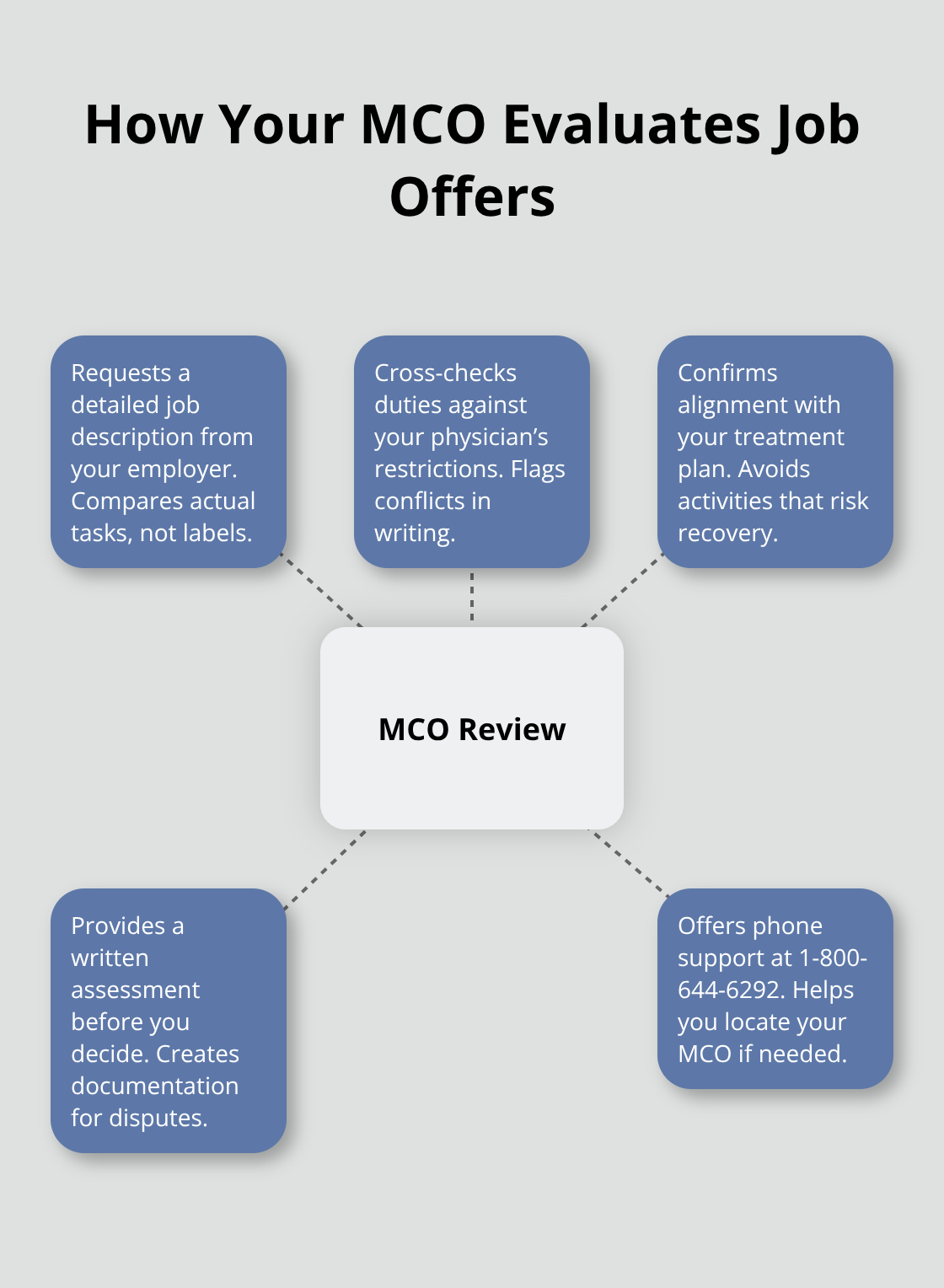
Contact your MCO directly at 1-800-644-6292 and ask them to conduct a written assessment of any job offer before you make a decision. This single step prevents disputes later and creates evidence that protects your benefits. The BWC’s preference for returning workers to earning income is real, but that preference does not override medical reality, and the MCO’s job is to verify medical suitability, not to pressure you into unsuitable work.
Getting Medical Certification Right from the Start
Your treating physician’s written restrictions form the foundation of everything that follows. The more specific these restrictions are, the easier it becomes to prove whether a job complies or violates them. Vague restrictions like light duty or desk work create openings for employers to interpret compliance however they want.
Push your doctor to document exact limitations: no lifting over 20 pounds, no standing longer than two hours at a time, no repetitive gripping motions, or whatever applies to your injury. Request a copy of these restrictions in writing and bring them to every conversation with your employer or MCO. When your employer presents a job offer, obtain the written job description and have your physician review it specifically against your documented restrictions.
Ask your doctor to provide written confirmation whether the job complies or violates your medical plan. This written certification becomes critical evidence if disputes arise. The Ohio Industrial Commission Ombuds Office can guide you through this process at no cost, and they understand how to frame requests so doctors provide the specific documentation the BWC needs. If your doctor seems rushed or dismisses your concerns about job suitability, seek a second opinion immediately. You have the right to change treating physicians, and occupational medicine doctors sometimes face pressure to return workers quickly regardless of actual readiness.
What Happens When You Need to Appeal
Unfavorable return to work decisions do not end your options. If the BWC or your MCO denies a request for continued temporary total disability benefits or refuses to approve modifications to your restrictions, you can request reconsideration or file a formal appeal with the Industrial Commission of Ohio.
The appeal process requires detailed documentation of why the return to work assignment fails to meet your medical needs. Gather all communications from your employer, MCO, and treating physician that show the job violates your restrictions. Include medical records that demonstrate your ongoing need for treatment and recovery time. The Ombuds Office provides step-by-step guidance on filing appeals and can assist without requiring you to hire an attorney, though consulting with an experienced workers’ compensation attorney strengthens your case significantly.
Appeals typically take several months, so continue documenting everything during this period. If you accepted unsuitable work and your condition worsened, medical records showing this deterioration become powerful evidence that the original return to work assignment was premature. The BWC and Industrial Commission review appeals based on the medical evidence you present, not assumptions about your recovery timeline.
Final Thoughts
Returning to work in Ohio after an injury requires you to understand your legal protections and take active steps to enforce them. Your rights include receiving medical treatment at no cost, earning wage replacement if you cannot work, and protection against retaliation for filing a claim. Document everything, verify that job offers comply with your medical restrictions in writing, and communicate directly with your MCO before accepting or rejecting any position.
The most common mistake injured workers make is accepting unsuitable work without written medical confirmation that the job fits their restrictions. This single decision can cost you benefits, worsen your injury, and eliminate your leverage if disputes arise later. Return to work Ohio cases often turn on documentation, so treat every communication with your employer, doctor, and MCO as potential evidence by requesting written job descriptions, obtaining physician certification of medical compliance, and keeping detailed records of dates, times, and names involved in all conversations.
When you face pressure to return before you are ready, when job offers violate your restrictions, or when you suspect retaliation, professional guidance becomes essential. The Ohio Industrial Commission Ombuds Office provides free assistance, but an experienced workers’ compensation attorney offers something more: they understand how the BWC evaluates claims, they know which documentation carries weight in appeals, and they can challenge unfair decisions on your behalf. Contact an experienced workers’ compensation attorney who can review your specific situation and protect your interests.